Berryman B-12 Chemtool Review: Is It Worth It?
Berryman B-12 Chemtool is worth trying when the symptom points to light deposit or stale-fuel trouble, but not when the problem looks mechanical or electrical. If rough idle, misfire, lean running, or hard starting comes back after one tank, cleaner is no longer the right answer. Diagnosis is.
Verdict on Berryman B-12 chemtool

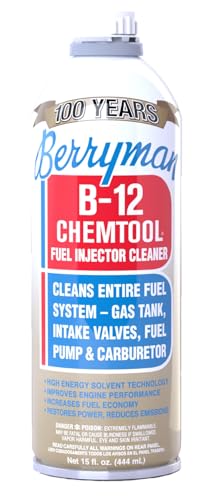
This is a fast-acting solvent cleaner for gasoline engines, not a repair in a bottle. It can help with rough idle, hesitation, hard starts, and sluggish throttle response when deposits are part of the problem, especially in older carbureted engines and in fuel systems with dirty injectors or stale fuel.
It is a weaker fit for repeated misfire, persistent check-engine lights, clogged filters, vacuum leaks, failing pumps, or injector faults that have moved past the “dirty” stage. In those cases, another bottle usually buys time, not a fix.
Bottom line for DIY drivers
Berryman B-12 Chemtool belongs in the “reasonable first try” category when the complaint is mild and the engine still runs well enough to respond to cleaning. The product is described as a fuel system cleaner using high-energy solvent technology, or HEST, and it is marketed for carburetor and injector cleaning in gasoline engines.
That does not mean it can rescue every drivability complaint. If the engine still stumbles after treatment, the issue is likely outside the cleaner’s reach.
Is B-12 good?
Yes, if you want a strong solvent cleaner and your symptom fits what fuel cleaning can address. Berryman B-12 Chemtool is most convincing for deposit-related complaints such as rough idle, startup hesitation, fuel economy complaints tied to dirty injectors, and older carbureted engines with gum or varnish buildup.
It is less convincing as a broad fix for any drivability issue. A cleaner can wash through varnish and soften gum, but it cannot restore a weak ignition coil, cure low compression, or open a mechanically damaged injector.
What it tends to help
The product is aimed at fuel injector cleaner use cases such as hard starting, hesitation, stalling, rough idling, and sluggish acceleration. For carburetor cleaning, it is also used for varnish removal, gum removal, and moisture dispersal in older engines that still rely on carburetor circuits.
Those are the problems where a strong solvent has a fair chance of helping. It is also the kind of complaint that can show up after a car sits with aged fuel.
Where it falls short
B-12 cannot fix injector failure, a clogged fuel filter, a dirty throttle body, a vacuum leak, or an ignition problem. It also has limits on direct-injection engines, where intake-valve deposits are not addressed the same way as in port-injected engines.
That distinction matters. A tank additive can clean fuel-path components, but it does not clean every part of the induction system.
How do you use Berryman B-12 chemtool?
Use the product exactly as the current label directs, and verify the bottle size and application first. One guide for Berryman 0116 B-12 Chemtool calls for 1 ounce cleaner to 1 gallon fuel, but that should not be treated as a universal rule unless the current package label says the same thing.
For fuel-tank use, the basic sequence is simple: add the cleaner before filling up, then drive enough for the treated fuel to circulate through the system. For carburetor-specific use, the product is still a fuel treatment first, so do not treat it like a spray-only carb cleaner unless the label explicitly says otherwise.
What to verify on the label first
- Confirm the product type: fuel system cleaner, carburetor/fuel treatment, or injector cleaner.
- Check the vehicle or equipment type listed on the package.
- Confirm whether the product is meant for a full tank dose or a specific fuel amount.
- Make sure the engine is gasoline-powered.
- Stop if the label excludes diesel use or any specific equipment.
Fuel-tank use before filling up
The common use case is fuel tank treatment. That is where the cleaner can reach injectors, some fuel passages, and the combustion side of the deposit problem through the fuel supply.
Say your compact sedan starts hard after a two-week sit and then idles unevenly for the first minute. A tank treatment can be reasonable if the fuel is old and the complaint is mild. If the idle remains rough after the tank is consumed, the next step is inspection, not another dose.
Carburetor-specific cautions
Carbureted engines are a better match for solvent cleaners than many modern direct-injection setups. B-12 is used to remove varnish and gum that can stick jets, passages, and metering parts, and to help with moisture dispersal in older engines.
Still, if a carburetor is mechanically worn, misadjusted, or internally damaged, cleaner will not replace overhaul work. A sticky choke, torn diaphragm, or severely clogged passage needs parts attention.
B-12 decision table
This table helps separate problems that may respond to cleaner from problems that need inspection. The decision point is not whether B-12 is strong. It is whether the symptom still looks chemical instead of mechanical.
| Symptom | Likely cause | Whether B-12 may help | When to stop and inspect parts |
|---|---|---|---|
| Rough idle | Light injector deposits, dirty carburetor circuits, stale fuel | Yes, if the engine otherwise runs normally | Stop if the idle stays rough after one tank or a misfire code returns |
| Hard start | Fuel delivery lag, old fuel, deposit buildup | Possibly, especially after storage | Inspect if cranking is long, fuel pressure is low, or starting worsens |
| Hesitation | Dirty injectors, carburetor varnish, restricted fuel flow | Yes, if the hesitation is mild and consistent | Stop if hesitation becomes a stall or is tied to load only |
| Stale fuel | Fuel aged in tank or lines | May help with deposit effects from aged fuel | Inspect if the fuel smells strongly degraded or water contamination is suspected |
| Clogged filter | Debris or tank contamination | No, not directly | Replace the filter and inspect the tank if flow stays poor |
| Dirty throttle body | Air-side deposits | Not directly for tank use | Inspect and clean the throttle body manually if symptoms persist |
| Injector failure | Electrical fault, internal wear, stuck injector | Usually no | Stop and test injector operation, wiring, and fuel pressure |
Pros and cons
Pros
- Targets fuel-system deposits with a strong solvent blend.
- Useful for rough idle, hesitation, hard starting, and sluggish acceleration linked to dirt or varnish.
- Applicable to gasoline engines, including many cars, trucks, boats, motorcycles, and lawnmowers.
- Often a practical first step before parts replacement on older engines.
Cons
- Cannot fix mechanical failures such as a bad injector, clogged filter, or vacuum leak.
- Not a cure for diesel problems.
- May not help direct-injection intake-valve deposits the way it can help fuel-path deposits.
- Too much product or the wrong application can create new problems instead of solving the old one.
Who is B-12 for?
This is a good fit for DIY drivers with gasoline-powered equipment that is running poorly but not failing catastrophically. That includes cars, trucks, boats, motorcycles, and lawnmowers, especially when the complaint is rough idle, hesitation, fuel economy complaints, or a hard start after storage.
It is not the right move for diesel engines, seized injectors, or a vehicle that has recurring codes and obvious mechanical symptoms. If the engine stalls under load, refuses to start, or sets the same code again after treatment, inspection is the better move.
Best-fit vehicles and symptoms
Berryman 0116 B-12 Chemtool is the version commonly described as a carburetor/fuel treatment and injector cleaner. The 12 oz size is one common package form, and the product is often discussed for rough idle, hesitation, and fuel economy complaints.
Picture a 1998 carbureted lawnmower that sat over winter and now surges at idle. That is the kind of use case where a fuel treatment can be sensible. A late-model direct-injection sedan with a persistent misfire is a different problem.
When another fix is the better move
If the symptoms point to ignition, air leaks, fuel pressure loss, or a blocked filter, cleaner should move to the background. The same goes for a direct-injection engine with valve deposits, because tank additives do not clean intake valves in the same way a targeted intake service might.
A common first-timer mistake is treating every stumble as dirty fuel. If the problem returns on the next cold start, do not assume the bottle failed. Assume the diagnosis was incomplete.
Is Berryman B-12 safe?
The product is described as safe for catalytic converter and oxygen sensor use, but that should not be read as a blanket promise that it can protect emissions parts from every misuse. It is a fuel cleaner, not an emissions repair.
Used as directed in gasoline engines, it is intended to work through the fuel system without being treated as a sensor killer. Too much product, the wrong engine type, or a preexisting fault can still trigger drivability issues that look like a cleaner problem.
Catalytic converter and oxygen sensor claims
The catalytic converter is an emissions component, so the safety claim matters, but only in the narrow sense claimed by the product documentation. It does not mean a cleaner can fix a converter that is already failing, clogged, or overheated.
The oxygen sensor claim is similar. Sensor-safe is not the same as fault-proof. If the engine already has an air-fuel control problem, a cleaner may change how the engine runs, but it will not erase the underlying issue.
What happens if you use too much B-12 Chemtool
Using too much can overwhelm the intended fuel ratio, especially in a small tank or a small engine. That can lead to hard starting, rough running, smoke, or a new drivability complaint that did not exist before.
Suppose a 5-gallon mower tank gets dosed like a 15-gallon car tank. The engine may start poorly and run unevenly until the excess fuel treatment is diluted or consumed. If that happens, stop running the equipment and verify the label directions before adding more fuel.
What B-12 is and why it works
Berryman B-12 Chemtool is a fuel system cleaner, and the formulation is built around aggressive solvents rather than gentle detergents. The ingredient table for Berryman 0116 B-12 Chemtool lists toluene at 40 – 50%, acetone at 20 – 25%, methanol at 20 – 25%, methyl ethyl ketone at 1 – 5%, 2-Butoxyethanol at 1 – 5%, and 2-Propanol at 1 – 5%.
That kind of blend explains the product’s reputation for acting quickly. It is built to dissolve deposits rather than slowly condition them.
Solvent blend versus slower detergent cleaners
| Cleaner type | Typical strength | Best use | Main limitation |
|---|---|---|---|
| Strong solvent cleaner like B-12 | Fast acting on deposits and varnish | Rough idle, hesitation, stale fuel, older carbureted systems | Can be too aggressive for the wrong application and does not fix mechanical faults |
| Slower detergent-style injector cleaner | Gradual cleaning over time | Maintenance use for lighter deposit control | May be slower to address a noticeable drivability complaint |
| Generic solvent cleaner | Varies widely | Budget cleanup of mild fuel-system grime | Ingredient quality and concentration can differ a lot |
Frequently asked questions
Is berryman b12 good?
It can be a good choice when the issue looks like deposit buildup, stale fuel, or light fuel-system contamination. It is not a cure-all. If the problem is a bad injector, clogged filter, vacuum leak, or ignition fault, B-12 is the wrong tool and the symptom will usually come back.
What is berryman b12?
It is a fuel system cleaner for gasoline engines. Berryman B-12 Chemtool is marketed for carburetor and injector cleaning, and the product is described as using high-energy solvent technology. It is meant for fuel-path deposits, not for fixing worn parts or electrical faults.
Is berryman b12 safe?
The product is described as safe for catalytic converter and oxygen sensor use when used as directed, but that is not a guarantee against every misuse. Too much cleaner, the wrong engine type, or an existing mechanical fault can still cause problems. Use the label instructions, not a guess.
Does berryman b12 work on rough idling?
It may help rough idling when the cause is dirty injectors, carburetor varnish, or stale fuel. It will not fix rough idle caused by a vacuum leak, low compression, misfire, or ignition trouble. If the idle remains rough after one treatment, the next step is diagnosis.
Can you use berryman b12 in a gas tank?
Yes, that is one of the main uses. The product is commonly added to the fuel tank before filling up so it can circulate through the system. Verify the label for the correct amount and engine type first. Do not use it in diesel engines unless the label specifically says it is approved.
What happens if you use too much b12 chemtool
Too much can make the fuel mix overly solvent-heavy and may cause hard starting, rough running, smoke, or other drivability issues. The risk is higher in small tanks and small engines. If overdosing happens, stop, confirm the label, and do not keep adding more product to chase the symptom.
Can you use berryman b12 on a motorcycle?
Yes, if the motorcycle is gasoline-powered and the label allows it. B-12 is also discussed for other gasoline equipment, including cars, boats, and lawnmowers. Be careful with small tanks, though, because a dosage that is fine for a car may be too strong for a motorcycle tank if the ratio is not adjusted correctly.
Products related to this article
Sponsored / affiliate links. As an Amazon Associate I earn from qualifying purchases. I may earn additional commission from eligible campaigns.