Can You Repair Auto AC Lines? DIY Kits, Costs & EPA Rules
Yes, you can repair auto AC lines – most leaks in a rigid aluminum section or rubber hose coupling can be fixed with a $39-$52 splice kit, unless the damage sits at a hard bend or corroded fitting. Skipping the refrigerant recovery step can send debris into the compressor and turn a cheap fix into a $1,000+ replacement. This guide covers aluminum vs. rubber line repair, the EPA rule on refrigerant, and real repair-vs-replace costs.
Insert your Affiliate Disclosure reusable block here
Quick Answer
Yes. A localized leak in a straight, accessible section of an aluminum AC line or rubber hose can be repaired with a $39-$52 splice kit or by brazing in a new section. Deeply corroded lines, discontinued factory parts, or damage at a hard bend usually need full replacement instead. Handling the refrigerant yourself is legal in small quantities, but recovering it requires EPA Section 609 certification.
Signs of Auto AC Line Issues
The first sign of a damaged AC line is usually reduced cooling, followed by a hissing sound when the compressor kicks on or an oily residue along the line itself. That residue is not a coincidence – refrigerant oil travels with the refrigerant, so it collects at whatever point the line is actually leaking, which makes it the fastest way to pinpoint the damage without a UV dye kit.
Visible refrigerant leaks, a sudden drop in AC performance on hot days, or a compressor that short-cycles are all signs the line has failed rather than a simple low-charge issue. Addressing a small leak early is what keeps this a $39-$52 splice-kit repair instead of a full line replacement.
Assessing the Damage
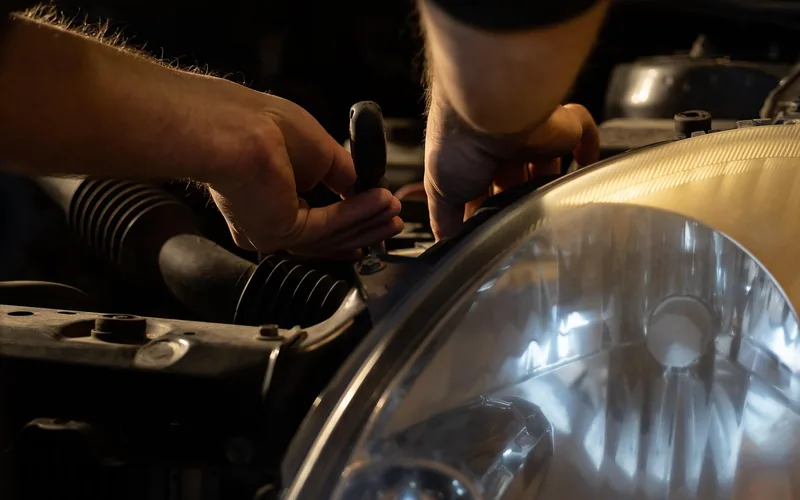
Assessing the damage to your auto AC lines is crucial for determining the next step. When evaluating leak severity, consider both the location and the extent of the damage. A minor pinhole leak in a straight, accessible section of aluminum line is a good candidate for repair. Significant corrosion, a leak buried at a factory bend, or damage on a rear line that’s expensive or discontinued as an OEM part usually points toward replacement instead.
Aluminum Lines vs. Rubber Hoses: Why the Repair Method Differs
An AC line is the rigid aluminum tubing that runs a fixed route through the engine bay or under the vehicle, while an AC hose is the flexible rubber section that connects those rigid lines to components like the compressor or condenser and is built to flex with engine movement. This distinction is what determines which repair method actually works.
A damaged aluminum line is typically fixed with a compression splice kit: a short section of high-pressure rubber hose crimped between two aluminum fittings, which absorbs vibration and prevents the fatigue cracks that caused the original failure. A damaged rubber hose section is usually replaced as a complete hose assembly rather than spliced, since the flexible material doesn’t hold a compression fitting as reliably over time. You may also see these lines called a “high side” line (small diameter, carries high-pressure liquid refrigerant) or a “low side” line (larger diameter, carries low-pressure gas) – both use the same repair methods described here.
Essential Repair Tools
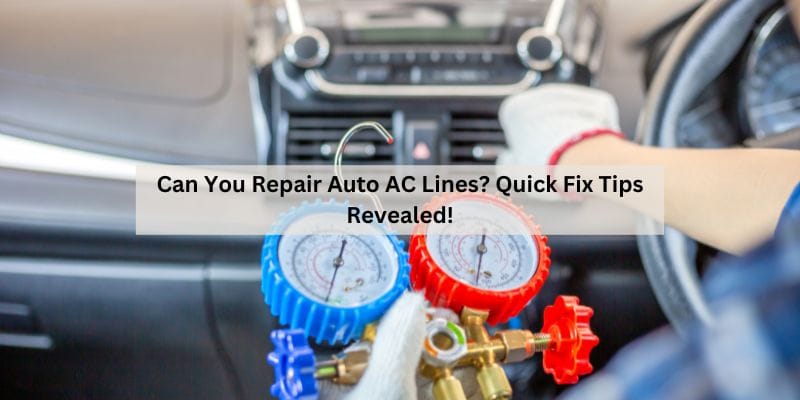
Repairing an AC line requires a short tool list: an AC line splice or repair kit sized to your line’s diameter, a tubing cutter, a deburring tool or fine file, a torque wrench for compression fittings, and safety gloves and eye protection for handling refrigerant and sharp aluminum edges. If you’re brazing instead of using a compression kit, add a torch, brazing rod, and a way to purge the line with dry nitrogen while you work.
Repair kits from brands like Auto Cooling Solutions are built from high-pressure flexible AC hose with pre-crimped aluminum fittings, so the compression side is the only connection you make yourself. Below are a few well-reviewed options depending on your line’s size and how many connectors you need on hand.
Best AC Line Repair Kit Pick
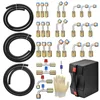
Langina 32-Piece AC Hose and Fitting Kit (#6/#8/#10)
A full assortment of aluminum fittings and three 6.5-ft hose lengths in a labeled toolbox, so you’re not stuck ordering a second kit if the leak is a different diameter than you assumed.
- Best for: DIYers unsure of exact line size, or repairing more than one leak/vehicle
- Why we picked it: Covers 3 common hose diameters and includes R134a service-port fittings in one kit
- Main drawback: Costs more upfront than a single-size splice kit if you only need one repair
Compare more AC line repair kit options
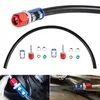 Option 1 800-671 A/C Line Splice Kit, 3/8″ Line
|
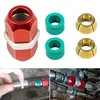 Option 2 800-641 Splice Connector, 3/8″ Aluminum Line
|
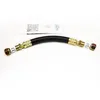 Option 3 Auto Cooling Solutions Repair Kit, 5/8″ O.D.
|
As an Amazon Associate we earn from qualifying purchases.
Is It Legal to Repair Your Own AC Lines? What the EPA Requires
Cutting, splicing, or brazing the line itself is not restricted – the legal issue is what you do with the refrigerant inside it. Under the Clean Air Act, technicians who service or recover refrigerant from a motor vehicle air conditioning (MVAC) system for compensation must hold an EPA-approved Section 609 certification. DIY consumers get a narrow exception: you can buy and add small, self-sealing cans of 2 lbs or less of a substitute refrigerant like HFC-134a without certification, but recovering refrigerant already in the system, or buying it in larger quantities, requires that same certification.
📊 DIY consumers may add small (2 lb or less), self-sealing cans of substitute refrigerant like HFC-134a without EPA certification, but recovering refrigerant already in the system requires Section 609 certification. – Source: EPA, Regulatory Requirements for MVAC System Servicing
In practice, this means most DIYers who splice a line themselves still have a shop recover the existing charge first, then do the mechanical repair, then bring it back (or use a certified mobile service) to evacuate and recharge the system. It’s also why an experienced technician should diagnose and confirm any AC line repair before you drive on it – a poor braze joint or a skipped nitrogen purge can send metal debris straight into the compressor.
How to Repair an AC Line Yourself (Step-by-Step)
- Diagnose and locate the leak: Trace the line for hissing sounds or oily residue, or use a UV dye kit and blacklight to pinpoint the exact damaged spot.
- Recover the refrigerant: Have a certified technician (or a certified recovery machine, if you hold Section 609 certification) pull the existing charge before you cut anything – never vent it to the atmosphere.
- Cut out and clean the damaged section: Use a tubing cutter to remove the corroded or punctured section, leaving clean, square ends, then deburr and wipe away metal shavings.
- Install the splice kit or braze the repair: Slide on the compression fittings and torque them to the kit’s spec, or braze in a new section after purging the line with dry nitrogen.
- Evacuate the system: Pull a vacuum for at least 30-45 minutes to remove air and moisture before recharging.
- Recharge and test for leaks: Recharge with the correct refrigerant type and amount, then recheck every repaired joint with UV dye or a sniffer before closing everything up.
Professional vs. DIY Repair: Which Should You Choose?
Repairing AC lines is a delicate process because it involves refrigerant, which can be dangerous and is federally regulated when it’s being recovered or purchased in bulk. A few situations point clearly toward calling a professional rather than doing the repair yourself:
- You’re not certified to recover or handle refrigerant beyond a small top-off can.
- The damage is on a rear line, buried under the dash, or otherwise hard to reach.
- The line is deeply corroded rather than showing one isolated pinhole leak.
- The factory line for your make and model is discontinued or prohibitively expensive as an OEM part.
Hiring a professional costs more upfront, but it guarantees the refrigerant is recovered and recharged correctly and that the repair is diagnosed properly the first time. If you have experience with refrigerant handling and the damage is a single, accessible pinhole leak, a splice kit is a reasonable and much cheaper DIY option.
“If it’s hard aluminum tubing, this is an ‘AC line’… the kit splices into the aluminum line and creates a permanent flexible repair section,” while a damaged rubber hose section is “usually replaced as a complete hose assembly” rather than spliced.
– Auto Cooling Solutions, AC Line vs. AC Hose Repair Guide
How Much Does It Cost to Repair or Replace AC Lines?
Cost depends almost entirely on whether the damage qualifies for a splice repair or requires a full line replacement. A DIY splice kit is the cheapest fix by a wide margin, but a complex or discontinued line can push a professional replacement well past $1,000.
| Repair Method | Typical Cost | Best For |
|---|---|---|
| DIY splice/repair kit | $39-$52 | One isolated pinhole leak on an accessible straight section |
| Professional line replacement (single line) | $978-$1,058 | Mid-section leak, or you don’t want to handle brazing/recovery yourself |
| Full OEM line replacement (rear/complex routing) | $1,200-$2,400 | Discontinued, deeply corroded, or hard-to-reach factory lines |
RepairPal’s cost estimator puts the average professional refrigerant line replacement at $978 to $1,058, with parts making up roughly $807 of that and labor running $171 to $251. Getting an exact quote from a local mechanic is still the most reliable way to budget, since the make, model, and which specific line failed all move the number significantly. For a full breakdown of what drives AC repair pricing beyond just the line itself, see our guide on how much it costs to fix an AC leak in a car.
Preventing Future AC Line Problems
Most AC line failures come from slow corrosion or vibration fatigue rather than a sudden event, which means a few routine habits catch the problem while it’s still a cheap fix instead of a full replacement. These same habits are covered across our broader automotive services library, from AC diagnostics to general maintenance:
- Visually inspect AC lines for wear, rubbing points, and corrosion at least once a year.
- Check the AC system for leaks and refrigerant loss before the start of hot weather season.
- Address small drops in cooling performance promptly – waiting almost always turns a splice-kit repair into a full replacement.
- Watch for moisture or an oily film around fittings and lines, which is usually the earliest visible sign of a developing leak. If you want a full diagnostic walkthrough, see our guide on how to find an AC leak in your car.
If a repair does require recovering and recharging refrigerant and you’d rather not schedule a shop visit for that step alone, see our guide on how to remove refrigerant from a car AC system without a recovery machine for the DIY-legal small-can approach.
Frequently Asked Questions
Can a car AC line be repaired?
Yes. A leak in an accessible section of aluminum line or rubber hose can usually be spliced or brazed for $39-$52 in parts. Deeper corrosion or damage at a hard bend typically means the line needs full replacement instead, which is best confirmed by an experienced technician.
Can refrigerant lines be repaired?
Yes, but the refrigerant has to be recovered before the line is cut open and recharged afterward – it can’t just be vented. The copper or aluminum line should also be purged with dry nitrogen during the repair to keep metal debris and moisture out of the compressor.
Can car air con pipes be repaired?
Yes – “air con pipes” is the same component as an AC line, just different regional terminology. An experienced technician can diagnose and repair it the same way, though the approach depends on whether the damage is on the rigid pipe or a flexible hose section.
How much does it cost to replace AC lines in a car?
A DIY splice kit runs $39-$52. A professional line replacement averages $978-$1,058, and a full OEM replacement on a discontinued or hard-to-reach line can run $1,200-$2,400. Get a shop estimate for your specific make and model before committing to either route.
What’s the difference between an AC line and an AC hose?
An AC line is rigid aluminum tubing on a fixed route; an AC hose is the flexible rubber section that connects those lines to components like the compressor. Lines are usually repaired with a splice kit, while damaged hose sections are more often replaced as a complete assembly.
Do you need a certification to recharge your car’s AC system yourself?
No, not to add a small, self-sealing can of 2 lbs or less of a substitute refrigerant like HFC-134a – that’s a legal DIY exception under EPA rules. But recovering refrigerant that’s already in the system, or buying it in larger quantities, requires EPA Section 609 certification.
Conclusion
Repairing auto AC lines is possible in most cases – a $39-$52 splice kit or brazed repair handles an isolated leak in an accessible section, while deep corrosion, hard-to-reach lines, or discontinued OEM parts point toward full replacement. Have an experienced technician confirm the diagnosis and handle refrigerant recovery, since that step is both a safety issue and, for anything beyond a small top-off can, federally regulated. Get a repair-vs-replace quote from a local shop before deciding which route makes sense for your vehicle.
Products related to this article
Sponsored / affiliate links. As an Amazon Associate I earn from qualifying purchases. I may earn additional commission from eligible campaigns.