How to Find an AC Leak in Your Car (4 Methods That Work)
A car AC leak lets refrigerant escape, which causes the system to lose cooling ability — usually within days to weeks of the first symptoms. The most reliable detection methods are UV dye injection (most precise for small leaks), an electronic refrigerant sniffer (fastest), and a soap bubble test (no tools needed). This guide covers all four methods in order of reliability, the most common leak locations, and what repair costs to expect if you find one.
Quick Answer
To find an AC leak in your car: (1) inject UV dye and scan with a UV light for glowing spots, (2) use an electronic refrigerant sniffer near hoses and fittings, or (3) spray soapy water on AC components and look for bubbles. The most common leak points are the evaporator coil, compressor shaft seal, and O-ring fittings.

Recognizing AC Leak Symptoms
Best AC Leak Detector Pick
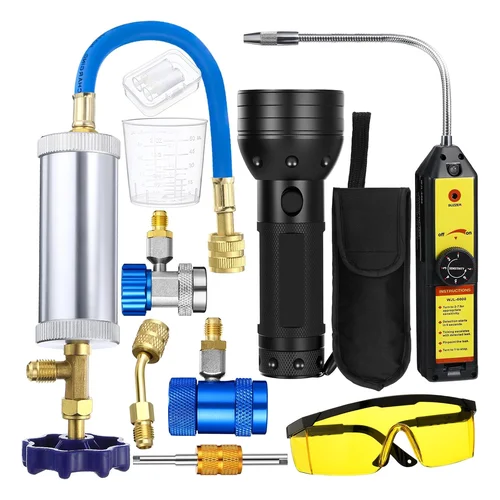
Electronic Refrigerant Leak Detector (R134a / R1234yf)
Audible beep detector that scans the full AC system in minutes — works on both R134a and R1234yf refrigerants found in most vehicles.
- Best for: Quickly scanning the entire AC system without disassembly
- Why we picked it: Works on both refrigerant types; no dye injection needed
- Main drawback: Won’t pinpoint micro-leaks as precisely as UV dye
Compare more AC leak detection options
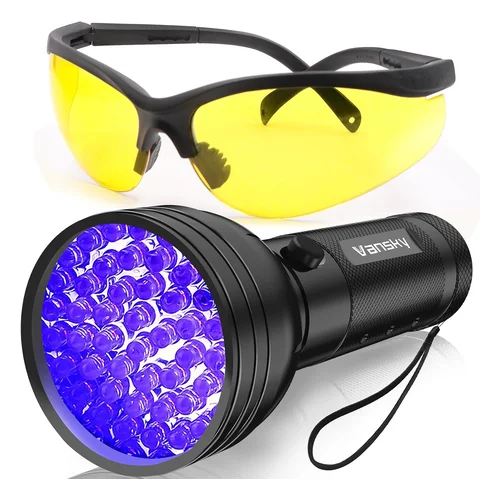 Option 1 UV Dye AC Leak Detection Kit
|
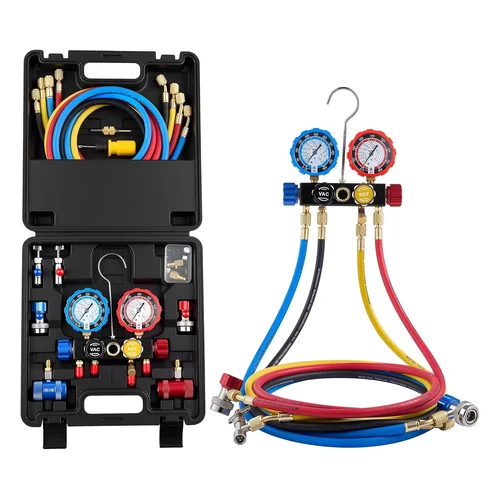 Option 2 AC Manifold Gauge Set
|
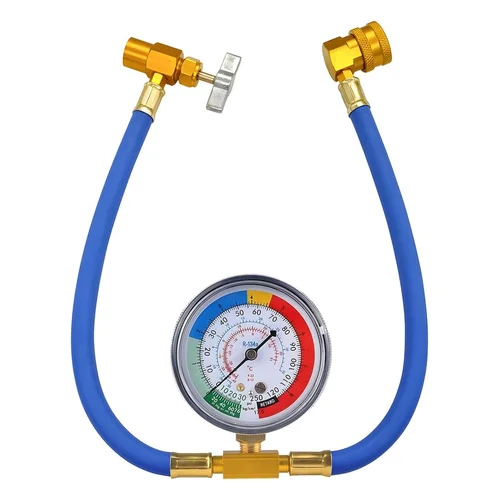 Option 3 AC Stop Leak & Recharge Kit (DIY)
|
As an Amazon Associate we earn from qualifying purchases.
Weak or warm airflow is the clearest symptom — if the AC blows air but it’s not cold, refrigerant has likely leaked out. Hissing sounds from under the hood while the AC runs often indicate an active refrigerant leak under pressure. You may also notice oily residue around hose connections or fittings — refrigerant carries AC oil with it when it escapes, leaving a visible film. A sweet or chemical smell inside the car can indicate refrigerant entering the cabin, usually from an evaporator leak. If you’ve noticed the AC slowly getting weaker over several weeks, a small refrigerant leak is the most likely cause.
Tools Needed For Leak Detection
Finding an AC leak requires at least one of the following: a UV dye kit (most thorough), an electronic refrigerant sniffer (fastest), or a soap solution (simplest). You’ll also need a flashlight, gloves, and safety glasses for any under-hood work.
Basic Tool Kit
A flashlight helps spot oily residue and discoloration in dark areas around hoses and fittings. A mirror lets you inspect connections at the back of the compressor or condenser without reaching blindly. Clean rags are useful for wiping components before inspection — oil residue stands out better on a clean surface.
Specialized Equipment
A UV leak detection kit (UV dye + UV flashlight) is the gold standard — it finds leaks too small to see with the naked eye. An electronic refrigerant sniffer beeps when it detects refrigerant concentration in the air, letting you scan the entire system quickly without opening anything. A manifold gauge set confirms refrigerant pressure — low pressure on the low-side gauge (below 25 psi at idle) with AC running is a strong indicator of a leak. If you need to read AC gauges on your car, our dedicated guide covers that process in detail.
Best AC Leak Detectors for Cars
An electronic refrigerant leak detector (also called an AC sniffer) is the fastest way to check car AC for leaks — it takes about 5 minutes to scan the full system versus 30+ minutes for a UV dye test. Most quality detectors work on both R134a (pre-2013 vehicles) and R1234yf (most 2017+ vehicles). UV dye kits are more precise for pinpointing tiny leaks but require running the car and waiting for dye to circulate. DIY stop-leak kits ($70–$160) work for minor O-ring or seal weeps but should not be used on compressor or evaporator leaks.
Inspecting AC Components
Start with a visual inspection before using any tools. Look for oily residue or discoloration around hoses, fittings, and the compressor — refrigerant carries AC oil with it, so a greasy film on a connection is a strong sign of a leak. Check the condenser (the radiator-like unit in front of the radiator) for bent fins or physical damage, which can cause refrigerant loss. Feel hoses gently for wet or sticky spots. If you need to know if your car needs Freon, warm air combined with oily residue on fittings is the clearest signal.
Using UV Dye For Detection
UV dye is the most precise method for finding small AC leaks. The dye is compatible with both R134a and R1234yf systems. Add only the amount specified by the kit — too much dye degrades the AC oil and can damage the compressor. After injection, run the AC for 15 minutes to circulate the dye, then use the UV light (included in most kits) to scan all hoses, fittings, the compressor shaft seal, and the condenser. Glowing yellow-green spots indicate the leak source. Mark any leak sites before starting the repair.
Performing A Soap Bubble Test
The soap bubble test works for active leaks with enough system pressure to push refrigerant out. Mix dish soap with water in a spray bottle and apply it to AC hose connections, the compressor fittings, and Schrader valve caps. Bubbles forming at any point confirm refrigerant is escaping there. This method works best on larger leaks — it will miss very slow leaks that a UV dye or electronic sniffer would catch.
Preparing The Solution
Mix a few drops of dish soap with water in a small spray bottle. The solution should be foamy but thin enough to spray — a too-thick paste won’t spread properly across fittings.
Identifying Leaks
Spray the solution on AC pipes, hose ends, O-ring connections, and the compressor fittings. Watch for bubbles forming within 30 seconds. Tiny, slow-forming bubbles mean a small leak; vigorous bubbling means a larger one. Mark any leak sites with tape before moving on.
Listening For Hissing Sounds
Turn the engine on and switch the AC to maximum. Listen near the compressor, high-pressure hose, and condenser connections. A hissing or whistling sound that stops when the AC is turned off points to an active refrigerant leak under pressure. Use the soap spray to confirm the exact location — sound alone can’t pinpoint it.
Checking Refrigerant Levels
Connect a manifold gauge set to the AC low-side service port (the larger fitting, usually on the accumulator or suction hose). With the engine running and AC on maximum, a normal low-side reading is 25–45 psi. A reading below 20 psi strongly indicates a refrigerant leak. Compare high-side pressure too — both sides reading low confirms the system is low on refrigerant, not just a pressure sensor fault. For a full walkthrough, see our guide on how to read AC gauges on a car. Also check out how often to refill Freon in a car to understand normal refrigerant consumption versus leak-related loss.
How to Fix a Car AC Leak
The fix depends on where the leak is. O-ring and fitting leaks are the most common and cheapest to fix — a shop typically charges $100–$250 for O-ring replacement including refrigerant recharge. Compressor shaft seal leaks cost $300–$600 to repair. Evaporator leaks are the most expensive — the evaporator is buried inside the dashboard and replacement typically costs $800–$2,600 in labor alone. Condenser leaks (from road debris damage) run $300–$700. Note: only EPA Section 609–certified technicians are legally permitted to recover or recharge automotive refrigerant — you can locate the leak yourself but the recharge step requires a professional unless you own certified recovery equipment.
Seeking Professional Help
Seek a professional when: the AC loses cooling repeatedly after recharges (indicates an ongoing leak too large for stop-leak), when you smell refrigerant inside the cabin (evaporator leak — requires dashboard disassembly), or when the compressor makes grinding or rattling noises (leak has allowed oil loss, damaging the compressor). Look for ASE-certified shops with AC/heating specialization. Always ask for a written estimate before authorizing refrigerant work — refrigerant itself (especially R1234yf at ~$50–$70 per pound) is a significant cost on top of labor.
When To Consult Experts
If the AC stops blowing cold within days of a recharge, or if you hear compressor grinding, stop driving with the AC on and book a shop inspection. Continued use with a severe leak can seize the compressor — a $1,500+ failure that’s entirely preventable.
Choosing A Repair Shop
Look for ASE-certified technicians and shops with dedicated AC equipment (recovery machine, leak detector, refrigerant scale). Ask whether they charge for the leak diagnosis separately from the recharge — a reputable shop will find the leak before recharging, not just top up the refrigerant.
Frequently Asked Questions
Where Is The Most Common Place For A Car AC Leak?
The most common leak locations in a car AC system are the evaporator coil (slow leaks, often smelled before seen), O-ring fittings at hose connections (most repairable), and the compressor shaft seal (develops with age or low oil). The condenser can also leak from road debris impact.
How To Find Air Conditioner Leak On A Car?
Inspect hoses and connections for oily residue, then use a UV dye kit or electronic refrigerant sniffer to pinpoint the source. Electronic sniffers are fastest; UV dye is most precise for small leaks. Confirm with a manifold gauge — low side pressure under 20 psi with AC running confirms refrigerant loss.
How Do I Find Out Where My AC Is Leaking?
Start with a visual inspection for oily residue at fittings and hoses. Then use an electronic sniffer to scan the system, or inject UV dye, run the AC for 15 minutes, and scan with a UV light. Common leak points are the evaporator coil, compressor seal, and O-ring connections. A professional with a recovery machine can also perform a pressure decay test for hard-to-find leaks.
What Is The Most Common Leak In A Car AC System?
Refrigerant leaks from degraded rubber O-rings and hose connections are the most common. Rubber seals harden and crack with age and heat cycles, allowing refrigerant to escape slowly. Evaporator coil leaks are the second most common and the hardest to access for repair.
Can I fix a car AC leak myself?
You can locate the leak yourself using UV dye or an electronic sniffer. Minor O-ring leaks can be sealed with a DIY stop-leak kit ($70–$160) on R134a systems. However, adding refrigerant legally requires EPA Section 609 certification — without it, you can use a self-sealing recharge can (which includes refrigerant + stop-leak) for small leaks on R134a vehicles. R1234yf vehicles should be serviced by a professional.
Conclusion
Finding an AC leak in your car starts with reading the symptoms — warm air, hissing sounds, or oily residue near fittings. Use an electronic sniffer for a fast scan, UV dye for precision, or a soap test if the leak is large enough. Once you’ve located the leak, small O-ring fixes cost $100–$250 at a shop; evaporator or compressor repairs can reach $2,600. Catching it early — before the compressor runs dry — keeps the repair cost manageable.
Products related to this article
Sponsored / affiliate links. As an Amazon Associate I earn from qualifying purchases. I may earn additional commission from eligible campaigns.