Best Car Inverter Chargers for Vehicles (2026): We Compared
For laptops and CPAP machines, a 300W pure sine-wave inverter with battery clamps is the best buy; 150W plug-in units are for phones, tablets, and most accessories only. Pick the wrong path and you can trip the outlet, starve a compressor, or overwork a sensitive load. This guide ranks compact inverter chargers by use case and shows which devices work from a 12V socket versus battery clamps.
Quick comparison
| Product | Badge | Best for | Price | ||
|---|---|---|---|---|---|
 |
BELTTT 1500W Pure Sine Wave Inverter 12V to 110V Converter,BELTTT | Our pick | 1500W · Pure Sine Wave · Dual Outlets | $139.99
Price as of 19 Oct 2026
|
View |
 |
Renogy Inverter P2 3000W, 12V to 110V Pure Sine Wave SolarRenogy | Upgrade pick | 3000W · Pure Sine Wave · Remote Control | $414.99
Price as of 19 Oct 2026
|
View |
The ranking below starts with the load path, then checks wattage. That matters because a 300W inverter can still be the wrong fit if the car’s socket is fused below the draw, while a battery-clamp model can make the same wattage usable.
Top line: BESTEK’s 500W pure sine wave inverter is the safest choice for sensitive electronics, BESTEK’s 300W unit is the strongest socket-friendly laptop pick, and FOVAL’s 150W model is the cleanest fit for phones and light USB charging.
📊 Car and Driver’s Energizer inverter is rated for 500W when connected to the battery. Source: Best Car Power Inverters for 2026, Tested.
How we chose
We compared continuous watt rating, peak headroom, and the connection path. A model that can only work from battery clamps is not the same thing as a plug-in unit that fits a cigarette-lighter socket.
We also weighed port mix, because USB-C Power Delivery matters for modern laptops and tablets, while plain USB-A still covers most phones. AC outlets matter when a device needs its own wall charger or when the load is not USB-native.
Finally, we looked at the failure points buyers run into most often: socket fuse ceilings, overload trips, heat buildup, and fan noise. Those are the reasons an inverter fails in real use before the watt number on the box runs out.
BESTEK 300W power inverter: best for laptops
For a laptop-heavy road kit, this is a practical plug-in balance of wattage and portability. BESTEK says this inverter delivers 300 watts of continuous DC-to-AC power and 700 watts of instantaneous power, and includes two AC outlets plus two USB ports, all in an aluminum housing with a built-in fuse and a replacement warranty.
It fits drivers who need one charger for a laptop, a phone, and maybe a tablet at the same time. The 11-17V compatibility is useful in vehicles with slightly variable system voltage, and the dual outlets give you room to keep a laptop charger on AC while a second device rides on USB.
The honest drawback is the connection path. A 300W label does not mean every 12V socket can support it. Many vehicle sockets are fused lower than the inverter’s full draw, so this model is best when your truck or car socket is known to handle the load, or when you are moving to battery clamps.
FOVAL 150W car power inverter: best for phones
The FOVAL unit is the compact pick. It provides 150 watts of continuous power, two USB ports, one AC outlet, and a 3.1A total USB output, all in a credit-card-sized footprint with an aluminum shell design and weight listed at 8 oz+.
That makes it the cleanest match for phones, earbuds, tablets, dash cams, and small travel accessories. It is also the least awkward choice when storage space matters, because the unit stays small enough to leave in a glovebox or door pocket.
The drawback is plain: 150 watts will not cover every laptop. It can handle light charging, but it leaves little room for combined loads, and the single AC outlet means you are planning around one wall-style charger at a time.
BESTEK 500W pure sine wave inverter: best for sensitive electronics
BESTEK’s 500W pure sine wave model is the premium safety pick for electronics that care about waveform quality. It offers 500W continuous output, a pure sine wave waveform, and two AC outlets, and the company describes pure sine wave output as matching mains electricity.
That lower THD matters for sensitive electronics, especially CPAP machines and precision equipment that can react poorly to noisier modified sine wave output. It is also the better fit when radio interference would be a problem, or when you want fewer surprises from a device with a picky power supply.
The drawback is that this class of inverter usually expects battery clamp connection. That is not a minor detail. It means the better electrical path may also bring hidden cost, because you may need clamps or extra wiring instead of a simple 12V plug.
Car inverter chargers table
| Device | Estimated draw | Compatible inverter wattage | Socket enough? | Connection type | Likely failure point if under-specced |
|---|---|---|---|---|---|
| Laptop | 45-100W for many chargers | 150W minimum; 300W gives headroom | Usually yes for one laptop, if the socket fuse is adequate | 12V plug for light loads; clamps if charging with other gear | Overload trip or socket fuse blow when the charger and another load run together |
| Phone | 5-20W | 150W is more than enough | Yes | 12V plug | Usually none unless multiple devices overload the USB section |
| Tablet | 10-30W | 150W or 300W | Yes | 12V plug | Weak USB output or a charger that cannot hold voltage under load |
| CPAP machine | 30-90W for many units; higher with humidifier | 300W minimum; pure sine wave preferred | Often no if humidity or startup surge is involved | Battery clamps are the safer answer | Noise, waveform errors, or shutdown from surge or low-voltage cutoff |
| Mini cooler | 40-60W running, higher at startup | 300W to 500W | Sometimes, but not reliably for long runs | Clamp connection preferred | Compressor start surge can trip protection or stall the inverter |
| Breast pump | Often 20-60W depending on model | 150W to 300W | Usually yes | 12V plug is often enough | Motor noise, unstable output, or a charger that cannot sustain dual-device use |
| Small compressor | 100-300W running, higher at startup | 400W to 500W | No, not safely in most cars | Battery clamps | Instant overload trip or a blown socket fuse on startup |
Which one should you buy?
If your load is a laptop plus a phone, start with the BESTEK 300W inverter. It gives you a workable margin over a basic 150W unit, and the dual AC outlets matter if the laptop brick is bulky.
If your kit is phones, tablets, earbuds, and travel accessories, the FOVAL 150W unit is enough and easier to stash. A common first-timer mistake is buying more wattage than the socket can safely supply, then discovering the car fuse is the real limit.
If you are powering a CPAP machine, a mini cooler, or any device with startup surge or waveform sensitivity, the BESTEK 500W pure sine wave model is the right direction. It costs more in the real world because the clamps or wiring may be extra, but that extra path is often part of the usable solution.
Say your car has a 12V socket that already feeds a dash cam and a radar detector. A 300W inverter plus a laptop charger can push the outlet past its comfort zone, so the better answer is battery clamps instead of hoping the socket fuse will cooperate.
What can you power with a 300W car inverter charger?
A 300W inverter can usually handle a laptop, phone charging, a tablet, and a few small accessories at the same time, as long as their combined draw stays below the continuous rating. It is not a compressor class or kitchen appliance class solution, and it should not be treated like one.
The practical rule is simple: one laptop plus one phone is sensible; one laptop plus a mini cooler may not be. Peak watts help only with short startup bursts. They do not turn a small inverter into a long-duration power source for bigger loads.
Do you need pure sine wave or modified sine wave in a car inverter?
Pure sine wave is the safer choice for sensitive electronics, especially CPAP machines, precision equipment, and devices that are more likely to complain about noise or waveform distortion. The benefit is lower THD, less radio interference, and output that is closer to household power.
Modified sine wave can be enough for simple chargers, many phones, and some laptop bricks. If the device already converts AC to DC internally and is not picky, modified sine wave is often acceptable. The moment the load is medical, motor-driven, or finicky, pure sine wave becomes the better answer.
Can a cigarette-lighter socket run a car inverter charger safely?
Yes, but only for the right size inverter and the right load. A cigarette-lighter socket is fine for low-draw charging, but it is not a universal pathway to 300W or 500W operation. The socket’s fuse, wire gauge, and heat tolerance set the real ceiling.
When the inverter’s continuous draw approaches the vehicle’s socket limit, battery clamps are the correct answer. The warning signs are repeated shutdowns, a hot plug, fan noise ramping up under load, or a fuse that keeps popping when you connect anything beyond a phone charger.
Are USB-C ports worth it on a car inverter charger?
Yes, when you carry modern tablets, newer phones, or a laptop that can charge over USB-C Power Delivery. USB-C matters because it can remove the need for a separate AC brick, which saves space and can reduce cable clutter on the dash or console.
They are not mandatory for every buyer. If your gear already uses standard AC adapters, or if your USB needs are limited to phones, a strong USB-A section and one AC outlet may be enough. BESTEK’s MRI3011BU-PD30W is the clearest example here, with 30W USB-C Power Delivery, 18W QC USB-A, dual AC outlets, dual USB ports, Tesla 16V compatibility, and a metal housing.
When do I need battery clamps instead of a 12V plug?
You need battery clamps when the inverter’s useful load exceeds what the vehicle socket can carry, or when the device itself has surge demand that the socket path cannot handle cleanly. This is common with 400W to 500W inverters and with loads like compressors, some mini coolers, and CPAP setups with humidifiers.
That is why the Energizer 500W unit matters as a battery-connected choice. It offers 500W capability when connected to the battery, four USB ports, two 120V AC outlets, alligator clamps, and a 32.5-inch cord. The extra wiring is part of the capability.
What happens if you exceed the inverter wattage?
The inverter usually shuts down, trips protection, or blows its fuse before the connected device gets usable power. If the overload is brief, you may just see a fault light or reset. If it keeps happening, heat builds, efficiency drops, and the inverter may cycle off repeatedly.
That is why continuous wattage matters more than marketing peak numbers. Peak output is short-lived. Continuous output is the number that has to cover the actual load, plus any startup surge and any other device running at the same time.
What is the best car inverter charger for a laptop?
The best laptop choice is a 300W class inverter with enough outlet flexibility to support the charger brick and a second accessory. For many drivers, BESTEK’s 300W unit is the cleanest socket-friendly answer, while a pure sine wave 300W or 500W clamp-fed model is better if the laptop shares power with more gear.
If your laptop uses USB-C charging, a model with USB-C PD can simplify the setup. If it still needs AC, two AC outlets matter more than a high USB count.
How many watts do I need for a car inverter charger?
Match the inverter to the combined load, not the largest single item alone. Phones and tablets can live in the 150W range, a laptop setup often fits 300W, and sensitive or surge-prone gear pushes you toward 300W to 500W with better connection hardware.
If you expect more than one device at once, add the watts together and leave margin for startup surge. That is the part buyers miss most often.
Can a car inverter charger run a CPAP machine?
Yes, but the inverter choice matters. A CPAP machine is one of the clearest cases for pure sine wave output, lower THD, and battery clamps if the machine includes a humidifier or has a meaningful startup surge. The wrong inverter can be noisy, unstable, or too small.
For CPAP, the safe path is usually a 300W or 500W pure sine wave model, with the connection type chosen around the machine’s actual draw and the vehicle’s socket limit.
Which car inverter charger is best for road trips?
The best road-trip inverter is the one that matches your mix of phones, tablets, laptops, and one oddball device without forcing a second purchase later. For many travelers, that means a 300W inverter with both AC and USB ports, plus a clamp option if the trip includes heavier gear.
If the trip is light and mostly charging phones, the 150W class is easier to carry and easier on the car’s socket. If the trip includes a CPAP machine or a mini cooler, step up to pure sine wave and battery clamps.
Products related to this article
Sponsored / affiliate links. As an Amazon Associate I earn from qualifying purchases. I may earn additional commission from eligible campaigns.
 300W Power Inverter Compatible with Dewalt, DC 20V to AC 110-120V Battery Inverter, Portable Battery Adapter Charger Converter with 3 USB & 1 Type-C & 2 AC Outlet for Outdoor,Emergency(Tool Only)
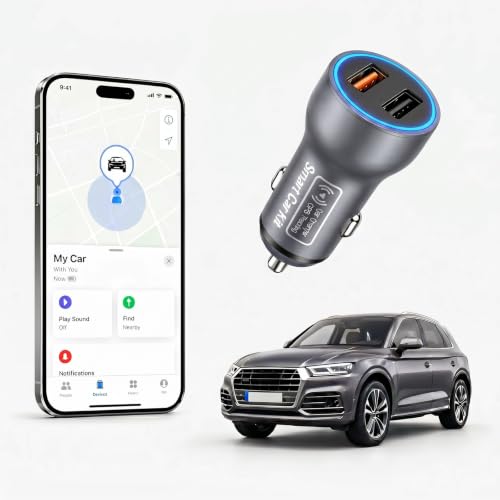 Grey Car GPS Tracker for Vehicles, 2 in 1 Cigarette Lighter Locator with Dual USB Ports, Plug & Play Vehicle Location Tracker Compatible with Apple Find My, No Monthly Fee No SIM Card, Gray (iOS Only)