
Can You Use High Mileage Oil In A New Car: Proven Dangers
Using high-mileage oil in a new car is not recommended and can be harmful. Its special additives, designed for older engines, can interfere with the tight seals of a new engine, potentially causing damage and voiding your warranty. Always stick to the oil type recommended by your car’s manufacturer for optimal performance and protection.
Walking down the car care aisle can feel overwhelming. You see bottles labeled “Full Synthetic,” “Conventional,” and then you spot it: “High-Mileage Oil.” It sounds impressive, right? It promises to protect and rejuvenate older engines. This leads to a common question: if it’s so good for old cars, wouldn’t it be even better for a new one? It’s a logical thought, but the answer might surprise you.
Caring for a new car means making the right choices from the very beginning. Using the correct oil is one of the most important things you can do. In this guide, I’ll walk you through exactly what high-mileage oil is, why it’s not the right choice for your new vehicle, and what you should be using instead. We’ll clear up the confusion so you can feel confident you’re giving your new car the best care possible.
What Exactly Is High-Mileage Oil?
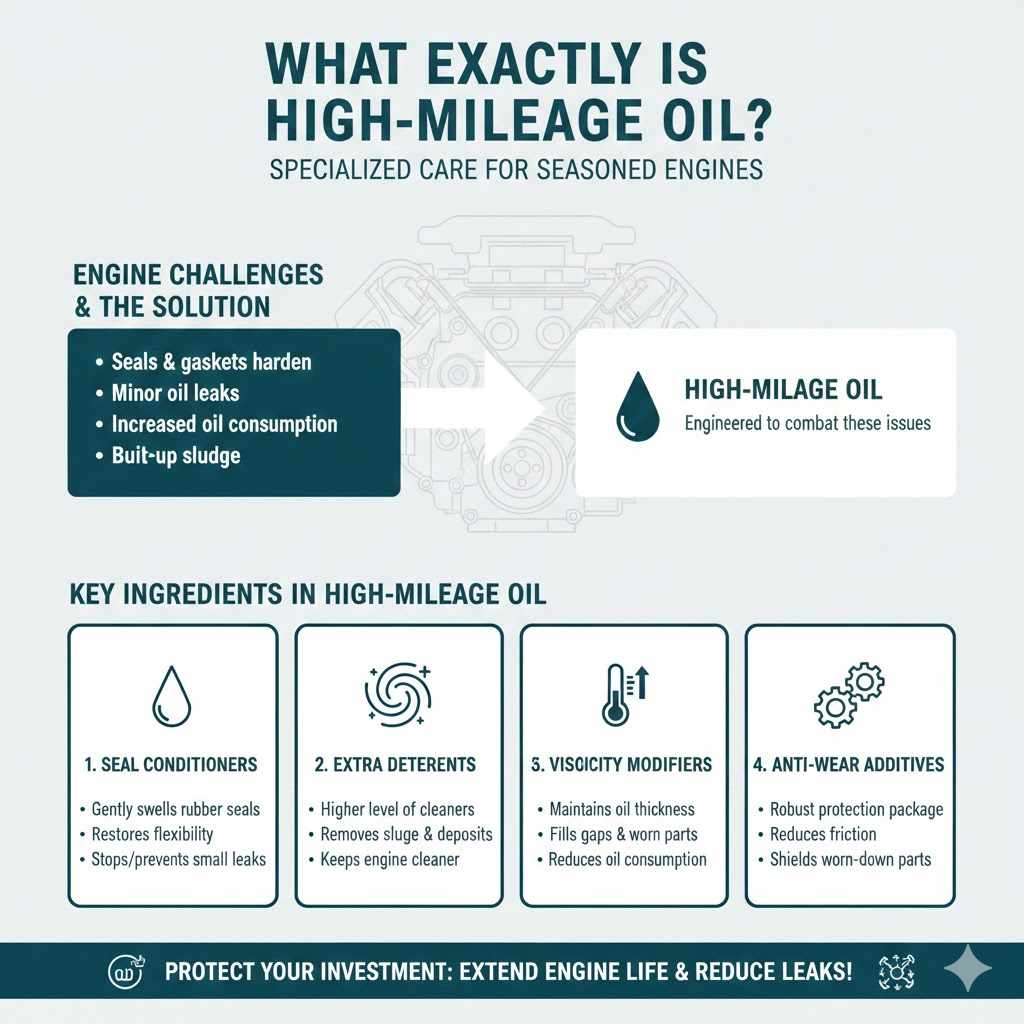
Before we dive into the dangers, let’s first understand what makes high-mileage oil special. Think of it as a specialized formula for seasoned vehicles. High-mileage oil is specifically engineered for cars with more than 75,000 miles on the odometer. As engines age, they face a unique set of challenges, and this oil is designed to meet them head-on.
Over time, the seals and gaskets in an engine can become hard and brittle. This can lead to small oil leaks. Also, older engines might burn a little more oil or have built-up sludge from years of use. High-mileage oil contains special additives to combat these specific issues.
Key Ingredients in High-Mileage Oil
The magic of high-mileage oil comes from its unique blend of additives. These are ingredients you won’t find in the same concentration in standard motor oils. Here’s a look at what’s inside:
- Seal Conditioners: These are the star players. Seal conditioners are chemicals that cause rubber seals to gently swell. In an older engine with shrunken, hardened seals, this helps them regain their original shape and flexibility, which can stop or prevent small oil leaks.
- Extra Detergents: Over the years, engines can accumulate sludge and other deposits. High-mileage oils contain a higher level of detergents to help clean out this gunk and prevent new deposits from forming, keeping the engine cleaner.
- Viscosity Modifiers: These help the oil maintain its proper thickness (viscosity) at high temperatures. In older engines, parts can wear down, creating larger gaps. A slightly thicker oil can help fill these gaps, improving compression and reducing oil consumption (burn-off).
- Anti-Wear Additives: While all oils have anti-wear additives, high-mileage formulas often include a more robust package to protect worn-down engine parts from further friction and damage.
High-Mileage Oil vs. Standard Oil: A Clear Comparison
So, how does this specialized formula stack up against the conventional or synthetic oil your new car probably calls for? The differences are significant because they are designed for engines at completely different stages of their life.
A new engine is a pristine, finely-tuned machine. The clearances between moving parts are extremely tight, and the seals are fresh, soft, and pliable. It doesn’t have sludge buildup and its seals don’t need “swelling.” It requires an oil that can flow quickly into those tight spaces to provide instant lubrication, especially on a cold start.
Here is a table to help you see the differences at a glance:
| Feature | Standard Oil (Conventional or Synthetic) | High-Mileage Oil |
|---|---|---|
| Target Engine Age | New to mid-life engines (under 75,000 miles) | Older engines (over 75,000 miles) |
| Seal Conditioners | Minimal or none. Formulated to maintain new seals. | High concentration to swell and restore old, brittle seals. |
| Detergent Levels | Standard levels to keep a clean engine clean. | Elevated levels to break down existing sludge and deposits. |
| Viscosity | Typically lower (e.g., 0W-20, 5W-20) for modern, tight-tolerance engines. | Often slightly thicker or has modifiers to maintain thickness under stress. |
| Primary Goal | Protect new components, reduce friction, maximize fuel economy. | Address wear and tear, stop leaks, clean deposits, and reduce oil burn-off. |
The Proven Dangers of Using High-Mileage Oil in a New Car
Now we get to the heart of the matter. Using a product designed for an old engine in a new one isn’t just unnecessary—it can be actively harmful. Here are the proven dangers you should be aware of.
1. Damaging Your New Engine’s Seals
The most significant risk comes from the very thing that makes high-mileage oil effective for older cars: the seal conditioners. In an old engine, these additives are a blessing. They soak into dried-out rubber seals, causing them to swell and plug up tiny leaks.
However, the seals in your new car are already in perfect condition. They are soft, flexible, and precisely sized to do their job. When you introduce powerful seal-swelling agents to these healthy seals, you can cause them to swell too much. This over-swelling can lead to several problems:
- Premature Wear: A seal that is overly soft and swollen can wear out much faster, leading to the very leaks you were hoping to avoid down the road.
- Increased Friction: Swollen seals can create extra drag on moving parts like the crankshaft, which can slightly reduce engine performance and fuel efficiency.
- Potential for Damage: In some cases, a seal can become so soft and distorted that it fails completely, leading to a significant oil leak that requires expensive repairs.
2. Introducing Unnecessary Additives
Your new car’s engine is a clean slate. It doesn’t have decades of sludge and carbon deposits built up inside. The potent detergents in high-mileage oil are designed for a heavy-duty cleaning job that simply isn’t needed in a new engine.
While it might sound like “extra clean” is a good thing, modern engine oils are a delicate balance of chemicals. Introducing a high concentration of detergents that your engine doesn’t need can disrupt this balance. The oil recommended by your manufacturer is formulated with the perfect blend of additives to protect your new engine, and altering that chemistry isn’t a good idea.
3. Voiding Your Car’s Warranty
This is a big one. Every new car comes with a manufacturer’s warranty that covers repairs for a certain period or mileage. However, this warranty comes with conditions. One of the most important conditions is that you must perform regular maintenance using fluids and parts that meet the manufacturer’s specifications.
Your owner’s manual will clearly state the required oil viscosity (like 0W-20) and performance standard (like API SP or ILSAC GF-6). High-mileage oils may not always meet these exact specifications. If you have an engine problem and the dealership discovers you’ve been using the wrong type of oil, they can deny your warranty claim. According to the Federal Trade Commission, you must use fluids that meet the car’s specifications to keep your warranty intact. Risking a multi-thousand-dollar repair to use the wrong oil is a gamble you don’t want to take.
4. Causing Lubrication Problems
Modern engines are designed with incredibly tight tolerances. The space between moving parts is measured in thousandths of an inch. To protect these parts, they need a thin, low-viscosity oil that can flow quickly into these tiny gaps, especially when the engine is cold.
Many high-mileage oils are slightly thicker (have a higher viscosity) than the oils specified for new cars. Using an oil that’s too thick can lead to “oil starvation” in critical areas during startup. This means it takes longer for the oil to reach components like the camshafts and valve lifters, causing increased wear during the most vulnerable moments of engine operation.
5. Wasting Your Money
Finally, there’s the simple matter of cost. High-mileage oils are typically more expensive than conventional oils and often cost as much as full synthetic oils. You would be paying a premium for special additives that not only provide no benefit to your new car but could potentially cause harm. It’s far better to invest that money in the high-quality synthetic oil that your manufacturer actually recommends.
So, What Oil Should You Use in a New Car?
The answer is simple and straightforward: use the oil your car’s manufacturer recommends. They designed and built the engine, so they know exactly what it needs to run reliably for years to come.
Step 1: Consult Your Owner’s Manual
This is your car care bible. Your owner’s manual is the single most important source of information for your vehicle. It will have a dedicated section on fluid specifications. Look for the page on “Engine Oil” or “Recommended Fluids.” It will tell you two crucial pieces of information:
- Viscosity Grade (e.g., SAE 5W-30): This tells you how thick the oil is at cold and hot temperatures. Using the correct viscosity is critical for both protection and fuel economy.
- Performance Standard (e.g., API SP or ILSAC GF-6): This indicates that the oil has passed a series of tests for quality, performance, and engine protection. Always use an oil that meets or exceeds the standard listed in your manual.
Step 2: Check the Oil Cap
Most manufacturers make it even easier by printing the recommended viscosity grade right on the engine oil filler cap. If you pop your hood, you’ll likely see something like “SAE 0W-20” on the cap. This is a quick and easy reminder of what your engine needs.
Step 3: Choose the Right Type of Oil
Your manual will likely recommend one of these types:
- Full Synthetic Oil: This is the best choice for most new cars. It’s man-made and offers superior performance, protection, and longevity compared to conventional oil. It flows better in the cold, resists breakdown at high temperatures, and keeps your engine cleaner.
- Synthetic Blend Oil: A mix of synthetic and conventional oil, offering better protection than conventional alone but at a lower cost than full synthetic.
- Conventional Oil: This is refined from crude oil and is the most basic option. Very few new cars today recommend conventional oil due to the higher demands of modern engines.
For a new vehicle, investing in a high-quality full synthetic oil that meets the manufacturer’s specs is almost always the best decision.
A Quick Guide to Choosing the Right Oil for Your New Car
Feeling confident? Here’s a simple checklist to use the next time you’re buying oil or getting an oil change.
| Check | What to Look For | Why It Matters |
|---|---|---|
| Owner’s Manual | The “Engine Oil” or “Specifications” section. | This is the definitive source for your car’s needs. |
| Viscosity (e.g., 5W-20) | Match the exact grade listed in the manual or on the oil cap. | Ensures proper lubrication at all temperatures. |
| Performance Standard | Look for the API “starburst” or “donut” symbol with the correct code (e.g., SP). | Guarantees the oil meets modern quality standards. |
| Oil Type | Choose full synthetic if recommended (most new cars). | Provides the best protection, performance, and longevity. |
When Should You Switch to High-Mileage Oil?
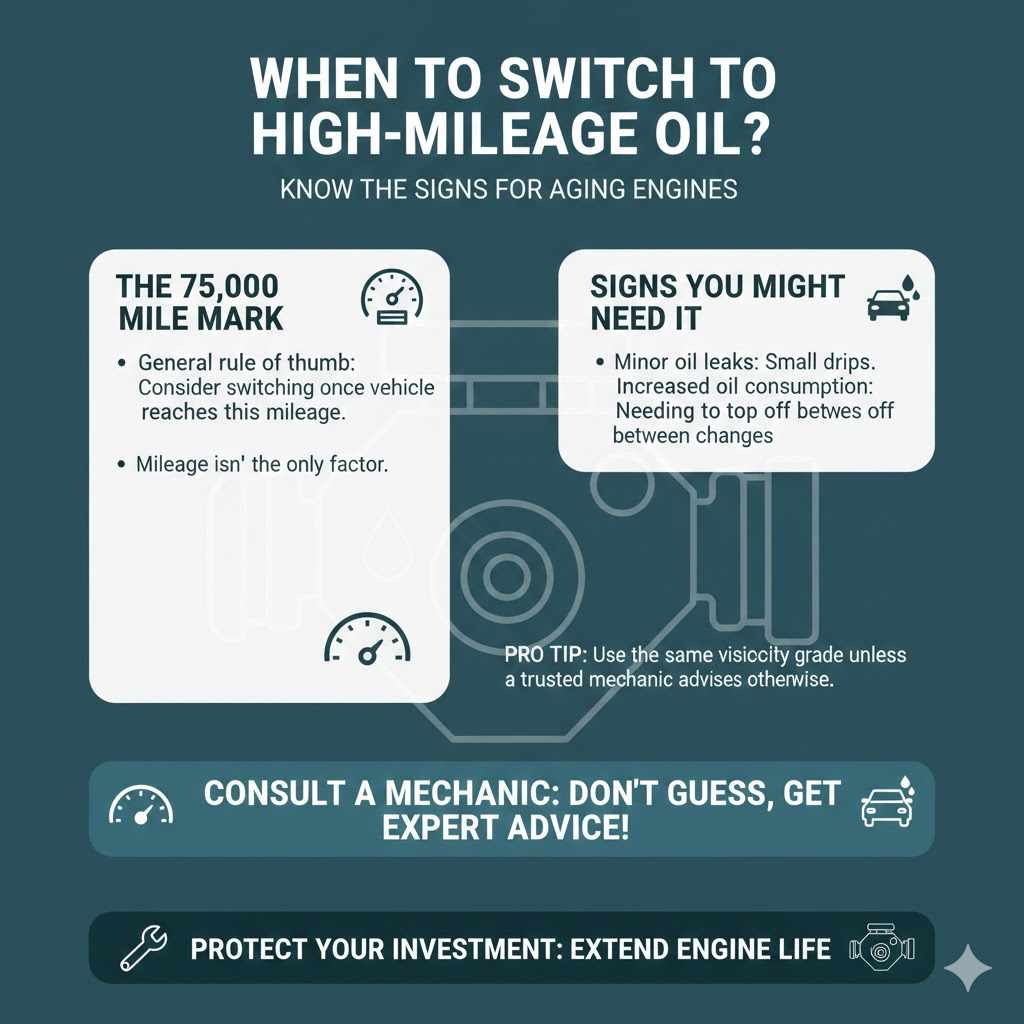
There will come a time when high-mileage oil is the right choice for your car. The general rule of thumb is to consider making the switch once your vehicle crosses the 75,000-mile mark. However, mileage isn’t the only factor.
You should also consider switching if your aging car starts to show signs like:
- Minor oil leaks: Small drips of oil on your driveway are a classic sign that seals are beginning to harden.
- Increased oil consumption: If you find yourself needing to top off the oil between changes, it could mean the engine is burning a small amount of oil, which high-mileage formulas can help reduce.
Even then, it’s always a good idea to stick with the same viscosity grade your car has always used, unless a trusted mechanic advises you otherwise.
Frequently Asked Questions (FAQ)
1. What if I accidentally used high-mileage oil in my new car once?
Don’t panic. Using it one time is highly unlikely to cause any permanent damage. The negative effects of high-mileage oil are cumulative. For your next oil change, simply drain the high-mileage oil completely and replace it with the manufacturer-recommended oil. Your engine will be fine.
2. Is high-mileage oil thicker than regular oil?
Not necessarily. A 5W-30 high-mileage oil and a 5W-30 synthetic oil have the same viscosity rating. However, high-mileage oil contains viscosity modifiers that help it resist thinning out under high heat and stress, which can make it behave like a slightly thicker oil in a running engine.
3. Does high-mileage oil actually stop oil leaks?
It can help with very small leaks or “seeps” caused by dry, brittle seals. The conditioners in the oil soften and swell the seals, helping them create a tighter fit. However, it is not a fix for major leaks caused by a broken seal or a cracked gasket.
4. Can I mix high-mileage oil with regular oil?
Yes, all commercially available motor oils are designed to be compatible. You can safely mix them if you need to top off your engine. However, mixing them will dilute the additive package of the high-mileage oil, reducing its effectiveness.
5. Why do new cars require thinner, synthetic oil like 0W-20?
Modern engines are built with more precise, tighter clearances to improve efficiency and reduce emissions. Thinner oils (like 0W-20) flow more easily, reducing internal friction (which improves gas mileage) and providing faster lubrication to critical parts upon startup, which is when most engine wear occurs.
6. At what mileage is a car officially considered “high mileage”?
The industry standard is generally 75,000 miles. This is the point where seals may start to lose their elasticity and minor wear becomes more apparent, making it the ideal time to consider switching to an oil formulated to address these issues.
Conclusion: Stick with the Manufacturer’s Recommendation
Choosing the right motor oil doesn’t have to be complicated. While high-mileage oil is a fantastic product for the right vehicle, it is simply not the correct choice for a new car. The specialized additives that work wonders on an older engine can cause unnecessary stress and premature wear on the pristine components of a new one, and could even put your warranty at risk.
For your new car, the best and safest path is always the simplest one: open your owner’s manual, find the recommended oil specification, and stick with it. By using the oil your engine was designed for, you are ensuring its health, protecting your investment, and setting it up for a long and reliable life on the road. Now you can walk down that oil aisle with confidence, knowing exactly what your car needs to thrive.