Car Accessories For Short People: Essential Boosts
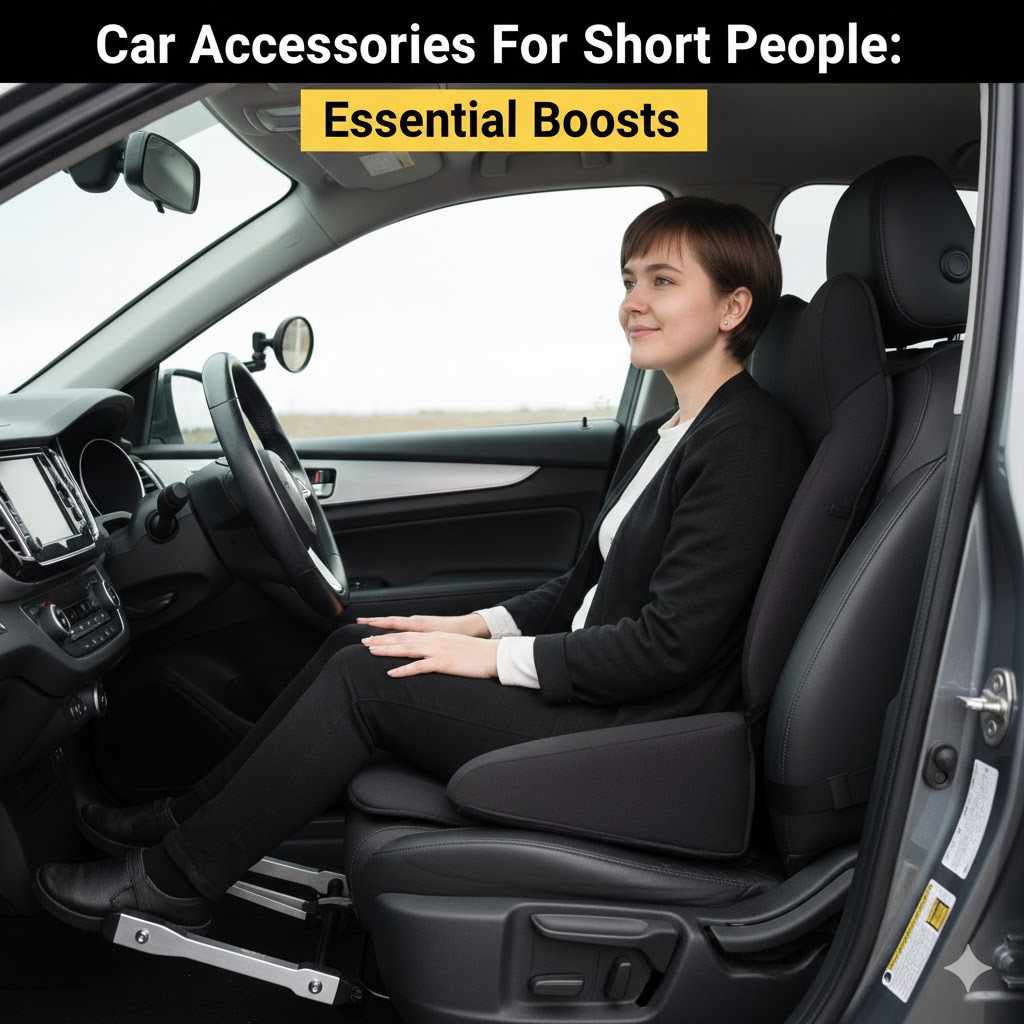
The best car accessories for short people involve seat boosters, pedal extenders, and adjustable lumbar supports that improve visibility and control. These simple additions make driving safer and much more comfortable by bringing essential controls within easy reach.
If you love driving but feel like your car wasn’t built for your height, you are not alone. Many modern cars, even smaller ones, still require a stretch to reach the pedals or offer a view over the dashboard. This isn’t just annoying; it can make driving feel unsafe or tiring over long distances. Dealing with a seat that’s too far back or pedals you can barely touch takes the fun out of your commute.
Don’t worry! Making your car fit you perfectly is easier and cheaper than you think. We are going to walk through the top, beginner-friendly car accessories designed specifically to boost comfort, safety, and control for shorter drivers. Let’s get your car feeling like it was custom-made for you.
Why Height Matters in Car Comfort and Safety
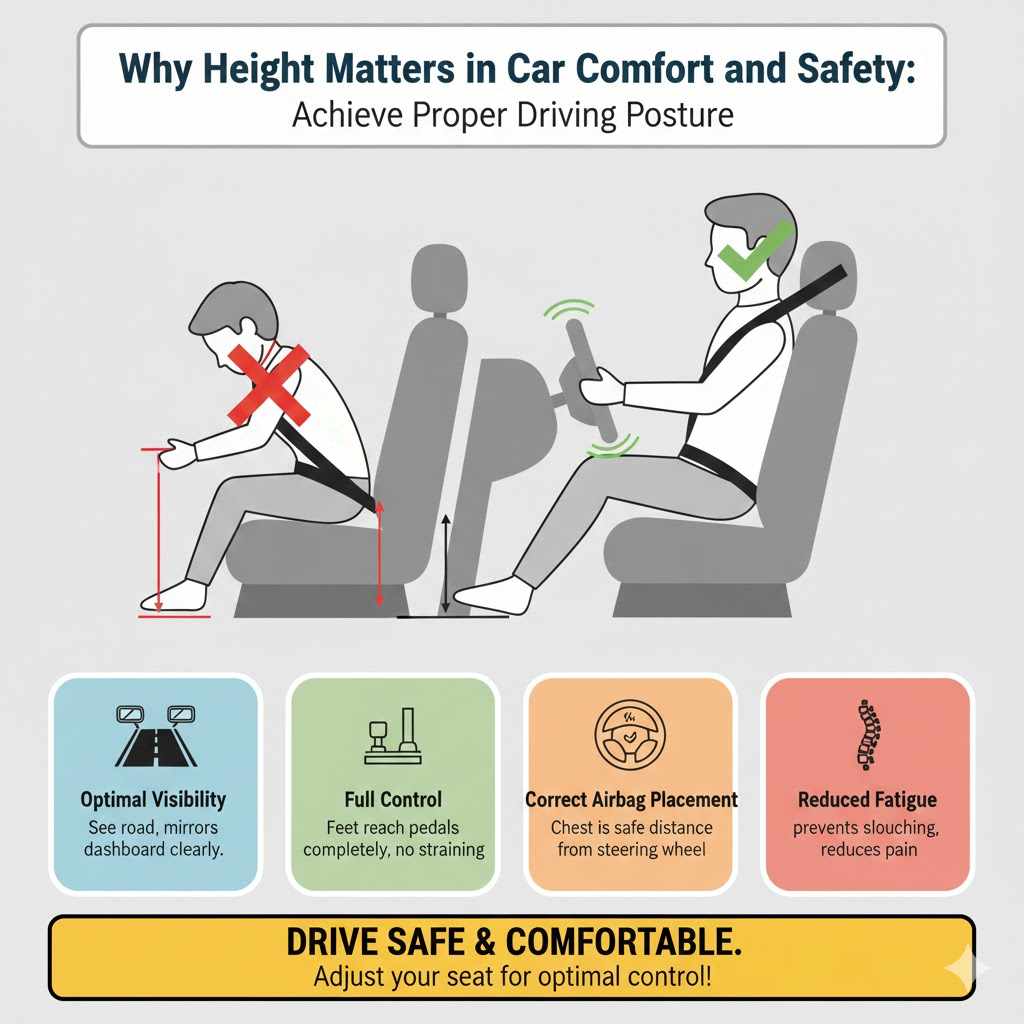
When you sit in a car, your body needs to align correctly with the controls. If you are too short, you often sacrifice safety for reach. For example, sitting too far forward to reach the pedals means the seatbelt might not cross your body correctly in an accident. Sitting too far back to see over the steering wheel puts you too far from the airbag.
Proper driving posture ensures:
- Optimal Visibility: You can see the road, mirrors, and all dashboard indicators clearly.
- Full Control: Your feet can press the brake and accelerator pedals completely without straining.
- Correct Airbag Placement: Your chest is the right distance from the steering wheel for airbag deployment safety.
- Reduced Fatigue: Proper support prevents slouching, reducing back and neck pain on drives.
Essential Car Accessories for Short Drivers: The Comfort Toolkit
These accessories are the foundation for any shorter driver looking to customize their cockpit. They directly address visibility and reach issues.
1. The Seat Cushion or Booster Pad: Raising Your View
This is the simplest and often most effective fix. A quality seat cushion lifts your entire body, instantly improving your view over the dashboard and steering wheel. Think of it as a professional boost for your driving position.
What to Look For in a Booster Pad
Not all cushions are created equal. You want something firm enough to provide lift but soft enough for comfort during long drives.
- Material: Memory foam or high-density foam holds its shape better than gel or cheap polyester stuffing.
- Thickness: Start with 2 to 3 inches of lift. Too much lift can cause headroom issues or make the seatbelt fit awkwardly.
- Non-Slip Base: This is crucial for safety. The cushion must stay firmly planted on the seat, especially during sudden stops.
- Seat Belt Check: After installing, ensure the shoulder belt still sits correctly across your collarbone, not rubbing against your neck.
2. Pedal Extenders: Closing the Distance to Control
For many shorter drivers, the biggest challenge isn’t seeing—it’s being able to fully depress the brake pedal. If you cannot press the brake hard enough, your stopping distance increases, which is a major safety hazard. Pedal extenders bridge this gap.
How Pedal Extenders Work
These devices attach directly to your existing accelerator and brake pedals, physically moving them closer to you. They come in adjustable models, allowing you to customize the exact extension needed for both pedals.
Safety Note: When installing pedal extenders, always test them thoroughly in a safe, empty parking lot. Ensure the brake pedal still engages fully and provides solid stopping power. You should always be able to comfortably press the brake to the floor.
For more information on vehicle safety standards and driver positioning, you can review guidelines from organizations like the National Highway Traffic Safety Administration (NHTSA) regarding driver reach and control. NHTSA provides valuable resources on vehicle safety engineering.
3. Steering Wheel Adjustment Aids (If Applicable)
Modern cars often have tilt and telescoping steering columns. If yours doesn’t adjust enough, or if you need to raise the wheel higher after installing a seat cushion, consider these options:
- Steering Wheel Cover/Riser: These add a bit of thickness and sometimes a slight height change to the top of the wheel, helping drivers keep their arms in a more relaxed, slightly raised position.
- Adjustable Steering Wheel Adapters: These aftermarket devices offer more extreme adjustment angles or height changes than the factory settings allow. They require careful installation to ensure the wheel remains locked in place during driving.
Advanced Accessories for Ergonomic Perfection
Once you have the basics sorted (view and reach), it’s time to fine-tune your posture to prevent aches and pains.
4. Lumbar Support Systems: Supporting Your Lower Back
When you boost your seat height, the angle between your hips and your lower back can change, sometimes leading to slouching or an awkward curve in your spine. Good lumbar support keeps your natural ‘S’ curve intact.
For shorter drivers, factory lumbar supports often sit too high. Look for an aftermarket version that:
- Attaches securely to the seat back.
- Offers adjustable inflation (like an air bladder) or manual height placement.
- Is made of breathable mesh or fabric to prevent heat buildup.
5. Footrest Extenders: The Unsung Hero for Shorter Legs
This accessory is often overlooked but is a game-changer for drivers whose feet dangle or cannot comfortably reach the accelerator pedal while maintaining proper knee bend.
A floor-mounted or pedal-mounted footrest extension gives your foot a solid anchor point. This allows you to sit back far enough to comfortably reach the steering wheel while keeping your leg slightly bent at the knee, which is the optimal position for quick, safe pedal response.
| Accessory | Primary Benefit | Best For Fixing | Installation Difficulty (1-5) |
|---|---|---|---|
| Seat Cushion/Booster | Increased Eye Level | Visibility over dashboard | 1 (Place on seat) |
| Pedal Extenders | Closer Pedal Reach | Inability to fully depress brake | 3 (Attaching to pedals) |
| Lumbar Support | Spinal Alignment | Lower back fatigue/slouching | 2 (Strapping to seat back) |
| Footrest Extender | Foot Anchor Point | Legs too short to maintain knee bend | 4 (Bolting to floor or frame) |
Installation Guide: Setting Up Your New Driving Position Safely
Getting the perfect setup involves careful placement and testing. Follow these steps sequentially for the best results.
Step 1: Adjust Your Seat Height (The Foundation)
If your vehicle has a manual seat height adjuster, use it first to get as high as comfortably possible without hitting your head on the roof liner.
If you are still too low, place your chosen seat booster cushion on the seat now. Make sure the non-slip base grips the upholstery.
Step 2: Test the Pedals and Reach
Sit in your adjusted seat. With your back fully against the seat back (this is key for safety), fully press the brake pedal. You should be able to press it completely to the floor without your leg becoming completely straight (locked at the knee).
If you cannot press the brake fully, you must install pedal extenders now. Follow the manufacturer’s instructions precisely when attaching them to ensure they are rock-solid.
Step 3: Fine-Tuning Steering Wheel and Mirror Angles
Once your seat is set, adjust the steering wheel. The top of the wheel should be roughly level with your shoulders. You should be able to rest your wrists lightly on the top of the wheel while keeping your arms slightly bent.
Adjust your side mirrors and rearview mirror. Because your eye level has changed, you must readjust all mirrors. This ensures you see traffic clearly around you and directly behind you.
Step 4: Add Ergonomic Support
Install the lumbar support. Position it in the small of your back, slightly above where your belt sits. Inflate or adjust until you feel gentle, firm pressure supporting your natural curve. This prevents you from sliding forward as you reach for the pedals.
Step 5: The Final Safety Check Drive
Take a very slow drive in a safe area, like a quiet street or empty parking lot. Test every function:
- Braking: Firm, full stops.
- Acceleration: Smooth power delivery without strain.
- Turning: Does the wheel feel easy to grip and turn with your new arm position?
- Visibility: Check blind spots and confirm dashboard gauges are easy to glance at.
If anything feels wrong, pull over immediately and readjust. Safety comes first!
Choosing Accessories Based on Your Vehicle Type
The right accessories can depend heavily on whether you drive a small sedan, a large truck, or an SUV. Here’s a quick guide:
| Vehicle Type | Common Issue for Shorter Drivers | Top Recommended Accessory |
|---|---|---|
| Compact Sedan/Hatchback | Deep footwell leading to distant pedals. | High-Quality Pedal Extenders |
| Truck/Large SUV | Very high seating position makes ceiling too close; hard to see over the high hood. | Thick, Firm Seat Booster (check headroom) |
| Sports Car/Low Coupe | Seats are built low to the ground, providing poor road view. | Ergonomic Seat Cushion for Height + Lumbar Support |
It’s worth noting that some modern electric vehicles (EVs) or vehicles designed with standardized safety shells might offer fewer factory adjustments, making aftermarket solutions even more critical for a perfect fit. Always check user manuals or manufacturer specifications if you are unsure about attaching items to the seat frame or floor.
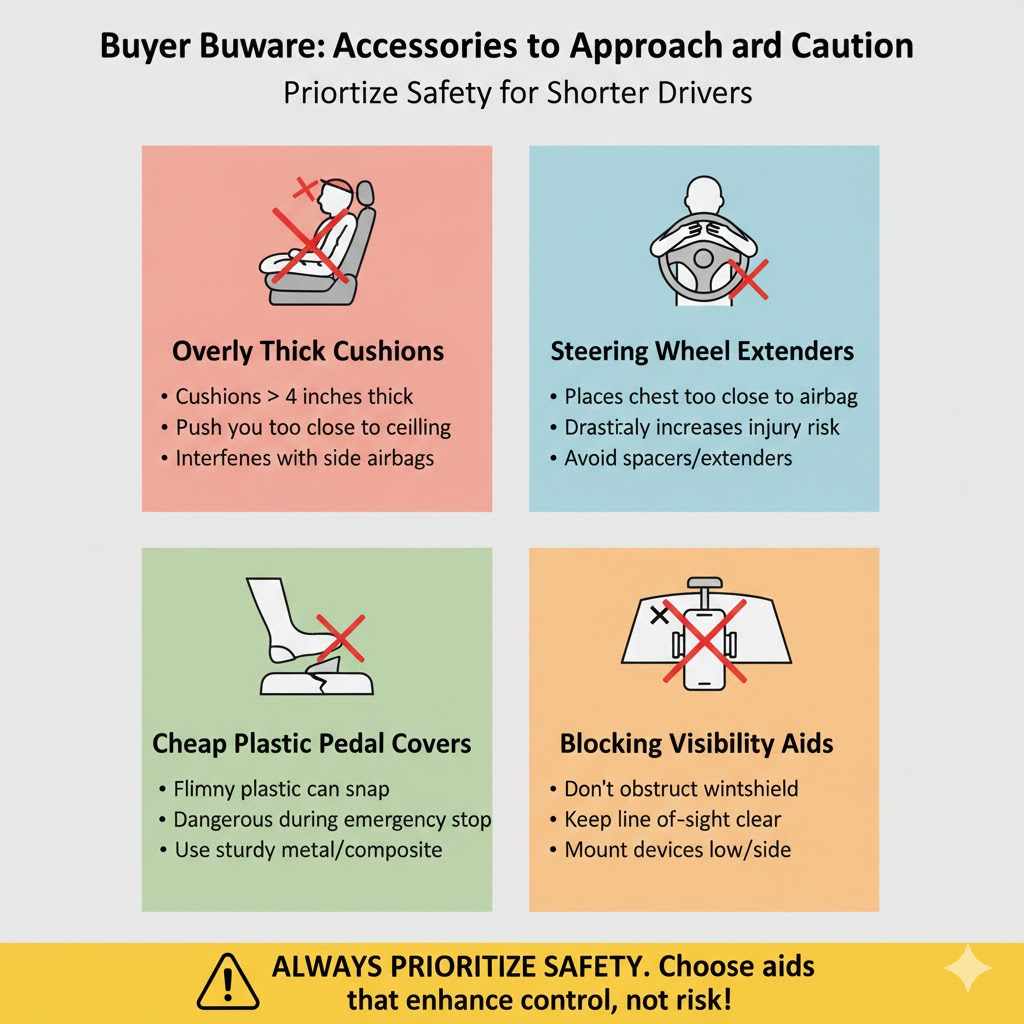
Buyer Beware: Accessories to Approach with Caution
While most aids are helpful, a few common car modifications can introduce unnecessary risk for shorter drivers if chosen poorly. As your automotive guide, I want you to drive with confidence, which means avoiding known hazards.
- Overly Thick Cushions: Cushions over 4 inches thick can push you too close to the ceiling, causing head discomfort and potentially interfering with the side curtain airbags if you lean too far.
- Steering Wheel Spacers/Extenders: If these devices push the steering wheel too far forward, they can place your chest directly against the airbag. In a crash, this drastically increases the risk of serious injury compared to the designed distance.
- Cheap Plastic Pedal Covers: If you opt for pedal extensions, avoid flimsy plastic covers. You need sturdy metal or reinforced composite materials that will not snap under the pressure of a hard emergency stop.
Always prioritize the ability to safely operate the brake. If an accessory compromises your stopping ability, it is not worth the cost.
Frequently Asked Questions (FAQ) for Shorter Drivers
Q1: Can I just use pillows to boost my seat height?
A: While pillows work in a pinch, they are not safe for regular driving. Pillows compress unevenly, slip easily, and can slide out from under you during braking. A dedicated, high-density foam seat cushion is much safer and more stable.
Q2: Are pedal extenders legal to use?
A: In most jurisdictions, pedal extenders are legal as long as they allow the driver to operate the vehicle controls, particularly the brake, fully and safely, without obstructing other essential functions. Always check your local Department of Motor Vehicles (DMV) regulations if you have concerns.
Q3: Do I need a booster cushion if my car has power seats?
A: Power seats usually offer good vertical adjustment, but sometimes they don’t lift high enough for very short drivers. If you still struggle to see the road clearly above the dashboard line, a cushion is still the best next step, even with power seats.
Q4: How do I know if my driving posture is correct?
A: Your back should be against the seat, your knees should be slightly bent when your foot is firmly on the brake, and your wrists should rest easily on top of the steering wheel when your arms are extended forward.
Q5: Will adding accessories void my car’s warranty?
A: Installing basic, non-invasive items like seat cushions or aftermarket steering wheel covers generally will not void your factory warranty. However, permanently altering the brake or steering system (like bolting pedal extenders directly to the pedal mechanism) could potentially affect the warranty coverage for those specific components.
Q6: Should I adjust my side mirrors differently after raising my seat?
A: Absolutely, yes. Raising your seat changes your viewing angle significantly. You must readjust all your mirrors every time you change your seat position substantially to eliminate blind spots and ensure proper rear visibility.
Conclusion: Drive with Confidence and Comfort
Driving should be an enjoyable experience, regardless of your height. By investing a little time and money into the right car accessories—specifically high-quality seat boosters, reliable pedal extenders, and excellent lumbar support—you can completely transform your cockpit.
These simple fixes aren’t just about convenience; they are about ensuring you maintain full, safe control over your vehicle. Take the steps outlined above: adjust your height, confirm your pedal reach, and secure your posture. You’ll quickly find that once your car fits you, driving becomes safer, less tiring, and much more fun. Happy travels, and enjoy the road from your new, perfectly tailored driver’s seat!