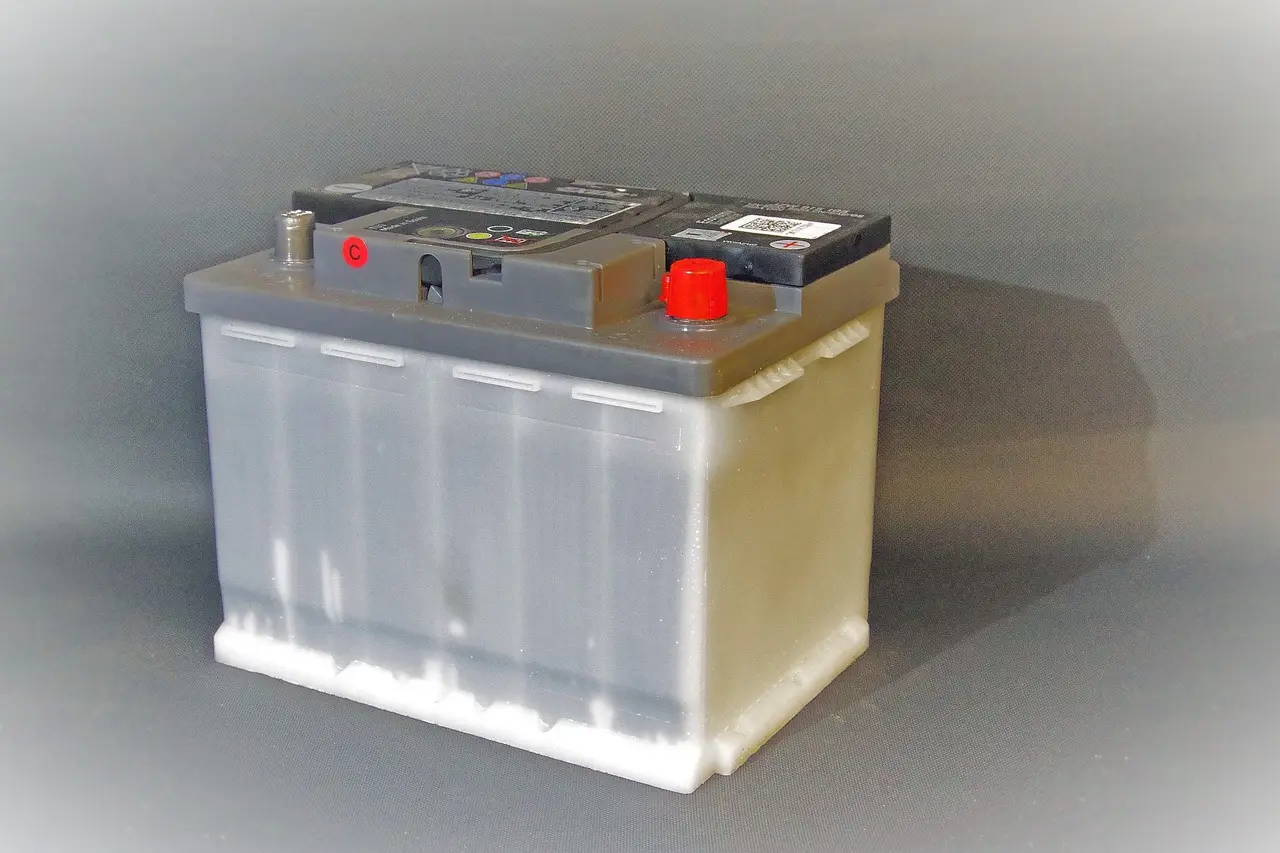
Jump Starting vs Battery Replacement
A jump is the right first move if the battery is only discharged and the car starts normally afterward. Replace it if it will not hold a charge after a jump, or if it is older than about 4–5 years and is still weak. Repeated dead starts can leave you stranded, and they can also hide a failing alternator or starter. This guide shows the symptom-by-symptom call: jump, replace, or test the charging system.
| Decision factor | Jump Starting | Battery Replacement | Winner |
|---|---|---|---|
| What it does | Gives temporary external power so the engine can crank | Installs a new battery that can restore normal starting performance | Battery Replacement |
| Fixes a weak or failed battery | No | Yes | Battery Replacement |
| Best use case | One-time drain, short-term discharge, or a battery that simply sat unused | Old battery, repeated no-starts, swelling, leakage, or failure to hold charge | Tie |
| What to do next | Test the battery and charging system after the car starts | Confirm correct fitment and still test the charging system if symptoms continue | Battery Replacement |
| Risk of guessing wrong | Higher if the car keeps dying or needs repeated jumps | Higher cost if the real problem is alternator, starter, wiring, or corrosion | Tie |
What the two options actually do
Jump Starting
Jump Starting gives the 12-volt battery a temporary power boost so the engine can crank. It does not repair age, internal damage, or failing cells. If the car starts after the boost, that only shows the battery could take enough outside power to start the engine at that moment.
Battery Replacement
Battery Replacement is the permanent fix when the battery is weak, failed, swollen, leaking, or repeatedly going flat. The new battery must match vehicle specifications, including group size and other fitment requirements, so the replacement is not just “any battery that fits.”
Why testing still matters after a start
A car can start after a jump and still have a bad battery, a failing alternator, loose battery terminals, corroded clamps, or a starter problem. That is why a battery load test is commonly part of charging-system testing, not just a guess after the first no-start.
No-start decision matrix
| Symptom | Most likely cause | Best next step |
|---|---|---|
| One-time drain after lights or accessories were left on | Battery discharged, not necessarily failed | Try Jump Starting, then verify battery state |
| Repeated no-starts in a short period | Battery failure or charging-system fault | Test first; replacement is likely if the battery will not hold a charge |
| Slow crank | Weak battery, poor connections, or starter load issue | Check battery terminals, then perform load test and charging-system test |
| Single click | Starter, battery, or connection problem | Do not assume the battery; test the system after a jump attempt |
| Bright lights with no crank | Starter or connection fault more likely than a dead battery | Inspect terminals, wiring, and starter diagnosis |
| Starts then dies again | Alternator or charging-system fault | Test charging output; a jump alone is not the fix |
| Swollen battery | Battery failure or damage | Replace; do not try to force a jump |
| Corrosion only | Poor electrical connection | Clean and tighten terminals before replacing the battery |
| New battery still needing a jump | Charging-system fault, loose connection, or parasitic drain | Test alternator output and inspect wiring, not just the battery |
| Battery over 3 years old in hot climate | Age-related wear accelerated by heat | Test now; replacement becomes more likely if performance is weak |
When is a jump start enough?
One-time drain from lights or accessories left
A jump start is enough when the battery was drained by a clear one-time event, such as an interior light or accessory left on. In that case, the battery may still be serviceable, and the jump only provides enough power to crank the engine. If the car restarts normally after driving, the problem may have been temporary discharge.
Short-term discharge after sitting unused
A car that sat unused for a while may need a jump even if the battery is not failed. That can happen with a standard vehicle battery system when charge has dropped below the level needed for cranking. If the battery recovers and starts normally after recharging, replacement is not automatic.
When the follow-up starts and tests are normal
Suppose the car starts with a jump, then restarts the same day without trouble, and a load test shows the battery still holds up. That points away from battery failure and toward a temporary discharge. A jump is then enough as the immediate fix, but the test should confirm that the battery and charging system are still healthy.
What signs mean the battery is failing?
Repeated jump starts are a strong warning sign. So are slow cranking, weak starting power, swelling, leakage, or a battery that will not hold a charge after it has been charged. A battery that is three years old or older deserves closer attention in hot climates, where heat speeds wear inside a battery.
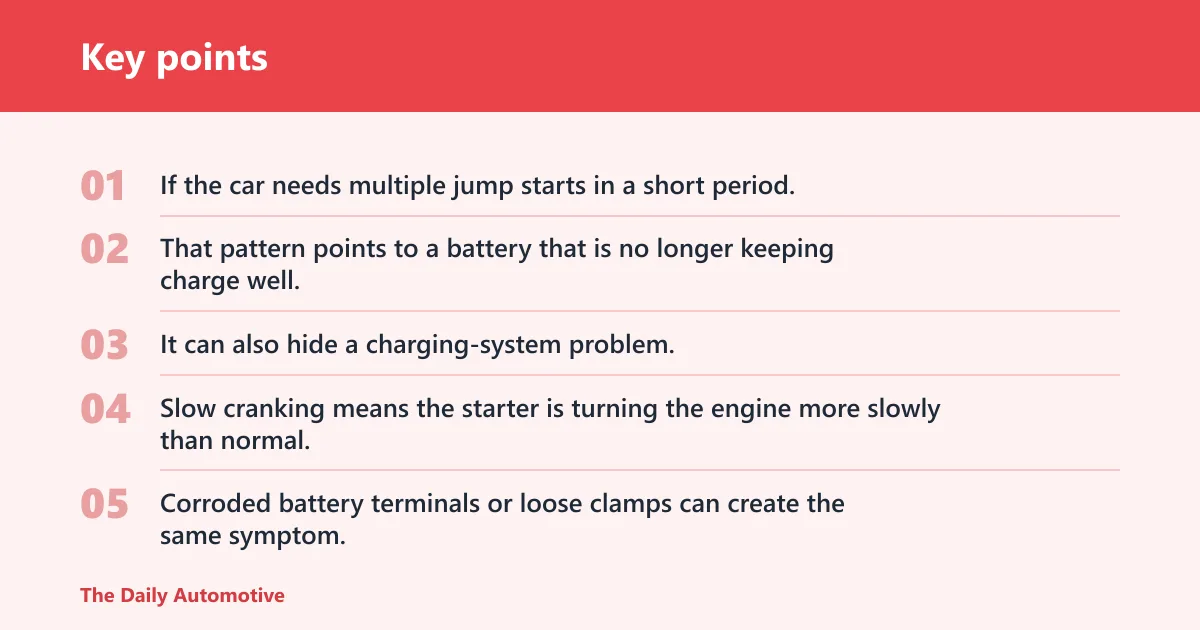
Repeated jump starts
If the car needs multiple jump starts in a short period, replacement is usually the better call than another temporary boost. That pattern points to a battery that is no longer keeping charge well. It can also hide a charging-system problem, so testing should not stop at the jump cable connection.
Slow cranking and weak starting power
Slow cranking means the starter is turning the engine more slowly than normal, often because the battery is weak. Corroded battery terminals or loose clamps can create the same symptom, which is why visual inspection comes before replacement. A load test helps separate a weak battery from a connection issue.
Swelling, leakage, corrosion, and age
A swollen, cracked, leaking, or frozen battery should not be jumped. Corrosion alone does not prove the battery is bad, but it does mean the connection needs attention. If the battery is already around 3 years old or older in a hot climate, age makes failure more likely and replacement more likely too.
Could it be the alternator or starter?
Yes. If the engine starts after a jump but dies shortly afterward, the alternator or charging system may be the issue. A single click or no crank with a known-good battery can point to the starter or to a connection fault. That is why battery load testing and charging-system testing belong together.
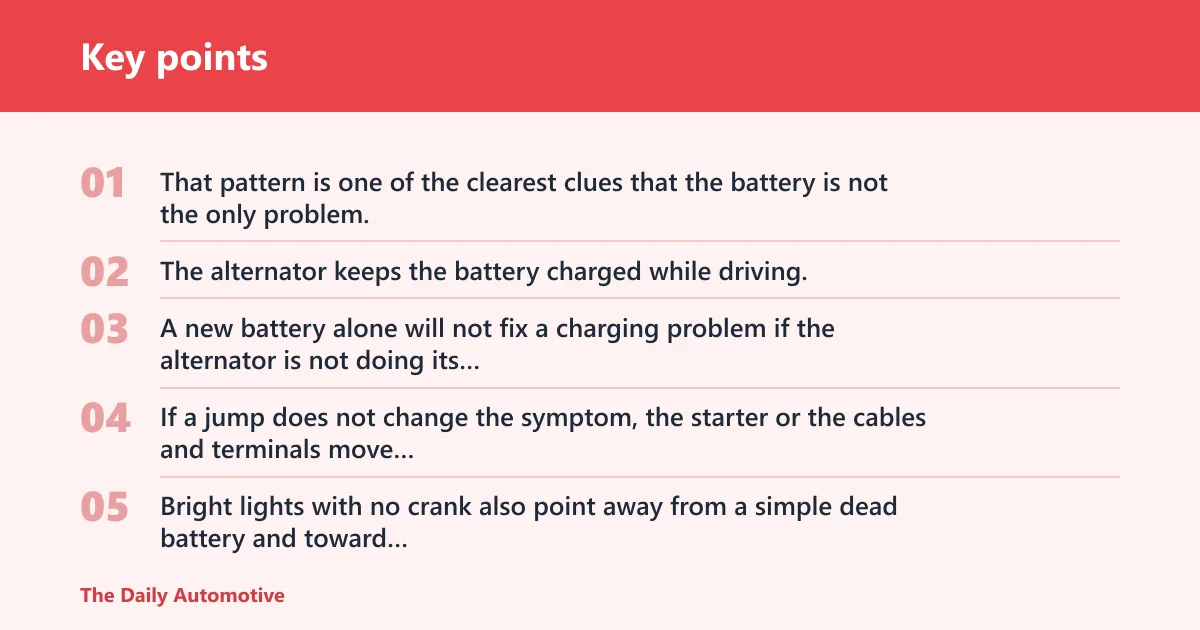
Starts then dies again
That pattern is one of the clearest clues that the battery is not the only problem. The alternator keeps the battery charged while driving, so a charging-system fault can look like battery failure. A new battery alone will not fix a charging problem if the alternator is not doing its job.
Single click or no crank with a known-good battery
If a jump does not change the symptom, the starter or the cables and terminals move higher on the list. Bright lights with no crank also point away from a simple dead battery and toward starter or connection issues. Do not buy a battery first when the symptom pattern fits a starter fault better.
Why load testing and charging-system testing matter together
A battery load test checks whether the battery can deliver power under demand. Charging-system testing checks whether the alternator restores that power properly while the engine runs. Together, those tests separate a discharge from a failed battery and keep you from replacing the wrong part.
Choose Jump Starting if… / Choose Battery Replacement if…
Choose Jump Starting if the problem looks like a one-time drain, the battery is not old, and the car starts and keeps running afterward. Choose Battery Replacement if the battery is swollen, leaking, repeatedly flat, or already showing a pattern of failure. Choose testing first if the symptom points to alternator, starter, wiring, or a bad connection.
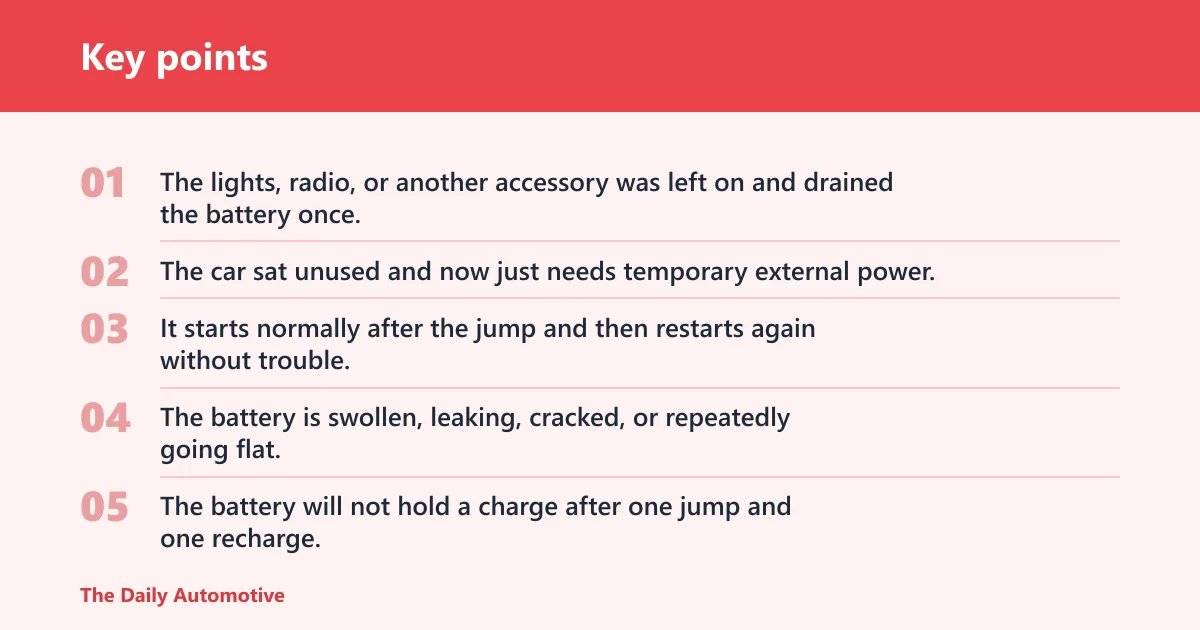
Choose jump starting if…
- The lights, radio, or another accessory was left on and drained the battery once.
- The car sat unused and now just needs temporary external power.
- It starts normally after the jump and then restarts again without trouble.
Choose battery replacement if…
- The battery is swollen, leaking, cracked, or repeatedly going flat.
- The battery will not hold a charge after one jump and one recharge.
- The battery is older and performance is weak, especially in hot weather.
Choose testing first if…
- The engine starts then dies again.
- There is a single click or no crank even with a known-good battery.
- Bright lights stay on but the engine will not turn over.
- Corrosion or loose clamps are visible at the battery terminals.


Frequently asked questions
Jump start vs battery replacement
Jump Starting is the right first step when the battery is only discharged. Battery Replacement is the right fix when the battery is weak, failed, swollen, or repeatedly flat. The deciding question is not “Did it start once?” but “Will it hold a charge and start normally again?”
Do you have to jump a new battery?
No, a new battery should not need a jump under normal conditions. If a new battery still needs external power, the problem is often the charging system, loose battery terminals, wiring, or a parasitic drain. That means the battery itself may not be the real failure.
Can you jump start a battery with another battery?
Yes. A jump start uses another battery or a portable jump pack as temporary external power so the engine can crank. It is a start aid, not a repair. After the engine runs, the battery and charging system still need to be checked if the dead-start problem returns.
Should you replace battery after jump start?
Not automatically. Replace it if the battery will not hold a charge, fails a battery load test, or has a clear pattern of repeated no-starts. If the jump followed a one-time drain and the battery tests normal afterward, replacement is usually unnecessary.
What signs mean the battery is failing rather than just drained?
Repeated jump starts, slow cranking, weak starting power, swelling, leakage, and age are the main warning signs. A battery over about 3 years old in a hot climate deserves closer attention because heat can shorten battery life. Corrosion alone is not proof of failure, but it should be cleaned and tested.
What if the car starts with a jump but dies again?
That points to a charging-system problem more than a simple dead battery. The alternator may not be keeping the battery charged, or there may be a wiring or connection fault. In that case, another jump is only a temporary reset, not the repair.
Products related to this article
Sponsored / affiliate links. As an Amazon Associate I earn from qualifying purchases. I may earn additional commission from eligible campaigns.