Car Detailing Products Price: What Each Item Costs
Most car detailing products often land at about $8–$20 per spray bottle, $15–$35 per 16-ounce concentrate, and $20–$60 per gallon, with value often improving in 1-gallon refills or 1:128 concentrates. Buy the wrong size and you pay more per use, or you end up with shelves full of product that sits too long. This guide maps pricing stage by stage, shows the best-value sizes, and flags where bundles beat single bottles.
Detail pricing matrix


This matrix uses shelf prices that are publicly posted or directly calculable from posted prices, then translates them into a rough cost per use. The goal is not one exact number for every brand. It is to show which size usually gives the best value for DIY detailers and where small businesses should buy bigger.
| Product category | Common size | Typical shelf price range | Estimated cost per use | Best-value buy size for DIY detailers versus small businesses |
|---|---|---|---|---|
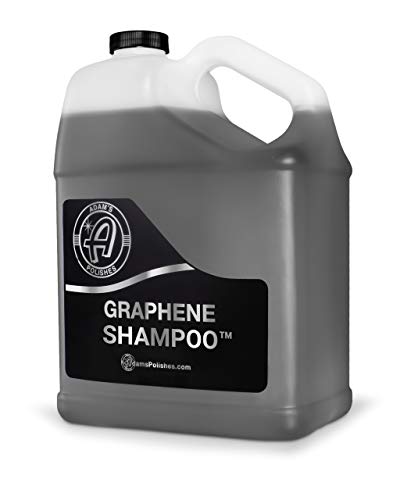
| Car wash soap | 16 oz | $17–$18 | About $2.13–$2.25 per wash, using 2 oz per wash and 8 washes per bottle | DIY: 16 oz if you wash occasionally. Small business: 1 gallon or larger for lower unit cost. |
| Wheel and tire cleaner | 16 oz | $17 | About $4.25 per full wheel set, using 4 oz per set and 4 sets per bottle | DIY: 16 oz for periodic cleaning. Small business: 1 gallon if used on every job. |
| Detail spray | 16 oz | Varies by brand and formula | Varies by dilution and how often you use it for dust removal or light finishing | DIY: 16 oz. Small business: larger refill size if the product is a repeat-use step. |
| Ceramic detailer | 16 oz | $22 | About $1.38 per application, using 1 oz per application and 16 applications per bottle | DIY: 16 oz is a reasonable trial size. Small business: 32 oz or 1 gallon if the product sees steady use. |
| Wax | 16 oz | $38 | About $1.19 per application, using 0.5 oz per application and 32 applications per bottle | DIY: smaller bottle is fine if you wax a few vehicles a year. Small business: larger size only if wax is still part of the service mix. |
| Compound | 8 oz, 16 oz, 32 oz, 1 gallon | Entry prices start around $17 | About $0.53–$1.06 per correction session, assuming 0.5 oz per session on a small panel area | DIY: 8 oz or 16 oz is enough for spot work. Small business: 32 oz or 1 gallon if correction is routine. |
| Polish | 8 oz, 16 oz, 32 oz, 1 gallon | Entry prices start around $17 | About $0.53–$1.06 per correction session, assuming 0.5 oz per session on a small panel area | DIY: 8 oz or 16 oz. Small business: 32 oz or larger for repeat correction work. |
| Microfiber towels | Single towel | $2 each | About $0.10 per use if one towel is rotated through 20 uses | DIY: buy a small pack and sort towels by job. Small business: bulk packs with higher pile counts for drying and finishing. |
| Sprayer bottle | Single bottle | $3 | Depends on refill product and how often you reuse the bottle | DIY: one or two bottles. Small business: several labeled bottles to avoid cross-contamination and wasted product. |
| Wash kit | Bundle | Varies by contents | Depends on whether the kit includes soap, towels, sprayer, and extras | DIY: good when it replaces separate purchases at a lower total. Small business: only if every included item matches your workflow. |
How much do detailing products cost?
Most detailing products get more expensive as you move from sprays and small bottles to 32-ounce, 64-ounce, and 1-gallon formats. Formula changes the price too. Basic wash soap costs less than a ceramic protectant, and a compound or polish can cost more than a cleaner because it is built for correction, not simple maintenance.
What drives price differences by size and formula
Size changes unit cost fast. A 16-ounce bottle can look cheap until you compare it with a gallon that costs more upfront but lowers the cost per ounce by a wide margin. Concentration matters just as much. A stronger product can cost more per bottle and still cost less per use.
Formula also changes the buying decision. Wash soap and wheel cleaner are repeat purchases. Compound and polish are usually slower-moving items because you do not need them every week. Ceramic detailers and waxes sit in the middle: more expensive than soap, but cheaper than repeated correction work if the finish only needs light upkeep.
How to compare shelf price with unit price
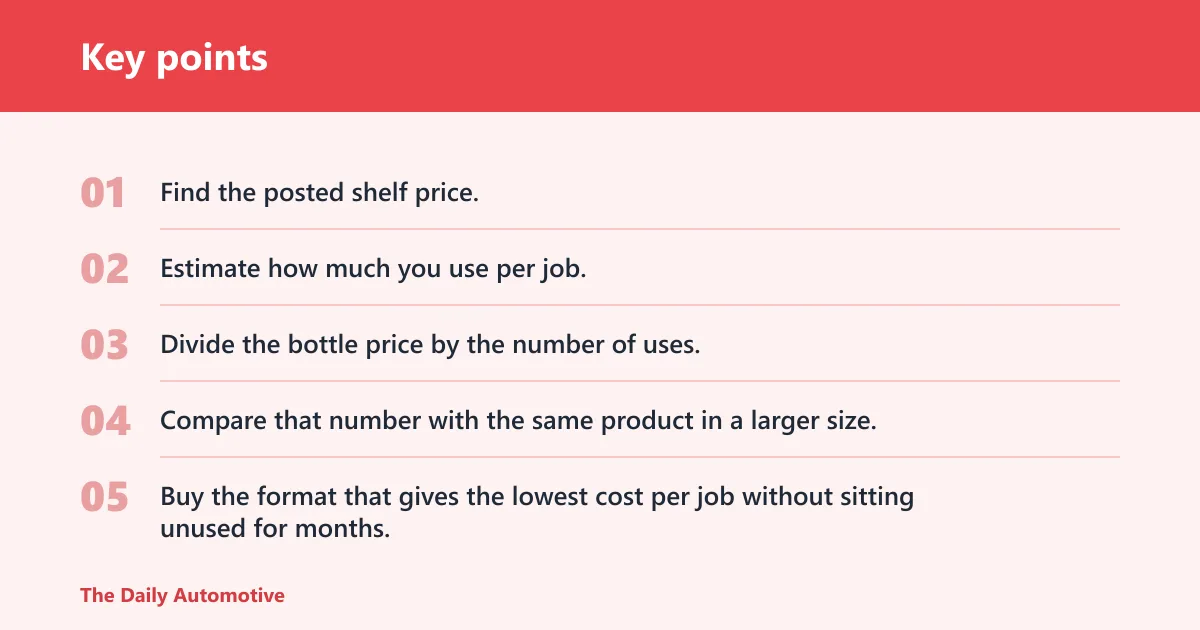
Use shelf price only as the starting point. Divide by usable applications, not just by ounces. That is where the real savings show up. A $22 ceramic detailer that lasts 16 applications can beat a cheaper bottle that runs out after eight because the per-use cost is lower.
- Find the posted shelf price.
- Estimate how much you use per job.
- Divide the bottle price by the number of uses.
- Compare that number with the same product in a larger size.
- Buy the format that gives the lowest cost per job without sitting unused for months.
Where entry-level products usually start
Entry pricing for correction products often starts around $17, while a posted car wash soap can sit around $17–$18 for a 16-ounce bottle. 3D ONE starts at $21.00 for compounding, polishing, and waxing in one product. 3D GLW Series SiO2 Ceramic Detailer starts at $22.00, and 3D GLW Series Wheel & Tire Cleaner starts at $17.00.
A common first-timer mistake is buying a gallon because it looks economical, then using a few ounces a year. For a home garage, that can turn into dead inventory. For a small business, it can be the right call if the same chemical leaves the shelf every week.
What should wash and drying supplies cost?
Wash soap and microfiber towels are the first places to set a budget. A fair price for a 16-ounce car wash soap is around $17–$18 when you are buying a recognizable consumer product. Microfiber towels at about $2 each are a sensible floor for basic pieces, while better pile count and edging push the price higher.
Car wash soap price points
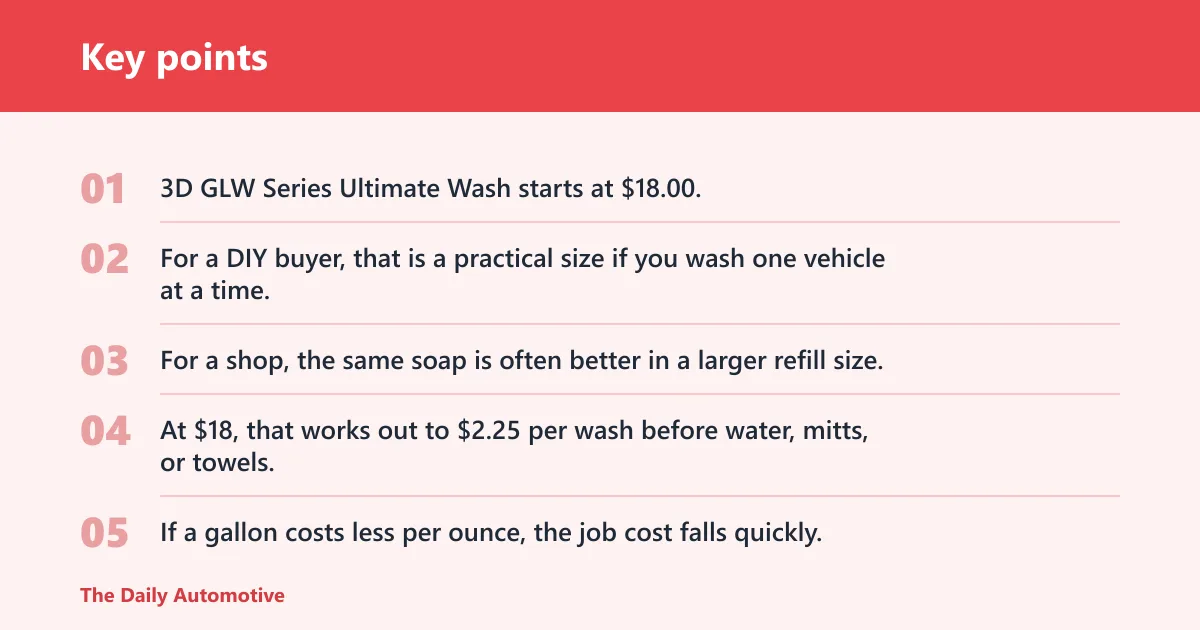
3D GLW Series Ultimate Wash starts at $18.00, which puts it squarely in the common retail range for a 16-ounce bottle. For a DIY buyer, that is a practical size if you wash one vehicle at a time. For a shop, the same soap is often better in a larger refill size.
Suppose you use 2 ounces of soap per wash. A 16-ounce bottle gives 8 washes. At $18, that works out to $2.25 per wash before water, mitts, or towels. If a gallon costs less per ounce, the job cost falls quickly.
Microfiber towel pricing and pile quality
3D microfibers are sold at $2.00 each. That is a fair anchor for a basic towel, especially when you need several types: one for drying, one for buffing, and one for interior cleaning. Quality changes the price because pile height, edge trim, and lint control affect how the towel performs on paint and interior trim.
Do not buy the cheapest towel for every job. A thin towel may work for wheel jambs or dirty interior plastics, but a drying towel or final wipe towel usually benefits from a better weave and more absorbency. One low-cost towel can still be a smart buy if it matches a specific task.
Wash kits versus buying each item separately
Wash kits can be cheaper when they combine soap, towels, and a sprayer at a lower total than the same pieces sold alone. 3D bottle sprayers are priced at $3.00, so a bundle that includes a sprayer and towels can make sense if you need all three items anyway. The catch is simple: you only save money if you would have bought every item separately.
Buy the kit when it covers a full stage of work. Skip it when the bundle hides weak items you will replace right away. A kit with one soap, one sprayer, and one towel may look cheap, but a separate purchase of better towels can be the better value.
What do correction and protection products cost?
Correction products usually cost more than wash chemicals because they do more work. Protection products vary by chemistry. Wax is usually cheaper up front than ceramic-themed protection, but ceramic products may last longer between applications. The best value depends on how often the car is washed and how much labor you want to spend.
Compound and polish price bands
Compounds and polishes show up in 8-ounce, 16-ounce, 32-ounce, and 1-gallon sizes. Entry prices start around $17, which is normal for small bottles. 3D ONE starts at $21.00 and combines compounding, polishing, and waxing in one product, so it can reduce the number of bottles on the shelf.
For a DIY user doing spot correction, a smaller bottle is usually enough. For a small business, a 32-ounce bottle or gallon can be the better buy because one correction product may be used on several vehicles a week.
Wax versus ceramic detailer pricing
3D GLW Series SiO2 Ceramic Detailer starts at $22.00, while 3D GLW Series SiO2 Ceramic Wax is priced at $38.00. That gap matters. Ceramic detailer is the lower-commitment maintenance product, while ceramic wax sits higher on the shelf and should be judged by durability and finish, not price alone.
Picture a sedan that gets washed every two weeks. A ceramic detailer can be the better buy if the goal is quick gloss and light protection after each wash. If the car needs a more durable layer and the owner is willing to pay more, the ceramic wax can make sense. If the car only gets occasional washes, the extra spend may not return enough value.
When higher-cost formulas make sense
Pay more when the formula changes the outcome, not when it only changes the label. A ceramic-detailing product can be worth it if it adds measurable slickness, water behavior, or easier maintenance. A more expensive cleaner with no practical advantage is harder to justify.
Do not overspend on correction products if the paint only needs light cleanup. A basic polish can be enough after a wash and clay step. Save the stronger compound for heavier defects, where the extra cut actually matters.
Is a detailing kit cheaper than buying individually?
A kit is cheaper only when the bundle price is lower than the total of the same items bought one by one. That is why bundle pricing is useful as a benchmark, not as an automatic buy signal. Compare the listed price of each needed item, then compare that sum with the kit tag.
What bundle pricing can tell you
Kits often combine wash, dry, shine, and sometimes clay or ceramic steps. That makes them easy to compare against a staged shopping list. If the kit price is lower than the total separate cost, it saves money. If not, skip it and buy only the items you will actually use.
Many buyers overpay by chasing every item in one carton. If you already have quality towels and a good wash soap, a full kit can become a duplicate purchase. The savings disappear fast once the bundle includes parts you do not need.
When kits save money
Kits save money when you are starting from zero and need several categories at once. They also help when the bundle includes a sprayer, towels, and one main chemical. That setup reduces checkout friction and often lowers the total cost versus separate retail tags.
Say your cart needs wash soap, one spray bottle, and four towels. At $18 for soap, $3 for a sprayer, and $2 per towel, the separate total is $29 before tax. If a kit lands below that and the included towel quality is acceptable, the kit is the better buy.
When individual bottles are the better buy
Buy individual bottles when you already know which stage you use most. A correction-heavy user should not pay for a shine-heavy kit. A maintenance-only user should not buy compound and polish in a bundle that will sit untouched.
Individual bottles also help when you want a larger size in one category and a smaller size in another. That is often the smartest mix for both DIY and small-business buyers.
How much should you budget for a basic detail?
Budget by stage, not by guess. A basic exterior detail can stay modest if you buy only soap, wheel cleaner, towels, and one maintenance spray. Add interior products and paint-correction products, and the total climbs quickly. Small businesses should budget more because they need refill sizes and backup towels.
DIY exterior-only shopping
A lean exterior list can include wash soap, wheel and tire cleaner, a few microfiber towels, and a sprayer. Using the posted anchors here, that can look like about $18 for soap, about $17 for wheel cleaner, about $6 for three towels, and about $3 for a sprayer. That is $44 before tax, and it still leaves out drying towels, protectant, and backup stock.
If you add a ceramic detailer at $22, the same cart becomes $66 before tax. That is why the difference between simple wash maintenance and a full protection routine matters.
DIY interior and exterior shopping
For an interior and exterior setup, budget for a second towel set so you do not move grit from wheels to cabin plastics. The simplest rule is to keep exterior towels separate from interior towels. That avoids accidental cross-use and keeps the cart organized.
A reasonable starter budget for a home user is often built around three stages: wash, light protection, and cleanup towels. The exact total depends on whether you add polish or compound. Those correction products raise the cart total much faster than wash chemicals do.
Small-business supply budget by product stage
Small businesses should budget by turnover, not by one vehicle. If wash soap, wheel cleaner, and ceramic detailer leave the shelf every week, buy the larger refill size. If compounds and polishes are only used for occasional correction work, smaller bottles are often the better cash-flow choice.
A small shop also needs more towels than a home user. That is where the $2 towel anchor matters. Buying enough towels to separate wash, dry, wheel, and interior work is less expensive than replacing paint or trim damage from one dirty towel.
What are the cheapest essentials worth buying?
The cheapest essentials are the products that touch every stage without forcing you into a premium formula. Wash soap, a few microfiber towels, a sprayer, and a basic wheel cleaner cover a lot of jobs. These are the first items worth buying because they affect every detail, even on a tight budget.
Lowest-cost categories that still matter
Microfiber towels are essential. So is a wash soap that rinses clean and does not leave heavy residue. A basic wheel and tire cleaner is also worth buying early because wheels usually need a dedicated chemical, not the same soap used on paint.
3D GLW Series Wheel & Tire Cleaner starts at $17.00, which makes it a fair reference point for a core exterior product. If you can only buy a few items at once, start there rather than spending first on specialty shine products you will not use every wash.
Where to save without hurting results
Save on bottle size when use is infrequent. Save on formula complexity when the task is simple. A maintenance wash does not need the most expensive protection product. A quick interior wipe does not need a premium bottle if a basic cleaner works and the towel is clean.
Do not save by cutting towel count too far. One towel for everything is false economy. It can leave streaks, push grit around, and force you to replace better surfaces later.
What to skip until you need it
Skip large correction bottles if the paint only needs light cleaning. Skip ceramic protection if you only want a temporary gloss boost. Skip duplicate accessories in kits if you already own good towels or sprayers.
That is how buyers end up with a shelf full of half-used bottles. The better approach is to buy the next stage only when the current stage is actually limiting the result.
Frequently asked questions
How much is car detailing?
If you mean products, a basic shopping cart can stay around a few dozen dollars when you buy soap, towels, and one cleaner. If you mean services, the answer is different and varies by market. This article focuses on product pricing, not service pricing.
What do car detailing products cost on average?
Many common items fall into a practical band of about $17–$22 for entry bottles, with wax and larger refill formats going higher. Towels can start at $2 each, and sprayers at $3. Larger sizes usually cost more upfront but reduce cost per use.
Is it cheaper to buy detailing products in a kit or individually?
A kit is cheaper only when it replaces separate items you would buy anyway. If the bundle includes soap, towels, and a sprayer at a lower total than individual tags, it saves money. If it duplicates products you already own, buying separately is usually better.
What are the cheapest essential car detailing products?
The best low-cost essentials are microfiber towels, wash soap, a sprayer, and a wheel cleaner. Those items cover cleaning, drying, and basic maintenance without forcing you into expensive correction products. Start with the categories you will use on every job.
Which detailing products cost the most?
Correction and ceramic-themed products usually cost more than basic soap or towels. In this data set, 3D GLW Series SiO2 Ceramic Wax is priced at $38.00, while ceramic detailer starts at $22.00. Compound and polish also climb as sizes get larger.
How much should I budget for exterior and interior detailing supplies?
For a small home setup, a basic exterior cart can start around $44 before tax using soap, wheel cleaner, towels, and a sprayer. Add a ceramic detailer and the total rises quickly. Interior work adds more towels and cleaners, while small businesses should budget for larger refill sizes.
Products related to this article
Sponsored / affiliate links. As an Amazon Associate I earn from qualifying purchases. I may earn additional commission from eligible campaigns.