Stock Car Stereo vs Aftermarket Car Stereo: Which Fits?
A head-unit swap pays off when the factory radio lacks Bluetooth or CarPlay, sounds flat, or costs more to fix than to replace with add-on gear. If the car already has a strong factory amp and a screen that ties into the dash well, keep it stock. Bad picks waste money, create dash-fit headaches, and can make audio worse. This guide compares sound, features, fitment, and total installed cost so you can decide on stock car stereo vs aftermarket car stereo with real-world numbers.
Stock car stereo vs aftermarket car stereo: the real trade-off


| Decision factor | Stock Car Stereo | Aftermarket Car Stereo | Winner |
|---|---|---|---|
| Sound with factory speakers only | Usually tuned to the vehicle and can sound clean if the rest of the system is decent | Can sound better if the factory radio was the weak point, but not if speakers or amp are the limit | Tie |
| Features | Often limited EQ controls and fewer upgrade options | Bluetooth, USB, auxiliary input, Apple CarPlay, Android Auto, touchscreen, and camera support are common | Aftermarket Car Stereo |
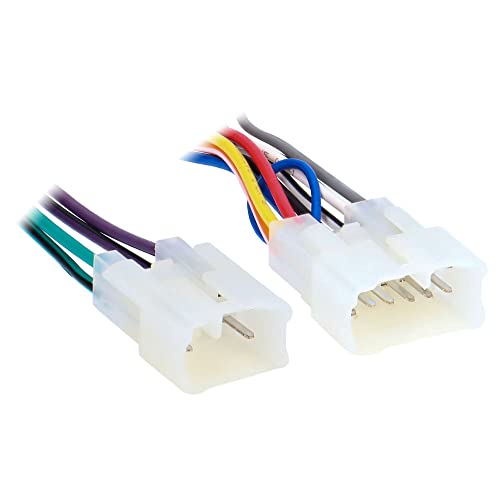
| Fitment and integration | Best native fit, retains factory controls and CANbus communication by design | Needs dash kits, adapter harnesses, antenna adapters, and sometimes steering-wheel control interfaces | Stock Car Stereo |
| Installation complexity | No swap needed unless the unit fails | Can involve CANbus, retained functions, programming, and trim-specific parts | Stock Car Stereo |
| Total installed cost | Lowest if you keep what you have | Can be moderate to high once parts and labor are added | Stock Car Stereo |
Sound quality: where the radio matters, and where it does not
The receiver, or head unit, is the control center for the system. CNET calls it the brain and heart of the car audio system, and that fits. But if the factory speakers are small, tired, or underpowered, a new deck alone will not transform the system.
Old factory head units may offer only CD player and radio, with buttons and very limited EQ control. In that setup, an aftermarket head unit can clean up source quality and make the system easier to tune. In a newer vehicle with a decent factory amp, the gain can be smaller than buyers expect.
Features: where aftermarket usually pulls ahead
Some aftermarket units may include Bluetooth for phone pairing, USB and micro SD card slots, phone-integration features, and touchscreen control. That is the main reason many drivers replace an older stock radio. The change is less about raw audio and more about getting modern phone access.
Factory units may not give many options for upgrades, especially in older cars. A modern aftermarket receiver can add source selection flexibility, better media access, and backup camera support on some models. If the car already has OEM smartphone integration, the gap narrows fast.
Fitment: the hidden part of the bill
Stock systems usually fit well because they were designed for the dash, the wiring, and the vehicle’s specific setup. Aftermarket fitment varies, and may require dash kits, adapter harnesses, antenna adapters, or steering-wheel control interfaces. Single-DIN and double-DIN openings, dash kits, adapter harnesses, antenna adapters, and steering-wheel control interfaces all affect the job.
CANbus also matters. On many modern cars, the radio is tied into the vehicle’s electrical setup, so an awkward swap can sometimes trigger warning lights or affect retained features. That is why a cheap head unit can turn into an expensive install.
According to What should you look for when choosing a car stereo? – CNET — CNET notes a car stereo should at least include USB and a 3.5mm auxiliary input.
How do they compare on sound, features, and fitment?
On sound, neither side automatically wins. A stock unit can be fine when the factory amp and speakers are doing their jobs, while an aftermarket unit helps most when the original radio is the weak link. Features and fitment are easier to call: aftermarket usually wins on modern functions, while stock usually wins on clean integration.
Sound quality: head unit limits versus speaker and amp limits
Replacing the factory head unit can fix weak bass control, poor EQ adjustment, or a noisy old radio section. It cannot rescue cheap speakers or a starved factory amp. That is the mistake many shoppers make: they blame the head unit for problems created farther downstream.
Features: Bluetooth, USB, CarPlay, Android Auto, and camera support
Aftermarket systems commonly bring Bluetooth audio streaming, hands-free calling, USB input, and auxiliary input. Some aftermarket systems support Android Auto and Apple CarPlay, and some can add backup cameras. Those are real daily-use gains, especially in older cars with only basic source options.
Fitment: single-DIN, double-DIN, dash kits, and factory integration
Older factory head units often live in custom dash shapes that need trim panels or fascia kits to accept a new radio. A single-DIN opening is often simpler. A double-DIN screen can look better and may fit better in some vehicles, if the dash layout and kit support it.

What changes in real life when you swap the head unit?
The biggest change is convenience. Bluetooth audio streaming, better phone pairing, and easier source control show up every time the car starts. If the old radio was clunky, scratched, or limited to CD player and radio, the daily improvement is immediate.
Bluetooth audio streaming and hands-free calling
Bluetooth is a common reason owners replace an older stock radio. It cuts the cable clutter and makes calls less awkward. On a worn factory unit, it can be the single best reason to change anything at all.
Apple CarPlay and Android Auto in older vehicles
Some aftermarket units support Android Auto and Apple CarPlay, which gives an older vehicle modern navigation and media access through the dash screen. That matters more than people admit. Once drivers use those interfaces regularly, the old button-heavy radio feels dated fast.
Equalizer control, source selection, and display usability
Factory head units often have limited EQ controls. Aftermarket decks usually give a better spread of tuning options and a clearer screen or mechless design. That said, a prettier interface does not fix weak speakers, so the gain is usability first and sound second.
Can you keep factory speakers and still swap the radio?
Yes, and in many cars that is the smart first move. If the factory speakers are still healthy and the goal is Bluetooth, CarPlay, or better source control, the head unit swap can make sense on its own. But if the speakers are distorted or the factory amp is the bottleneck, the radio is not the first problem.
When the stock speakers are fine to keep
Keep them when they play cleanly at normal volume, the bass is acceptable, and the vehicle just needs modern inputs or better calling features. In that case, the head unit is the right change because it addresses the real complaint without doubling the bill.
When an amp or speaker swap should come first
If the system sounds strained, thin, or harsh even at moderate volume, the speakers or amplifier may be the weak point. A new receiver can improve control, but it will not add cone area, power, or better tweeter quality. Fix the actual bottleneck first.
How to avoid blaming the radio for speaker problems
A tired factory speaker can fool people into thinking the new deck is bad. Before spending on a radio, check for torn surrounds, rattles, blown drivers, or clipping from a factory amp. That keeps the budget focused where the sound problem really lives.
What makes aftermarket installation harder than it looks?
Installation is where many budget comparisons fall apart. DIY installations may require understanding CANbus, and modern cars can lose steering-wheel controls, retained warnings, or camera behavior if the adapter plan is wrong. The labor is often more than a simple plug-and-play swap.
CANbus, warning lights, and retained vehicle functions
CANbus is the vehicle communication network that can connect the radio to other systems. If the wrong wiring interface or adapter is used, the car can throw warning lights or drop retained functions like accessory power timing. That is why vehicle-specific planning matters before the first trim panel comes off.
Steering-wheel buttons, antenna adapters, and dash kits
Many drivers want the new radio to keep steering-wheel buttons, factory antenna performance, and a flush dash look. Those pieces are rarely free or universal. Missing one adapter can turn a clean install into a half-finished one.
When professional installation is the safer call
Professional installation makes sense when the vehicle uses CANbus heavily, the dash is tightly packaged, or the car has a factory amp and steering-wheel controls. It also makes sense if the owner wants backup camera integration and OEM-like behavior. Paying labor can be cheaper than repairing a bad install.
Decision table: stock vs aftermarket across 10 buyer scenarios
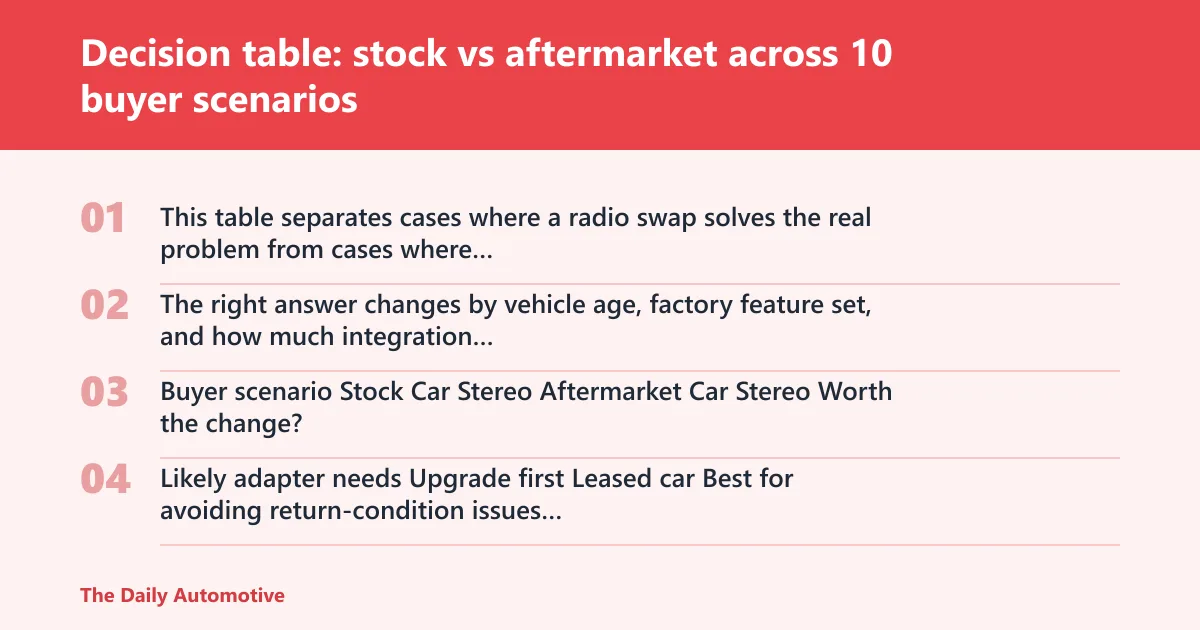
This table separates cases where a radio swap solves the real problem from cases where it only adds cost. The right answer changes by vehicle age, factory feature set, and how much integration the driver wants to keep.
| Buyer scenario | Stock Car Stereo | Aftermarket Car Stereo | Worth the change? | Likely adapter needs | Upgrade first |
|---|---|---|---|---|---|
| Leased car | Best for avoiding return-condition issues | Only makes sense if the lease terms allow reversible changes | No, usually keep stock | None if kept stock; many parts if swapped | Nothing unless a removable phone mount solves the need |
| Older car with no Bluetooth | Acceptable if radio still works and the owner is fine with wires | Big practical gain from Bluetooth and modern inputs | Yes, often worth it | Dash kit, wiring interface, antenna adapter | Head unit first |
| Premium trim with factory smartphone integration | Often already covers the main features well | May lose OEM functions for little gain | Usually no | Complex integration parts if swapped | Leave stock unless a specific fault exists |
| Driver who wants a backup camera | May already support the factory camera path | Can add screen support for a rear camera on some units | Maybe, if the stock unit cannot do it | Camera kit, video interface, wiring interface | Head unit if no display exists |
| Owner chasing better sound without changing speakers | May already be as good as the speakers allow | Can help if the factory radio is weak | Maybe, not guaranteed | Wiring interface and dash kit | Head unit only after checking speaker health |
| Daily commuter who needs hands-free calling | Fine if Bluetooth calling is built in | Usually gives easier pairing and better controls | Yes if stock lacks Bluetooth | Basic adapter kit | Head unit or a call-focused interface |
| Truck or SUV with steering-wheel controls | Best at keeping all factory buttons working | Can keep them only with the right interface | Maybe, depending on adapter support | Steering-wheel control interface, wiring interface, dash kit | Head unit only if control retention is available |
| Car with an external factory amp | Often integrates cleanly with the amp tuning | Can work well, but integration must be checked carefully | Maybe, install risk is higher | Amp retention wiring, sometimes amp interface | Speaker or amp planning before radio swap |
| Budget build with worn factory radio | Not a good value if the unit is failing | Usually the cleanest fix | Yes, if the stock unit is failing | Basic wiring interface and dash kit | Head unit first |
| Owner who plans future speaker and amp upgrades | May become the limiting factor later | Better platform for source control and expansion | Yes, if the build is planned well | Depends on vehicle and audio plan | Head unit first, then speakers, then amp |
Choose Stock Car Stereo if… / Choose Aftermarket Car Stereo if…
Choose Stock Car Stereo if your factory system already has Bluetooth, smartphone integration, steering-wheel controls, and a screen that works with the car’s electronics. Keep it stock if the vehicle is leased, the trim is premium, or the real sound problem is worn speakers or a tired amplifier.
Choose Aftermarket Car Stereo if the radio is old, lacks Bluetooth, lacks CarPlay or Android Auto, or is the weak link in an otherwise decent system. It is also the better move when you want backup camera support, cleaner source control, or a better base for future speaker and amp work.
The cheapest smart choice is not always the cheapest radio. If the factory setup already does the job, leave it alone. If the head unit is holding the system back, replace it and budget for the adapters that make the job behave like factory.
Frequently asked questions
Is a stock car stereo better than an aftermarket car stereo?
Stock is better when the factory system already fits the car, keeps all controls, and includes the features the driver wants. Aftermarket is better when the factory radio is dated, limited, or missing Bluetooth, CarPlay, Android Auto, or backup camera support. The better choice depends on the bottleneck.
Does an aftermarket car stereo improve sound quality?
Sometimes. If the factory head unit is the weak point, an aftermarket receiver can clean up source quality and give better tuning control. If the speakers or amplifier are the limit, the sound change will be smaller than buyers expect.
What features do aftermarket stereos have that stock stereos don’t?
Common additions include Bluetooth audio streaming, USB input, auxiliary input, Apple CarPlay, Android Auto, touchscreen control, and backup camera support on some units. Some aftermarket systems also offer better EQ control and more source choices than a basic factory radio.
Can I keep my factory speakers and just replace the head unit?
Yes, if the speakers are still healthy and the goal is better features or a cleaner radio section. That is often the most sensible first step. If the speakers are worn or the factory amp is weak, the new head unit will not fully solve the sound problem.
Will an aftermarket stereo fit my car’s dash?
Often, yes, but only with the right kit. Fitment depends on whether the car takes a single-DIN or double-DIN unit, plus the correct dash kit, wiring interface, antenna adapter, and sometimes a steering-wheel control interface. Vehicle-specific planning matters more than the box art.
Do I need professional installation for an aftermarket car stereo?
Not always, but many modern cars make DIY more complex than expected. CANbus, warning lights, retained controls, and factory amps can all create problems if the wrong parts are used. Professional installation is the safer move when integration matters.
Can an aftermarket stereo add Apple CarPlay or Android Auto to an older car?
Yes, many aftermarket units support Android Auto and Apple CarPlay, which adds modern phone access to older vehicles. That is one of the clearest reasons to replace a basic factory radio. The dash may need extra parts, but the feature gain is real.
Is a stock head unit more durable than an aftermarket one?
Often it is, but not always. Factory units are built for the vehicle and usually integrate well with the electrical system, while aftermarket quality varies a lot by brand and price. Durability is about build quality and installation quality, not the word stock versus aftermarket by itself.
Products related to this article
Sponsored / affiliate links. As an Amazon Associate I earn from qualifying purchases. I may earn additional commission from eligible campaigns.