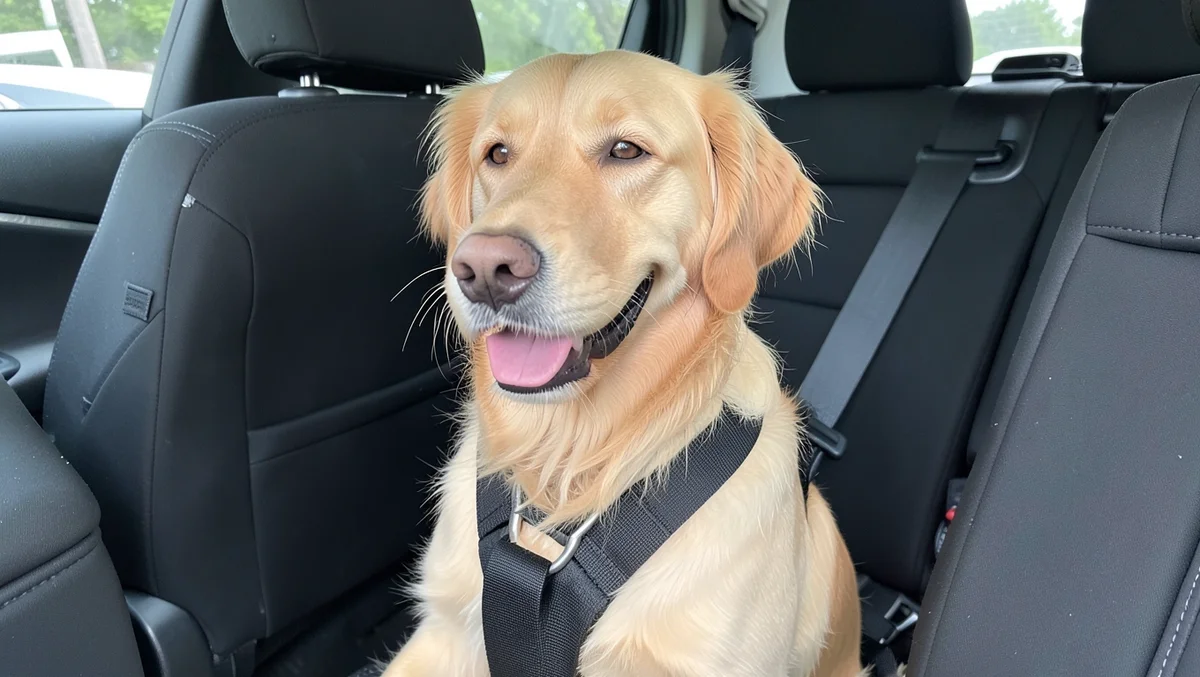
Best Car Seat Belts for Dogs: 3 Top-Rated Picks Reviewed
A car seat belt for dogs is a nylon tether that clips a dog’s harness to your car’s seat belt buckle, cutting down on driver distraction and keeping a dog from being thrown forward in a sudden stop. These clip-style tethers are not the same thing as a full, crash-test-certified harness — pair one with a properly fitted harness (never a plain collar) for the safest setup.
We compared three popular dog seat belts below — a retractable bungee tether, a reflective 2-pack, and a heavy-duty carabiner clip — based on their real listed specs, materials, and adjustable range, so you can see how they actually differ instead of assuming they’re interchangeable.
1 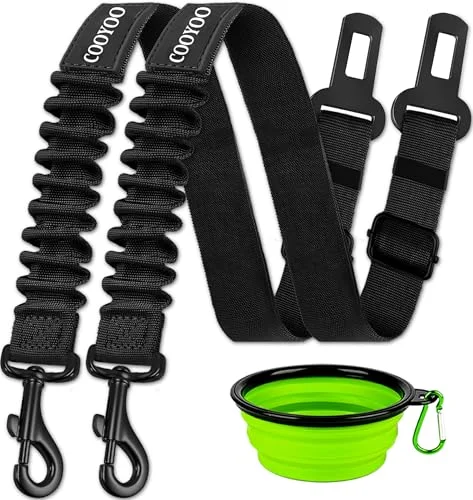
|
Top Pick
COOYOO Dog Seat Belt, 3-Piece Set Retractable Dog Car Harness Seat Belt |
|
2 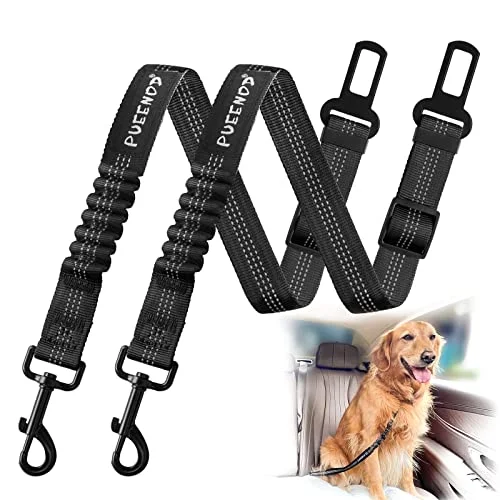
|
Best for Night VisibilityPUEENOD 2-Pack Dog Seat Belt with Reflective Stitching |
|
3 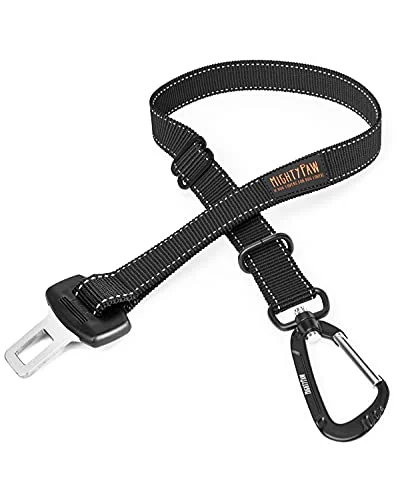
|
Heavy-Duty BuildMighty Paw Dog Seat Belt with Aviation-Grade Aluminum Carabiner |
1. COOYOO Dog Seat Belt, 3-Piece Set Retractable Dog Car Harness
- Brand: COOYOO
- Adjustable length: 24 to 31 inches
- Buckle tab width: 0.79 inches (fits most vehicle seat belt receptacles)
- Set includes: 2 seat belt tethers + 1 collapsible travel bowl, roughly half a pound each
This is a retractable bungee-style tether, not a rigid strap. The elastic bungee section absorbs sudden braking so your dog isn’t yanked hard against the tether, and the aluminum alloy clasp on the harness end rotates a full 360 degrees, so a dog can sit, lie down, or turn around without the leash line twisting up. The quick-release metal buckle clips straight into your car’s seat belt receptacle, and the swivel clip on the harness end works with any harness that has a D-ring — it does not come with a harness, so you’ll need to already own one or buy one separately.
Advantages
- Comes as a 2-pack, so one order covers two dogs or a second car.
- Bungee section cushions sudden stops instead of jerking the harness tight.
- 360-degree rotating clasp lets a dog reposition without tangling.
- Includes a collapsible silicone travel bowl as a bonus.
- 0.79-inch buckle tab fits the vast majority of factory seat belt buckles.
Our Take
This is the pick if you want the most give in the tether — the bungee stretch means a dog can shift positions on a long ride without feeling constantly held taut. The tradeoff is that a stretchy tether has more give in a hard stop than a fixed-length one, so we’d pair it with a snug, properly fitted harness rather than a slip collar. Getting a spare bowl in the box is a nice touch if you’re already stocking up for road trips.
2. PUEENOD 2-Pack Dog Seat Belt with Reflective Stitching
- Brand: PUEENOD
- Adjustable length: 21 to 30 inches
- Buckle tab width: 0.83 inches
- Weight: About 6 ounces per belt
This pack gets its “night visibility” edge from reflective thread woven into the strap itself, not a stick-on reflector strip that can peel off — it stays visible from a car’s headlights if you’re loading or unloading a dog roadside after dark. It uses a zinc-alloy 360-degree swivel snap and an elastic bungee buffer, similar in concept to other secured-restraint gear you’d use for smaller passengers, and the strap adjusts from 21 to 30 inches, a slightly shorter range than the COOYOO set above — worth checking against your dog’s typical seated distance from the buckle before ordering.
Advantages
- Reflective stitching is woven in, not glued on, so it won’t peel.
- Comes as a 2-pack at a lower per-belt price than most single-belt listings.
- Zinc-alloy swivel snap rotates a full 360 degrees.
- Elastic bungee buffer softens sudden stops.
- Lightest of the three tethers reviewed here, at roughly 6 ounces per belt.
Our Take
If you regularly load or unload your dog at dusk, a rest stop, or a dark driveway, the reflective stitching here is a genuinely practical edge over the other two picks, not just a marketing bullet point. The shorter 21-to-30-inch adjustable range is the one thing to double-check first — measure the distance from your seat belt buckle to where your dog naturally sits before assuming it’ll reach.
3. Mighty Paw Dog Seat Belt with Aviation-Grade Aluminum Carabiner
- Brand: Mighty Paw
- Adjustable length: 16 to 26 inches (the shortest range of the three)
- Carabiner rating: Rated by the manufacturer to withstand over 850 lbs of force
- Weight: About 4 ounces, the lightest of the three
Instead of a bungee section, this one uses a fixed nylon strap with an aircraft-grade aluminum carabiner instead of a plastic clip. The manufacturer’s own listing states it should be paired with an approved vehicle dog harness rather than clipped to a collar — which lines up with standard pet-restraint advice, since a collar can slip or put pressure on a dog’s neck in a sudden stop, while a harness spreads that force across the chest. The 16-to-26-inch range is the shortest of the three tethers here, so it’s best suited to smaller vehicles or dogs that sit close to the seat belt buckle.
Advantages
- Aluminum carabiner is rated to over 850 lbs of force by the manufacturer, well above a metal clasp.
- Fixed nylon strap doesn’t stretch, so there’s no bungee rebound to manage.
- Lightest and most compact of the three, easy to stash in a glovebox.
- Manufacturer explicitly recommends pairing it with a harness rather than a collar.
Our Take
Choose this one if you’d rather have a rigid connection point than a stretchy one, or if your dog tends to lean into a bungee tether and stretch it out. The carabiner clip is faster to unclip one-handed than a swivel snap, which matters if you’re wrangling a leash and a dog at the same time. Just measure your back seat first — at 16 to 26 inches, it’s noticeably shorter than the other two options.
Buying Guide: How to Choose a Car Seat Belt for Your Dog
Know the Difference Between a Seat Belt Tether and a Crash-Tested Harness
The three products above are seat belt tethers — a clip or carabiner on one end, a swivel snap for a harness D-ring on the other. They’re built to stop everyday problems: a dog climbing into the front seat, blocking your mirror, or jumping out an open door at a stoplight. They are not the same category of product as a full-body crash-tested dog harness.
The most rigorous independent testing on dog car restraints comes from the Center for Pet Safety (CPS), which partnered with Subaru and MGA Research Corporation — an NHTSA-contracted lab — to crash-test dog harnesses at 30 mph using a weighted dummy dog. Of the 11 harness brands sampled, most failed, and several were rated “catastrophic failures.” As of this writing, CPS lists the Sleepypod Clickit Sport and Clickit Terrain as its currently certified harnesses (rated for dogs up to 110 lbs), with the EzyDog Drive also earning a high CPS rating. None of the three tethers reviewed above have gone through independent crash testing, and neither have the vast majority of dog seat belts sold on Amazon — that’s true of this entire budget product category, not a flaw specific to any one brand.
That doesn’t make a basic tether pointless. It still keeps a dog in one seat, out of your lap, and away from an open door — the everyday risks most dog owners are actually trying to solve. It just means you shouldn’t assume “seat belt for dogs” and “crash-tested harness” are the same safety claim.
Always Clip to a Harness, Never a Collar
A seat belt tether should clip to a properly fitted body harness, not a collar. A collar sits on a dog’s neck, and a hard stop or sudden swerve concentrates that force on the throat. A well-fitted harness spreads the same force across the chest and shoulders instead. If you don’t already own a harness, budget for one alongside the tether — several listings in this category, including the Mighty Paw pick above, say this directly in their own product description.
Match the Adjustable Length to Your Back Seat
Measure the distance from your seat belt buckle to roughly where your dog’s harness D-ring sits when your dog is comfortably seated. The three tethers above range from 16 to 31 inches fully extended — too short and the dog can’t sit normally, too long and it defeats the point of restraint. Bungee-style tethers (like the COOYOO pick) have some built-in stretch on top of their listed length; fixed-strap tethers (like the Mighty Paw pick) don’t.
Check Buckle Tab Width Before You Buy
The metal tab that plugs into your car’s seat belt receptacle isn’t a universal size across every vehicle. Most dog seat belts, including the two above with published specs, use a tab around 0.79 to 0.83 inches wide, which fits the large majority of factory buckles — but some older or aftermarket buckles run narrower. If you’ve had trouble with a seat belt clip not seating fully in the past, measure your buckle’s opening before ordering.
Know Your State’s Pet Restraint Laws
Most states don’t have a law requiring restrained pets, but a few do. New Jersey treats driving with an unrestrained pet as an animal cruelty violation, with fines from $250 to $1,000 (and, in theory, up to six months in jail). Hawaii bars dogs from sitting on the driver’s lap and requires a crate or a tether, with a $97 fine for a first offense. Rhode Island requires pets to be kept in an enclosed area or physically restrained, with fines up to $200. Even outside those three states, an unrestrained dog jumping around the cabin can factor into a distracted-driving citation after the fact.
Frequently Asked Questions
Why Use a Car Seat Belt for Dogs?
A seat belt tether keeps your dog in one part of the car instead of roaming into your lap, the front footwell, or an open door. That cuts down on driver distraction and reduces the chance of your dog being thrown forward in a hard stop, even though a basic tether isn’t the same as a crash-tested harness (see the buying guide above for that distinction).
How Do I Choose the Right Dog Seat Belt?
Measure the distance from your seat belt buckle to your dog’s harness D-ring, check that the buckle tab width matches your car, and decide whether you want a bungee tether with some stretch or a fixed-length strap. All three products above list their adjustable range and buckle tab width, which is the fastest way to rule products out before buying.
Are Car Seat Belts for Dogs Crash-Tested?
Most are not, including the three reviewed on this page. The Center for Pet Safety (CPS), working with Subaru and an NHTSA-contracted lab, has crash-tested dog harnesses since 2013 and currently certifies only a small number of products, such as the Sleepypod Clickit Sport and Clickit Terrain. If independent crash certification is your top priority, look specifically for a CPS-certified harness rather than a generic seat belt clip.
Should I Clip the Seat Belt to My Dog’s Collar or Harness?
Always use a harness. Clipping a seat belt tether to a plain collar puts the full force of a sudden stop on your dog’s neck. A properly fitted harness spreads that same force across the chest and shoulders, which is why most seat belt manufacturers, including Mighty Paw, specifically recommend pairing their product with a harness.
Can Any Dog Use a Car Seat Belt?
Most adjustable tethers fit small to large dogs within their stated range, but very small puppies and toy breeds may need a smaller, purpose-built harness rather than an adult-sized tether, since a loose-fitting harness can slip off entirely. Always check the manufacturer’s weight and size range before buying.
Is It Illegal to Drive with an Unrestrained Dog?
In most states, no specific law requires it, but New Jersey, Hawaii, and Rhode Island all have restraint requirements with real fines attached. Beyond those three states, an unrestrained dog can still contribute to a distracted-driving citation if it’s found to have caused unsafe driving.
Conclusion
A dog seat belt won’t turn a hatchback into a crash-tested transport crate, but it solves the problem most owners actually have: a dog climbing around the cabin, blocking the mirror, or bolting out an open door. Pick a tether whose adjustable length matches your back seat, clip it to a properly fitted harness instead of a collar, and treat a CPS-certified harness as the next step up if independent crash protection is what you’re after.
Products related to this article
Sponsored / affiliate links. As an Amazon Associate I earn from qualifying purchases. I may earn additional commission from eligible campaigns.