Car Starts Then Dies When Cold: Common Causes and Simple Fixes
It can be super frustrating when your Car Starts Then Dies When Cold: Common Causes can stop your day in its tracks. If your car struggles to stay running when the temperature drops, you’re not alone! Many car owners face this problem. It might seem tricky at first, but figuring out why your car does this doesn’t have to be hard. This post will walk you through the most common reasons and give you easy-to-follow solutions. Get ready to explore how to get your car running smoothly, even when it’s chilly outside.
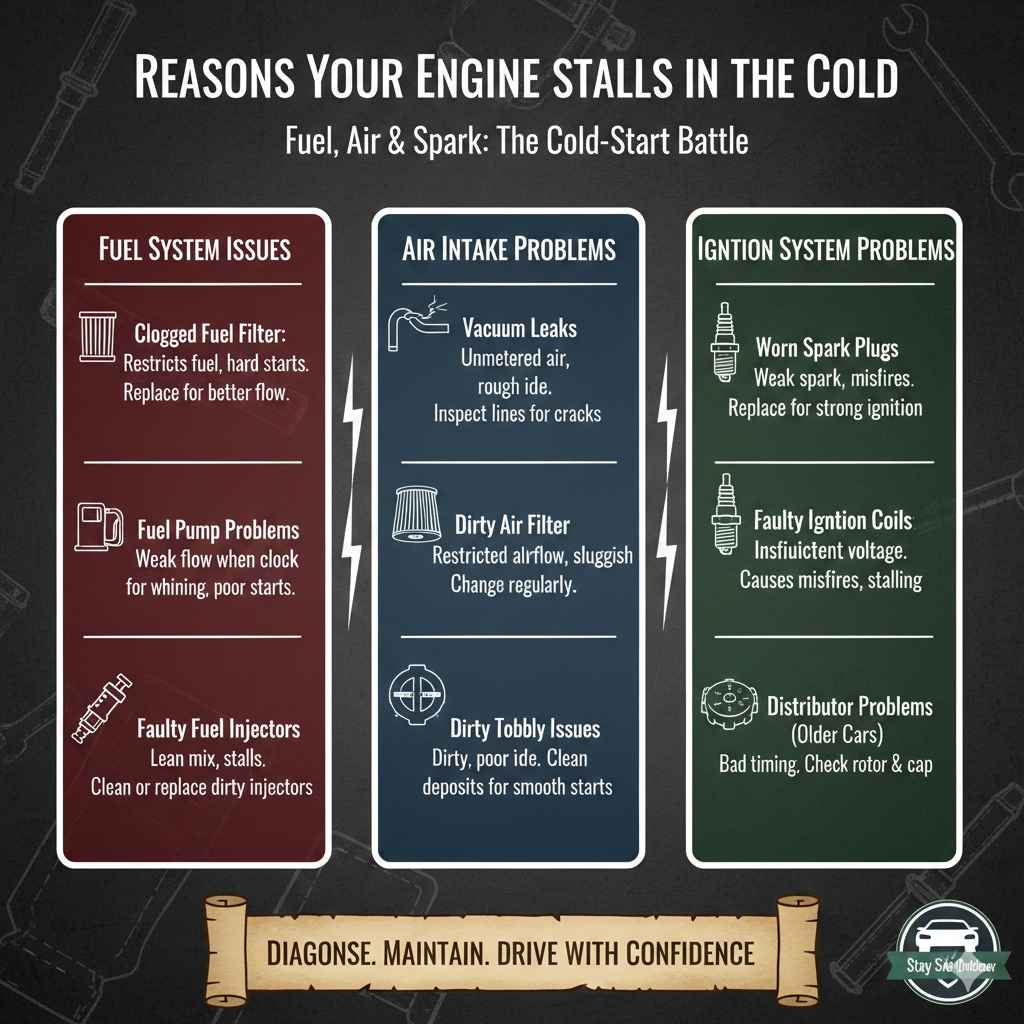
Reasons Your Engine Stalls in the Cold
When your car doesn’t want to cooperate in cold weather, several issues could be at play. The engine relies on a mix of air, fuel, and spark to run properly. Cold temperatures can mess with this balance. This section explores the common culprits behind your car’s cold-start woes. We’ll explore each cause, helping you recognize symptoms and take appropriate action. Knowing the likely problems is the first step in getting your car back to normal.
Fuel System Issues
Your car’s fuel system is like its bloodstream, delivering the energy it needs. If this system isn’t working correctly, your engine will have trouble starting and staying on in the cold. Cold weather can make fuel thicker, which makes it harder for the car to get the right amount of fuel. Problems in the fuel system often create problems for cold starts. Let’s look at some things to check when your car hesitates to start on a cold day.
Clogged Fuel Filter: A fuel filter removes dirt and debris from the fuel before it reaches the engine. Over time, the filter can get clogged, restricting fuel flow. A clogged fuel filter starves the engine of fuel, which is more noticeable during cold starts when the engine needs more fuel to run correctly. Replacing the fuel filter is a standard maintenance task that’s generally straightforward.
For instance, a driver might start noticing issues during the winter when their car becomes difficult to start. They may experience a sluggish engine response or the engine may stall. They eventually trace the problem back to the fuel filter, which needs to be replaced. After the replacement, the car starts and runs much better.
Fuel Pump Problems: The fuel pump is responsible for sending fuel from the gas tank to the engine. If the fuel pump is failing, it may not deliver enough fuel, especially when the engine is cold and needs more fuel to start. The fuel pump might struggle to work in cold temperatures, leading to hard starts or stalling. The pump might produce a whining noise when it’s failing, but it may also fail with no prior indication.
A car owner might notice their car taking longer to start in the winter. Eventually, the engine fails to start completely. After inspection, a mechanic discovers the fuel pump is weak and cannot supply sufficient fuel to the engine. Replacing the fuel pump often solves the starting problems.
Faulty Fuel Injectors: Fuel injectors spray fuel into the engine cylinders. If the injectors are clogged or not working correctly, they might not deliver the right amount of fuel, especially during cold starts. Clogged injectors can lead to a lean fuel condition, causing the engine to stall. Replacing or cleaning the fuel injectors can resolve starting issues in the cold.
Consider a situation where a driver’s car suddenly begins to idle roughly after a cold start. They may also notice a decline in gas mileage and poor acceleration. After testing, the mechanic reveals a few injectors are not spraying fuel correctly, probably because they are dirty. The mechanic will clean or replace the injectors to fix the issue.
Air Intake Problems
Your engine needs the right mix of air and fuel to run. The air intake system brings air into the engine, and if this system is blocked or compromised, it can cause problems, especially in cold weather. When the air-fuel ratio is off, the engine might not start or stall shortly after starting. Inspecting the air intake system is a good way to troubleshoot your car’s cold-start problems.
Vacuum Leaks: Vacuum leaks happen when there’s an opening in the vacuum lines of the engine. These leaks can cause unmetered air to enter the engine. This can disrupt the air-fuel mixture, making it difficult for the engine to start, particularly in cold conditions. Vacuum leaks might cause rough idling, stalling, and a decrease in engine performance. Inspecting vacuum lines for cracks, disconnections, or damage is a good way to resolve these problems.
A vehicle owner may notice their engine making a hissing noise and starting to run rough. After checking, they discover a cracked vacuum hose. The cracked hose is letting extra air into the engine, making it run poorly. Replacing the faulty hose gets the car running smoothly again.
Dirty Air Filter: The air filter keeps dirt and debris from getting into your engine. However, when an air filter is clogged, it restricts airflow. This restriction can make the engine run poorly, especially during cold starts when it needs a lot of air. Regularly changing your air filter is important.
Suppose a driver observes that their car seems sluggish and lacks power. Inspection of the air filter reveals that it is very dirty. After changing the air filter, the engine runs more smoothly and the car gets better gas mileage.
Throttle Body Issues: The throttle body controls the amount of air entering the engine. If the throttle body is dirty or has problems, it may cause issues, like poor starting or stalling. Cleaning the throttle body can help restore proper airflow and fix starting issues.
One situation is where a driver notices their car struggles to maintain a steady idle speed, and stalls frequently. They inspect the throttle body and find it’s covered in carbon deposits, which restrict airflow. After cleaning the throttle body, the car returns to starting and running smoothly.
Ignition System Problems
The ignition system is what starts the combustion process in your engine. If there are problems with your car’s ignition system, it will have a hard time starting and running, especially in cold weather. The ignition system gives the spark the engine needs to run. Checking the spark plugs, ignition coils, and other parts of the ignition system can often resolve starting issues.
Worn Spark Plugs: Spark plugs provide the spark that ignites the air-fuel mixture in your engine cylinders. If the spark plugs are worn, they may not produce a strong enough spark, especially when the engine is cold. Worn spark plugs may also cause misfires, rough idling, and reduced engine performance. Replacing spark plugs is a common maintenance task that is usually very affordable.
For example, a car might start to have trouble starting on cold mornings, and it might run rough when it does start. The owner has a mechanic inspect the spark plugs, and it is found that they are worn and in need of replacement. After new spark plugs are installed, the car starts and runs like new.
Faulty Ignition Coils: Ignition coils are responsible for providing the high voltage needed to generate a spark in the spark plugs. When an ignition coil is failing, it might not provide a sufficient spark, especially in cold weather when the engine needs a strong spark to start. Faulty coils can lead to misfires, rough idling, and engine stalling.
A vehicle owner notices their car hesitating when accelerating and running rough. They then get a check engine light. They take their car to a mechanic, and the mechanic finds that one of the ignition coils has failed. Replacing the faulty coil can often resolve the performance issues.
Distributor Problems: Some older cars have a distributor, which delivers the spark to the spark plugs. If the distributor is faulty, it can affect the timing of the spark, which can cause starting and running issues, particularly when the engine is cold. The distributor components, like the rotor and distributor cap, can become worn.
A driver with an older car may have problems starting their car on cold days. After inspecting their car, they find that the distributor cap is cracked. Replacing the cap can fix the problem.
Understanding the Role of the Engine Control Unit
The Engine Control Unit (ECU) is like the brain of your car. It receives data from many sensors and uses this data to manage your engine’s performance. The ECU makes adjustments to ensure the engine runs smoothly and efficiently. When the engine is cold, the ECU has a significant role in making sure the engine starts and stays running. Let’s explore how the ECU works and how problems with the ECU can lead to starting problems.
How the ECU Manages Cold Starts
During a cold start, the ECU uses data from many sensors to adjust the air-fuel mixture, the ignition timing, and other things. It makes changes to provide a richer fuel mixture and adjusts the timing to help the engine start easily. A healthy ECU that is running correctly is key to ensuring your engine starts reliably in the cold. It constantly adjusts the engine settings based on information from the sensors.
Sensors and Their Data: The ECU depends on data from different sensors to make its adjustments. Some of these sensors include the engine coolant temperature sensor, the intake air temperature sensor, and the mass airflow sensor. The ECU uses the data to calculate the right amount of fuel and the right timing for starting.
The engine coolant temperature sensor tells the ECU the temperature of the engine. In cold weather, this sensor helps the ECU determine the correct adjustments. The ECU will make the fuel mixture richer and adjust the timing for optimal performance during the starting process. The intake air temperature sensor measures the temperature of the air entering the engine, and the mass airflow sensor measures the amount of air.
Fuel Mixture Adjustment: In a cold engine, the ECU will typically enrich the fuel mixture. This means that more fuel is added to the air-fuel mixture to help the engine start. A richer mixture gives the engine the extra fuel it needs to start when it is cold. The ECU adjusts this mixture based on the temperature data from the sensors.
When starting a cold engine, the ECU may increase the fuel injection by 20% or more. This is because cold fuel doesn’t vaporize as easily. Adding more fuel ensures the engine receives enough fuel to start the combustion process.
Ignition Timing Control: The ECU also changes the timing of the spark. The ECU will advance the ignition timing to ensure the spark plugs ignite the fuel-air mixture at the right moment. The precise timing helps the engine start. The timing ensures the mixture combusts at the right moment for maximum power and smooth operation.
For instance, when an engine is cold, the ECU might advance the ignition timing by a few degrees. This early spark helps the engine. As the engine warms up, the ECU will reduce the amount of ignition timing advance to keep the engine working efficiently.
Possible ECU Problems and Their Effects
Even though the ECU is durable, it can sometimes encounter issues. These issues can lead to several problems, including starting issues, poor performance, and even stalling. ECU issues can often cause problems in cold weather, when the ECU is making many adjustments. Let’s look at how ECU problems can impact your car’s starting and running performance.
Sensor Failures: The ECU relies on data from different sensors. If any of these sensors fail, it can send inaccurate information to the ECU. This can lead to the ECU making wrong adjustments to the fuel mixture, the timing, or other settings. A faulty sensor might cause the engine to stall.
For example, a failing engine coolant temperature sensor might make the ECU think the engine is warmer than it actually is. This might cause the ECU to lean the fuel mixture, making it difficult to start the engine, particularly in cold weather.
Software Glitches: Like any other piece of technology, the ECU can have software glitches. These glitches can mess up the ECU’s ability to control the engine. Software glitches might cause your car to run poorly. They can also lead to issues like stalling or poor fuel economy.
A software glitch in the ECU’s cold-start algorithm could prevent it from enriching the fuel mixture properly, resulting in a cold engine that doesn’t start. The car owner might need to reprogram the ECU. This will correct the glitch and get the car back to normal.
ECU Component Failure: The ECU contains electronic components that can fail over time. A failing component can impact the ECU’s ability to do its job. A failed component can lead to many problems, including the engine stalling, rough idling, or failure to start. The issue may require replacement of the ECU.
A driver’s car suddenly begins to stall when it’s cold. They find that one of the ECU’s internal components has failed, preventing the ECU from correctly managing the engine. Replacing the ECU often solves the problem.
Simple Steps to Troubleshooting Cold Start Issues
Troubleshooting your car’s cold start problems doesn’t have to be hard. By using a systematic approach, you can identify and solve the problem. Checking simple things first can save you money and time, and it may allow you to fix things yourself. This section explains how to approach the problem so you can get your car starting smoothly in the cold. Let’s explore a simple, step-by-step process for figuring out the problem.
Initial Checks and Visual Inspections
Before you jump into complex diagnostics, there are some simple checks you can do yourself. These initial steps are the perfect place to start. A quick visual inspection and a few easy tests can reveal a lot about the problem. It could save you a trip to the mechanic. These checks can help you get a basic grasp of what’s happening.
Battery Check: Your car’s battery is essential for starting the engine. Cold weather can reduce battery performance. A weak battery might not give the engine enough power to start. Check the battery voltage with a voltmeter. The battery voltage should be at least 12.6 volts when the car is off.
A car might have trouble starting on a cold morning, and the engine might crank slowly. The car owner can check the battery voltage and discovers it’s low. Replacing the battery can often solve the starting problem, particularly in cold weather.
Fuel Level: Make sure you have enough gas in your car. Running out of fuel is a common cause for a car failing to start. Low fuel levels can also cause problems, because fuel condenses inside the tank when it is cold. When fuel condenses, it reduces the amount of fuel that makes its way to the engine.
A driver might think their car is having mechanical problems when it won’t start. However, they may discover that they ran out of gas. This can easily happen in the cold when the engine needs more fuel to start. Adding fuel can solve the problem.
Visual Inspection: Check for any obvious problems. Look for any disconnected or damaged wires, loose connections, or anything that seems out of place under the hood. Inspect the air filter, hoses, and vacuum lines for visible damage. Any of these problems can cause problems.
A car owner might notice a hissing sound and find a vacuum hose that has come loose. Reconnecting the hose can sometimes solve the engine stalling.
Advanced Diagnostics and Further Steps
If the initial checks don’t solve the problem, you may need to dig a little deeper. More advanced diagnostic steps can help identify the root of the problem. If you feel comfortable, these steps can assist you in finding the cause. If not, a mechanic can perform these tests for you.
Using an OBD-II Scanner: An OBD-II (On-Board Diagnostics II) scanner can help you pinpoint problems. This tool plugs into your car’s diagnostic port and reads trouble codes stored in the ECU. This can tell you about any problems.
The check engine light comes on, and a mechanic uses a scanner to read the trouble codes. The codes might indicate issues with the fuel injectors or the ignition system. The scanner offers a starting point for more advanced troubleshooting.
Fuel Pressure Test: Test the fuel pressure to ensure the fuel pump is delivering the correct amount of fuel. Attach a fuel pressure gauge to the fuel rail. The fuel pressure reading should be within the car’s specifications, which can vary. Low fuel pressure can prevent the engine from starting.
The car hesitates to start, and a mechanic runs a fuel pressure test. The test reveals that the fuel pump is not delivering enough pressure. Replacing the fuel pump can often solve the starting issues.
Spark Test: To check for a spark, remove a spark plug and connect it to the spark plug wire. Then, ground the spark plug and crank the engine. If there’s no spark, you can explore the ignition system components.
The car struggles to start, and the mechanic removes a spark plug. After cranking the engine, they don’t see a spark. They might then explore the ignition coil or the distributor to discover the cause of the problem.
| Problem | Possible Causes | Troubleshooting Steps |
|---|---|---|
| Engine cranks but does not start |
|
|
| Engine starts then dies immediately |
|
|
Frequently Asked Questions
Question: Why does my car start then die when it’s cold?
Answer: Several issues can cause this, but the most common are fuel delivery problems, issues with the air intake, or problems with the ignition system. Cold weather can make these issues worse because the engine needs the right mix of fuel and air to start.
Question: What’s the role of the fuel pump in cold starts?
Answer: The fuel pump delivers fuel to the engine. If the fuel pump isn’t working correctly, it might not supply enough fuel, especially when cold. A failing fuel pump can cause the engine to start but then die quickly.
Question: Can a bad battery cause starting problems in cold weather?
Answer: Yes. Cold temperatures decrease battery efficiency. A weak battery might not give the engine enough power to start, causing the car to struggle or not start at all. The battery is crucial for the car’s electrical system.
Question: What should I check first when my car won’t start in the cold?
Answer: First, check the battery for proper voltage. Also, make sure you have enough fuel in the tank. Then, visually inspect the engine for any obvious problems, like loose or disconnected wires.
Question: When should I bring my car to a mechanic for cold start issues?
Answer: If you’ve done the basic checks and are still having trouble, or if you don’t know how to do the repairs, it’s best to see a mechanic. They have the tools and experience to diagnose and fix the problem.
Final Thoughts
When your car refuses to start or stalls when the temperatures drop, it can definitely be frustrating, but knowing the main reasons and having a simple plan to troubleshoot is a huge step. As you’ve explored, the issue of Car Starts Then Dies When Cold: Common Causes can stem from fuel delivery problems, issues within the air intake, and troubles with the ignition system. The Engine Control Unit, or ECU, also has a key role in the process. Remember, the fuel pump, spark plugs, and vacuum lines are all likely suspects. By doing some simple inspections, you can often identify the core issue and get your car running right. If it’s more complicated than you can do, don’t hesitate to consult a mechanic. This approach will save you time and money and may allow you to fix problems yourself. Get ready to explore the open road.