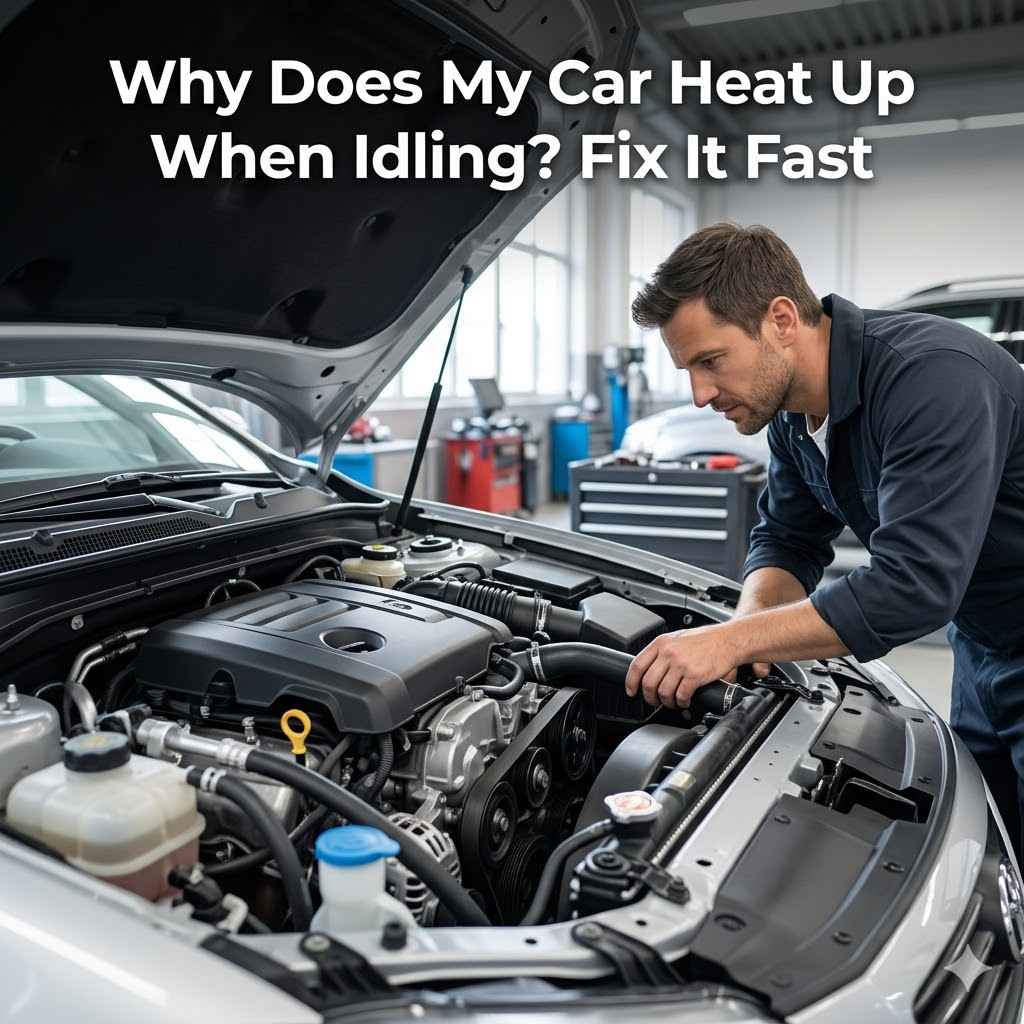
Why Does My Car Heat Up When Idling? Fix It Fast
It can be worrying when your car’s temperature gauge climbs while you’re just sitting still. You might wonder, Why Does My Car Heat Up When Idling? Fix It Fast is a common concern for many drivers, especially those new to car care.
It might seem complicated, but often, the causes are simple to spot and fix. This guide will break down the main reasons and give you clear steps to get your car cooling properly again. We’ll look at what’s going on under the hood so you can feel confident addressing this issue.
Understanding Why Your Car Overheats While Idling
When your car’s temperature rises while it’s not moving, it’s usually a sign that something in the cooling system isn’t working as it should. The cooling system is designed to keep your engine at a steady, safe temperature. It does this by circulating coolant through the engine to absorb heat and then dissipating that heat through the radiator.
When your car is idling, there’s less natural airflow over the radiator than when you’re driving. This means the system relies more heavily on its fans and the coolant’s efficiency to stay cool. If any part of this system is struggling, the heat can build up quickly when the engine is left running without the benefit of moving air.
Several factors can contribute to overheating at idle. These often involve issues with the coolant itself, the fans that help cool the radiator, or the water pump that circulates the coolant. Sometimes, a simple clog or a minor leak can cause a big problem.
This section will explore the most common culprits. We’ll explain what each component does and how its failure can lead to your car getting too hot when you’re stopped. Knowing these reasons is the first step to solving the problem.
The Crucial Role of Engine Coolant
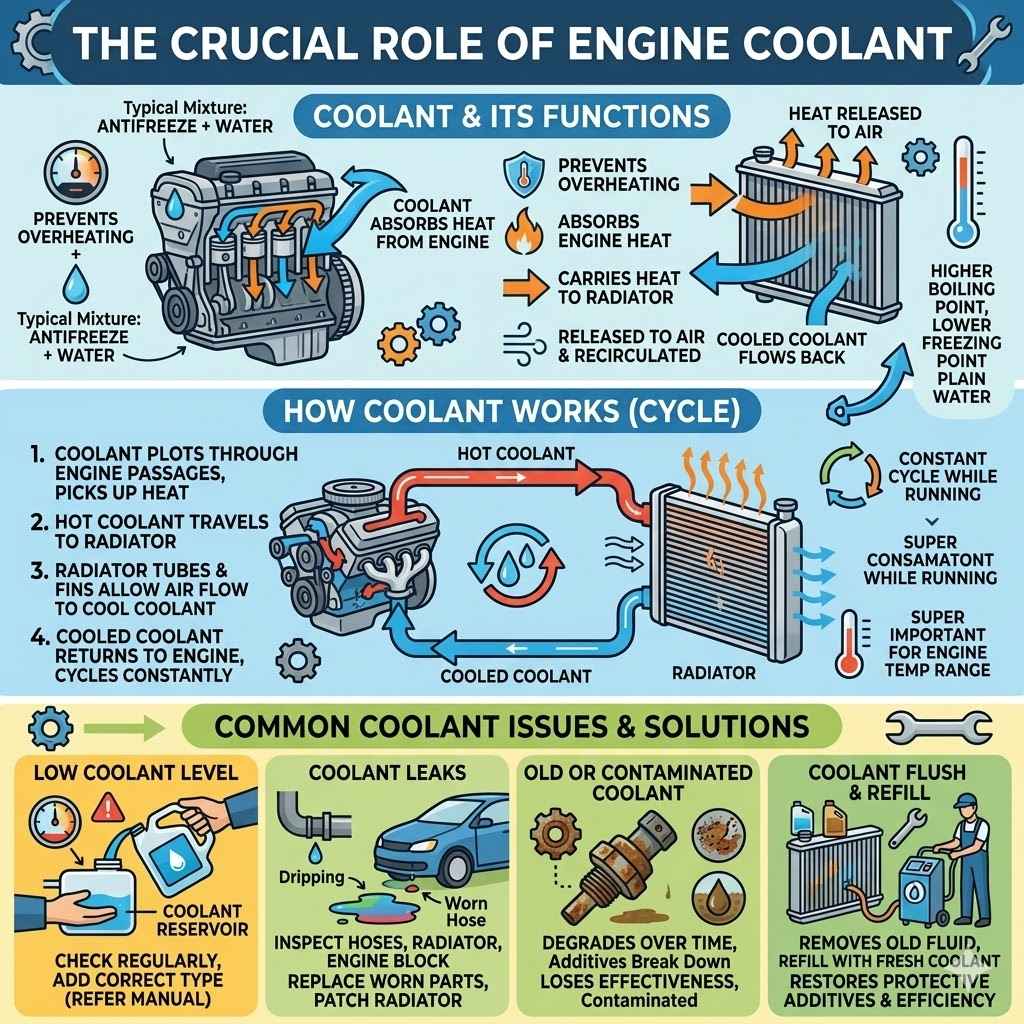
Engine coolant, also known as antifreeze, is a vital fluid that circulates through your engine to prevent it from overheating. It’s typically a mixture of antifreeze and water. This mixture has a much higher boiling point and a lower freezing point than plain water, which is essential for keeping the engine safe in various temperatures.
Coolant absorbs heat from the engine’s metal parts and carries it to the radiator. There, the heat is released into the air, and the cooled coolant flows back into the engine.
The coolant also contains additives that prevent corrosion and lubricate parts of the cooling system, like the water pump. Over time, coolant can degrade, lose its effectiveness, or become contaminated. Low coolant levels are one of the most frequent reasons for overheating.
If there isn’t enough coolant, the system can’t transfer heat efficiently. Leaks in hoses, the radiator, or the engine block can cause coolant to escape.
What is Coolant and How Does It Work
Coolant is a special fluid that keeps your engine from getting too hot or too cold. It’s made of antifreeze and water. Antifreeze is a chemical that makes the mixture boil at a higher temperature and freeze at a lower temperature than plain water.
This is super important because engines work best within a specific temperature range. When your engine runs, it creates a lot of heat. The coolant flows through small passages in the engine, picking up this heat.
Then, the hot coolant travels to the radiator. The radiator is like a set of thin tubes with fins that allow air to flow through them. As air passes over the radiator, it cools the coolant down.
This cooled coolant then goes back into the engine to pick up more heat. This cycle keeps happening all the time your engine is running. Without enough good coolant, the system can’t keep up with the heat, especially when the car isn’t moving.
Common Coolant Issues and Their Solutions
One of the simplest issues is a low coolant level. This can happen due to leaks or just evaporation over a long time. You should regularly check your coolant reservoir.
If it’s low, you need to add the correct type of coolant. Always refer to your car’s manual for the right kind.
Leaks are another big problem. These can be small drips from hoses or a more serious leak from the radiator. If you see puddles of colored liquid under your car, it’s likely a coolant leak.
Fixing leaks often involves replacing worn-out hoses or patching or replacing the radiator.
Another issue is old or contaminated coolant. Over time, the protective additives in coolant break down. This makes it less effective at preventing corrosion and less efficient at heat transfer.
If your coolant looks rusty, murky, or has debris in it, it’s time for a flush and refill. A coolant flush removes the old fluid and
The Role of Cooling Fans and Radiator Efficiency
When your car is moving, the air passing through the radiator does most of the cooling work. However, when your car is stopped or moving slowly, like in traffic, there isn’t enough natural airflow. This is where the cooling fans come in.
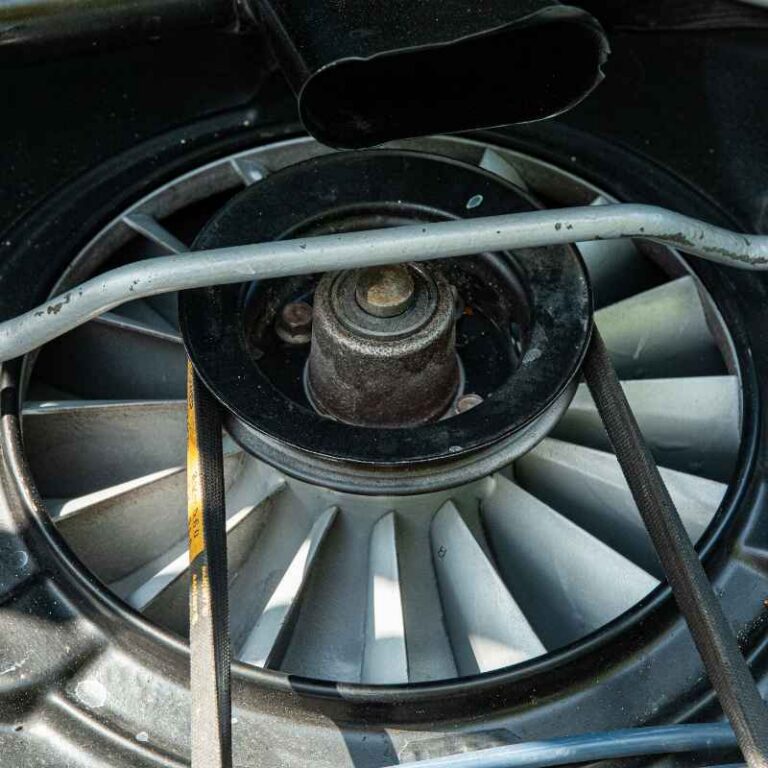
These electric fans are mounted behind the radiator and are designed to pull air through it, helping to dissipate heat. They usually turn on automatically when the engine reaches a certain temperature. If these fans aren’t working, the radiator can’t cool the coolant effectively when the car isn’t moving.
The radiator itself can also become less efficient. Over time, debris like leaves, bugs, and dirt can clog the fins of the radiator. This blockage prevents air from flowing through freely, reducing its ability to cool the coolant.
Internal clogs can also occur if the coolant has been neglected, causing sediment to build up inside the radiator’s passages. A clean and unobstructed radiator is essential for proper cooling, especially at idle.
Cooling Fan Systems Explained
Cars have electric cooling fans that are a critical part of the cooling system. These fans are usually located on the engine side of the radiator. Their job is to suck air through the radiator’s fins.
This helps cool down the hot coolant that is flowing inside the radiator. The fans are controlled by sensors that monitor the engine’s temperature.
When the engine gets too hot, especially when the car is not moving, these sensors tell the fans to turn on. They operate at different speeds to provide the right amount of airflow. If a fan motor fails, a fuse blows, or the sensor malfunctions, the fans might not turn on when needed.
This directly leads to the engine overheating when the car is idling because there’s no natural airflow to cool the radiator.
Radiator Clogs and Blockages
The radiator has many small tubes and fins. Its job is to get rid of heat from the engine coolant. Air passes over the fins to cool the coolant inside the tubes.
If the outside of the radiator gets blocked by dirt, leaves, or other debris, air can’t flow through. This makes the radiator work much harder and less effectively.
Inside the radiator, sediment from old coolant can build up. This clogs the tubes and stops coolant from flowing freely. When the flow is restricted, heat transfer suffers greatly.
A radiator that is both externally blocked and internally clogged will struggle to cool the engine, particularly when the car is stopped and relying solely on the fans. Keeping the radiator clean, both inside and out, is key for preventing overheating.
The Function of the Water Pump and Thermostat
The water pump is the heart of your car’s cooling system. It’s a mechanical pump that circulates coolant throughout the engine, radiator, and heater core. Without a working water pump, the coolant would just sit in place, and the heat generated by the engine would not be carried away.
A failing water pump can lead to overheating very quickly, regardless of whether the car is moving or idling.
The thermostat is another crucial component. It’s a valve that controls the flow of coolant to the radiator. When the engine is cold, the thermostat stays closed, allowing the engine to warm up quickly to its optimal operating temperature.
Once the engine reaches that temperature, the thermostat opens, allowing coolant to flow to the radiator for cooling. If the thermostat gets stuck closed, the coolant cannot reach the radiator, causing the engine to overheat even when the fans are working.
How the Water Pump Circulates Coolant
The water pump is a belt-driven or electric component that actively pushes coolant through the cooling system. It has an impeller, like a small fan, inside. As the engine runs, this impeller spins, forcing the coolant to move from the engine block, through the radiator, and back again.
Think of it as the engine’s circulation system.
If the water pump’s seal starts to leak, or if the impeller wears out or breaks, it won’t be able to move coolant effectively. This creates “hot spots” in the engine because the hot coolant isn’t being replaced by cooler coolant. A failing water pump can lead to significant overheating problems very rapidly, often accompanied by strange noises or leaks from the pump itself.
The Thermostat’s Role in Temperature Regulation
The thermostat acts like a gatekeeper for your engine’s coolant. It’s usually located where the engine’s coolant hose connects to the engine block. Its main job is to ensure the engine reaches its ideal operating temperature quickly and then stays there.
When you first start your car, the engine is cold. The thermostat stays shut to keep the coolant contained within the engine.
This allows the engine to warm up faster. Once the coolant reaches a specific, predetermined temperature (usually around 180-200 degrees Fahrenheit), the thermostat opens. This opening allows the hot coolant to flow into the radiator, where it can be cooled down by air.
If the thermostat gets stuck in the closed position, the coolant can’t get to the radiator to cool down. This will cause the engine temperature to rise rapidly, especially when idling, as the heat has nowhere to go.
Identifying and Addressing Common Problems
Diagnosing why your car overheats at idle involves a systematic approach. You’ll want to check the most common issues first, as they are often the simplest to fix. This includes checking coolant levels, looking for leaks, and ensuring the cooling fans are operational.
Simple visual inspections can often reveal obvious problems. For instance, a drooping hose or a visible leak under the car points towards an issue that needs immediate attention.
Sometimes, the problem might be less obvious and require a bit more testing. For example, a faulty thermostat might not show visible signs until it fails completely. Similarly, a cooling fan that only works intermittently might be harder to catch.
This section provides practical steps you can take to identify these issues and outlines the general approach to fixing them. Remember, if you’re not comfortable performing certain repairs, it’s always best to seek help from a qualified mechanic.
Troubleshooting Steps for Overheating at Idle
First, let your car cool down completely before attempting any checks. Never open a hot radiator cap, as the pressurized hot coolant can cause severe burns.
1. Check Coolant Level: Locate the coolant reservoir, usually a translucent plastic tank near the radiator. Check the markings for “cold” and “hot” levels.
If it’s below “cold,” you need to add coolant.
2. Inspect for Leaks: Look for any wet spots or colored stains around hoses, the radiator, and under the car. A sweet smell can also indicate a coolant leak.
3. Test Cooling Fans: Start the engine and let it idle. Turn on the air conditioning (this usually forces the fans to run).
Watch if the cooling fans behind the radiator start spinning. If they don’t, there’s a problem with the fan motor, fuse, relay, or sensor.
4. Observe Temperature Gauge: Monitor the temperature gauge as the car idles. If it starts climbing rapidly, it’s a clear sign of an issue.
5. Check Radiator Cap: Ensure the radiator cap is in good condition and seals properly. A faulty cap can lead to loss of coolant pressure and overheating.
Practical Fixes and When to Call a Professional
If your coolant level is low, the fix is usually to add the correct type of coolant. However, if it’s consistently low, you must find and repair the leak. This might involve tightening hose clamps or replacing a damaged hose or radiator.
If the cooling fans aren’t working, the first step is to check the fuses and relays related to the fan system. If these are fine, the fan motor itself might need replacement. Sometimes, the temperature sensor that controls the fans can also be faulty and require changing.
A clogged radiator might need flushing. If the blockage is severe, the radiator may need to be replaced. A stuck thermostat is typically replaced; it’s a relatively inexpensive part.
For more complex issues like a faulty water pump, a blown head gasket (which can cause coolant to be burned or mixed with oil), or internal engine problems, it’s strongly recommended to consult a certified mechanic. These repairs often require specialized tools and expertise to ensure they are done correctly and safely.
Understanding Temperature Fluctuations
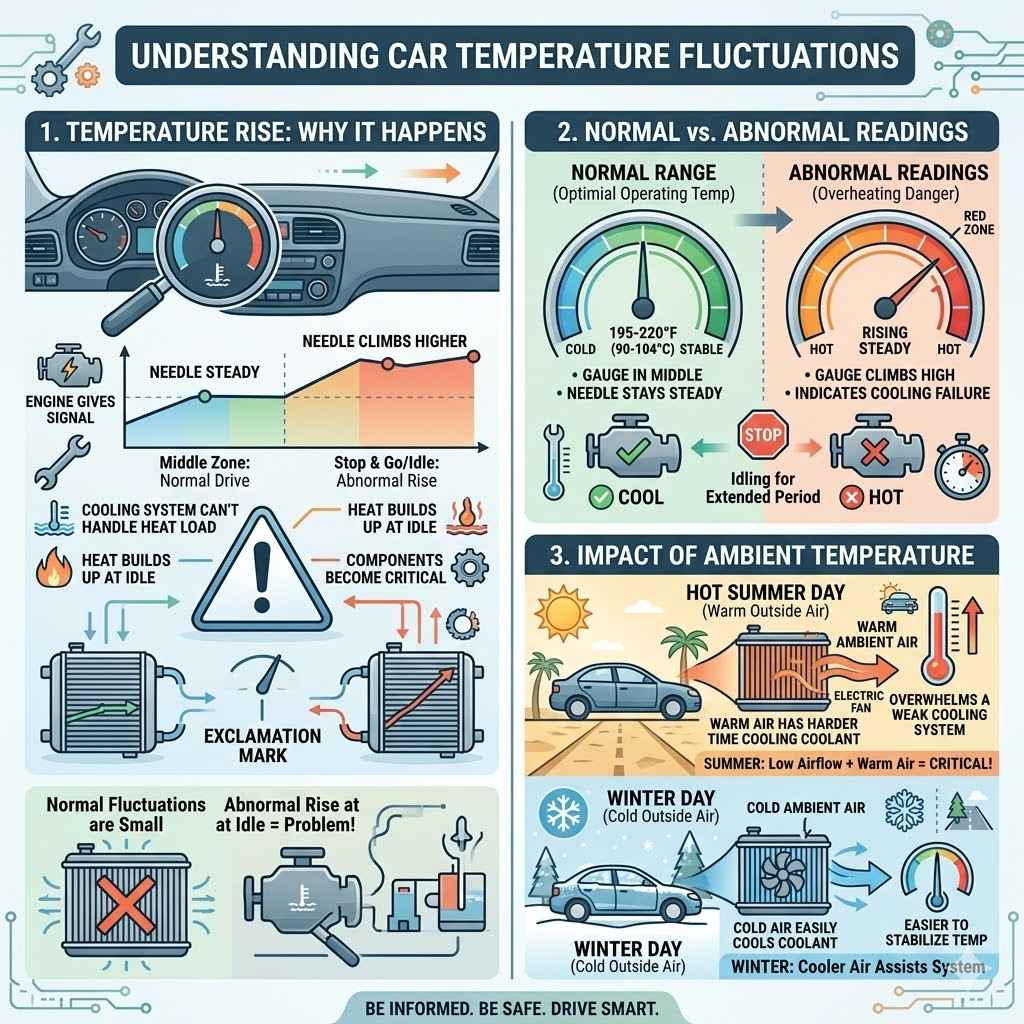
It’s normal for your car’s temperature gauge to fluctuate slightly as you drive. It will typically rise to a steady operating temperature and then stay there. However, if you notice your car’s temperature gauge climbing significantly higher than normal, especially when you’re stopped, it’s a problem that needs addressing.
This rise in temperature is the engine’s way of telling you that the cooling system isn’t handling the heat load effectively.
Several factors can contribute to these abnormal temperature spikes at idle. The less airflow you have over the radiator when you’re not moving means the cooling system’s components, like the electric fans and the coolant’s ability to absorb and release heat, become more critical. When these parts aren’t working perfectly, the heat builds up, and the temperature gauge reflects this.
Understanding these dynamics helps in pinpointing the exact cause of the overheating.
Normal vs. Abnormal Temperature Readings
Most cars have a temperature gauge on the dashboard that indicates how hot the engine is. On a normal drive, this gauge will move from the “cold” position up to the middle. It should then stay relatively stable in the middle zone, showing that the engine is at its optimal operating temperature.
This range is usually between 195 and 220 degrees Fahrenheit (90 to 104 degrees Celsius).
Abnormal readings are when the needle goes significantly above the middle mark, towards “hot” or into the red zone. This can happen quickly, especially when the car is idling for an extended period. If you see the temperature rising steadily while you’re stopped, it’s a strong indicator that the cooling system is failing to remove heat effectively under those specific conditions.
The Impact of Ambient Temperature
The outside temperature plays a significant role in how well your cooling system performs. On a very hot day, the ambient air is already warm, making it harder for the radiator to cool down the circulating coolant. This means your cooling system has to work much harder to keep the engine temperature stable.
When it’s hot outside, and you’re stuck in traffic or idling for a long time, the combination of low airflow and already warm ambient air can overwhelm a cooling system that is not in peak condition. Even minor issues, like a slightly low coolant level or a fan that doesn’t engage at full power, can become critical on a hot day, leading to overheating. This is why you might notice your car getting hotter when idling in the summer more than in the winter.
Frequently Asked Questions
Question: What should I do if my car overheats while driving?
Answer: If your car’s temperature gauge starts rising into the hot zone, pull over to a safe location as soon as possible. Turn off the engine to prevent further damage. Never open the radiator cap when the engine is hot, as the pressurized steam and coolant can cause severe burns.
Wait for the engine to cool down completely before checking the coolant level or looking for visible leaks.
Question: How often should I check my car’s coolant level?
Answer: It’s a good practice to check your coolant level at least once a month, and before any long road trips. You can usually find the coolant reservoir under the hood. Make sure to check it when the engine is cool.
Question: Can I use water instead of coolant in my car?
Answer: While plain water can provide some cooling, it’s not recommended for regular use. Coolant (antifreeze) has a higher boiling point and lower freezing point than water, which protects your engine in both hot and cold weather. It also contains additives that prevent corrosion within the cooling system.
Question: My car smells sweet, what does that mean?
Answer: A sweet smell coming from your car, especially around the engine, often indicates a coolant leak. Coolant typically has a sweet odor. If you notice this smell, it’s important to have your cooling system checked for leaks.
Question: How long does it take for a car to cool down after overheating?
Answer: A car can take anywhere from 30 minutes to a couple of hours to cool down completely after overheating, depending on the ambient temperature and the severity of the overheating. Always err on the side of caution and allow ample time for it to cool before attempting any inspections or repairs.
Summary
When your car heats up while idling, it usually means a part of the cooling system isn’t working right. This can be low coolant, a faulty fan, a clogged radiator, or a bad water pump or thermostat. Checking coolant levels, looking for leaks, and ensuring fans are running are key first steps.
Simple fixes like adding coolant or tightening a hose can help. For more serious issues, it’s best to see a mechanic. Keeping your cooling system in good shape means your engine stays cool and runs smoothly.
Products related to this article
Sponsored / affiliate links. As an Amazon Associate I earn from qualifying purchases. I may earn additional commission from eligible campaigns.