Best Car Trash Cans for Families (2026): we compared
For most families, the best car trash can is the Hotor-style lidded, leak-resistant 1- to 2-gallon bin that mounts behind a seat or hangs from the center console. It fits the mess I see in family cabins: wrappers, cups, wipes, and sticky spills that otherwise end up in seat tracks and door pockets.
This guide is part of our Car exterior accessories guide series.
Quick comparison: which style fits your family?
| Product | Badge | Best for | Price | ||
|---|---|---|---|---|---|
 |
Femuar Leak Proof Car Trash Can with Lid – WaterproofFemuar | Budget pick | Collapsible · Waterproof 600D · Mesh pockets | $7.99
Price as of 4 Oct 2026
|
View |
 |
JEYODA – Automatic Push Button Car Trash Can with SecureJEYODA | Upgrade pick | Push-button lid · Hands-free · Reinforced plastic | $20.99
Price as of 4 Oct 2026
|
View |
 |
High Road Large TrashStash Hanging Car Trash Can with PushHigh Road | Our pick | 4.5 gal · Hanging design · Leakproof | $17.99
Price as of 4 Oct 2026
|
View |
Families with toddlers usually need faster access and better spill control than families with older kids. Fit, mounting, and cleanup matter more than a long spec sheet.
If trash stays in the back seats, the bin has to stand up to kicking feet, dropped snack cups, and lids left half-open during loading and unloading.
How we chose
I weighed these picks by family use first, then by container type. The main questions were plain: how often will it need emptying, where will it sit, and what happens after a juice box leaks.
- Capacity and refill frequency: small bins work for short errands; larger bins fit carpools and road trips.
- Mounting stability: headrest straps, seatback mounts, floor placement, and cupholder fit all act differently once the car is moving.
- Cleanup after spills: wipeable interiors, removable liners, and dump-out design matter after wet trash.
- Back-seat access: the best bin is the one kids can reach without making a mess worse.

What size works best for families?
For light use, a small bin in the roughly 16-ounce to 1.5-gallon range is enough for wrappers, tissues, and a few napkins. For daily family duty, 2 to 2.5 gallons usually fits school runs, snacks, and the steady stream of drink containers. For minivans and road trips, a larger bin around 3 gallons can be easier to live with because it stretches the time between dumps.
Capacity changes more than fill level. A small cupholder bin may need emptying after a day of snack-heavy driving, while a 3-gallon hanging bin can handle a weekend away without overflowing. The tradeoff is space: bigger bins are harder to place without blocking feet, seatbacks, or cargo access.
Match the bin to the longest drive you make often, not the biggest trip you make once a year. A family that carpool-drives every weekday needs a different setup than one that does two long vacations a summer.
Femuar leak proof car trash can: best for budget-friendly family use
The Femuar bin is the best fit for families who want a low-cost back-seat trash holder for wrappers, tissues, and light snack waste. It stands out because it is collapsible, uses waterproof material, and includes mesh pockets for small supplies like wipes, sanitizer, or spare liners.
That makes it useful for school pickup duty and short errands. The drawback is clear: at this price and format, it works better for routine trash than for heavy, wet spill containment, so juice boxes and coffee cups still need quick cleanup rather than long storage.
JEYODA automatic push button car trash can: best for odor control and quick lid access
The JEYODA bin suits families that want a more closed-off trash container for mixed waste, especially when odors build up from food scraps, wet wipes, or snack scraps. Its push-button lid is the main advantage, since it lets an adult open it quickly without fishing for a flap.
Based on the spec sheet and owner feedback, the reinforced plastic body should hold shape better than soft-sided bags. The drawback is also plain: a lid mechanism can slow access when a child is tossing in wrapper after wrapper, and a fuller bin may be awkward if the opening is blocked by bulky trash.
High Road large TrashStash hanging car trash can: best for road trips and bigger families
The High Road Large TrashStash is the best fit for families that generate a lot of trash over long drives. Its hanging design keeps debris off the floor, and the 4.5-gallon capacity gives it more breathing room than compact bins when the back row is producing cups, bags, napkins, and wet wipes all at once.
Its strength is plain: fewer dumps on long trips. The drawback is size, because a bigger hanging bin can get in the way if rear passengers kick it or if a seatback is already crowded with organizers, toys, or coat hooks.
Which one should you buy?
If the family problem is toddler snacks, wet wipes, and short-trip mess, the Femuar is the easy budget pick. If odors and lid control matter most, the JEYODA makes more sense because it keeps trash covered better than an open or soft-sided bag.
If the family drives long distances, carries multiple kids, or fills the cabin with cups and wrappers every day, the High Road Large TrashStash is the better match. The extra capacity buys time, and time is what most families need between stops.
For minivans, a hanging rear-seat bin usually works best because kids can reach it without a parent twisting around every few minutes. For sedans and small cars, a compact bin near the console or seatback is usually easier to live with than a floor bag that gets kicked out of place.
Family-use decision table
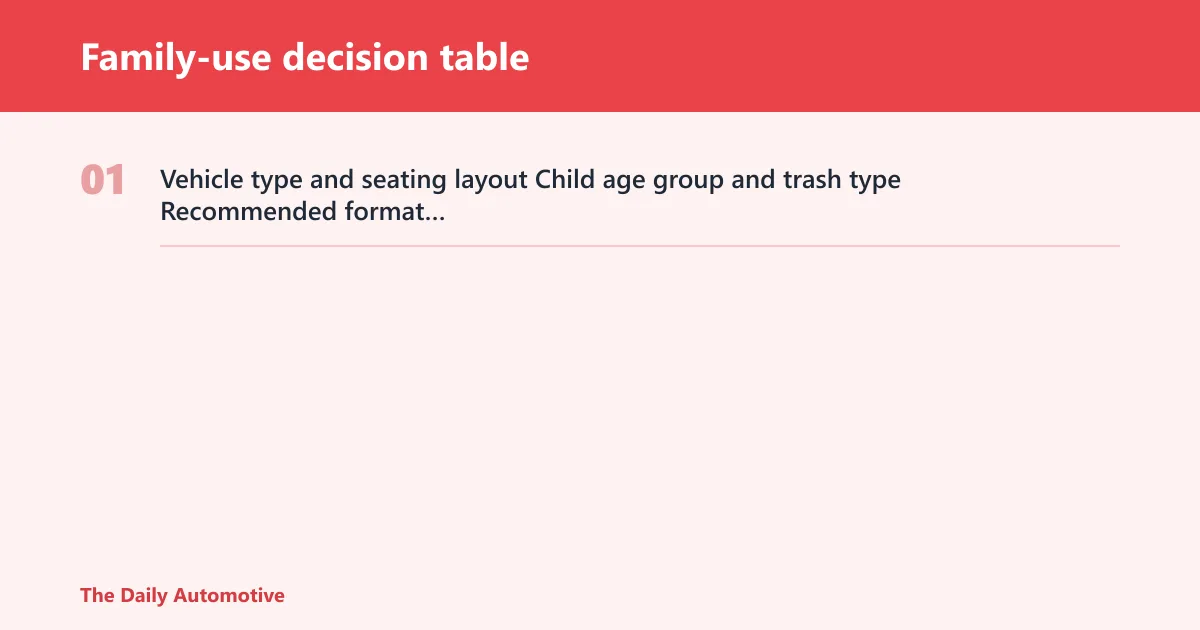
| Vehicle type and seating layout | Child age group and trash type | Recommended format | Capacity range | Mounting position | Cleanup routine |
|---|---|---|---|---|---|
| Small car, tight front cabin, limited rear access | Older kids; napkins, gum wrappers, receipts | Cupholder or console-fit bin | 16 ounces to 1.5 gallons | Center console or cupholder | Empty daily; wipe the opening and dump crumbs before they pack down |
| Sedan with rear bench access | Toddlers; crackers, snack bags, sticky cups | Hanging bin with lid or flap | 1.5 to 2.5 gallons | Headrest strap or seatback mount | Empty every one to two drives; remove liner and wipe after spills |
| SUV with second-row riders | Mixed ages; yogurt cups, juice boxes, wet wipes | Leak-resistant hanging bin | 2 to 3 gallons | Seatback mount or floor placement beside the seat | Check for liquid at each stop; dump, rinse liner, and air-dry if needed |
| Minivan with carpool and third-row traffic | Multiple kids; wrappers, drink containers, snack packaging | Large hanging bin with lid | 2.5 to 3 gallons | Back of captain’s chair or cargo-side mount | Empty after school runs; wash removable liner weekly to stop odors |
| Road-trip SUV or minivan with cargo access | All ages; mixed trash, coffee cups, food packaging | Large leakproof bin with stiff frame | 3 gallons | Rear-seat back or cargo-side mount | Use liner bags, close lid before moving, and clean spills the same day |
Why liner material matters for juice, coffee, and wet wipes
Leakproof and waterproof liners matter when kids carry drinks into the car. Vinyl and PEVA are easier to wipe after a spill, while Oxford polyester and waterproof fabric usually offer better soft-sided storage and a cleaner look.
The difference shows up after a juice box leaks or a coffee cup tips over. A waterproof liner keeps liquid from soaking into seams, slows odor, and makes cleanup more about wiping than scrubbing. Without that barrier, the bin can hold onto sour smells long after the trash is removed.
Still, even a waterproof bin is not magic. If wet trash sits overnight, the smell still builds. The real win is buying time so the mess can be cleaned at the next stop instead of staining the seat or floor.
Where should you put a car trash can in an SUV or minivan?
In an SUV or minivan, a practical placement is usually behind a seat or along the back-row access path where children can reach it without stepping on it. A seatback mount works well for second-row riders, while a floor bin can make sense if the back seat has enough room and the bin stays upright.
Headrest straps and seatback mounts keep the container off the floor and within easy reach. They also lower the chance that a bin gets kicked into the aisle. A floor-mounted trash can may be better when the seatbacks are already full of organizers or when the cargo area is the main mess zone.
In minivans, a rear-bin or seatback position often beats a console-mounted option because the trash is produced in the second and third rows, not at the front. In SUVs, the best spot is the one that avoids blocking legroom and does not interfere with folded seats.
Do car trash cans with lids control odors better?
Yes, lids usually control odors better, but they can slow access. A closed lid helps contain snack smells, wet wipes, and half-full drink containers, especially on hot days when a soft bag starts to stink before the next stop.
The tradeoff is speed. A spring-loaded flap or rubber opening is quicker for kids tossing in wrappers, while a tighter lid is better for hiding trash and keeping smells down. Hook-and-loop closures are easy to open, but they rarely seal odors as well as a true lid or self-sealing top.
For families, the right choice depends on what goes in the bin most often. Dry wrappers can live with a faster opening. Wet trash needs stronger closure and quicker emptying.
How do I keep a car trash can from tipping over?
Use a bin with an anti-slip bottom, a weighted base, dual straps, or a stiff frame if tipping has been a problem. Placement matters too: a bin that sits in a footwell or against a seat leg usually moves less than one left loose in the middle of the floor.
In family use, tipping often happens when the container gets too full or when a child pushes a drink cup into the opening and shifts the center of gravity. Magnetic liner holders and stiffer sides help the bin keep its shape, so trash does not pull the top inward and make the base wobble.
Also watch for lid interference. When a bin is packed full, the opening may catch on bulky trash, and then the whole container moves when someone tries to force waste through it. Empty it before the lid becomes a hinge point for the mess.
What car trash can is easiest to clean after spills?
The easiest bin to clean after spills is one with a wipeable interior, a removable liner, and a wide opening for dump-out. Waterproof vinyl or PEVA liners clean faster than absorbent fabric, especially after juice, coffee, or yogurt drips hit the bottom.
For families, washability matters more than the name on the side. A bin that can be turned inside out, shaken out, and wiped dry will stay usable longer than a soft-sided bag that traps crumbs in the seams. Side pockets are helpful too, because they keep spare liners, wipes, and sanitizer together.
The best maintenance rhythm is simple: empty daily on busy weeks, wash weekly if wet trash is common, and replace liners before odors settle in. That keeps the cleanup short and avoids the slow build of sour smells that can linger in a family cabin.
Are leakproof car trash cans worth it for kids’ snacks and drinks?
Yes. Leakproof or waterproof construction is worth it once snacks include applesauce pouches, yogurt cups, open drink lids, or half-empty sippy cups. Families do not just throw dry wrappers into these bins, and the first wet spill is usually enough to justify the upgrade.
Look for materials like waterproof fabric, vinyl, or PEVA because they make cleanup faster after a juice box leak. They also help with odor control, since liquid soaked into a soft liner is harder to clean out than a spill that sits on a wipeable surface.
The catch is that leakproof construction still needs prompt emptying. A sealed bin keeps the mess contained; it does not remove it. Letting wet trash sit for days defeats the point.
Should I choose a hanging car trash can or a cupholder trash can?
Choose a hanging trash can if the family trash comes from the back seat, carpool rows, or road-trip snack chaos. Choose a cupholder bin if the trash is mostly small items like receipts, wrappers, and gum in a small car or front cabin.
Cupholder fit works best when space is tight and the goal is easy access for the driver or front passenger. Hanging bins are better when kids need to reach the opening and when the trash volume is large enough that a 16-ounce cupholder bin would fill too fast.
A hanging bin also keeps mess off the floor, which matters when kids kick or drop items. A cupholder bin can be cleaner in a small cabin, but it is usually too small for family duty beyond light use.
What size car trash can is best for a family road trip?
For a family road trip, 3 gallons is the safest bet if the vehicle has room for it. That size reduces refill stops and gives you space for wrappers, cups, tissues, and the odd wet wipe without needing to compress the trash every hour.
A 2 to 2.5-gallon bin can still work for shorter trips or smaller families, but it fills fast once drink containers start piling up. A 1.5-gallon model is fine for light use, yet it usually needs more attention than most road-trip parents want to give.
The right answer is always tied to trip length. If the drive runs all day, bigger wins. If the family is just crossing town, smaller is easier to place and empty.
Frequently asked questions
What is the best car trash can for families?
For most families, a lidded, leak-resistant 1- to 2-gallon bin is the best all-around choice because it handles wrappers, cups, and wipes without taking over the cabin. It should mount behind a seat or hang from the center console so the mess stays near the passengers who make it.
How do I keep a car trash can from tipping over?
Pick a model with a stiff frame, dual straps, or a weighted base, and keep it where feet cannot kick it loose. Overfilling is a common cause of tipping, so empty the bin before trash starts pushing the lid outward and shifting the center of gravity.
Are leakproof car trash cans worth it for kids’ snacks and drinks?
Yes, especially when kids carry juice boxes, yogurt cups, or open drink lids into the car. Leakproof materials like vinyl or PEVA help contain the spill long enough to clean it properly, which matters because wet trash can stink and stain fast in a closed cabin.
Where should you put a car trash can in an SUV or minivan?
Put it where the back-seat passengers can reach it without kicking it. Seatback mounts and headrest straps work well for second-row riders, while a floor bin can make sense if it stays upright and does not block legroom or cargo access.
What size car trash can is best for a family road trip?
A 3-gallon bin is usually the best road-trip size for a family because it buys time between dumps. Smaller bins can still work, but once snack wrappers, cups, and wipes start stacking up, a compact container fills too quickly and becomes one more stop to manage.
Do car trash cans with lids control odors better?
Yes. Lids usually do a better job of holding in smell than open tops or loose flaps, especially with wet trash. The tradeoff is slower access, so families need to choose between faster tossing and better odor control based on what gets thrown away most often.
What car trash can is easiest to clean after spills?
The easiest bin to clean has a wipeable interior, a removable liner, and a wide opening for dumping out crumbs and liquid. Waterproof vinyl or PEVA is easier to wipe after a spill than absorbent fabric, and that matters when the trash includes juice or coffee.
Products related to this article
Sponsored / affiliate links. As an Amazon Associate I earn from qualifying purchases. I may earn additional commission from eligible campaigns.
 2026 Upgrade Crystal Coating for Car, Plastic Parts Crystals Coating, Plastics Parts Crystal Coating Plastic Restorer with Spong, Long Duration Refurbish Coatings Agent for Automotive Plastics (4)
 2026 Upgrade Crystal Coating for Car, Plastic Parts Crystals Coating, Plastics Parts Crystal Coating Plastic Restorer with Spong, Long Duration Refurbish Coatings Agent for Automotive Plastics (1)