Car Trim Repair Cost: How Much to Pay for Common Fixes
Car trim repair costs usually run $50-$300 for clip or cosmetic fixes, and $150-$800+ for a full trim-piece replacement. Estimates vary by damage type and severity, along with location and material. Leave loose or damaged trim alone and you can get wind noise, water leaks, rust, and higher labor when a small part turns into a larger job. This guide breaks down repair versus replacement costs for interior, exterior, window, and roof trim, plus the factors that move the price up or down.
Car trim repair cost basics
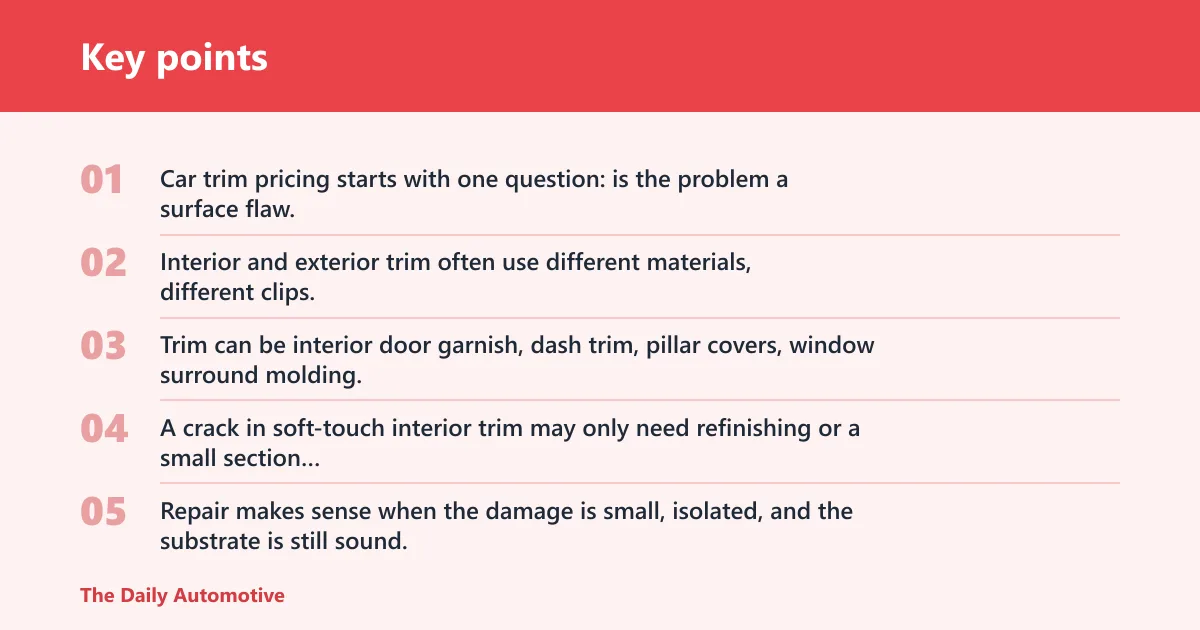


Car trim pricing starts with one question: is the problem a surface flaw, a fastener issue, or a damaged part that no longer fits correctly? Interior and exterior trim often use different materials, different clips, and different access methods, so the quote should follow the part, not a generic “trim” label.
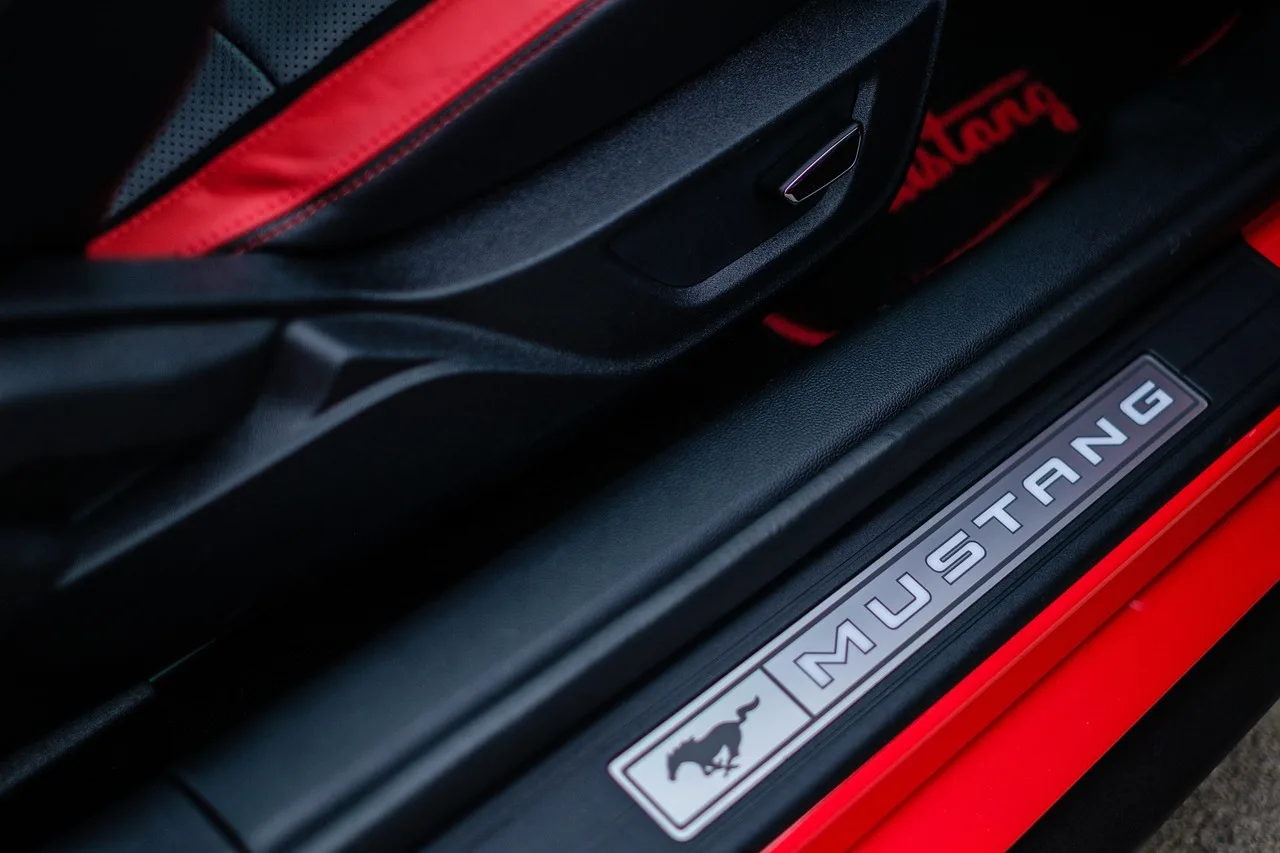
Trim can be interior door garnish, dash trim, pillar covers, window surround molding, roof trim, or exterior moldings and appliqués. A crack in soft-touch interior trim may only need refinishing or a small section replacement, while a warped exterior molding may need the full piece, new clips, and paint or finish matching.
Repair, refinish, or replace
Repair makes sense when the damage is small, isolated, and the substrate is still sound. Refinish fits scuffs, scratches, and some cosmetic wear on painted or soft-touch trim. Replace is the better call when clips are broken, mounting points are stripped, the part is warped, or the damage spreads across several spots.
A common first-timer mistake is to price only the visible crack. If the clip rail behind a window molding is bent or the seal has torn, the trim piece may fail again after a simple reattach. That hidden damage often changes the bill more than the visible mark.
What affects trim price?
Trim price changes with location, material, damage spread, and labor access. A small loose clip on an interior panel is usually quicker than a roof molding with hidden fasteners, and a painted exterior piece can add finishing work that plain black plastic does not need. Shop rates and part sourcing then move the final total up or down.
Location on the car
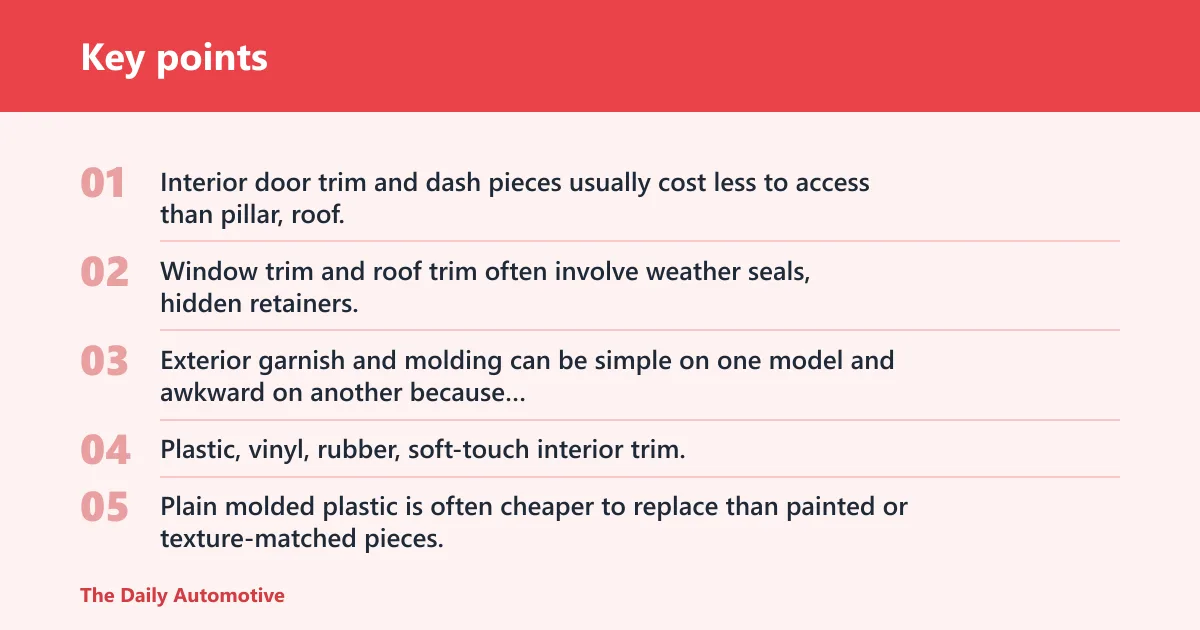
Interior door trim and dash pieces usually cost less to access than pillar, roof, or rear quarter trim. Window trim and roof trim often involve weather seals, hidden retainers, or fragile clips, which adds labor time. Exterior garnish and molding can be simple on one model and awkward on another because of body shape and panel overlap.
Material and finish
Plastic, vinyl, rubber, soft-touch interior trim, and painted exterior trim do not price the same way. Plain molded plastic is often cheaper to replace than painted or texture-matched pieces, while soft-touch surfaces can require more careful refinishing or a better-matching replacement. Rubber window and roof trim can also hide seal damage that changes the fix.
Damage severity and spread
Single-spot damage is usually cheaper than multi-area damage because one broken tab or one scuff is easier to isolate. Repair can cost 60 to 85 percent less for a single-spot fix. Three or more damaged spots on one panel can erase the repair cost advantage, and the break-even point is listed at 2 to 3 spots for repair versus replacement.
Say your driver door molding has one missing clip and a 3-inch scuff near the handle. That is a very different quote from a panel with three cracked areas and a loose edge from top to bottom. The first may stay in repair range; the second often moves into replacement territory.
Labor rate and parts pricing
Labor rate matters because trim work is often billed by the hour, and labor intensity varies by access and fastener count. Specialist shops usually charge more than general repair shops when the trim requires careful removal, finish matching, or model-specific fit. Regional labor differences can move the estimate by a large margin, and planning estimates can vary by 25 percent or more between shops.
Parts pricing also changes the total. OEM versus aftermarket parts can shift both price and fit. OEM trim usually costs more, while aftermarket parts can be cheaper but may need extra fitting, different clips, or paint matching if the surface is visible.
Trim cost matrix
This matrix gives likely price bands by location, damage type, and repair path. Use it as a budgeting tool, not a final quote, because hidden clip, seal, or substrate damage can change the fix after inspection.
| Trim location | Damage type | Repair path | Likely range | What a shop must inspect |
|---|---|---|---|---|
| Interior door trim | Loose, scratched, missing clip | Reattach or refinish | $50-$180 | Clip rail, fastener points, substrate, adjacent panel fit |
| Interior door trim | Cracked, broken, warped | Replace part | $120-$450 | Mounting tabs, handle area, hidden break points, trim level |
| Dash trim | Scratched, loose, sun-baked plastic | Refinish or replace part | $90-$500 | Airbag-adjacent areas, clips, surface texture, part availability |
| Pillar trim | Loose, cracked, broken clip | Reattach or replace part | $80-$350 | Fasteners, hidden retainers, headliner edges, substrate damage |
| Window trim | Loose, missing clip, worn seal | Reattach or replace part | $100-$600 | Seal condition, clip rail, water entry marks, panel-specific fit |
| Roof trim | Warped, broken, missing clip | Replace part or substrate | $150-$800+ | Roof rail, hidden fasteners, seal, surrounding paint and glass clearance |
| Exterior molding | Scratched, cracked, broken | Refinish or replace part | $120-$700+ | Paint match, clips and fasteners, panel alignment, hidden corrosion |
Interior door and dash trim
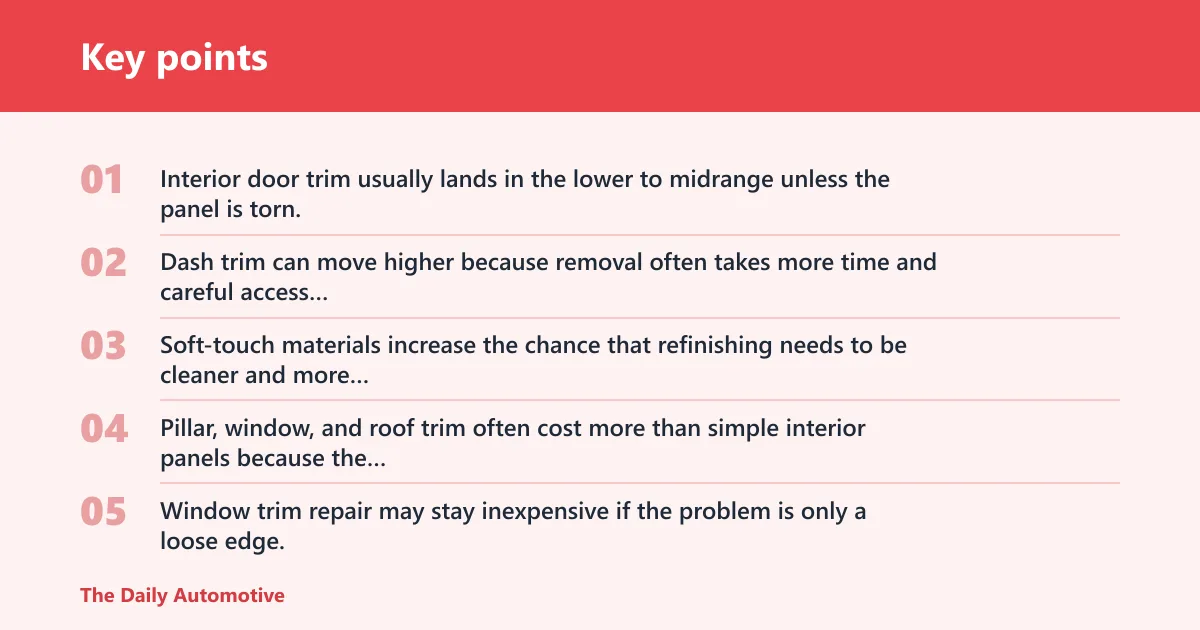
Interior door trim usually lands in the lower to midrange unless the panel is torn, warped, or missing multiple clips. Dash trim can move higher because removal often takes more time and careful access around switches, vents, and safety parts. Soft-touch materials increase the chance that refinishing needs to be cleaner and more exact.
Pillar, window, and roof trim
Pillar, window, and roof trim often cost more than simple interior panels because the fasteners are hidden and the seal path matters. Window trim repair may stay inexpensive if the problem is only a loose edge, but a failed seal or broken rail can push the job toward replacement. Roof trim often brings the highest labor risk because access can involve surrounding panels and weather sealing.
Exterior molding and garnish
Exterior molding and garnish usually price higher when the part is painted or has a panel-specific shape. Broken clips can turn a small trim repair into a replacement job if the molding will not hold flush. If paint matching is needed, the part cost is only part of the total.
Repair or replace trim?
Repair is cheaper when the damage is shallow, limited to one spot, and the mounting structure is still intact. Replace is usually better when the part is warped, the clip rail is damaged, or the problem appears in more than 2 to 3 spots. The key question is not only whether the trim looks bad, but whether it can still mount correctly and stay sealed.
Loose or missing clips
Loose or missing clips often support repair if the trim piece and rail are otherwise sound. Reattach work may include new clips, fresh fasteners, or a reset of the panel edge. If the clip holes are stripped or the rail is bent, replacement starts to make more sense because the part may not stay secure.
Cracks, warping, and breaks
Cracks and breaks on plastic or vinyl trim can sometimes be refinished, but warping usually points to heat damage or fit loss. Sun-baked plastic can become brittle, which raises the chance that a repair fails later. When the part shape no longer follows the body line, replacement is often the better value.
Hidden damage to rails or substrate
Hidden damage changes the math. A cracked visible piece may be a symptom of a bent rail, torn seal, or damaged substrate beneath it. If that support layer is compromised, a quick cosmetic fix will not hold, and the final bill can jump once the shop opens the panel and confirms the real fault.
When replacement is the better value
Replacement becomes the better value when labor for repair approaches the cost of a new part, or when several spots are damaged on the same panel. It also makes sense when the trim is cheap, readily available, and difficult to refinish cleanly. If the quote includes repeated fitting time, replacement often wins on reliability.
How much should a shop charge?
A shop should charge based on inspection, labor time, and parts, not on a flat guess. Written estimates are better than rough phone quotes because trim work often hides fasteners, seals, and fit issues. Photo estimates can help early budgeting, but they miss the details that determine whether repair or replacement is the right path.
Written estimate versus photo quote
A written estimate should list labor, materials, and parts separately when possible. Photo quotes are useful for obvious damage and basic screening, but they are limited when the problem may involve hidden clips, rails, or substrate damage. For trim, that limitation matters because the visible break is not always the actual failure point.
OEM and aftermarket part impact
OEM trim often costs more but usually gives better panel-specific fit. Aftermarket trim may lower the parts line on the estimate, though fit differences can add labor if the piece needs adjustment. Clips and fasteners also matter because a low-cost trim shell can still need fresh hardware to sit correctly.
Specialist shop versus general shop
A specialist shop may charge more for careful trim installation, especially for painted exterior pieces, soft-touch finishes, or parts near airbags and glass. A general shop can be lower cost for simple reattachment or clip replacement. The price difference should reflect labor skill, time, and risk of damage during removal.
Regional labor-rate differences
Labor rates vary by region, and trim pricing follows the same pattern as other repair work. A shop in a high-cost metro area may quote more for the same trim job than a shop in a lower-cost market. That difference often shows up most clearly on jobs with hidden fasteners or delicate interior panels.
What a trim quote should inspect
A good trim quote starts with the right identifiers: VIN, trim level, model year, and exact damage location. Trim pieces can vary within the same model line, so the shop needs the car’s build details before pricing parts. Photos help, but measurements and direct inspection are what turn a rough estimate into a real quote.
- Confirm the VIN and trim level so the shop can identify the correct part style.
- Pinpoint the damage location, including whether it is interior, exterior, window, or roof trim.
- Check clips, fasteners, seal edges, and mounting rails for hidden failure.
- Inspect the substrate or backing surface for cracks, bends, or stripped holes.
- Review surrounding panels for fit issues, rubbing, or water entry marks.
- Use photos and measurements to support the quote, then verify them in person when needed.
Picture a roof trim strip that looks only loose on one end. If the shop finds a bent rail under the strip, the estimate changes from a simple reattach to a full replacement with hardware and seal checks. That is why inspection-based pricing matters more for trim than for many other small exterior fixes.
Can you get an online estimate?
Yes, you can get a useful online estimate for obvious trim damage, especially when the part is easy to photograph and the problem is clearly cosmetic. The estimate is less reliable when the damage may involve hidden clips, fastener holes, seals, or substrate damage. Online tools are best for narrowing the range, not locking in the final bill.
What photos can show
Clear photos can show the trim location, visible cracks, missing sections, paint damage, and whether the problem is single-spot or multi-area. They also help the shop see whether the part appears to be interior, exterior, window, or roof trim. If you add the VIN and trim level, the estimate gets closer to a real parts quote.
What photos usually miss
Photos usually miss clip rail damage, stripped fastener points, seal failure, and hidden substrate cracks. They also miss how hard a panel is to remove, which affects labor time. That is why a photo estimate can be a starting point, but not the final word on trim work.
When an in-person check is necessary
An in-person check is necessary when trim is loose after body flex, when water appears near the panel, or when the part has already been reattached once and failed again. It is also needed when the part crosses into dash, pillar, roof, or window trim, where hidden hardware can change the fix. If the quote depends on fit, sealing, or safety-adjacent parts, inspect it in person.
Frequently asked questions
How much does car trim repair cost?
Car trim repair often runs $50-$300 for simple clip, loose-edge, or cosmetic work, with higher totals when the piece needs careful removal or refinishing. The price rises quickly if the trim is broken, warped, or tied to a hidden rail, seal, or substrate issue.
How much does it cost to replace car trim?
Replacement usually starts higher than repair because you are paying for the part, clips or fasteners, and labor to fit it correctly. Many full replacements land in the $150-$800+ range depending on whether the piece is interior, exterior, window, or roof trim, and whether paint matching is needed.
How much does it cost to repair window trim?
Window trim repair often falls in the $100-$600 range depending on whether the issue is a loose edge, missing clip, worn seal, or a damaged molding section. If the rail or seal is failing, the repair may turn into a replacement with more labor and parts.
Is it cheaper to repair trim or replace it?
Repair is usually cheaper for one damaged spot, especially when the clip or surface flaw is isolated and the part still mounts correctly. Replacement becomes the better value when there are 2 to 3 damaged spots, the part is warped, or hidden damage makes the repair likely to fail.
How much should a shop charge for trim work?
A fair charge should reflect labor time, materials, and parts, with a written estimate that separates those items when possible. Regional labor rates, specialist versus general-shop pricing, and OEM versus aftermarket parts can all change the number, so compare the inspection details, not only the headline price.
Can I get an accurate trim repair estimate online?
Online estimates can be useful when the damage is clearly visible and the part is easy to identify from photos and VIN details. They are less accurate when hidden clips, seals, or fasteners may be damaged, so use them as a budget range and plan an in-person check before approving major work.
Products related to this article
Sponsored / affiliate links. As an Amazon Associate I earn from qualifying purchases. I may earn additional commission from eligible campaigns.