4 Best Tire Gauges for Budget Drivers: Based on Specs and Reviews
A simple analog pencil gauge with a bleed valve is usually the cheapest choice that still gives repeatable results for routine car-tire checks. Bad readings can push a tire above the placard pressure or leave it too low, which changes tread wear, steering response, and fuel economy. This guide compares cheap gauge types and picks the best value for your checking routine.
Quick comparison
| Product | Badge | Best for | Price | ||
|---|---|---|---|---|---|
 |
ATsafepro Pencil Tire Pressure Gauge 5-50/10-75 PSIATsafepro | Our pick | Pencil gauge · 5-50/10-75 PSI · aluminum | $4.59
Price as of 14 Nov 2026
|
View |
 |
AstroAI Heavy Duty Digital Tire Pressure Gauge 0-230 PSIAstroAI | Also great | Digital gauge · 0-230 PSI · backlit LCD | $21.99
Price as of 14 Nov 2026
|
View |
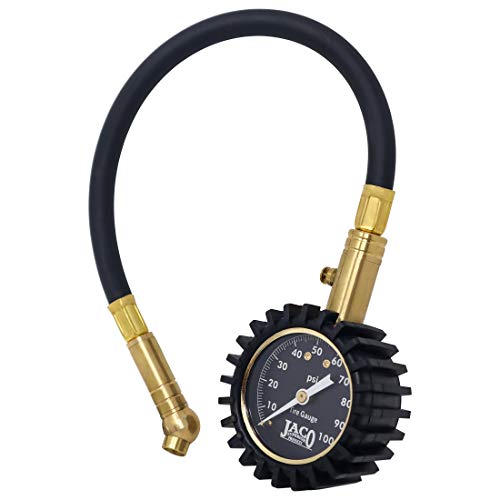 |
JACO ElitePro Tire Pressure Gauge – 100 PSIJACO Superior Products | Upgrade pick | Analog gauge · 100 PSI · glow dial | $22.90
Price as of 14 Nov 2026
|
View |
 |
Milton S-976 Dual Head Tire Pressure GaugeMilton | Also great | $17.06
Price as of 14 Nov 2026
|
View |
For a monthly check, the cheapest readable gauge usually wins. For weekly commuters, a dial or digital display with larger numbers can be worth a small premium, especially if you check pressures in dim parking lots or before dawn.
For night use, pay for a backlit LCD or glow dial before you pay for a huge PSI range. Storage also matters: a compact body is easier to keep in the glove box and more likely to be within reach when you need it.
How we chose
This roundup is based on manufacturer specs, listing details, and published buyer feedback. The main filters were repeatable readings, readability, storage convenience, battery dependence, PSI range, and whether a bleed valve or swivel chuck adds real value for routine drivers.
Price mattered too. Popular Mechanics says a daily driver should not spend more than $25, and that is a sensible ceiling for a budget-focused buyer who wants a dependable tool without extra cost.
Should you buy digital or analog?
Digital is the better buy if you check tires in low light and want a clear readout fast. Analog is the better buy if you want a battery-free tool with fewer failure points and do not mind reading a dial or pencil scale in daylight.
Digital tire pressure gauge
Digital gauges are the easy-read option. The same source notes that digital gauges can be more expensive but may offer a backlit display, and it recommends a digital gauge for a daily driver if it includes precise reading and air-release capability.
The tradeoff is battery dependence. That is minor for a driver who checks pressure often enough to notice a weak battery, but it is still a cost and a failure point. For a budget buyer, the extra spend only makes sense if the screen is easier to read than an analog dial in your routine.
A backlit LCD display helps in a dark garage or by curbside light, and some models add pressure lock-on so the reading stays visible after you pull the chuck off the valve stem. That convenience matters most if you check pressures before sunrise or after sunset, not if you only check in daylight.
Analog tire pressure gauge
Analog gauges are the simple middle ground. The same source says analog gauges are more reliable because they do not need batteries, and that makes them a strong fit for drivers who want a tool that should be ready after months in the glove box.
Most analog gauges are easier to trust at a glance during daylight because the needle position is obvious. They also keep the design simple, with a single moving part in the gauge body, which can matter for storage and long-term durability.
The main drawback is readability at night. A plain dial can be awkward under weak parking-lot lighting, and that is where a backlit digital or glow-dial analog model earns its higher price.
Pencil tire pressure gauge
Pencil gauges are the cheapest and most compact choice. They have no batteries, fit easily in a glove box or door pocket, and are best for quick checks when you want a basic PSI reading without carrying a larger tool.
The limits are real, though. Pencil gauges often have a lower PSI ceiling than larger digital models, and the printed scale is usually less comfortable to read than a dial or backlit LCD. That is fine for ordinary passenger cars, less ideal for wider pressure needs.
Say your sedan gets checked once a month before a gas-station fill-up. A pencil gauge can be enough if you only need a quick, repeatable reading and you store the tool where it will not get lost.
Best budget tire pressure gauge
AstroAI Heavy Duty Digital Tire Pressure Gauge is the best value for budget drivers who check tires in dim light and want an easy-to-read result without spending on a premium shop tool. It is listed at $21.99, which stays inside the common budget ceiling for a daily driver.
What stands out is the combination of a backlit LCD, a flashlight, and a calibration claim tied to ANSI B40.7 Grade 2A. That mix gives it the clearest reading path of the group and makes it the strongest fit for drivers who want one tool that works in daylight and at night.
The drawback is the battery requirement and the larger body that comes with a digital gauge. If you mainly check tires in bright conditions and want the smallest tool possible, you may pay for features you will rarely use.
The same source recommends a backlit display for checking tire pressures at night, which is where this style has a real edge over a plain analog or pencil gauge.
JACO ElitePro Tire Pressure Gauge: best for simple checks
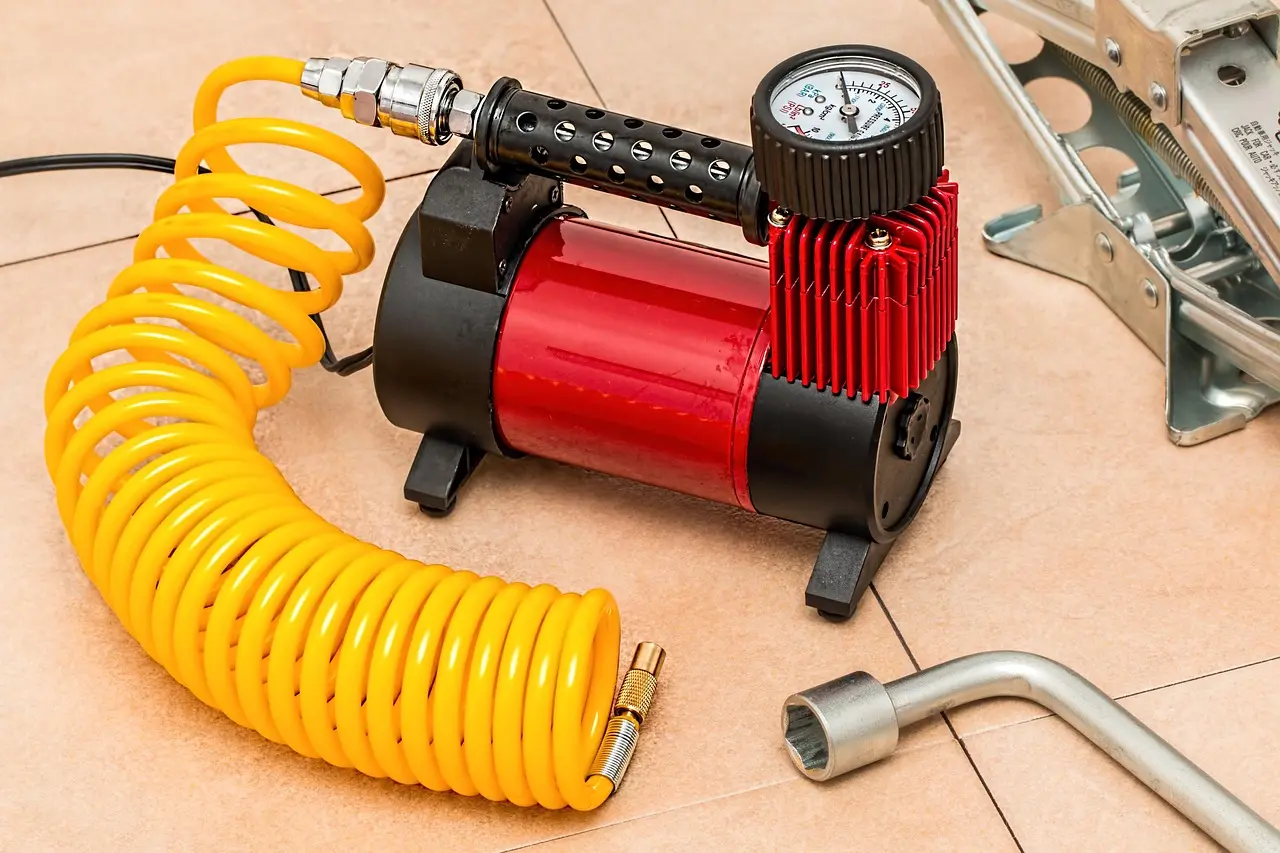
JACO ElitePro Tire Pressure Gauge is a strong choice for drivers who want an analog gauge with better usability than a bare-bones pencil model. It is listed at $22.90, and the glow dial, bleeder valve, and 360-degree swivel chuck make it practical for routine checks.
The swivel chuck helps when the valve stem sits at an awkward angle, and the bleeder valve gives you a way to trim off excess air if a tire is slightly overinflated. The same source notes that some gauges can only check pressure and bleed excess air, which is useful when you want one tool to handle both jobs.
The drawback is size and cost. It is still a manual gauge, so you give up the instant numeric screen of a digital model, and its price puts it close to a better-equipped digital option if low-light use matters more to you than battery-free operation.
For drivers who check pressure in daylight and want a dial that is easier to read than a pencil scale, this is the cleaner analog pick.
ATsafepro Pencil Tire Pressure Gauge: best for glove boxes
ATsafepro Pencil Tire Pressure Gauge is the cheapest and most portable option here. It is listed at $4.59, has a compact pencil-gauge form, and uses a printed scale with a zinc alloy chuck and brass core for basic checks on bikes, cars, and trucks.
This is the pick for drivers who want no batteries, no screen, and no fuss. The pocket clip makes storage easy, and the small size means it is the least annoying gauge to keep in a glove box or center console.
The drawback is the limited pressure range. It is marked 5-50/10-75 PSI, which is enough for many passenger-car checks but less flexible than a higher-range digital or analog gauge if you also need to read higher-pressure tires or want more headroom.
For a quick monthly top-up at a gas station, that tradeoff can still make sense if your goal is the lowest cost and a repeatable basic reading.
Milton S-976 Dual Head Tire Pressure Gauge: best for wide PSI needs
Milton S-976 Dual Head Tire Pressure Gauge is the practical middle option for drivers who want a wider range than a standard car-focused gauge. It is listed at $17.06 and covers 10-160 PSI in 2 PSI increments.
That wider range is useful if you want one gauge for more than a passenger car, or if you simply prefer the extra headroom. The dual-head layout can also help with access in tight spaces, depending on your valve-stem setup.
The drawback is that the listing data here is leaner than the others, so you should check the manufacturer’s listing for your model if you need to confirm details such as chuck style or any extra usability features.
For a budget buyer who wants a broader PSI span without jumping to a large digital unit, this is the compromise pick.
Which one should you buy?
For most budget drivers, start with the AstroAI digital gauge if you check tires at night or before sunrise. Start with the ATsafepro pencil gauge if you mainly want the cheapest possible tool and only need a quick, basic reading.
If you want a manual gauge with better readability and a bleed valve, the JACO ElitePro is the strongest analog buy here. If you want extra PSI headroom for mixed vehicle use, the Milton S-976 is the better fit.
The same source says a daily driver should not spend more than $25, so the spending decision is mostly about what feature you will actually use: backlit reading, battery-free simplicity, or the smallest body for storage.
What features are worth paying for?
The features that matter most in a budget gauge are the ones that improve the reading process, not the spec sheet. Accuracy, readable display, storage convenience, and a useful pressure range matter more than decorative extras.
A bleed valve is worth paying for if you often find the tires slightly overinflated. It lets you deflate excess air in small steps, which is useful after topping up at a gas station or compressor. The same source notes that some gauges can only check pressure and bleed excess air, and some higher-end gauges are compatible with a compressor.
Swivel chucks and hoses are worth it if your valve stems are hard to reach. A 360-degree swivel can reduce awkward hand positions, and a leak-proof hose can make a gauge easier to use on wheels with tight spoke layouts or less clearance around the stem.
Measurement range
For most passenger cars, a 0-60 PSI or 0-75 PSI gauge is usually enough. Wider ranges such as 0-100 PSI, 0-150 PSI, or 0-200 PSI make sense when you want one gauge that can also cover trucks, RVs, or higher-pressure tires.
If your routine is limited to a sedan or compact SUV, do not pay extra just for a huge top end. A narrower range often keeps the reading area easier to see and the tool easier to store.
Accuracy rating
Cheap gauges should still give a repeatable reading, but the label matters. ANSI calibration, ±1 PSI, ±0.50% FS, and 2% span are all ways sellers describe accuracy, and the practical point is simple: the reading should be consistent enough to set tire pressure the same way each time.
For a budget driver, a gauge that is repeatable and easy to read is more useful than one with a flashy claim and a hard-to-see display. A small error is less of a problem if the tool gives the same result every time you check the same tire under similar conditions.
Low-light readability
Low-light readability is one of the few features that can justify a higher price on a cheap gauge. A backlit LCD display or glow dial helps when you check pressure in a garage after dark, and Popular Mechanics specifically recommends a backlit display for night checks.
Picture a commuter who leaves at 6 a.m. and checks pressure in a dark driveway. A pencil gauge may be cheap, but a backlit digital gauge can save time and reduce second-guessing when the valve stem is hard to see.
Storage convenience
Storage matters more than most buyers expect. A compact pencil gauge is easiest to keep in the glove box, while a larger digital gauge may be more comfortable to read but less convenient to store every day.
Long-term ownership cost also matters. A battery-free analog or pencil gauge avoids battery replacement, while a digital gauge adds that small recurring cost. For a budget buyer, the cheapest tool is not always the cheapest to own if it gets left dead in the glove box.
Budget decision matrix
| Driver type | Best gauge type | PSI range to target | Accuracy target | Battery dependence | Readability priority | Storage priority | Simple rule |
|---|---|---|---|---|---|---|---|
| Monthly checker | Pencil or analog | 0-60 PSI or 0-75 PSI | Repeatable, with ANSI-listed calibration if available | None preferred | Daylight | High | Buy the cheapest gauge you can read quickly in your usual lighting. |
| Weekly commuter | Analog or digital | 0-75 PSI or 0-100 PSI | ±1 PSI or a clear ANSI-based claim | Low if possible | Medium to high | Medium | Pay a little more for better readability if you check pressure often. |
| Low-light/night user | Digital with backlight | 0-100 PSI | ANSI B40.7 Grade 2A, ±0.50% FS, or similar published claim | Acceptable if the display is clear | Very high | Medium | Spend extra only for a clear screen and pressure lock-on. |
How accurate does a cheap tire pressure gauge need to be?
Cheap does not have to mean sloppy. A budget gauge should be accurate enough to give the same result repeatedly when used the same way, because the real goal is to set tire pressure consistently rather than chase a perfect laboratory number.
For most drivers, the practical threshold is whether you can trust the reading to tell you if a tire is low, on target, or overinflated. A gauge with a stated ANSI calibration or a clear PSI error claim is more useful than one with no real specification at all.
Do not pay for a fancy number if the display is hard to read. A repeatable gauge that is easy to use in your regular routine is better than a more precise one that sits in the glove box because it is annoying to check.
What PSI range should a car tire gauge have?
For most cars, a 0-60 PSI or 0-75 PSI gauge is enough. That range covers normal passenger-car tire pressures while keeping the gauge easy to read and compact enough for glove-box storage.
Choose 0-100 PSI if you want extra headroom or plan to use the same gauge on a wider mix of vehicles. Go to 0-150 PSI or 0-200 PSI only if you truly need that range; otherwise, you are paying for unused capacity.
A wider range can be useful, but it is not automatically better for daily car use. The right range is the one that fits your tires without adding bulk you will not appreciate later.
Do I need a gauge with a bleed valve?
You do not need a bleed valve for basic checks, but it is worth paying for if you often find tires slightly overfilled. It lets you release a small amount of air without reaching for a separate tool, which is handy after topping off at a compressor.
That said, a bleed valve is more valuable on a better manual gauge than on the cheapest possible pencil model. If your routine is only check and forget, the feature may go unused most of the time.
A common first-timer mistake is buying the most basic gauge, then discovering that every small overfill means a second trip to the air hose. A bleed valve avoids that extra step.
Are pencil tire pressure gauges good enough for daily drivers?
Yes, for many daily drivers they are good enough. Pencil gauges are compact, battery-free, and low cost, and they can provide a basic repeatable reading for routine tire checks when you do not need night visibility or extra functions.
The limits are readability and range. They are best for quick checks in daylight, not for drivers who want a large display or a wide PSI ceiling. If your car sits in the normal passenger range and you mainly check at home, they can be a sensible budget choice.
For a driver who already checks pressure only once a month, a pencil gauge is often the simplest tool to keep in the car and actually use.
How much should I spend on a tire pressure gauge?
The same source says a daily driver should not spend more than $25, and that is a reasonable cap for a budget buyer. Below that level, you can still find a readable analog gauge, a basic pencil gauge, or a simple digital model with useful features.
The price question is less about the sticker and more about the routine. If you check in the dark, pay for a backlit display. If you check in daylight, pay for a clear dial and a bleed valve only if you need one.
For the cheapest ownership cost, a pencil or analog gauge usually wins because there is no battery to replace. For the easiest reading, a modest digital model can still be worth the small premium.
What features matter most in a budget tire pressure gauge?
The most useful budget features are the ones that improve speed, reading confidence, and storage. A clear display, a sensible PSI range, a compact body, and a bleed valve matter more than extra branding or oversized packaging.
If you drive mostly in daylight, focus on a simple analog or pencil gauge. If you check tires at night, spend more for a backlit LCD display or a glow dial. If your valve stems are awkward to reach, look for a swivel chuck or hose before you look at anything else.
The best budget choice is the one that fits your actual checking routine. That is why a cheap gauge with the right display and range often beats a more expensive one with features you will never use.
Frequently asked questions
What is the best tire pressure gauge for budget drivers?
For most budget drivers, the best value is a simple gauge that is easy to read and reliable in your usual lighting. If you check tires at night, a backlit digital model makes the most sense. If you only check in daylight, a pencil or analog gauge is usually the cheaper and more practical buy.
Should I buy a digital or analog tire pressure gauge?
Buy digital if low-light readability matters and you want a clear screen with little guesswork. Buy analog if you want a battery-free tool with fewer long-term ownership costs. The better choice depends on when you check tires, not on feature count alone.
Products related to this article
Sponsored / affiliate links. As an Amazon Associate I earn from qualifying purchases. I may earn additional commission from eligible campaigns.