OEM Trim vs. Aftermarket Trim
Aftermarket trim works for simple cosmetic pieces with no sensors or seals nearby, but factory-correct OEM trim is the safer pick for clip-critical, weather-sealed, camera-, radar-, or airbag-adjacent parts. Pick the wrong part, and you can end up with gaps, rattles, water leaks, warning lights, or trim that blocks a sensor. This guide shows which exterior, interior, and sensor-adjacent trim can usually be bought aftermarket and which parts should stay OEM.
| Decision factor | OEM Trim | Aftermarket Trim | Winner |
|---|---|---|---|
| Fitment | Factory-spec fit, original part number, and mounting points built to the vehicle’s specified tolerances. | Fitment quality varies; premium pieces can be close, but budget listings may need reshaping or rework. | OEM Trim |
| Cost | Usually higher up front, with less chance of return shipping or repaint work. | Usually lower purchase price and wider availability. | Aftermarket Trim |
| Finish consistency | More likely to match texture, sheen, clips, and color cues used on the vehicle line. | Finish can vary by brand, batch, and material. | OEM Trim |
| Risk on sensor-adjacent parts | Better bet for camera, radar, airbag, and weather-sealed areas. | Can work only if the part preserves clearance, visibility, and mounting accuracy. | OEM Trim |
| Availability and style options | Limited to factory forms and superseded part numbers. | More choices, including blacked-out, chrome, or reproduction styles. | Aftermarket Trim |
OEM trim vs. aftermarket trim
OEM trim is the automaker’s factory-spec replacement path. It should match the original part number, the approved supplier’s tooling, the same mounting points, and the intended tolerances for the body opening or interior panel.
Aftermarket trim comes from a third-party manufacturer, not the automaker. It can work well for simple cosmetic pieces, but fitment, finish, and material quality vary more widely than with OEM.
What OEM trim means
OEM trim is the safer route when the part must line up exactly with clips, tabs, seals, or adjacent panels. That matters for body trim and moulding such as trunk lid and tailgate moulding, window surrounds, door handle bezels, and rocker panel accents.
OEM parts also help with originality and resale when the trim is visible and model-specific. The key advantage is repeatable fit, not brand prestige.
What aftermarket trim means
Aftermarket trim can be a good budget option for visible pieces that do not control sealing or sensing. It often brings lower cost, more style choices, and better availability for older vehicles.
Quality swings a lot. Some listings are close to OEM; others miss the mark enough to leave a gap, sit proud of the panel, or require slotting, trimming, or repainting.
The trade-off in one sentence
OEM Trim keeps factory dimensions and mounting accuracy. Aftermarket Trim keeps the price lower and the options wider, but you need to check fitment and function more carefully.
What counts as trim on a car?
Trim is the visible or semi-visible hardware that finishes the vehicle’s body or cabin, including pieces that shape airflow, cover attachment points, or protect edges. Some trim is cosmetic. Some trim carries a seal, blocks water, or helps a sensor see the road properly.
Exterior brightwork and moulding
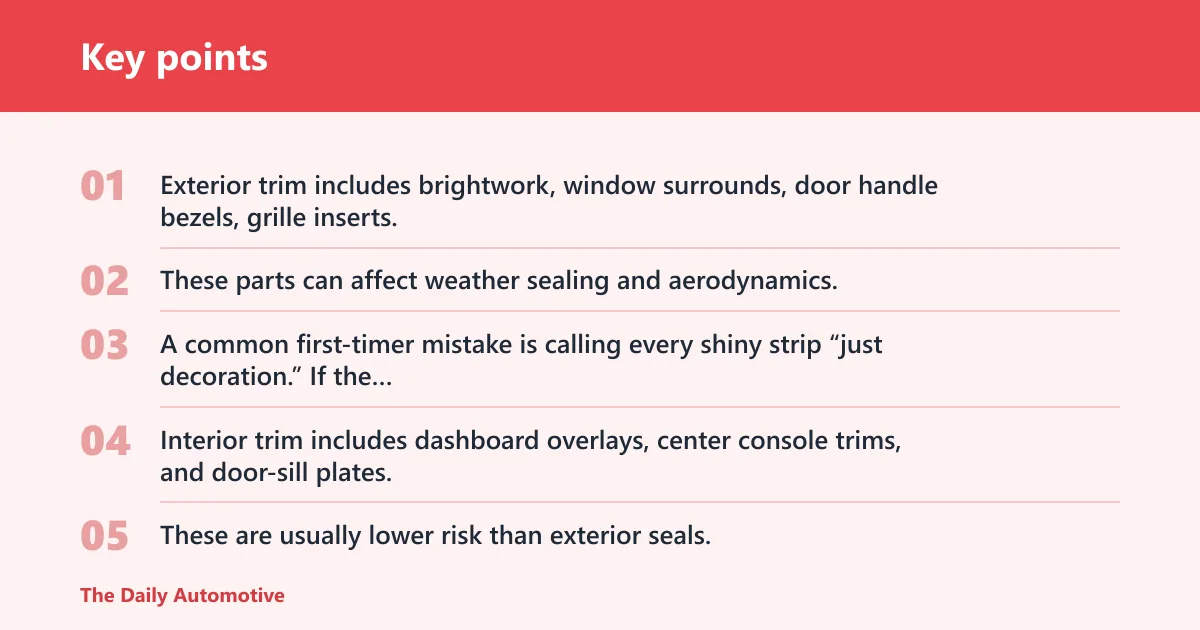
Exterior trim includes brightwork, window surrounds, door handle bezels, grille inserts, rocker panel accents, trunk lid moulding, and tailgate moulding. These parts can affect weather sealing and aerodynamics, so fit is more than a visual concern.
A common first-timer mistake is calling every shiny strip “just decoration.” If the piece meets a door glass edge, hatch opening, or bumper opening, it may also control noise, drainage, or clip retention.
Interior trim overlays and plates
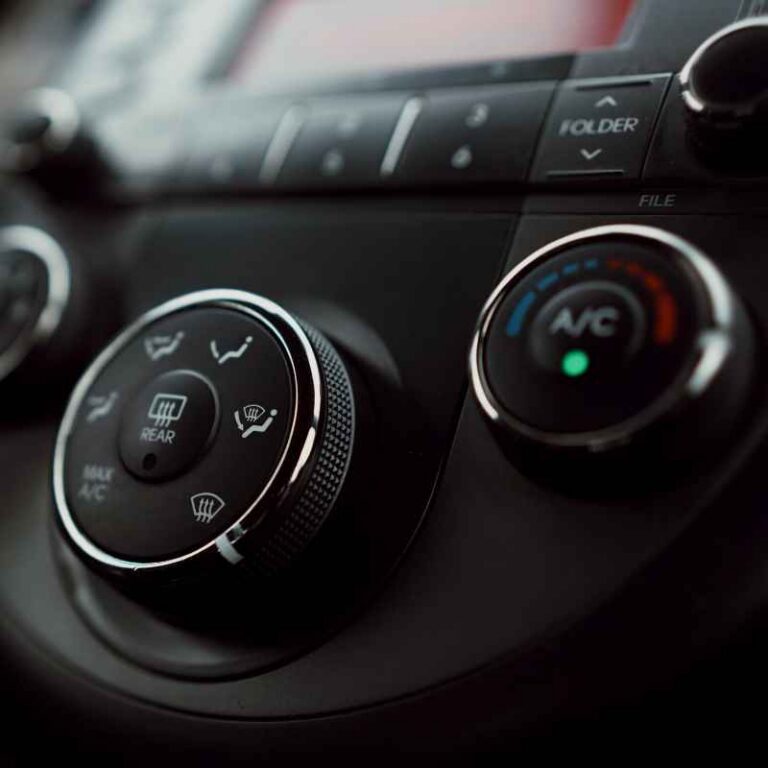
Interior trim includes dashboard overlays, center console trims, and door-sill plates. These are usually lower risk than exterior seals, but they still need the right clip layout and finish if you want the cabin panels to sit flush.
Some interior pieces are purely cosmetic. Others protect wiring or hide fasteners, so a weak clip can become a squeak or loose panel later.
When trim starts affecting sealing or sensors
Trim becomes more functional than cosmetic when it touches a weather strip, a camera window, a radar opening, or an airbag-related cover. NHTSA-related equipment concerns matter here because a bad fit can interfere with warning systems, visibility, or crash-related hardware clearance.
For example, a bumper insert may sit about 2 to 3 mm off center on a vehicle with a front camera opening. The part may still bolt on, but the camera may not get the intended view, or the insert may rub the housing and create a noise or fault.
Fitment and installation differences
Fitment is where OEM and aftermarket trim usually separate fastest. OEM parts are built for exact mounting points and tolerances. Aftermarket pieces may fit well, but the odds of rework rise as the price falls.
Mounting points, clips, and tabs
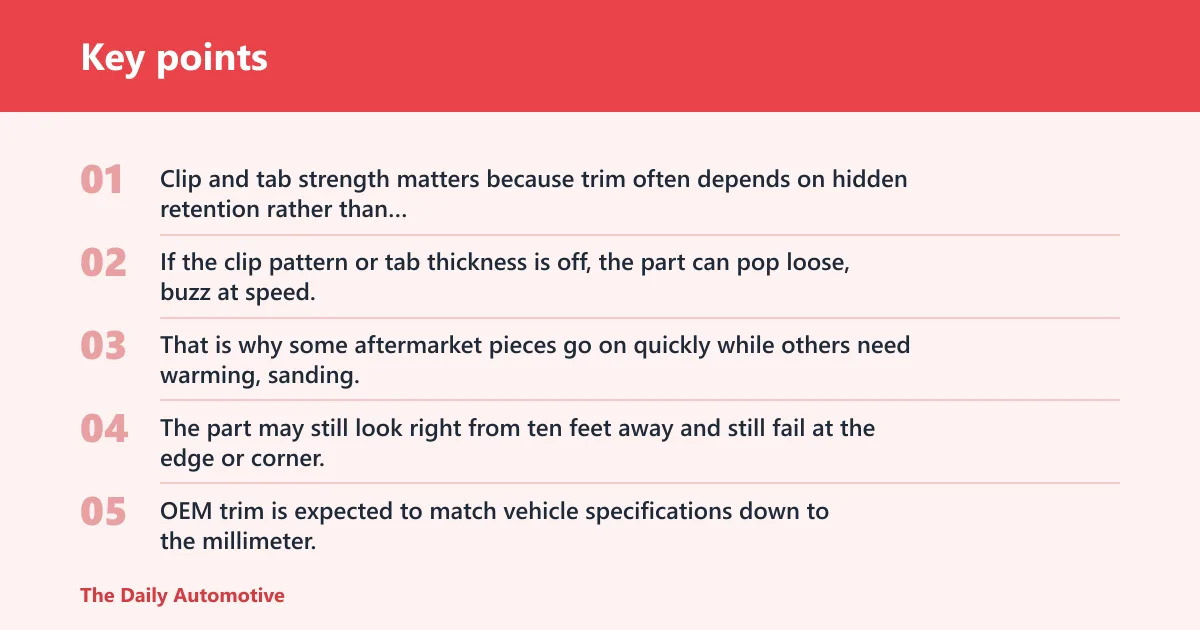
Clip and tab strength matters because trim often depends on hidden retention rather than visible fasteners. If the clip pattern or tab thickness is off, the part can pop loose, buzz at speed, or break during installation.
That is why some aftermarket pieces go on quickly while others need warming, sanding, or modified clips. The part may still look right from ten feet away and still fail at the edge or corner.
Millimeter-level alignment and gap control
OEM trim is expected to match vehicle specifications down to the millimeter. Aftermarket listings may advertise tighter or looser fit, but the practical result depends on the mold, the supplier, and how closely the part follows the original shape.
Published buyer guidance commonly separates premium aftermarket fitment at ±0.3 mm, mid-tier at ±1.2 mm, and budget or gray-market pieces at 2.5 mm or more. That spread is enough to change how a trim edge meets a fender, lamp, or weather strip.
Why some aftermarket pieces need rework
Rework usually happens when the part is close, but not exact. Common fixes include shaving a tab, warming the plastic, or repainting a surface that does not match the vehicle’s sheen.
That extra labor changes total ownership cost. A cheaper part can become the more expensive choice once installation time, return shipping, and refinishing are added.
Material quality and finish
Material quality affects how trim ages in sun, salt, heat, and wash chemicals. Plastic, metal, and rubber compounds all age differently, and the cheapest option can fade, pit, or harden sooner than the factory piece.
Plastic, metal, and rubber compounds
Plastic trim can warp or chalk if the compound is weak. Metal brightwork can corrode if the plating or coating is thin. Rubber trim and sealing strips need enough flexibility to keep pressure against the body without cracking.
OEM parts usually follow the vehicle’s original material spec. Aftermarket parts may use a different compound, which can be fine for appearance but weaker under long weather exposure.
UV, corrosion, and weather exposure
UV resistance matters for black exterior trim and interior overlays near glass. Corrosion protection matters for brightwork and plated pieces exposed to road spray. Weather sealing matters for edges that keep water out of the cabin or cargo area.
Auto part guidance also notes that poor trim can increase wind noise and reduce fuel efficiency. That is a reminder that a loose or misshaped part can affect more than appearance.
Finish consistency and color match
Finish consistency includes sheen, grain, and color. Two black trim pieces can still look mismatched if one has a glossier surface or a different texture pattern.
That matters most on door-sill plates, dashboard overlays, and visible brightwork. On those parts, a close-looking photo can hide a finish mismatch that stands out once installed.
OEM trim verification checklist
Before you buy, verify the part itself, not the seller’s title alone. The safest listings tie to an OEM part number, clear vehicle fitment data, and packaging or label details that support authenticity.
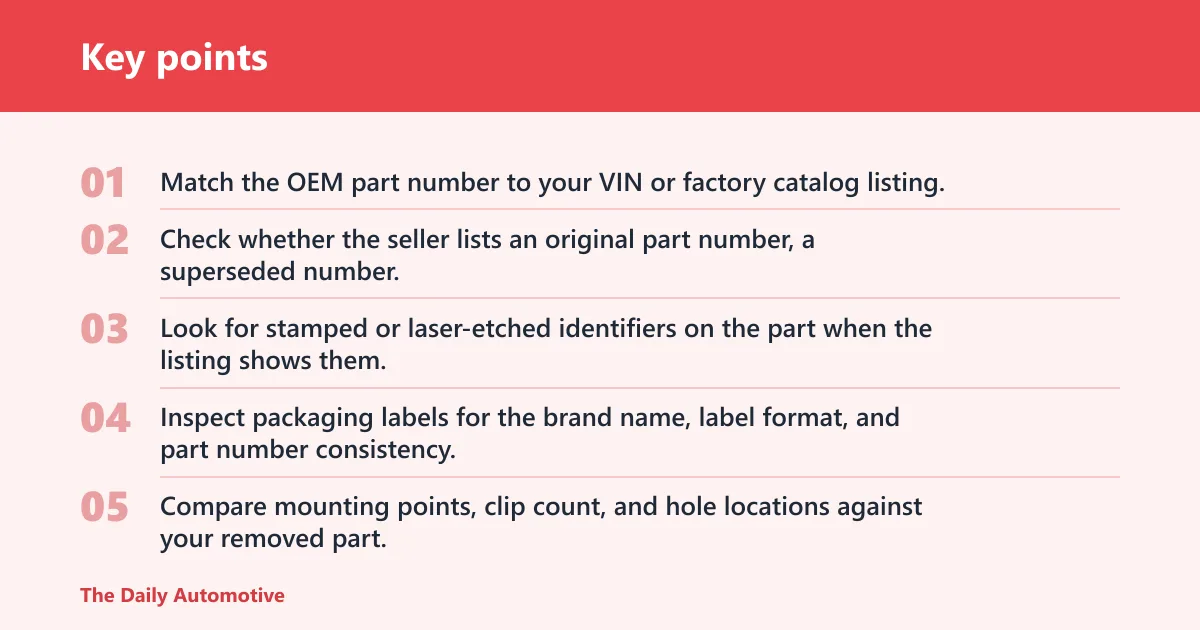
- Match the OEM part number to your VIN or factory catalog listing.
- Check whether the seller lists an original part number, a superseded number, or a cross-reference only.
- Look for stamped or laser-etched identifiers on the part when the listing shows them.
- Inspect packaging labels for the brand name, label format, and part number consistency.
- Compare mounting points, clip count, and hole locations against your removed part.
- Confirm sensor clearance, camera windows, or seal edges before installing.
| Trim type | Risk level | Recommended source | Failure mode to watch for |
|---|---|---|---|
| Exterior brightwork | Medium | OEM Trim for exact color, sheen, or clip fit; aftermarket only if the profile is simple | Visible gap, peel, or finish mismatch |
| Window surrounds | High | OEM Trim | Wind noise, water leak, loose edge near glass |
| Bumper inserts | Medium to high | OEM Trim if sensor openings are present; aftermarket only when the opening is plain and unmonitored | Clip failure, misaligned opening, blocked airflow or sensor view |
| Dashboard trim overlays | Low to medium | Aftermarket Trim for non-airbag areas; OEM Trim for exact texture and color match | Rattle, poor grain match, loose edge |
| Door-sill plates | Low | Aftermarket Trim if the piece is purely cosmetic; OEM Trim for illuminated or model-specific plates | Adhesive lift, uneven sit, scuffed finish |
| Sensor-adjacent trim | High | OEM Trim | Blocked camera, radar interference, warning light, clearance issue |
Choose OEM Trim if… / Choose Aftermarket Trim if…
Choose OEM Trim if the piece sits near a sensor, seal, airbag cover, or tight body opening. Choose it when you want the original part number, factory mounting points, better resale support, or the least chance of rework.
Choose Aftermarket Trim if the part is cosmetic, simple, and easy to inspect before installation. It makes sense when you want a lower price, broader style options, or a faster replacement for an older vehicle where exact originality does not matter.
Say your trunk lid moulding is missing and the replacement sits far from cameras, seals, or lamps. An aftermarket piece may be fine if the clip layout matches and the finish is acceptable. Say the part is a grille surround that frames a front camera or radar opening; that is the point where factory-correct fit matters more than a lower sticker price.
In practical terms, the safest rule is simple: cosmetic pieces can often be bought aftermarket, but sealing and sensing pieces should stay OEM unless the listing proves exact fit and clearance.
Frequently asked questions
What is trim in automotive?
Automotive trim is the visible finishing hardware inside or outside a vehicle, including moulding, overlays, bezels, brightwork, and sill plates. Some pieces are only cosmetic. Others affect weather sealing, clip retention, airflow, or sensor clearance, so the part’s function matters as much as its appearance.
What is OEM vs aftermarket?
OEM means the replacement comes from the automaker’s original supply chain or an approved supplier and matches the original part number and mounting design. Aftermarket means a third-party manufacturer made the part. OEM usually fits better; aftermarket is often cheaper and more varied.
Are OEM parts better than aftermarket?
OEM parts are usually better for exact fit, finish consistency, and sensitive areas like seals or sensors. Aftermarket parts can be perfectly usable for simple cosmetic trim and budget repairs. The better choice depends on how much the part controls alignment, sealing, or safety-related clearance.
What is considered trim on a car?
Trim includes exterior brightwork, window surrounds, grille inserts, rocker accents, door handle bezels, dashboard overlays, center console trims, and sill plates. If a piece covers a joint, finishes an edge, or helps seal a body opening, it counts as trim even when it looks decorative.
What is the difference between OEM and aftermarket parts?
OEM parts are built to the vehicle’s original specifications, often with the same supplier or an approved supplier, and are designed around exact mounting points and tolerances. Aftermarket parts come from third-party makers, so fitment, material quality, and finish can vary more from one listing to the next.
What kind of trim is this?
Start by asking whether the part is cosmetic, seal-related, or sensor-adjacent. A door-sill plate is usually cosmetic. A window surround or bumper insert can affect sealing or airflow. If the piece sits near a camera, radar, or airbag cover, it should be treated as function-critical trim.
Products related to this article
Sponsored / affiliate links. As an Amazon Associate I earn from qualifying purchases. I may earn additional commission from eligible campaigns.