Car Won’t Start Battery Dead Smoking?
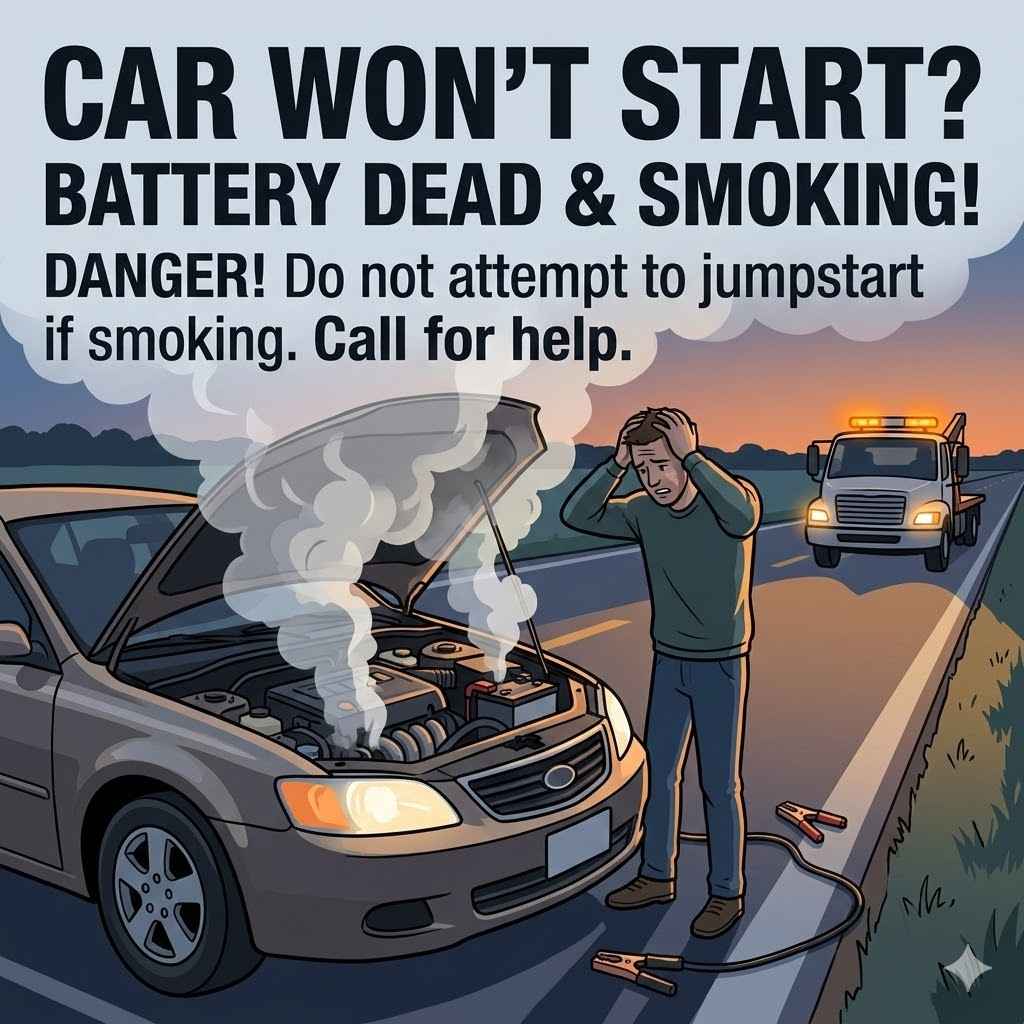
It can be super worrying when your car just won’t start and you see smoke. For folks new to cars, the thought of a Car Won’t Start, Battery Dead and Smoking? situation can seem really tricky to figure out. You might wonder what’s going wrong or how to fix it.
But don’t you worry! We’re going to break this down step by step so you can understand what’s happening and what to do next. Get ready to learn simple fixes.
Troubleshooting Car Won’t Start Battery Dead and Smoking
This section helps you figure out why your car might not be starting and if the battery is involved. We’ll also talk about why smoke might be showing up. It’s a common problem many drivers face, and understanding the basic signs can save you a lot of stress.
We’ll cover what to look for when you turn the key.
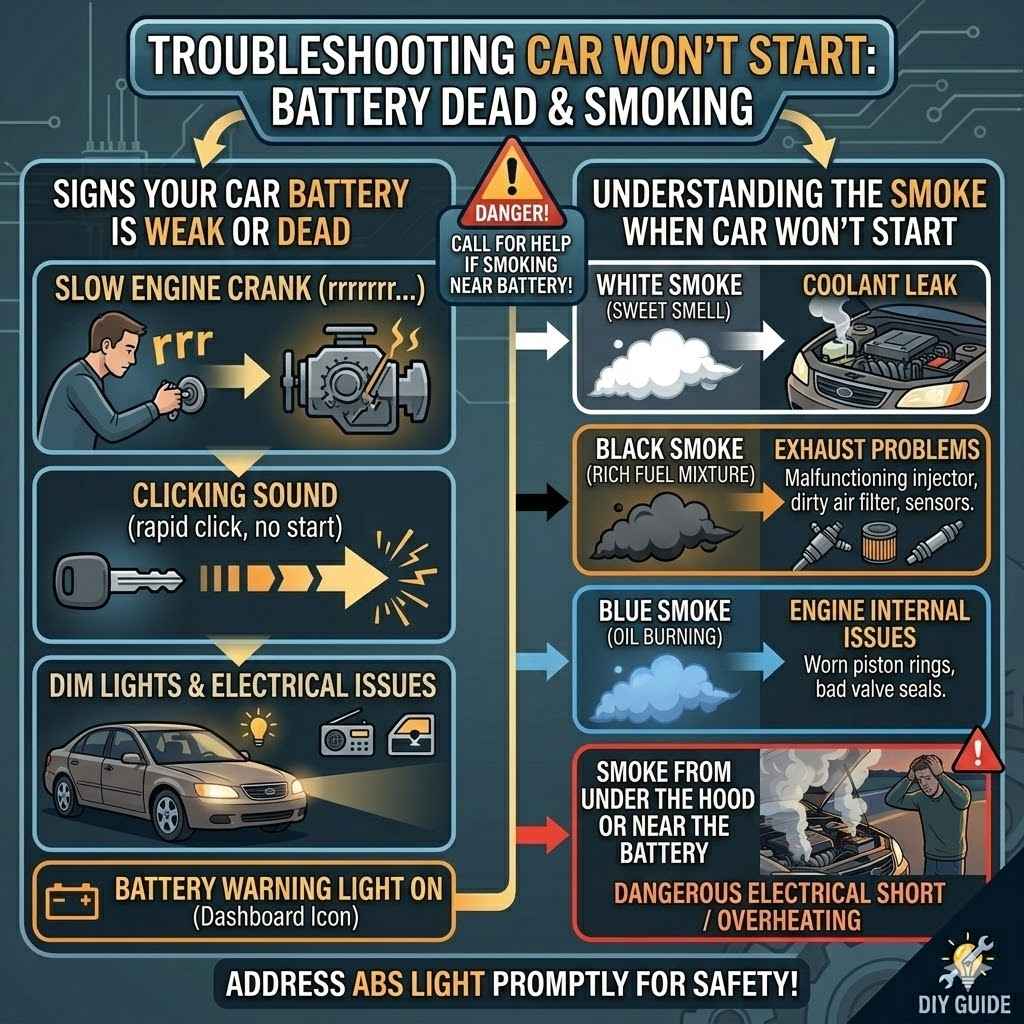
Signs Your Car Battery Is Weak or Dead
A weak or dead car battery is often the main reason a car won’t start. You might notice a few key signs before the car completely refuses to turn over. These signs are your car’s way of telling you it needs attention.
Slow Engine Crank
When you turn the key, the engine might crank slowly, almost like it’s struggling. This is the starter motor trying to turn the engine, but it doesn’t have enough power from a weak battery. It sounds like a drawn-out “rrrrrr” instead of a quick, strong start.
Clicking Sound When Turning Key
If you hear a rapid clicking noise when you try to start the car, but the engine doesn’t turn over, it’s a strong sign of a dead battery. The clicking is often the starter solenoid trying to engage but not getting enough power to turn the starter motor. This sound is a classic indicator of a battery issue.
Dim Lights and Electrical Issues
Before the car even fails to start, you might notice your headlights are dimmer than usual. Interior lights could also be dim or flicker. Your radio might cut out, or power windows might move slower.
These are all symptoms of the electrical system not getting enough power from a failing battery.
Battery Warning Light On
Most modern cars have a battery warning light on the dashboard. If this light comes on while you’re driving or trying to start your car, it means there’s a problem with the charging system or the battery itself. It’s a direct signal that something is wrong with how your battery is functioning.
Understanding the Smoke When Car Won’t Start
Seeing smoke when your car won’t start is definitely alarming. The type and location of the smoke can give you clues about the problem. It’s important not to ignore it, as it could indicate a more serious issue than just a dead battery.
White Smoke
White smoke often means there’s a coolant leak. Coolant might be leaking into the combustion chambers or onto hot engine parts. This can happen if there’s a blown head gasket or a cracked engine block.
If it smells sweet, it’s likely coolant. This is a serious problem that needs immediate attention.
Black Smoke
Black smoke usually signals that the engine is burning too much fuel. This can be caused by a malfunctioning fuel injector, a dirty air filter, or problems with the engine’s sensors that control the fuel mixture. The engine is getting more fuel than it can properly burn, leading to rich exhaust fumes.
Blue Smoke
Blue smoke indicates that the engine is burning oil. This means oil is getting into the combustion chamber, which could be due to worn piston rings, bad valve seals, or a problem with the engine’s lubrication system. Burning oil is bad for the engine and can cause further damage.
Smoke From Under the Hood or Near the Battery
If the smoke is coming from under the hood, especially near the battery area, it could mean the battery is overheating or there’s an electrical short. This is a very dangerous situation. A short circuit can cause wires to overheat rapidly, melt insulation, and even start a fire.
Why A Car Won’t Start Battery Dead and Smoking?
When you encounter a situation where your Car Won’t Start, Battery Dead and Smoking?, it’s a sign that multiple systems might be having trouble. It’s not always just one thing. The battery is often the first suspect when a car doesn’t start, but the smoke points to other potential issues that are happening at the same time or are related.
The Role of the Battery in Starting a Car
The car battery is like the heart of your vehicle’s electrical system. It provides the initial surge of power needed to start the engine. When you turn the ignition key, the battery sends a large amount of electricity to the starter motor.
The starter motor then spins the engine’s flywheel, which cranks the engine, allowing it to begin its combustion cycle and run on its own.
Without a fully charged and healthy battery, this process cannot happen. The battery stores chemical energy and converts it into electrical energy. Over time, batteries can lose their ability to hold a charge due to age, extreme temperatures, or damage.
A worn-out battery can’t deliver the high current needed to engage the starter motor effectively, leading to a no-start situation.
How Battery Problems Can Cause Other Issues
A failing battery doesn’t just prevent the car from starting. It can also cause odd electrical behaviors. When a battery is weak, it may not be able to supply consistent voltage to various car systems.
This can lead to flickering lights, a malfunctioning radio, or even issues with the car’s computer.
In some cases, a severely discharged or shorted battery can overheat. Batteries contain chemicals that can generate heat when they are stressed or shorted. If this heat builds up rapidly, it can cause the battery casing to swell or even melt, leading to smoke.
This is a critical safety concern.
When Smoke Meets a Dead Battery
The combination of a no-start and smoke suggests a more complex problem. For instance, a short circuit in a battery cable could drain the battery quickly and also cause the cable or battery to overheat and smoke. Alternatively, an electrical issue elsewhere in the car might be drawing too much power, draining the battery and causing other components to overheat and smoke.
Another possibility is that a faulty charging system (like a bad alternator) has overcharged and damaged the battery, leading to overheating and smoke, while also leaving the battery unable to provide starting power. The presence of smoke alongside a no-start condition demands careful investigation beyond just checking the battery’s charge.
Diagnosing the Root Cause Beyond the Battery
While the battery is a common culprit for a car not starting, the smoke points to other potential problems. It’s vital to investigate these symptoms together to get a full picture of what’s happening. This requires looking at the starting system, the charging system, and any potential electrical shorts or mechanical failures.
The Starting System Explained
The starting system is what makes your engine turn over. It includes the ignition switch, the starter motor, the starter solenoid, and the battery. When you turn the key, the ignition switch sends a signal to the starter solenoid.
The solenoid then engages a gear that meshes with the engine’s flywheel and activates the starter motor. The starter motor, powered by the battery, spins the flywheel, which in turn spins the engine’s crankshaft.
If any part of this system is faulty, the engine won’t crank. A worn-out starter motor might not spin, a bad solenoid might not engage, or damaged wiring can prevent power from reaching these components. If the starter motor is trying to turn but can’t, it might draw excessive current, potentially leading to overheating and smoke from wires or the starter itself, especially if the battery is also weak.
The Charging System’s Role
The charging system keeps the battery charged while the engine is running. It includes the alternator, the voltage regulator, and the battery. The alternator generates electricity when the engine is running, and the voltage regulator ensures this electricity is at the correct voltage to charge the battery and power the car’s electrical systems.
If the alternator or voltage regulator fails, the battery won’t get recharged. This will eventually lead to a dead battery and a no-start condition. In some cases, a faulty alternator can also overheat and fail, potentially producing smoke.
If the charging system has been overcharging the battery, this can also cause the battery to overheat and vent gases or smoke.
Electrical Shorts and Wiring Issues
Electrical shorts are when an unintended path is created for electricity to flow, often bypassing the intended circuit. This can happen if wires are damaged, insulation wears off, or components fail. A short circuit can cause a massive surge of current, which can quickly overheat wires, melt their insulation, and produce smoke.
These shorts can drain the battery very quickly because of the high current draw. A short in a major power wire could drain the battery completely and cause that wire to get extremely hot, leading to smoke. Locating these shorts can be challenging, but they are a significant cause of both electrical problems and fire risks in vehicles.
Mechanical Engine Problems
While less common as the direct cause of a no-start and smoke combo, severe mechanical engine problems can also be factors. For example, if the engine has seized (stopped moving internally), the starter motor will struggle immensely or be unable to turn it over, draining the battery.
If there’s a significant internal engine issue like a broken connecting rod or piston, this could cause catastrophic failure. Such an event might lead to smoke from the engine compartment as parts fail and overheat. However, the most frequent cause of smoke along with a no-start is related to the electrical or charging systems.
When Battery is Dead and Smoking What To Do
If you find yourself in the scary situation of your Car Won’t Start, Battery Dead and Smoking?, the most important thing is to stay calm and prioritize safety. Smoke from a car is a warning sign that should not be ignored. Here’s a step-by-step approach to handle this.
Immediate Safety Steps
Your safety and the safety of others around you is the top priority. Do not attempt to start the car repeatedly if you see smoke. This could make the situation worse and potentially cause a fire.
Turn Off the Ignition Completely
Make sure the ignition key is in the off position. If the car is running and smoking, turn it off immediately. This stops the engine, which is the source of many potential problems and heat.
Do Not Open the Hood Immediately
If you see smoke, especially if it’s thick or dark, opening the hood can feed oxygen to a potential fire. Wait a few minutes for the smoke to dissipate and for any potential fire to die down before you consider opening the hood.
Assess the Situation From a Distance
Observe where the smoke is coming from. Is it from under the hood, from the exhaust, or from the wheels? Try to note any unusual smells.
If you see flames, evacuate everyone from the car and move to a safe distance.
Call for Professional Help
If there is smoke, it’s best to call for roadside assistance or a tow truck. Do not try to drive the car. You might need to call the fire department if there is an active fire or if the smoke is very heavy.
Checking the Battery Area (With Caution)
If there is no immediate fire and the smoke has subsided, you can cautiously inspect the battery area. Always exercise extreme caution.
Wear Protective Gear
If you decide to look, wear safety glasses and gloves. Batteries can leak acid, and hot components can cause burns.
Look for Visible Damage
Check the battery terminals for corrosion. Look for any signs of melting, bulging, or leaking from the battery itself. See if the battery cables are loose, damaged, or show signs of melting.
Smell for Burning
Beyond the initial smoke, you might smell burning plastic, rubber, or sulfur (like rotten eggs). This smell can help pinpoint the source of the problem.
When to Jump Start and When Not To
Jump starting is a common fix for a dead battery. However, if you see smoke, it’s generally not recommended to attempt a jump start.
Don’t Jump Start If Battery is Damaged or Smoking
If the battery is visibly damaged, swollen, leaking, or actively smoking, do not attempt to jump start it. This could cause the battery to explode or leak dangerous chemicals. The risk of fire is too high.
Jump Start Only If Battery Seems Intact
If the battery just seems dead with no signs of damage or smoke, and the issue is clearly a lack of power, a jump start might help. However, if there’s any doubt, it’s safer to wait for a tow.
Consider the Cause of the Dead Battery
Even if you jump-start successfully, the underlying reason for the dead battery and any smoking issue needs to be found. A jump start is a temporary fix and doesn’t address the root problem, which could be a bad alternator, a short circuit, or a faulty battery.
What a Mechanic Will Do
A qualified mechanic has the tools and expertise to diagnose complex issues like this. They will start with a thorough inspection.
Battery Testing
They will perform a load test on the battery to check its health and ability to hold a charge.
Charging System Check
The alternator and voltage regulator will be tested to ensure they are functioning correctly and not overcharging or undercharging the battery.
Electrical System Diagnosis
Using diagnostic tools, they will check for error codes and trace wiring harnesses to find any short circuits or open circuits that could be causing electrical problems and overheating.
Component Inspection
They will visually inspect starter motors, solenoids, and other electrical components for signs of damage or failure that could lead to smoke.
Car Won’t Start Battery Dead and Smoking? Solutions
Dealing with a Car Won’t Start, Battery Dead and Smoking? can be unsettling, but there are clear steps to take. We’ve explored the common reasons, from battery issues to electrical shorts and even engine problems. Now, let’s look at the most likely solutions.
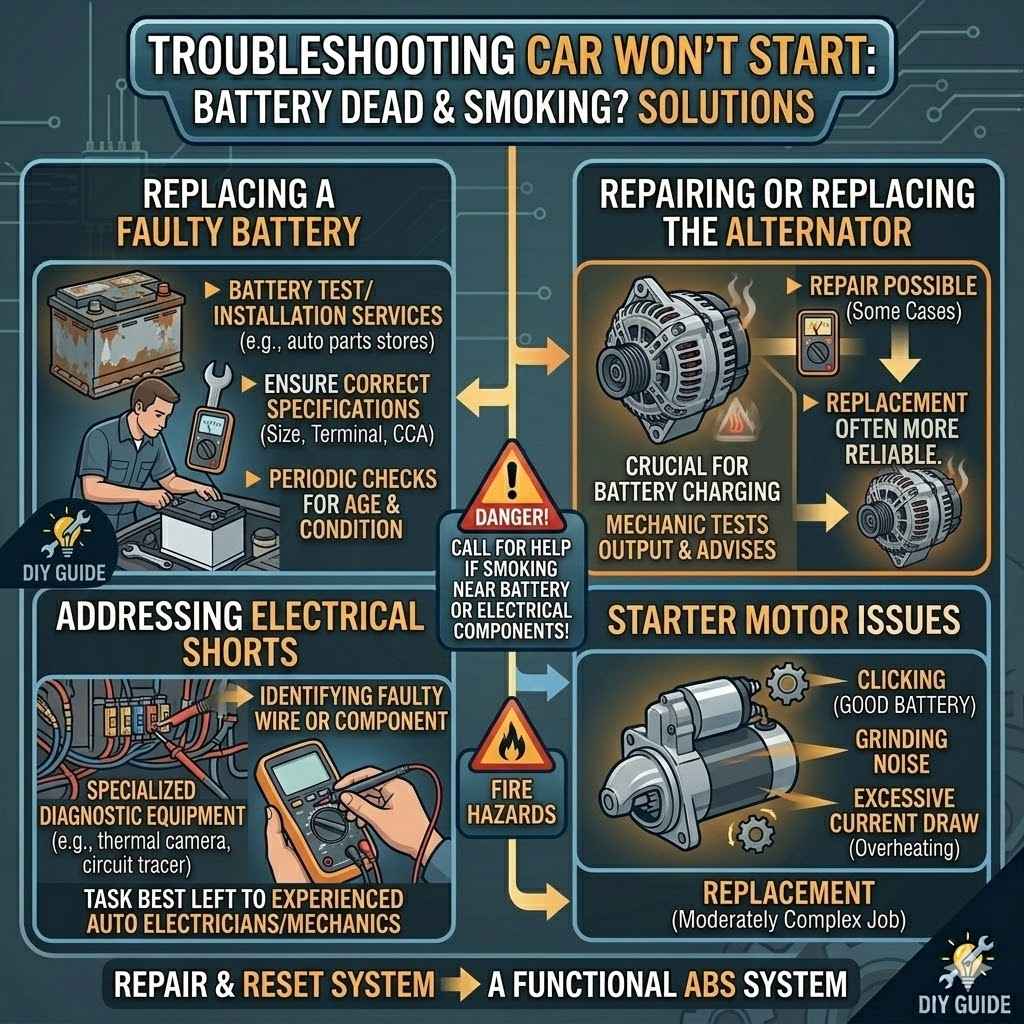
Replacing a Faulty Battery
If diagnostics confirm the battery is old, damaged, or simply no longer holding a charge, replacement is the straightforward solution. Modern car batteries typically last between 3 to 5 years. It’s a good idea to check your battery’s age and condition periodically.
When replacing a battery, ensure you get one with the correct specifications for your vehicle. This includes the correct size, terminal type, and Cold Cranking Amps (CCA) rating. Many auto parts stores offer battery testing and installation services, making the process easier.
Repairing or Replacing the Alternator
The alternator is crucial for keeping the battery charged. If the alternator is failing, it won’t produce enough electricity, leading to a dead battery. Sometimes, a failing alternator can overheat and smoke.
Repairing an alternator might be possible in some cases, but often, replacement is the more reliable option. A mechanic can test your alternator’s output and advise on the best course of action. A properly functioning alternator is key to preventing future battery issues.
Addressing Electrical Shorts
Electrical shorts are one of the more complex issues to fix, as they require careful tracing of wires. A short circuit can drain the battery and cause overheating, leading to smoke. The fix involves identifying the faulty wire or component causing the short and repairing or replacing it.
This often requires specialized diagnostic equipment. It’s a task best left to experienced auto electricians or mechanics who can safely and effectively locate and repair the electrical fault, preventing further damage and fire hazards.
Starter Motor Issues
A worn-out or malfunctioning starter motor can also cause starting problems and, in some cases, draw excessive current leading to overheating and smoke. If the starter motor is determined to be faulty, it will need to be replaced.
Symptoms of a bad starter include a clicking sound when turning the key (if the battery is good), a grinding noise, or the engine not turning over at all. Replacing a starter motor is a moderately complex job that usually requires removing other engine components to access it.
Other Potential Fixes
Beyond these common issues, other problems could contribute to a car not starting and smoking. These might include issues with the ignition switch, fuel pump, or even internal engine damage.
A mechanic will perform a comprehensive diagnostic process. This might involve checking the fuel system pressure, examining spark plugs, and looking for any leaks or damage within the engine compartment. Any problem that drains the battery excessively or causes components to overheat needs thorough investigation to ensure a safe and reliable repair.
Frequently Asked Questions
Question: What is the first thing I should do if my car won’t start and I see smoke?
Answer: The first thing to do is to turn off the ignition completely and step away from the car. Do not try to start it again. Assess the situation from a safe distance and call for roadside assistance or emergency services if there are flames.
Question: Can a dead battery cause smoke?
Answer: Yes, a severely dead, shorted, or faulty battery can overheat and produce smoke. This is a dangerous situation and indicates the battery itself is compromised and needs immediate attention.
Question: How do I know if it’s the battery or the alternator if my car won’t start?
Answer: A weak battery often results in a clicking sound or slow cranking. If the car cranks but doesn’t start, or if lights are dim but the engine is cranking weakly, it’s likely the battery. If the car starts but dies soon after, or if warning lights are on, it might be the alternator.
Smoke, however, complicates this and needs professional diagnosis.
Question: Is it safe to jump start a car that was smoking?
Answer: No, it is not safe to jump start a car that was smoking. The smoke indicates a more serious problem, potentially a short circuit or a damaged battery, which could lead to further damage or a fire during a jump start.
Question: How much does it typically cost to fix a car that won’t start and is smoking?
Answer: The cost can vary greatly depending on the cause. Replacing a battery might cost $100-$200. An alternator replacement could be $300-$700.
Fixing electrical shorts can be more expensive, ranging from a few hundred to over a thousand dollars if extensive wiring needs replacement.
Summary
When your car won’t start and you see smoke, it’s a serious issue. It could be a simple dead battery, but the smoke means you should look closer. Common causes include battery failure, alternator problems, or electrical shorts.
Always prioritize safety first by not attempting to start the car and calling for professional help. A mechanic can diagnose the exact problem and recommend the right fix, whether it’s a new battery, alternator, or electrical repair.