Cheap Floor Mats for Cars That Don’t Fall Apart in Six Months
You bought a used car with pristine carpet. Three weeks later, the driver’s side looks like a construction site. Coffee drips, salt stains, and gravel have turned your floor into a mess you scrub at with a damp rag and regret.
Most people respond by grabbing the first $15 set they see at the auto parts store. Those mats curl at the edges, slide under the pedals, and crack in cold weather. Then you buy another set. Then another. You end up spending more than a quality set would have cost in the first place.
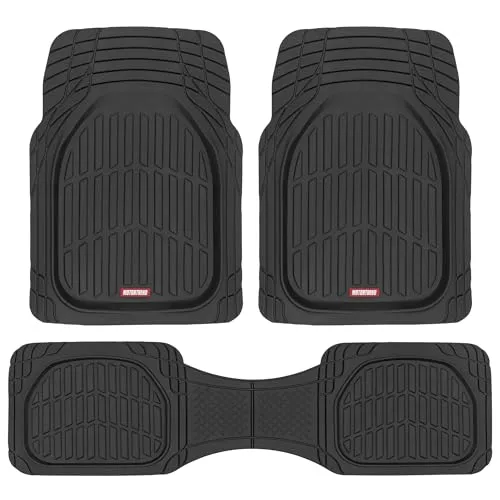
Motor Trend
Motor Trend FlexTough Floor Mats for Cars,…
- GENUINE FLEXTOUGH CAR FLOOR MATS – Motor Trend's FlexTough car floor mats provide maximum all-weather protection for your car's in…
- UNIVERSAL FIT – Designed to fit most vehicles, these flexible rubber floor mats mold to the shape of your car's interior. Front Me…
- HEAVY-DUTY RUBBER – Built with a proprietary rubber blend, our floor mats for cars are made to last and always protect your vehicl…
This guide covers what actually matters when you’re shopping for cheap floor mats for cars. You’ll learn which materials hold up, which ones waste your money, how to measure your floor pan correctly, and when a universal mat is worth buying over a custom-fit liner. I’ll also show you a specific product that hits the sweet spot between price and durability.
What Makes a Floor Mat Cheap Versus Worthless
Price alone doesn’t tell you much. A $20 mat can be a bargain or a trap depending on three things: material thickness, edge design, and how it stays put.
Thickness matters more than most people think. Cheap mats often use a thin rubber sheet around 1.5 millimeters thick. That’s fine for a garage queen but useless for a daily driver. Every time you press the clutch or brake, the mat flexes. Over months, the flexing creates creases. Creases turn into cracks. Cracks let water through to your carpet.
Look for mats with a measured thickness of at least 2.5 to 3 millimeters. You can feel the difference immediately. The mat should have some weight to it and resist bending when you fold it in half.
Edge design separates good universal mats from bad ones. A flat mat with no raised border lets melted snow run right off the sides and soak into your carpet. A deep-dish design with raised edges traps that water until you can dump it out. That’s not a luxury feature. It’s the difference between a clean floor and a mold problem.
Then there’s the retention issue. A mat that slides forward under the pedals is a safety hazard, not just an annoyance. Factory mats have hook or clip systems. Universal mats can’t use those. The best cheap mats solve this with a textured backing that grips the carpet. Some also include trim-to-fit holes for grommets, but you’ll rarely use them.
One more thing to check: does the mat have a strong odor when you open the package? Some ultra-cheap rubber mats reek of petroleum for weeks. That smell doesn’t go away with airing out. It stays every time you get in the car on a hot day. If a mat smells bad in the store or in the box, put it back.
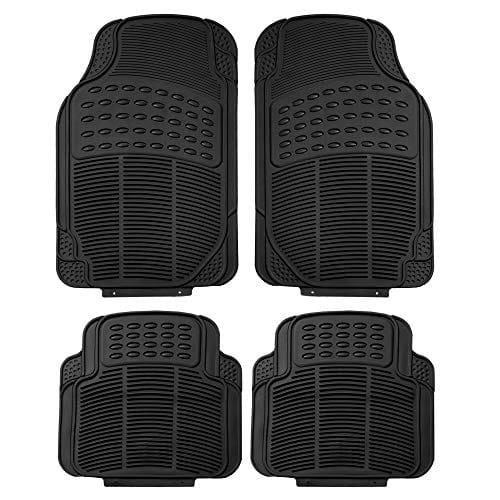
A solid example of the right approach is the Motor Trend FlexTough set. It uses a heavy-duty rubber blend that doesn’t deform in heat or crack in freezing temperatures. The deep-dish edges catch snow and mud, and the trim-to-fit design lets you adjust it for your specific floor pan. You can find the current price on Amazon, but the value comes from not having to replace them every season.
Universal Fit Versus Custom Fit: Which One Makes Sense on a Budget
Custom-fit floor liners look great and cover every inch of your carpet. They also cost $150 to $250 for a full set. If you’re shopping for cheap floor mats for cars, that’s usually out of range.
Universal mats cost $20 to $60. The trade-off is coverage. A universal mat covers the flat area of your footwell but leaves the sides and the transmission tunnel exposed. In practice, that’s fine for most people. Dirt and water land where your feet land. The edges of the footwell don’t take much abuse.
Where universal mats fall short is in vehicles with unusual floor shapes. Trucks with high transmission humps, sports cars with narrow footwells, and some SUVs with curved floor pans all leave gaps that a flat universal mat can’t fill. If your car has a floor that looks like a bathtub, you need a liner that matches the shape.
For everything else, a good universal set with deep edges and a trim-to-fit design works nearly as well as a custom liner at a third of the price. The key is buying a set that’s slightly larger than your floor and trimming it down. You can’t stretch a mat that’s too small.
Measure your floor pan before you buy. For the front, measure from the back of the footwell up to the firewall and across the width at the widest point. For the rear, measure the full width of the floor area since most universal rear mats are one long piece. Add an inch to each measurement so you have room to trim.
The FlexTough front mats measure 27 inches long and 20 inches wide. The rear mat spans 51 inches by 14 inches. Those dimensions fit most sedans, crossovers, and compact SUVs. If your vehicle is larger, look for an XL universal set or consider a truck-specific option from our floor mats for trucks guide.
How to Trim Universal Floor Mats for a Clean, Custom Look
Trimming a universal mat is straightforward, but most people do it wrong. They cut too much, too fast, and end up with a mat that leaves gaps. Take your time. You can always cut more. You can’t uncut.
Here’s the process that works:
- Place the mat in the footwell and press it down with your hand to see where it overlaps the sides and the front firewall.
- Use chalk or a grease pencil to mark the trim line. Leave about a quarter inch of extra material beyond where the mat naturally lies. This gives you room for error and accounts for the mat settling over time.
- Remove the mat and lay it flat on a piece of cardboard or a cutting mat. Use a sharp utility knife with a fresh blade. Dull blades tear rubber instead of cutting it cleanly.
- Cut in long, smooth strokes rather than short choppy ones. Follow your marked line exactly.
- Test the fit. Put the mat back in the car and press it into place. Check that the edges sit below the door sill and don’t interfere with the seat rails.
- Trim again if needed. Most people need two or three rounds to get it right.
Pro tip: cut the mat in a warm room, not in a cold garage. Warm rubber cuts cleanly. Cold rubber is stiff and prone to cracking along the cut line.
You don’t need to trim the entire perimeter. Focus on the areas that overlap the footwell walls or poke up visibly. The front edge near the firewall and the outer edge near the door sill are the two spots that matter most. The inner edge near the center console can stay untrimmed since it usually tucks underneath.
After trimming, wipe the cut edges with a damp cloth to remove loose rubber dust. That dust gets tracked onto your carpet if you skip this step.
Rubber, Carpet, or All-Weather: Choosing the Right Material for Your Climate
Your local weather should dictate your material choice. People who buy carpet mats for rainy climates are setting themselves up for disappointment.
Rubber mats are the obvious choice for wet or snowy regions. They’re waterproof, easy to rinse off, and don’t stain. The downsides are appearance and feel. Rubber mats look utilitarian, and they can get slippery when wet, though textured patterns help.
Carpet mats look nice and feel comfortable underfoot. They’re fine for dry climates and cars that never see mud. But once carpet gets wet, it stays wet. The backing absorbs moisture and the fibers trap dirt. Cleaning requires a wet vac or a trip to the car wash. For most people, carpet mats are the wrong choice for a daily driver.
All-weather mats sit in between. They’re made from a rubberized thermoplastic that’s flexible in cold weather and stiff enough to hold its shape in summer. The Motor Trend FlexTout mats fall into this category. They handle rain, snow, and mud without cracking, and spills wipe off with soap and water.
If you live somewhere with actual seasons, all-weather mats are the practical pick. They cost about the same as a decent set of carpet mats but last multiple times longer.
| Material | Best For | Durability | Cleaning Effort | Typical Price Range |
|---|---|---|---|---|
| Rubber (flat) | Dry climates, work trucks | Good, but can crack in extreme cold | Wipe or rinse | $10–$25 |
| Carpet | Show cars, dry climates | Fair, backing degrades when wet | Vacuum, wet vac | $20–$50 |
| All-weather (deep dish) | Daily drivers, wet/snowy regions | Excellent, resists cracking and deformation | Wipe with soap and water | $30–$70 |
| Custom-fit liner | Full coverage, odd floor shapes | Excellent | Wipe or rinse | $150–$250 |
One honest caveat: all-weather mats in the budget range won’t have the rigid structure of premium liners. They’ll flex a bit when you step on them, especially in the rear seat where the mat spans a wide area. That’s normal and doesn’t affect performance.
Real Questions People Ask About Budget Floor Mats
Can I use universal floor mats in a car with factory retention hooks?
Sometimes, but you’ll likely need to modify the mat. Most universal mats don’t come with holes for factory hooks. You can punch your own holes using a hole punch or a utility knife. Position the mat, mark where the hooks land, and cut small slits. The mat will stay put once the hooks engage. If you don’t want to modify the mat, buy one with a aggressive textured backing that grips the carpet on its own.
How often should I replace cheap car floor mats?
Depends on the quality. A truly cheap mat might last six months before it cracks or warps. A decent all-weather mat should last two to three years with regular use. You’ll know it’s time when the mat no longer lies flat, cracks appear in the rubber, or the deep-dish edges collapse and stop holding water. Inspect your mats at every oil change. That’s a good reminder to check for wear.
Do deep-dish floor mats trap more dirt than flat ones?
Yes, and that’s the point. The raised edges contain dirt, water, and debris so it doesn’t spread to your carpet. The trade-off is that you have to empty them. You can’t just shake a deep-dish mat out the door. You need to dump it or rinse it. If you’re the type of person who never cleans floor mats, a flat mat that you can vacuum quickly might suit you better, even if it leaks.
Will cheap floor mats damage my car’s carpet?
Only if they trap moisture underneath. A rubber mat that fits tightly can create a barrier that doesn’t allow airflow. If water gets under the mat, it stays there and can lead to mildew. To avoid this, pull your mats out and let the carpet dry completely every few weeks, especially after winter. Also, check that the mat’s backing isn’t abrasive. Some cheap mats have a rough backing that can wear thin carpet over time.
Are universal floor mats safe to use in the driver’s side?
They’re safe if they don’t interfere with the pedals. The problem is that universal mats can shift. A mat that slides forward can jam the accelerator or prevent the clutch from fully engaging. Always check that your mat is positioned correctly before driving and that the textured backing keeps it from sliding. If you have any doubt about a mat’s grip, add a layer of hook-and-loop tape or use a mat with a raised heel pad that keeps your foot from pushing it forward. You can also read more about proper mat installation in our custom floor mats guide.
What to Buy and What to Skip
After testing and living with budget floor mats, here’s the practical summary:
- Buy deep-dish all-weather mats, not flat rubber or carpet. The raised edges save your carpet from the worst of winter and rainy seasons.
- Measure your floor pan before ordering. Universal mats that are too small leave gaps, and mats that are too large require heavy trimming.
- Check the material thickness. Anything under 2.5 millimeters is too thin for daily use. The Motor Trend FlexTough set uses a heavy-duty blend that holds up.
- Trim slowly and in a warm environment. You can always cut more, but you can’t add material back.
- Secure the driver’s mat. Make sure it doesn’t slide toward the pedals. Your safety matters more than a clean floor.
- Clean your mats regularly, even the deep-dish ones. Trapped moisture under the mat leads to mildew and a musty car smell.
- Skip the $10 specials. They crack, curl, and slide. Spend a little more on a set that will survive more than one season.
Cheap floor mats for cars don’t have to be a compromise. The right universal set, trimmed properly, gives you 90 percent of the protection of a custom liner at a fraction of the cost. Take the time to measure, choose a material that matches your climate, and don’t rush the trimming process. Your carpet will thank you.
Products related to this article
Sponsored / affiliate links. As an Amazon Associate I earn from qualifying purchases. I may earn additional commission from eligible campaigns.