Chicco KeyFit 30 Review: Is It Worth It?
Chicco KeyFit 30 is often a strong newborn seat if an easy-to-install infant carrier for small cars is the goal, but it is commonly described as being outgrown at about 30 pounds or 30 inches and may fit some very small babies better than others. Get the fit wrong and you can end up with a loose install, a baby slumping in the shell, or a seat that feels miserable in summer. This review covers newborn fit, hot-weather comfort, travel use, and small-car installation.
Whether the KeyFit 30 fits your car, stroller, and stage
For a family that wants an infant seat for rear-facing newborn use, the KeyFit 30 makes the most sense when you value simple installation, a removable carrier, and base-free travel more than extra room to grow. It is a reasonable buy if your car is tight, your stroller setup is straightforward, and you expect to move to a convertible seat later anyway.
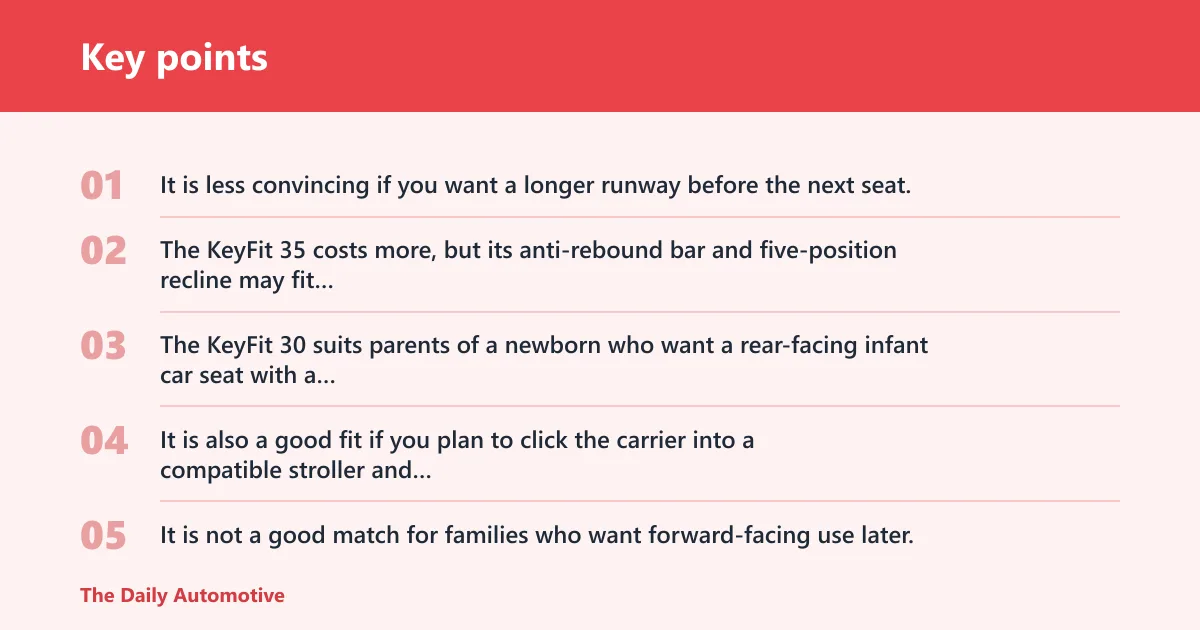
It is less convincing if you want a longer runway before the next seat, more padding for a tiny baby, or a model with more travel-focused extras. The KeyFit 35 costs more, but its anti-rebound bar and five-position recline may fit some families better.
Who the KeyFit 30
The KeyFit 30 suits parents of a newborn who want a rear-facing infant car seat with a stay-in-car base, a removable carrier, and simple day-to-day use in a small sedan or compact SUV. It is also a good fit if you plan to click the carrier into a compatible stroller and then move the baby without unbuckling every time.
It is not a good match for families who want forward-facing use later, because this seat is rear-facing only. It also loses appeal if your child is close to the upper end of the infant-seat stage and you would rather buy one convertible seat that lasts longer. (Consumerreports)
Say your baby is 5 pounds and still curls deeply at the shoulders. The seat’s newborn support insert and harness fit matter a lot more than price. If the baby sits too low or the harness lands badly, look to the manufacturer’s listing and your CPST guidance before assuming this is the right shell.
Where the seat feels dated or cramped
The KeyFit 30 can feel tight sooner than some parents expect, especially in hot weather or when the baby wears thicker layers. The canopy and padding are fine for basic use, but they do not erase heat buildup in a parked car or a stroller run on a warm day.
Suppose you live where summer interiors get hot quickly and you need repeated transfers from home to car to daycare. In that setting, the standard fabric package matters less than ventilation, quick buckling, and whether the infant actually tolerates the seat well during short rides.
📊 CR gives the KeyFit 30 an overall score of 86. Source: Chicco KeyFit 30 Car Seat Review.
Is the KeyFit 30 easy to install?
Yes, it is usually easy to install, especially with LATCH in vehicles that give you enough room to work. The push-on connectors, single-pull tensioner, and spring-loaded leveling foot are often cited as reasons to choose this seat, but the vehicle seat shape and rear-seat angle still help determine whether installation feels straightforward or fussy.
LATCH install with push-on connectors and single-pull tensioning
Consumer Reports says the KeyFit 30 includes push-on LATCH connectors, and that matters because they reduce the fiddling many parents hate during daily use. The single-pull tensioner can tighten the base quickly, which is helpful when you are moving the seat between vehicles or reinstalling after cleaning.
That ease has limits. If your back seat is narrow, the latch anchors sit deep in the cushion, or the seat bight is awkward, even a friendly connector can become a two-handed job. The fit in the car matters as much as the connector design.
Vehicle belt install with the built-in lockoff
The seat also works without LATCH. BabyGearLab notes a built-in lock off, so a vehicle seat belt can secure the base when LATCH is not available or when the center seat position is the better fit. That makes sense in vehicles where the lower anchors are awkward or outboard use is not ideal.
Vehicle-belt installation is often the better move when you want the center position and the base sits firmly on the seat cushion. It is also useful in older cars, though you should check the vehicle manual and the car-seat manual together before calling any belt path “compatible.”
What small cars and tricky rear seats change about the install
The leveling foot/base recline system helps the KeyFit 30 sit at a better angle, but it does not create extra legroom or fix a cramped front seat. In small cars, the rear-facing shell may still push the front passenger seat forward more than you want.
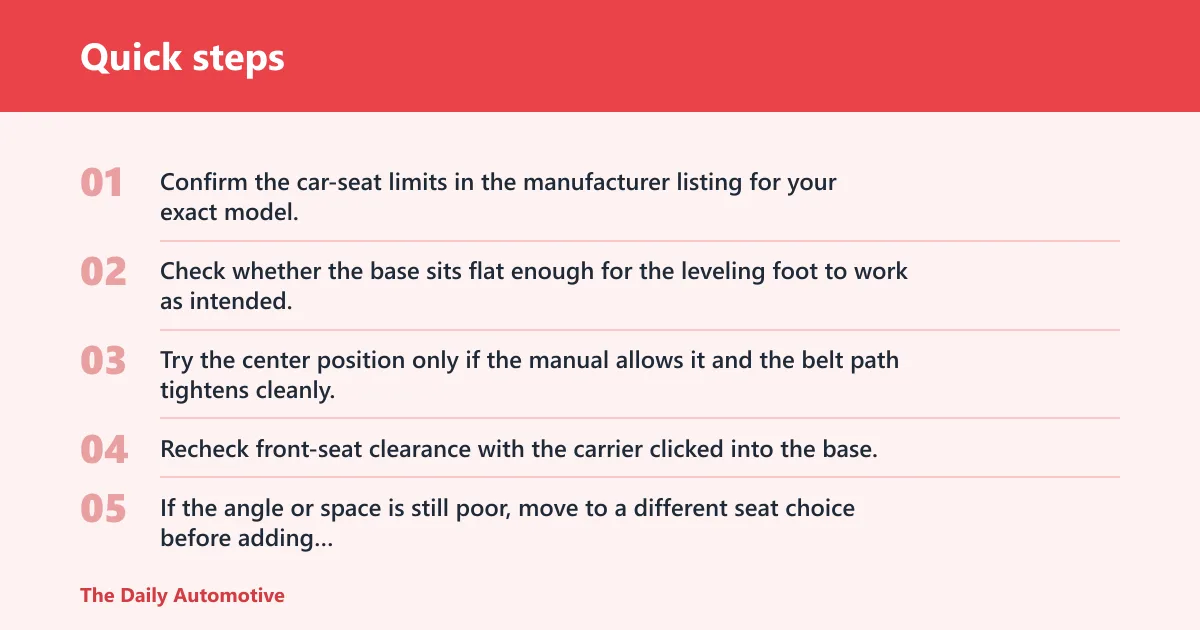
- Confirm the car-seat limits in the manufacturer listing for your exact model.
- Check whether the base sits flat enough for the leveling foot to work as intended.
- Try the center position only if the manual allows it and the belt path tightens cleanly.
- Recheck front-seat clearance with the carrier clicked into the base.
- If the angle or space is still poor, move to a different seat choice before adding aftermarket accessories.
Does the KeyFit 30 travel well?
It travels well for a family that wants one seat to handle car, airport, and rideshare use without removing the carrier from the shell every time. The same source says the KeyFit 30 is aircraft certified, which makes it relevant for plane travel, but the practical advantage is that you can use it without the base when needed.
FAA certification and base-free plane use
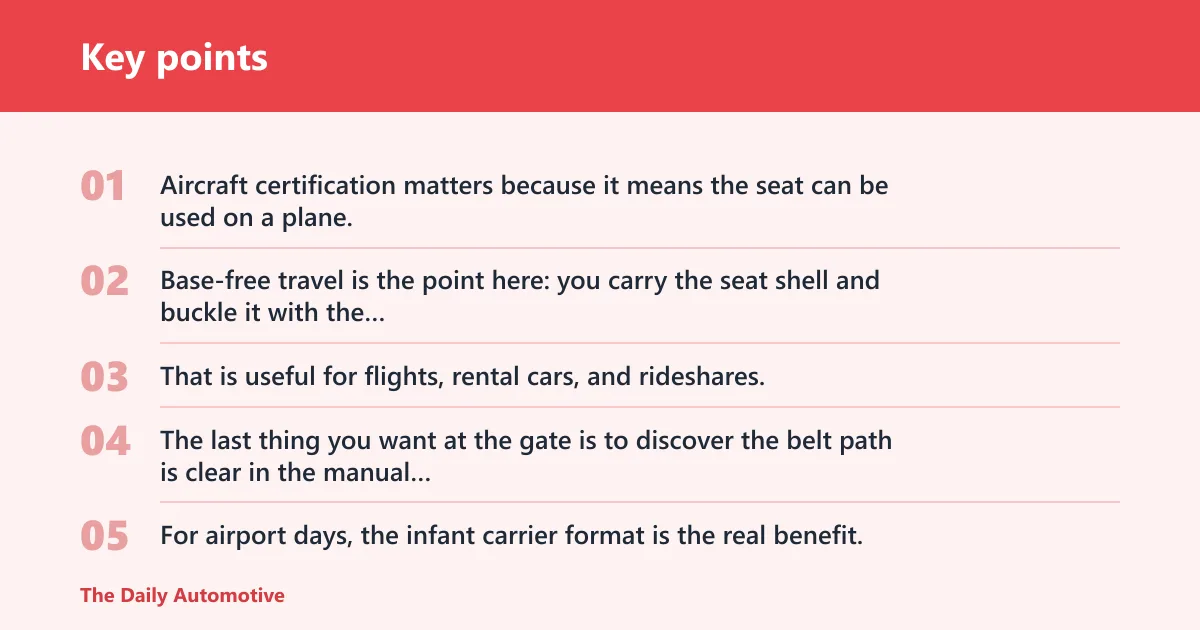
Aircraft certification matters because it means the seat can be used on a plane, which is different from saying every airline setting will be easy. Base-free travel is the point here: you carry the seat shell and buckle it with the aircraft belt rather than dragging the base through the airport.
That is useful for flights, rental cars, and rideshares, but it also means you should practice the belt routing before travel day. The last thing you want at the gate is to discover the belt path is clear in the manual but awkward in a narrow aircraft seat.
Rideshare, taxi, and airport handling
For airport days, the infant carrier format is the real benefit. You can move the baby from curb to terminal to plane without waking them every time, as long as the carrier is clicked into the base or installed by belt when the base is not available.
Keep the travel checklist simple: bring the seat manual, confirm the airline allows child restraints in the chosen row, and verify that the carrier can be installed without the base if you are using it in a taxi or rideshare. Do not assume every driver’s vehicle has a friendly rear seat angle.
Stroller travel system compatibility and adapter checks
The KeyFit 30 works with Chicco strollers and travel systems, but click-in compatibility is the part that matters, not the brand name alone. Some stroller setups need adapters, and that dependence can change whether the system is worth it for daily use or only for occasional outings.
A travel system is most useful when the stroller folds easily, the carrier clicks in without forcing a strap workaround, and the baby can stay asleep through the transfer. If the adapter stack makes the stroller clumsy, a separate stroller may be the better long-term move.
When the KeyFit 30 is the right pick
The KeyFit 30 is the right pick when you want a rear-facing infant seat for a newborn, a straightforward base install, and airline-capable travel without buying a heavier system. It is a weaker choice once the baby nears the upper end of infant-seat sizing, or when you know you want more recline adjustment and rebound protection.
| Vehicle type | Baby size/stage | Travel frequency | Stroller use | Install method | Guidance | Common mistakes | Upgrade cue |
|---|---|---|---|---|---|---|---|
| Compact sedan | Newborn or small infant | Regular local driving | Yes, if the stroller clicks in easily | LATCH | Yes, if the base fits flat and front-seat space stays usable. | Forcing the front seat too far forward; ignoring the recline angle. | Move to KeyFit 35 if you want more adjustability; move to a convertible seat if infant-seat time will be short. |
| Small SUV | Preemie-sized or very small newborn | Occasional trips and errands | Maybe | Vehicle belt | Yes, if the belt path locks down cleanly and the harness fits the smallest rider well. | Assuming the insert solves every fit issue; skipping a manual check on belt routing. | Upgrade if the baby slumps in the shell or outgrows the shell sooner than expected. |
| Older sedan with awkward anchors | Average newborn | Frequent taxi or rideshare use | No | Vehicle belt | Yes, if you need base-free travel and the seat belt install stays secure. | Leaving the base at home without learning the belt install first. | Choose KeyFit 35 if you want the extra travel-focused features; choose a convertible if you do not need carrier portability. |
| Hot-climate family car | Newborn in summer | Daily driving | Maybe | LATCH | No, if warmth, padding, and canopy coverage matter more than simplicity. | Overdressing the baby; assuming standard padding fixes heat buildup. | Consider KeyFit 35 or a different seat if cooling, recline, or fit flexibility becomes the bigger need. |
| One-car household | Infant approaching 30 lb. or 30 in | Longer ownership horizon | Maybe | Either | No, if you want to avoid buying the next seat soon. | Buying an infant seat for a child who will outgrow it quickly. | Move to a convertible seat if longevity matters more than carrier convenience. |
Pros and cons
Pros
- Simple rear-facing infant-seat use with a removable carrier and stay-in-car base.
- Push-on LATCH connectors and a single-pull tensioner make many installs quick.
- Built-in lockoff helps when seat-belt installation is the better choice.
- Aircraft certification makes plane travel more practical.
- Machine-washable covers help with everyday cleanup.
Cons
- Rear-facing only, so it is not a long-term seat.
- The 30-pound and 30-inch limits can arrive sooner than some families expect.
- Small babies may need extra attention to fit and positioning.
- Hot-weather comfort is average rather than impressive.
- Stroller compatibility can depend on adapters and the exact stroller model.
Price, model position, and comparison with the KeyFit 35
The same source lists the KeyFit 30 at $225.99 to $229.99, which puts it in the middle of the infant-seat market rather than the bargain bin. That matters because a slightly pricier seat can be worth it if it solves fit or installation problems, but not if it simply adds features you will not use.
The KeyFit 35 is the model to look at when you want a higher-price alternative with an anti-rebound bar and five recline positions. The same source says the KeyFit 35 includes an anti-rebound bar, unlike the KeyFit 30 comparison, and has five recline positions.
That comparison matters most for families who need more flexibility in the car or who want a newer-feeling travel seat. If the KeyFit 30 already installs cleanly and fits the baby well, the 35 is an upgrade, not a necessity.
How long are Chicco infant car seats good for?
Chicco infant car seats are useful only until the child reaches the seat’s stated limits, and for the KeyFit 30 that means 4 lb. to 30 lb. and 30 in max height. It is a rear-facing-only infant seat, so “good for” means the infant stage, not a toddler stage. Check the manufacturer’s listing for your exact model.
That limit is why the KeyFit 30 makes the most sense as a first seat, not a forever seat. If a child is growing quickly or already close to those limits, a convertible seat often makes more sense because it can cover more of the rear-facing period and then continue later.
Frequently asked questions
Is Chicco a good car seat?
Chicco makes some good infant seats, and the KeyFit 30 is one of the clearer examples when the buyer wants easy installation and a compact footprint. It is a better fit for families that value convenience and travel flexibility than for those who need the longest possible usable range.
Can the Chicco KeyFit 30 be forward facing?
No. The KeyFit 30 is designed for rear-facing use only, so it cannot be turned forward-facing. If you want one seat that later converts for toddler use, look at a convertible seat instead of an infant carrier.
Is Chicco KeyFit 30 FAA approved?
The same source says the KeyFit 30 is aircraft certified, which is the practical answer for plane travel. That means you can use it on an airplane when the airline allows a child restraint and the seat fits the aircraft seat belt setup.
Is the Chicco KeyFit 30 airline approved?
The seat’s aircraft certification makes it relevant for airline use, but the final check is still the airline’s policy and the seat’s fit in the airplane seat. For travel, bring the manual, confirm the airline rules, and be ready to install the carrier without the base.
What is the Chicco KeyFit 30 weight limit?
The KeyFit 30 fits babies from 4 lb. to 30 lb., and its maximum height is 30 in. Those are the hard limits that matter more than marketing language, so check your child’s current size against the manufacturer listing before relying on it for the next growth spurt.
Is the Chicco KeyFit 30 easy to install?
Yes, usually. The same source says it uses push-on LATCH connectors, and BabyGearLab notes a built-in lock off. That combination helps in many cars, but the vehicle seat shape, anchor location, and belt routing still decide whether the install feels truly simple.
Products related to this article
Sponsored / affiliate links. As an Amazon Associate I earn from qualifying purchases. I may earn additional commission from eligible campaigns.
 FH Group Car Seat Cover Front Set Striking Striped Car Seat Covers with Front Seat Covers and Rear Split Bench, Universal Fit Interior Accessories for Cars, Trucks, and SUVs – Gray
 Seat Belt Covers for Kids, 2 in 1 Car Seat Strap Covers & Auto Seatbelt Pillow for Kids nap, Car Travel Pillow & Strap Pads Cushion for headrest, Neck/Shoulder Support, fit Child, Adult, Grey;