Car Seat Protector Review: Is It Worth It?
A car seat protector is generally used for spill and dent protection, and it should not be used unless it fits the seat and the child restraint maker allows it. A bad protector can let a car seat move more, trap dirt, or leave leather creased anyway. This guide separates safety, upholstery protection, and install stability for infant seats, convertible seats, boosters, and pet cargo setups.
This guide is part of our Car seat safety and installation guide series.
Verdict first: is it worth it?
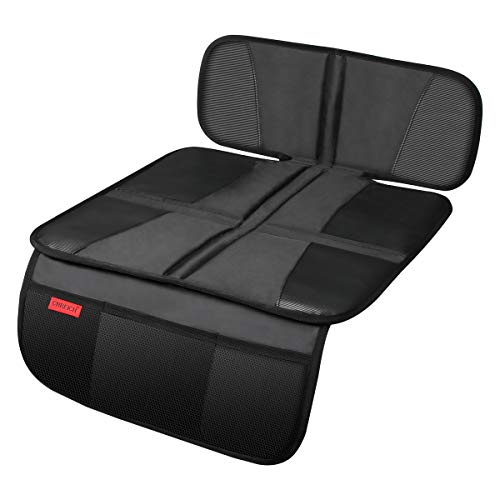

A car seat protector is worth it when the vehicle seat needs real protection and the add-on does not change how the child restraint installs. Thin, stable protectors can cut leather compression marks, snack mess, and long-trip grime. Thick padding, a loose fit, or extra bulk can make a useful idea less suitable.
When the answer is yes
Buy one if your seat is leather, you haul a messy child seat often, or you need easier cleanup after drinks, mud, or pet hair. A protector makes the most sense when the seat base sits flat, the install stays tight, and the protector only adds a barrier, not cushion.
When the answer is no
Skip it if your car seat already installs tightly only on the bare seat, if the protector adds wobble, or if you are buying it “just in case.” Cloth seats often do fine with no add-on. In those cases, a simple towel, a basic mat, or nothing at all can be the better choice.
What changes the decision
The decision hinges on three separate questions: will it stay out of the way of a safe install, will it protect the upholstery from the mess you actually have, and is the price better than a simpler option? Those are different problems, and the answer can change from one vehicle to the next.
Say your toddler rides in a rear-facing convertible seat on a leather second row and drops crackers every day. A thin protector with firm anti-slip backing may help. Suppose the same seat is already borderline tight on the cushion; adding a padded liner can be the wrong trade even if it looks well made.
📊 Car and Driver says it has "60+ years" of experience. Source: Caranddriver.
Car seat protector decision matrix
This table separates safety risk, seat-protection benefit, and value-for-money. The verdict reflects the whole package, not just whether the cover looks durable.
| Use case | Safety risk | Seat-protection benefit | Value-for-money | Verdict |
|---|---|---|---|---|
| Infant seat | Medium to high if the base needs a perfectly flat, firm contact patch | Low to medium; the base footprint is small | Often weak unless the vehicle seat is leather | Skip unless the manual allows a thin, approved protector |
| Convertible seat | Medium; added bulk can affect tightness and recline | Medium; more contact area than an infant base | Good only with a thin, wipe-clean design | Recommend if install remains rock solid |
| Booster | Low for install stability, but still watch belt routing and slipping | Low to medium; protects from crumbs and abrasion more than crash forces | Fair if used daily | Recommend mainly for mess control |
| Leather interior | Low if the protector is thin; higher if it bunches or traps heat | High; helps with compression marks and stains | Usually good | Recommend |
| Cloth interior | Low to medium depending on thickness | Low to medium; less need for dent protection | Often mediocre | Skip unless spills are frequent |
| Pet transport | Low if used as a cargo mat, not under a child seat | High for hair, mud, and claw scuffs | Good if cleaning is frequent | Recommend for cargo use, not as a child-seat fix |
| Frequent snack or crumb exposure | Low if the protector stays flat | High; this is where cleanup help matters most | Strong | Recommend |
Are car seat protectors safe with car seats?
They can be safe only when the child restraint maker and the vehicle manual allow them, and only if the protector does not change the install. The main risk is not the fabric itself. It is added bulk, sliding, or interference with the car seat base, seat belt routing, or LATCH layout.
What can interfere with a safe install?
Thick padding can keep the car seat from sitting fully on the vehicle cushion. A loose protector can wrinkle under the base. Some products also block access to the belt path or sit where a LATCH anchor strap needs to pass. Any of those can reduce install stability.
LATCH and seat belt checks
Whether you use LATCH or the seat belt, the seat still needs a tight install with no meaningful side-to-side or front-to-back movement at the belt path. Recheck that movement after adding the protector. If the install gets looser, the protector loses the argument.
Why thin matters more than padded
Thin protectors preserve the original shape of the seat cushion better. That matters because car seats depend on a firm contact surface. Padded liners can look protective but create the very compression and movement problems that make parents and drivers reach for them in the first place.
What protectors actually do well
Car seat protectors are best at keeping the upholstery cleaner, reducing abrasion, and giving you a wipeable surface under the child seat or pet load. They are a cleanliness tool first. They are not a fix for a poor installation, and they are not a guarantee against leather wear.
Spill and stain defense
For bottles, snacks, and juice cups, a wipe-clean surface can save time. Machine-washable materials help when messes repeat. On leather, the best benefit is often stain resistance, since liquid and dye transfer can be harder to remove than crumbs.
Crumbs, mud, and pet hair
Crumbs fall into seat seams. Mud smears across cloth. Pet hair sticks to textured upholstery and collects in creases. A protector with a smooth top layer and simple cleanup can cut that cleanup time, especially on longer trips and in shared family vehicles.
Leather indentation and wear protection
Leather often shows compression marks from car seat feet or booster bases. Those marks can stay visible even after the seat comes out. A protector can reduce that pressure, but only if it stays thin and flat enough to avoid becoming a pressure point of its own.
Who should buy one?
Buy one if you have leather seats, regular child-seat use, or frequent spills. Skip one if your seat already installs tightly without help, if your upholstery is cloth and not seeing much mess, or if the protector adds enough bulk to make you question the install. The best fit is the one that solves a real problem.
Best fit for leather seats
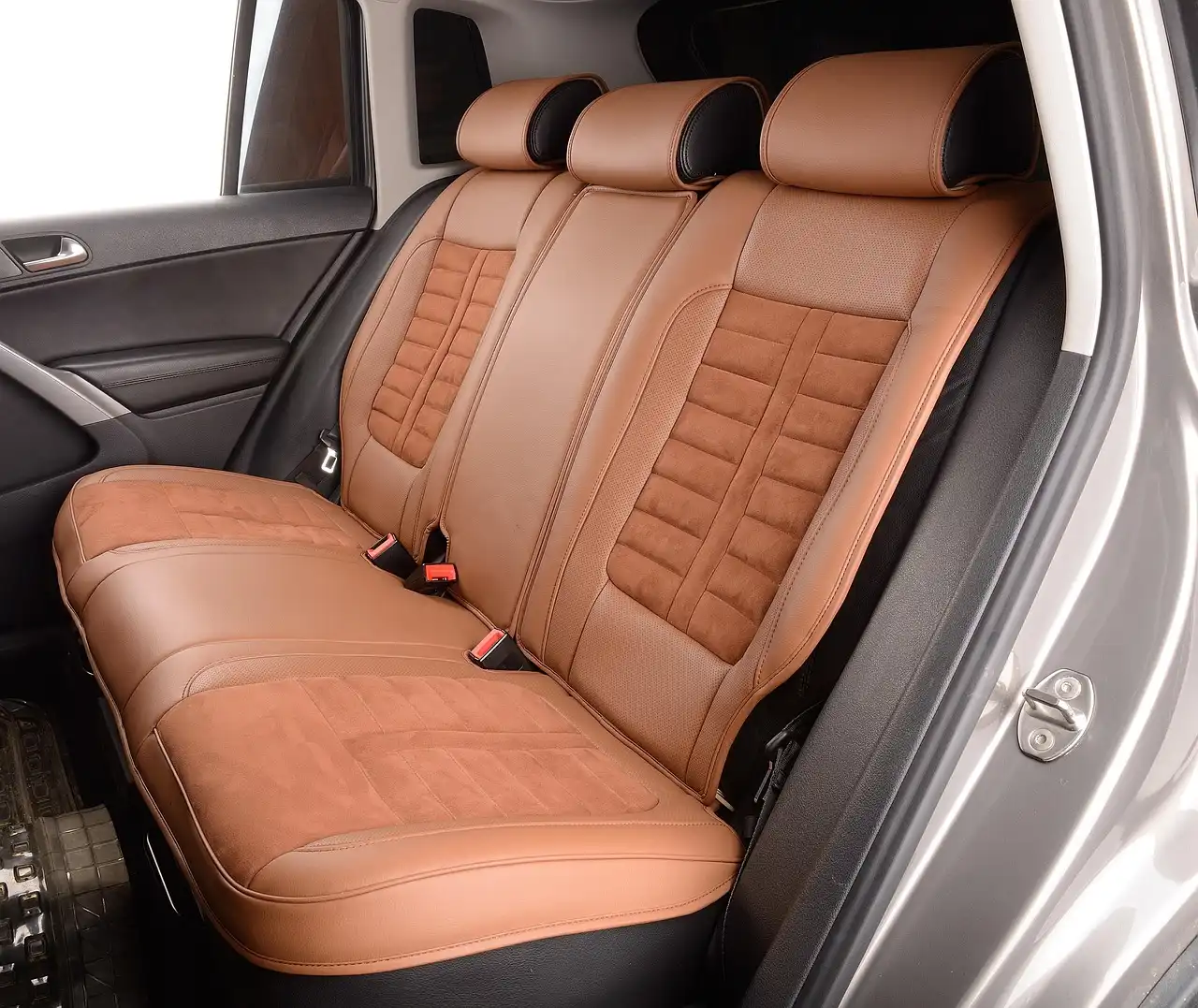
Leather owners get the clearest upside. A protector can reduce compression marks, scuffing, and sticky residue. That said, leather needs the right kind: thin, stable, easy to clean, and wide enough to cover the contact area without bunching at the edges.
Best fit for messy family use
Families with daily snacks, sports drinks, sand, or wet shoes get more from a protector than drivers who simply want a cleaner-looking seat. In that use case, a wipe-clean or machine-washable surface can save more effort than it costs.
Who should skip it?
Skip it if the car seat is already tricky to install, if you cannot keep the base rock solid with the protector in place, or if your only goal is “maybe less wear someday.” A bad add-on can do more harm than leaving the seat alone.
Pros and cons
Here is the short version.
Pros
- Helps with spills, crumbs, mud, and pet hair.
- Can cut leather compression marks and wear.
- May make cleanup faster on long-trip family use.
- Can be a good value if mess is constant.
Cons
- Can add bulk under a child restraint.
- Can slip, wrinkle, or bunch if the backing is poor.
- Can interfere with LATCH, seat belts, or harness paths.
- May be unnecessary on cloth seats with light use.
What to look for in a safe protector
Look for a thin profile, a non-slip base, and a design that does not cover the belt path. The right product should stay flat under load, clean up fast, and cover only the area you need. Bigger coverage is not automatically better if it adds bulk.
Anti-slip backing and anchoring
Anti-slip backing helps, but it should not be the only plan. Anchoring straps can help the protector stay in place when they do not block the car seat or vehicle hardware. If the product slides during installation, it is the wrong one.
Coverage area and profile
Choose coverage for the cushion and, when needed, part of the backrest. Full-coverage protectors make sense for pets and heavy mess. Under a child seat, more area can mean more material where you do not want it. Thin beats plush almost every time here.
Materials and cleanup
Wipe-clean vinyl or coated fabric helps with drinks and food. Machine-washable fabric helps with repeated grime. For pet use, choose a surface that releases hair easily. For child seats, avoid materials that shift easily or compress into a thick pad.
- Check the child restraint manual and the vehicle manual first.
- Choose a thin protector with a flat, non-slip base.
- Install the car seat with the protector in place.
- Test movement at the belt path after installation.
- Keep only the coverage you need for the mess you have.
Alternatives to a car seat protector
A towel, mat, liner, kick mat, or no add-on at all can be the better-value answer. The right alternative depends on whether your problem is seat back scuffs, cushion spills, pet cargo, or a simple desire to avoid changing the install geometry.
Towel
A towel is the cheapest option, but it is also the least stable. It can work under light, temporary use if the manuals allow it, yet it is usually a poor choice under a car seat because it can bunch and slide. Use it only when the risk is low.
Mat or liner
A thin mat or liner is often the better middle ground. It can protect against dirt and light spills without the thickness of a padded protector. This is the option to compare first when you want protection but do not want to change the seat’s feel much.
Kick mat
A kick mat is meant for the back of the front seat, not under the child restraint. If your issue is shoe scuffs from rear-facing passengers, that may be the smarter buy. It solves a different problem and leaves the car seat install alone.
No protector
No protector is often the best-value choice for cloth seats, light use, or installs that are already tight and stable. If the seat is easy to clean and the child restraint sits securely without extra layers, the simplest answer is usually the right one.
For shoppers who are also comparing vehicles, broader research tools can help decide whether a cleaner interior or easier-to-clean materials matter more than accessories. Car and Driver says it has 60+ years of experience, coverage around thousands of cars, and hundreds of tests; its Marketplace says there are Over 3 million cars available nationwide. TRUECar says eligible shoppers can save 10% or MORE on a next car, and it offers tools such as Lease a Car, Auto Loan Calculator, Best SUVs, Car Reviews, and Car Rankings. (Caranddriver)
Frequently asked questions
Are seat protectors safe with car seats?
Sometimes, but only if the child restraint maker and the vehicle manual allow the product and the install stays tight. The protector must stay thin, flat, and clear of the belt path and base. If it changes movement at the belt path, skip it.
Is a car seat protector worth it?
Yes, when you have real spill, stain, or compression-mark risk and the protector does not compromise installation. It is usually worth it for leather, heavy snack use, or pet cargo. It is usually not worth it when the seat is already hard to install or the car sees light use.
Do car seat protectors prevent leather damage?
They can cut some damage, especially stains and visible compression marks, but they do not erase the risk. Leather can still crease under pressure, and a thick protector can worsen the fit. Thin protection helps most when the seat base has broad, even contact.
Will a car seat protector interfere with installation?
It can. Added bulk, slipping, and bunching are the main problems, especially with infant and convertible seats. After installation, check movement at the belt path and confirm that LATCH anchors or seat belt routing are still unobstructed. If stability changes, remove the protector.
Do I need a car seat protector for an infant seat or booster?
Infant seats often need extra caution because the base can be sensitive to added layers. Boosters are less likely to create install problems, but they still benefit from a thin, stable surface if you want cleaner upholstery. Use the simplest option that keeps the install secure.
Which car seat protector is best for leather seats?
The best choice for leather is a thin protector with anti-slip backing, easy-clean material, and enough coverage to spread pressure without adding cushion. Avoid thick foam and oversized pads. The goal is to reduce indentation and mess while preserving a firm, stable seat base.
What should I look for in a safe car seat protector?
Look for manufacturer compatibility, thin construction, non-slip backing, and no interference with the belt path. Wipe-clean or machine-washable materials help with spills. If the product has straps, they should not get in the way of the car seat or create a new pressure point.
Products related to this article
Sponsored / affiliate links. As an Amazon Associate I earn from qualifying purchases. I may earn additional commission from eligible campaigns.
 FLORICH Front Car Seat Covers, Leather Seat Covers for Cars, Waterproof Car Seat Protector Breathable, Front Seat Covers for Cars, Automotive Seat Covers Universal Fit for Most SUV Pick-up Truck
 Coverado Car Seat Covers, Front Covers for Cars, Car Seat Cover Front Seats, Automotive Seat Cover, Waterproof, Leather Car Seat Cushion, Universal Interior Covers Seat Protectors for Most Cars