Best Water Tanks for Detailing for Your Car (3 Real Picks Compared)
A mid-size polyethylene tank in the roughly 50-gallon range is often a practical fit for many mobile detailers. It covers a full wash-and-rinse workflow without jumping straight to truck-bed weight and bulk. Smaller compact tanks suit quick jobs and tight vans, while a separate DI rinse system is the right tool for spot-free final rinse water.
Quick comparison
| Product | Badge | Best for | Price | ||
|---|---|---|---|---|---|
 |
SereneLife 24L Compact Portable Water Tank – Non-toxicSereneLife | Our pick | 24L · SLCAWT20 · Compact | $45.99
Price as of 19 Oct 2026
|
View |
 |
20 Gallon Portable Water Tank with Spigot&Hose | Food-gradeSLOYUNLU | Also great | 20 Gallon · SLOYUNLU · Spigot | $149.99
Price as of 19 Oct 2026
|
View |
 |
PRO+AQUA RinseMaster Lite | Portable Spotless 2,000 GallonPRO+AQUA | Upgrade pick | 2,000 Gallon · PRO+AQUA · Deionizer | $330.00
Price as of 19 Oct 2026
|
View |
Match the tank size to your actual water use. Do not buy the largest tank that fits. A 25- to 30-gallon setup can suit compact rigs, a 50-gallon setup can suit solo mobile work, and a 100-gallon tank is best reserved for a vehicle with enough payload margin and a proper mounting plan.
For readers who need spot-free final rinse support, a DI unit is a separate purchase from bulk storage. It solves a different problem: water quality, not water volume.
How we chose
The comparison centers on four things that matter in the field: how much water each workflow uses, how much weight the tank adds, how well the material holds up outdoors, and whether the fittings work with common pumps and drains.
It also includes setup cost beyond the tank itself. Hose, pump, fittings, tie-downs, and filtration can change the real price quickly.
Finally, the choices reflect vehicle fit. A tank that works in a box truck can be the wrong call for a compact van or a half-ton pickup with limited payload.
Workflow decision table
| Detailing workflow | Gallons used per job | Tank choice | Vehicle fit | Payload impact | Pump requirement | Common failure mode |
|---|---|---|---|---|---|---|
| Quick maintenance wash | 10–15 gallons | 25–30 gallon compact tank | Small vans, small trailers, tight cargo areas | Lower, but still check tie-down load and remaining payload | Often optional for gravity feed; useful if you want steadier flow | Running dry faster than expected, loose mounting, cracked outlet from vibration |
| Full detail with exterior rinse and wash | 20–30 gallons | 50 gallon polyethylene tank | Solo mobile rigs, cargo vans, larger SUVs with proper rack support | About 417 lbs at full load before tools or chemicals | Usually yes for consistent pressure and hose control | Slosh, overfilling the vehicle, poor strapping, drain fitting leaks |
| Heavy service day, multiple cars, or truck-bed setup | 30+ gallons across the route | 100 gallon tank | Truck beds, work vans, dedicated mobile wash rigs | About 834 lbs at full load before tools or chemicals | Yes, with pump-ready plumbing and proper filtration | GVWR overload, suspension sag, baffle stress, tipping if mounted poorly |
| Spot-free final rinse support | Depends on final rinse only | DI rinse system, not a storage tank | Any rig with room for a filter canister and hose path | Low compared with bulk tanks | Often used inline with a hose feed and a TDS meter | Resin exhaustion, water spots if the meter is ignored, contamination from dirty prefiltering |
25-30 gallon tank: best for compact rigs
A 25- to 30-gallon tank is the cleanest fit for part-time detailers, small vans, and short appointment routes. It gives enough water for a maintenance wash, which typically uses roughly 10–15 gallons per car, without forcing a heavy payload hit or taking over the cargo area.
That size is also easier to mount low and keep stable. For compact vehicles, lower height matters because it reduces slosh and keeps the center of gravity down.
The limit is obvious on fuller jobs. A full detail can push water use to 20–30 gallons, so a small tank leaves little margin for mistakes, a second car, or a longer rinse.
Choose a UV-stabilized polyethylene tank with a threaded outlet and a drain port that matches your pump setup. A 2-inch threaded outlet is common on larger mobile water tanks, while 3/4-inch NPT or MGH drain ports make pump and hose connections easier to standardize.
Say your route is three maintenance washes in a row and your tank only holds 24L. You may finish the first job cleanly, then waste time hunting for a refill before the second one starts. That is fine for emergency use or very light work, but not for steady mobile volume.
What to watch
- Use baffles if the tank will ride in a moving vehicle. They reduce slosh and lower wall stress.
- Choose food-grade or FDA-compliant resin if the same tank will hold rinse water for paint-safe work.
- Check the mount point and tie-downs before loading water. The tank weight is only part of the load.
- Do not expect a compact tank to support repeated full exterior jobs without refilling.
50 gallon polyethylene tank: best for solo mobile detailers
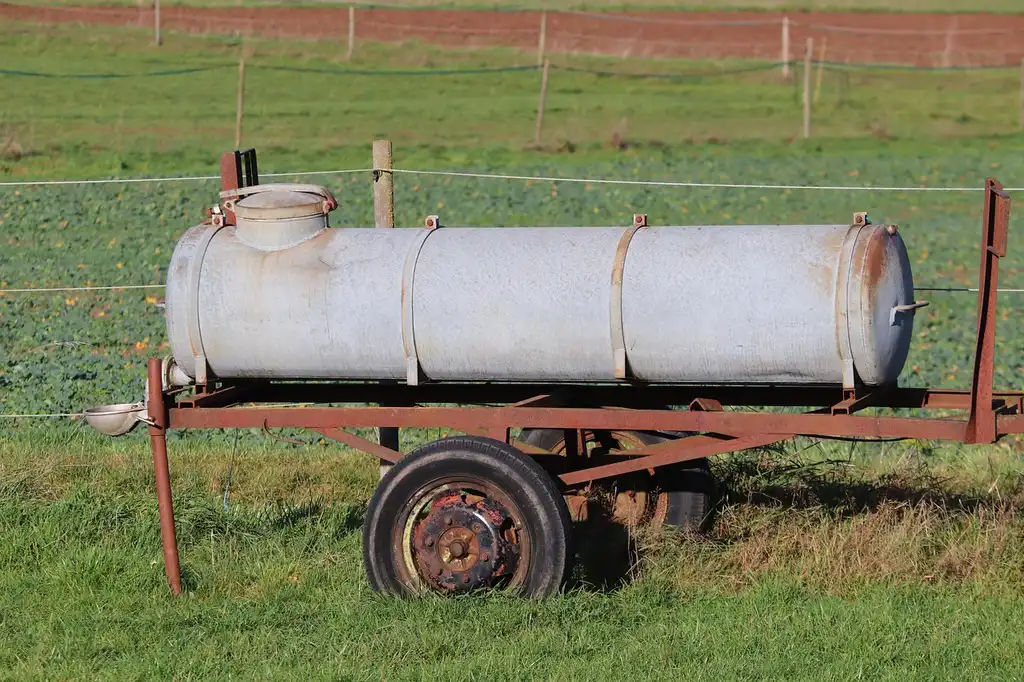
The 50-gallon class is the strongest all-around choice for solo mobile work. It clears the gap between quick maintenance washes and fuller exterior services, and it gives enough reserve that one unexpected rinse pass does not force an early refill.
Water weight matters here. Water weighs 8.34 lbs per gallon, so a full 50-gallon tank adds about 417 lbs before tools or chemicals. That is manageable in many vans and trucks, but only if the vehicle still has payload left after the rest of the setup is loaded.
Polyethylene is the default material for this job because it is UV-stabilized, rustproof, and better suited to road vibration than plain plastic. A baffle-equipped tank is better still, because baffles reduce water slosh during braking and cornering.
The Norwesco 65-gallon vertical tank is often described as a workhorse pick, but the same logic applies to the 50-gallon class: choose a tank built for outdoor storage, not one meant only for stationary use. A flat-bottom design can also be easier to mount in a van floor or trailer deck.
Hidden setup costs start to matter at this size. Budget for a pump, hose, bulkhead fittings, tie-downs, and any filtration you need to keep the rinse water clean.
Why this size fits the middle ground
- It covers most single-vehicle detail appointments without a refill stop.
- It keeps weight below the jump seen with 65-gallon and 100-gallon tanks.
- It suits solo operators who need both portability and a real water reserve.
- It is easier to secure than a larger tank in a compact van bay.
Where it can fail
The common failures are not exotic. Slosh can stress the tank walls, a cheap fitting can crack at the outlet, and a rushed install can exceed payload before the driver notices. A full 65-gallon tank adds 542 lbs before tools or chemicals, which is the point where many rigs need a fresh payload check. A 100-gallon tank adds 834 lbs before tools or chemicals and demands even more caution.
100 gallon tank: best for truck beds and heavy routes
A 100-gallon tank makes sense when the route is long, the vehicle is a truck bed or larger van, and refill stops would cost more time than the added weight. It is a volume play, not a convenience play.
This is where payload and GVWR checklists stop being optional. A full 100-gallon tank adds 834 lbs before tools or chemicals, and that number can push a lightly loaded truck or van past its safe margin very fast.
For this class, baffles, tie-downs, and pump-ready plumbing are not extras. They are part of the purchase decision. The tank should have sturdy threaded ports, bulkhead fittings, and a mounting plan that keeps the load from shifting when the vehicle turns or stops hard.
Most compact vehicles should not carry this much water. The better use case is a purpose-built rig with enough axle rating, suspension headroom, and space to secure the tank flat and low.
Picture a truck-bed setup with a 100-gallon tank and no baffles. A hard stop sends the water surging forward, the bed flexes, and the fittings take the load. The tank may survive the first few trips, then begin to leak at the outlet or seam.
Best-fit setup details
- Use a pump-ready plumbing layout so hose pressure stays steady.
- Install tie-downs that hold the tank in more than one direction.
- Check bed length or cargo bay clearance before buying.
- Confirm the vehicle still stays under GVWR with water, gear, and the driver aboard.
Which one should you buy?
Choose the 25- to 30-gallon class if you work from a compact van, do part-time washes, or need a tank that leaves cargo room for chemicals and tools. Choose the 50-gallon class if you want the best balance of refill frequency, vehicle fit, and practical weight for solo mobile detailing. Choose 100 gallons only if your route volume and vehicle payload both justify it.
If your vehicle is small and your appointments are short, a compact tank wins on simplicity. If you need one tank to handle most jobs, the 50-gallon class is the safer middle ground.
If you need spot-free final rinse water, do not buy a bigger storage tank to solve that problem. Buy a DI rinse system with a TDS meter and treat it as a separate part of the wash process.
For a foldable or portable option, a PVC water bladder can work when empty-space storage matters more than tank rigidity. It makes sense for seasonal use or shared cargo space, but a rigid polyethylene tank is usually the safer choice for road vibration, outlet strength, and daily mounting.
When a water bladder makes sense
A foldable high-capacity bladder is useful when you need water only part of the time and want the storage to disappear when empty. That is why these units appeal to part-time operators, temporary jobs, or crews that must reclaim cargo space after a route.
Its weakness is the same trait that makes it convenient. Soft walls, fittings, and floor support matter more, and the setup is less forgiving if the vehicle brakes hard or the bladder is not fully supported.
Setup cost beyond the tank
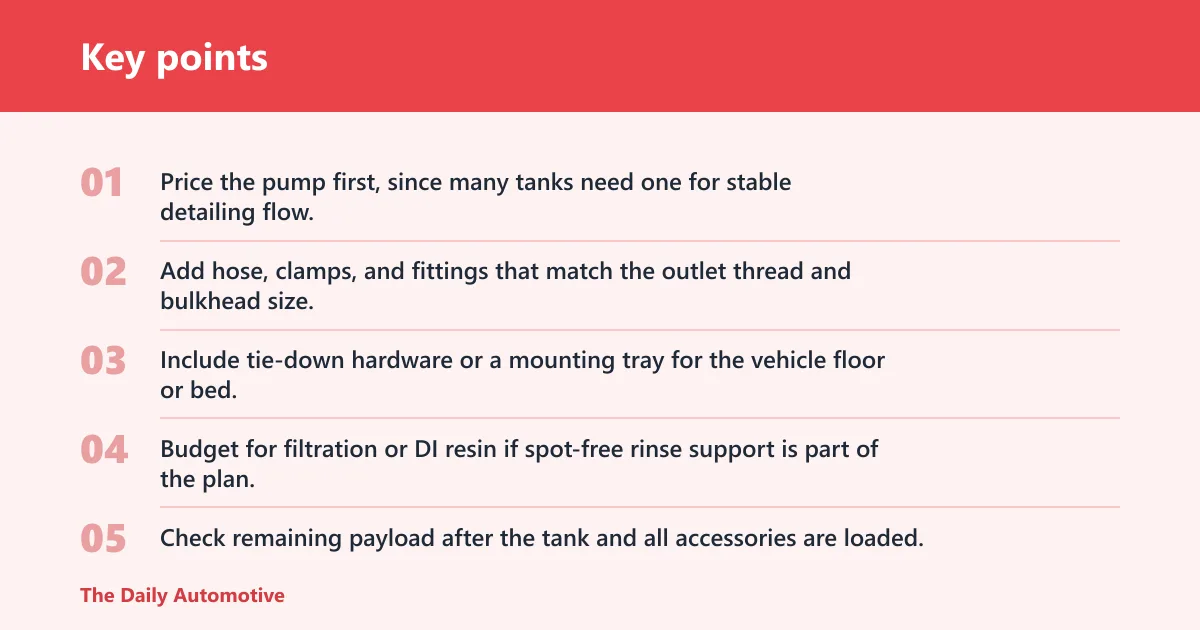
- Price the pump first, since many tanks need one for stable detailing flow.
- Add hose, clamps, and fittings that match the outlet thread and bulkhead size.
- Include tie-down hardware or a mounting tray for the vehicle floor or bed.
- Budget for filtration or DI resin if spot-free rinse support is part of the plan.
- Check remaining payload after the tank and all accessories are loaded.
SereneLife 24L Compact Portable Water Tank: best for emergency rinse carry
This compact SereneLife tank fits the reader who needs a light, easy-carry water source for very small jobs, quick rinses, or backup use. The built-in handle and food-grade, BPA-free, non-toxic construction make it a simple choice for tight storage spaces and occasional mobile use.
Its main strength is portability. The included adapter for a handwash sink also makes it easier to adapt to a small rinse setup than a bare container would.
The drawback is capacity. At 24L, it is not a true primary tank for full mobile detailing, so it will not suit longer wash routes or jobs that need a larger rinse reserve.
SLOYUNLU 20 gallon portable water tank: best for light-duty mobile use
This 20-gallon tank is the better fit for readers who want a small but real mobile-detailing reserve rather than a tiny carry container. The spigot and hose support easier flow control, and the wide opening should make filling and cleaning less awkward than on a narrow-neck unit.
It is also the most practical of the compact options for someone who wants one tank for light outdoor washes, RV use, or a truck-based setup with limited room. The thicker plastic should handle wear better than a thin utility container, based on the published product details.
The drawback is still size. Twenty gallons can cover lighter work, but it leaves little cushion for full detail days, and it is not the right answer if you need a larger reservoir for back-to-back appointments.
PRO+AQUA RinseMaster Lite: best for spot-free final rinse support
This is not a bulk storage tank. It is the right pick when the goal is a spot-free final rinse, because the DI resin filters hard minerals out of the water before it reaches the panel. The included TDS meter gives you a way to monitor water purity instead of guessing.
That matters because spot-free rinse support solves a different problem than storage. You may already have enough water volume and still need cleaner rinse water to reduce spotting on glass, paint, and trim.
The drawback is ongoing upkeep. DI resin does not last forever, so resin replacement and TDS checks are part of the system’s real cost. It also adds another piece of equipment to carry and plumb.
How much does a full detailing water tank weigh?
A full tank gets heavy fast. That weight must come out of payload, not wishful thinking.
This is where vehicle class matters. A van or truck can carry a tank only if the rest of the load leaves enough room under GVWR. The tank itself may fit, but the axle and suspension limits still apply.
A common buyer mistake is to focus on tank size alone and ignore whether the water tank fits a mobile detailing setup. A tank may fit physically, yet still overload the vehicle once water, hose reels, pumps, and supplies are aboard.
What is the best material for a detailing water tank?
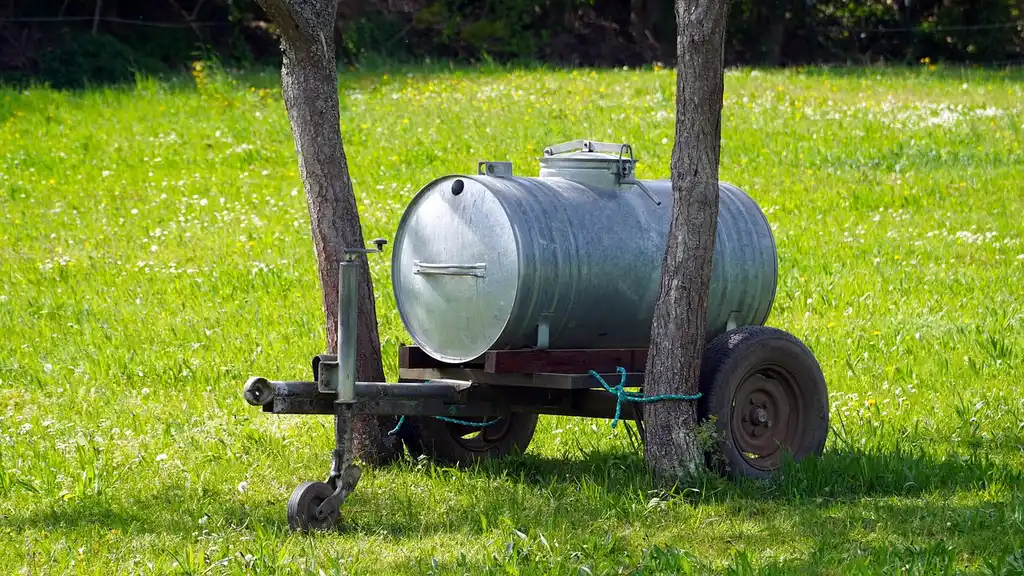
UV-stabilized polyethylene is the default choice for outdoor detailing work because it resists sunlight, does not rust, and handles road vibration better than plain plastic. It is the standard material most mobile wash rigs rely on for storage tanks.
Food-grade or FDA-compliant resin matters when the same water will touch paint or glass. It signals cleaner storage for rinse water, which is useful when you want to limit contamination before the final pass.
Rigid polyethylene is usually the safer call than a soft container for daily vehicle carry. A foldable PVC bladder can save space, but it is a different tradeoff: convenience when empty, less structure when full.
Do I need a pump with a car detailing water tank?
Many detailing tanks work better with a pump, especially if you want steady flow through a hose or wand. Gravity feed can work for simple rinse tasks, but pump-ready rigs are easier to control and less dependent on tank height.
Look for a threaded outlet and compatible bulkhead fittings. Common drain and outlet sizes such as 2-inch threaded outlets and 3/4-inch NPT or MGH drain ports make plumbing more predictable when you are building a custom setup.
If the tank will feed a soap cannon, rinse wand, or longer hose run, a pump is usually worth the added cost. It is part of the system, not an accessory.
What tank size fits a van or truck bed for detailing?
A van or truck bed can fit several sizes, but the right choice depends on payload and job mix. A 25- to 30-gallon tank works well for compact vans, a 50-gallon tank suits many solo mobile rigs, and a 100-gallon tank belongs in larger truck-bed setups with proper weight margin.
Always subtract tank weight from payload before loading the rest of the equipment. The fit may look fine on paper, yet the vehicle can still be overloaded once water is added.
Baffles matter more as size rises, because bigger tanks move more water mass during braking and cornering. That extra control helps keep the rig stable.
Frequently asked questions
What size water tank is best for car detailing?
For most detailers, a 50-gallon tank is the best balance of size and practicality. Smaller compact rigs do fine with 25 to 30 gallons, while truck-bed and heavy-route setups may justify 100 gallons if the vehicle has the payload to carry it safely.
How many gallons do I need for mobile detailing?
A quick maintenance wash uses roughly 10–15 gallons per car, while a full detail can push water use to 20–30 gallons. That means a 25- to 30-gallon tank is enough for light work, and a 50-gallon tank gives more breathing room for fuller jobs or a second vehicle.
Are portable water tanks for car detailing food grade?
Some are, but not all. Food-grade or BPA-free resin is preferred when the tank holds rinse water that will touch paint, glass, or trim. Always check the product details, because storage-grade plastic and paint-safe water storage are not automatically the same thing.
Can I use a foldable water bladder for car detailing?
Yes, if you need a high-capacity option that stores flat when empty. A foldable PVC bladder makes sense for temporary use, but a rigid polyethylene tank is usually safer for daily road vibration, outlet durability, and secure mounting in a moving vehicle.
Products related to this article
Sponsored / affiliate links. As an Amazon Associate I earn from qualifying purchases. I may earn additional commission from eligible campaigns.