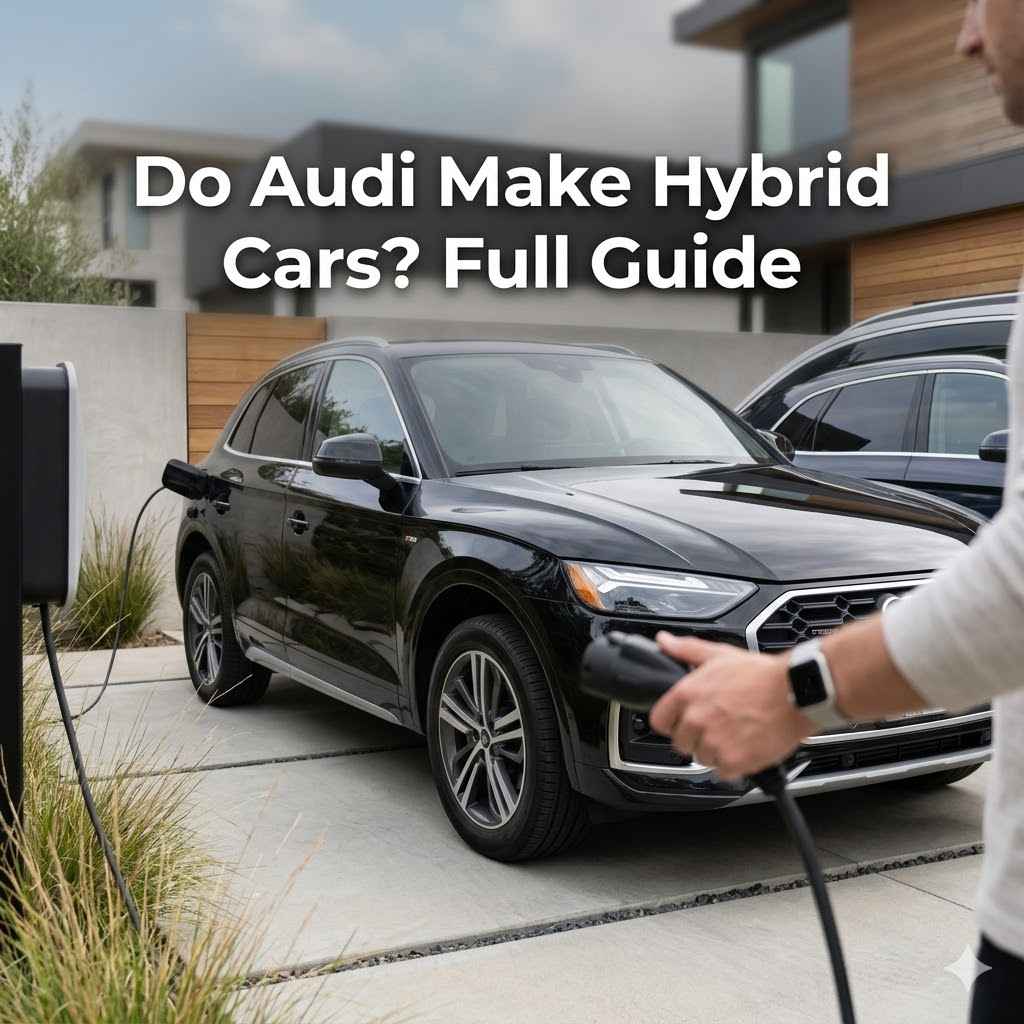
Do Audi Make Hybrid Cars? Full Guide
Many people wonder about electric and hybrid cars, and sometimes it’s hard to know where to start. If you’re asking, “Do Audi Make Hybrid Cars? Full Guide,” you’re not alone!
It can feel a bit confusing with all the different types of cars out there. But don’t worry, this guide will make it super simple. We’ll walk through everything step-by-step so you can get a clear picture.
Get ready to learn about Audi’s hybrid options without any fuss.
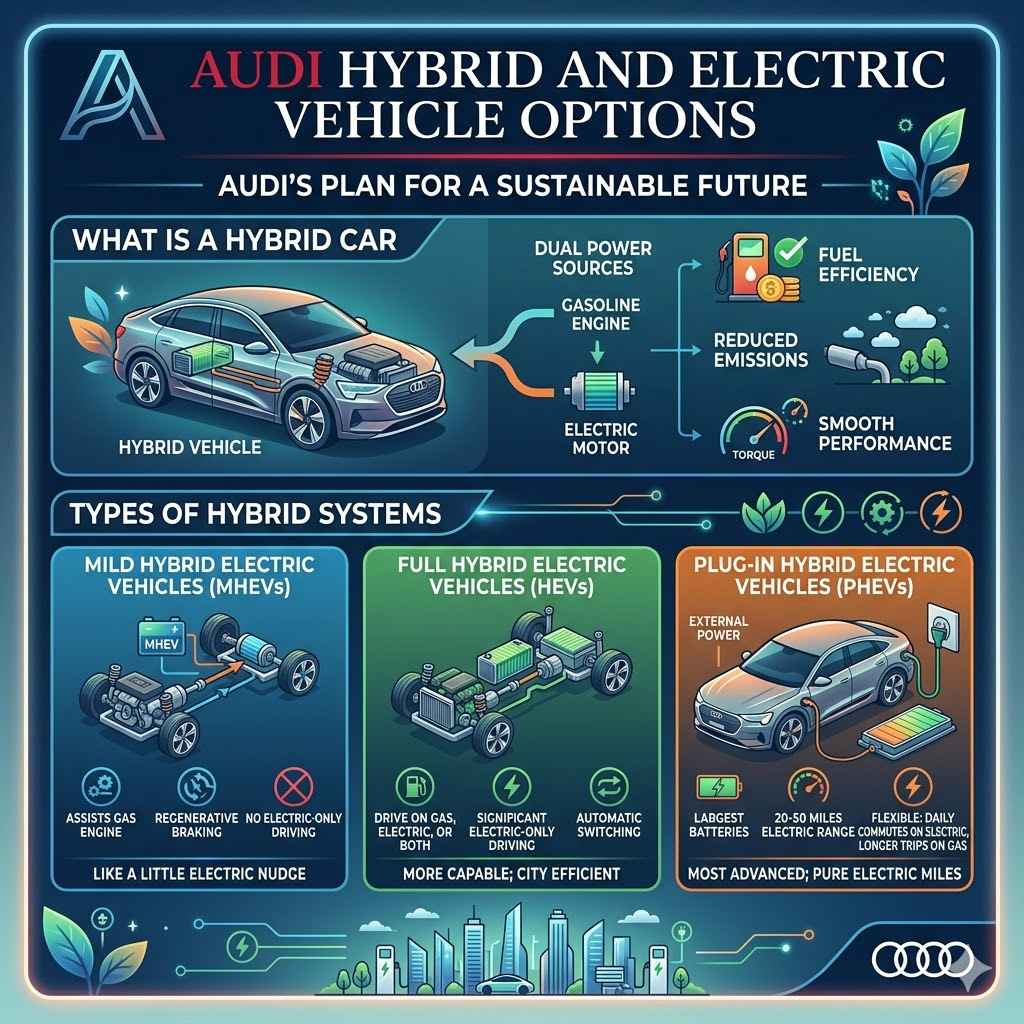
Audi Hybrid And Electric Vehicle Options
Audi has a clear plan for a more sustainable future, and that includes offering a range of hybrid and fully electric vehicles. These cars blend the convenience of gasoline engines with the efficiency of electric power. This means you can enjoy a smoother, quieter drive while also reducing your fuel consumption and emissions.
Audi’s approach to electrification is about providing luxury and performance with eco-friendly technology.
What Is A Hybrid Car
A hybrid car is a vehicle that uses more than one source of power to move. Most commonly, this means it has both a traditional gasoline engine and an electric motor. The electric motor can help the gasoline engine, making the car more fuel-efficient.
Sometimes, the electric motor can even power the car on its own for short distances. This combination aims to save fuel and lower emissions compared to cars that only use gasoline.
Dual Power Sources: Hybrids combine a gasoline engine with an electric motor. This allows for different driving modes.
Fuel Efficiency: The electric motor assists the gas engine, leading to better gas mileage. This saves money on fuel.
Reduced Emissions: By using less gasoline, hybrids produce fewer harmful emissions. This is better for the environment.
Smooth Performance: Electric motors provide instant torque, which can make acceleration feel quicker and smoother. The transition between power sources is often seamless.
Think of it like having two helpers for the car. One is the familiar gasoline engine you’ve probably known for years. The other is a quiet, clean electric motor powered by a battery.
When you’re driving slowly, like in city traffic, the electric motor might do most of the work. When you need more power, like for highway passing, the gasoline engine kicks in. The car’s computer decides which power source or combination to use to give you the best balance of performance and economy.
Types Of Hybrid Systems
There are different ways hybrid systems can work. Some are mild hybrids, where the electric motor mainly helps the gas engine start and provides a small boost. Others are full hybrids, where the electric motor can power the car by itself for a while.
Then there are plug-in hybrids, which have bigger batteries and can be plugged into an outlet to charge, allowing for longer electric-only driving ranges.
Mild Hybrid Electric Vehicles (MHEVs): These systems use an electric motor that assists the gasoline engine but cannot drive the car on its own. It typically helps with starting the engine, acceleration, and regenerative braking. Regenerative braking captures energy that would normally be lost as heat when braking and stores it in a small battery.
This captured energy is then used to power the electric motor.
Full Hybrid Electric Vehicles (HEVs): These vehicles can run on the gasoline engine alone, the electric motor alone, or a combination of both. They have larger batteries and more powerful electric motors than mild hybrids, allowing for significant electric-only driving at lower speeds. The system automatically switches between power sources for optimal efficiency.
Plug-in Hybrid Electric Vehicles (PHEVs): PHEVs have the largest batteries among hybrid types and can be plugged into an external power source to recharge. This allows for a substantial electric-only driving range, often 20-50 miles or more, before the gasoline engine needs to engage. They offer the flexibility of electric driving for daily commutes and the range of a gasoline engine for longer trips.
A mild hybrid is like having a little electric nudge to help the gas engine along. A full hybrid is more capable; it can actually drive on electricity alone for a bit, making city driving very efficient. A plug-in hybrid is the most advanced, letting you drive on pure electricity for many miles after charging it up.
This means you might not even need to use the gas engine on some days.
Do Audi Make Hybrid Cars Full Guide
Yes, Audi absolutely makes hybrid cars! They offer a range of vehicles that combine gasoline engines with electric power. This allows drivers to enjoy the benefits of both traditional and electric propulsion.
Audi’s hybrid lineup is designed to provide a luxurious driving experience while also improving fuel economy and reducing emissions.
Audi’s Hybrid Model Lineup
Audi offers several hybrid models across its different series, focusing on both practicality and performance. These models often carry the “e-tron” badging or are part of their plug-in hybrid offerings, showcasing their commitment to electrification. The specific models and their availability can change, but Audi has consistently expanded its hybrid and electric vehicle portfolio.
Audi A6 TFSI e: This plug-in hybrid version of the A6 sedan offers a blend of executive comfort and efficient performance. It combines a turbocharged gasoline engine with an electric motor, allowing for a significant electric-only driving range. This makes it ideal for daily commutes where you can rely on electric power, while the gasoline engine is there for longer journeys.
Audi A7 TFSI e: Similar to the A6 TFSI e, the A7 TFSI e provides a sporty yet efficient option in the luxury liftback segment. It features the same plug-in hybrid powertrain, delivering a refined driving experience with the added benefit of reduced emissions and improved fuel economy. The sleek design of the A7 is complemented by its advanced powertrain.
Audi A8 TFSI e: The flagship A8 luxury sedan also features a plug-in hybrid variant. This model aims to deliver ultimate comfort and advanced technology with the efficiency gains of electrification. It’s designed for those who seek the highest levels of luxury and refinement, coupled with a more sustainable powertrain option.
Audi Q5 TFSI e: For SUV buyers, the Q5 TFSI e offers a versatile plug-in hybrid option. It provides the practicality and space of an SUV with the fuel-saving advantages of a hybrid system. This model is well-suited for families and individuals who need a capable vehicle for various driving needs, from city errands to longer road trips.
Audi Q7 TFSI e: The larger Q7 SUV also comes in a plug-in hybrid version, offering three-row seating and ample space with hybrid efficiency. This makes it a compelling choice for larger families who want to reduce their environmental impact without sacrificing practicality or luxury. It combines powerful performance with impressive fuel economy for its size.
Audi uses the “TFSI e” designation for its plug-in hybrid models. This means these cars have both a gasoline engine (TFSI) and an electric motor (e). The “e” signifies their electric capabilities.
These models are a great way to experience the benefits of electric driving, like quieter operation and lower running costs, while still having the reassurance of a gasoline engine for longer trips.
How Audi’s Hybrid Technology Works
Audi’s hybrid vehicles typically employ a sophisticated system that manages the interplay between the gasoline engine and the electric motor. The battery stores electrical energy, which powers the electric motor. When you accelerate, the electric motor can provide instant torque, making the car feel more responsive.
During braking, the system uses regenerative braking to recapture energy and recharge the battery, a process that would otherwise be lost as heat.
The Electric Motor and Battery
The electric motor in an Audi hybrid is a key component that contributes to both performance and efficiency. It is powered by a high-voltage battery pack. This battery is usually located under the floor of the car to maintain a low center of gravity and preserve interior space.
The size of the battery determines the electric-only driving range. Larger batteries mean you can drive further on electricity alone.
When you’re driving, the car’s computer constantly monitors driving conditions. It decides whether to use the electric motor, the gasoline engine, or both to achieve the best balance. For example, at low speeds or when cruising on the highway with a light foot, the electric motor might be the primary power source.
When you need more power for acceleration or climbing hills, the gasoline engine will engage, often working in tandem with the electric motor.
Regenerative Braking Explained
Regenerative braking is a crucial feature in all hybrid and electric vehicles, including Audi’s. Instead of just using friction to slow the car down, which wastes energy as heat, regenerative braking uses the electric motor in reverse. The motor acts as a generator, converting the car’s kinetic energy (energy of motion) back into electrical energy.
This energy is then stored in the battery, ready to be used for acceleration. It’s like getting free energy back every time you slow down or brake!
This system significantly boosts efficiency, especially in stop-and-go city driving where braking is frequent. The more you brake, the more energy you can recover. Audi’s systems are finely tuned to make this process as smooth and seamless as possible, so you might not even notice it happening.
It’s a smart way to extend your driving range and reduce your reliance on the gasoline engine.
Driving Modes and Efficiency
Audi hybrid vehicles offer different driving modes that allow you to customize your driving experience and prioritize efficiency. Common modes include EV mode, Hybrid mode, and Battery Hold. EV mode prioritizes electric-only driving.
Hybrid mode allows the car’s system to intelligently switch between electric and gasoline power. Battery Hold mode lets you preserve the battery charge for later use, perhaps for driving in a city center where electric-only is preferred.
These modes give drivers control over how their car uses energy. For instance, if you know your commute is short and mostly city driving, you can select EV mode and rely solely on electricity. If you have a longer trip planned and want to maximize fuel economy, you might use Hybrid mode.
The ability to manage these settings empowers drivers to make the most of their hybrid vehicle’s capabilities.
Benefits of Audi Hybrid Cars
Choosing an Audi hybrid offers a compelling combination of luxury, performance, and environmental responsibility. These vehicles provide an enhanced driving experience with reduced running costs and a lower carbon footprint compared to traditional gasoline cars. They represent a smart choice for the modern driver who values both sophistication and sustainability.
Environmental Impact
One of the primary advantages of Audi hybrid cars is their reduced environmental impact. By utilizing electric power, these vehicles consume less gasoline and produce fewer greenhouse gas emissions. This contributes to cleaner air and a more sustainable transportation system.
Audi’s commitment to electrification is a key part of its strategy to reduce overall carbon emissions across its fleet.
A 2023 report indicated that the average CO2 emissions for new cars sold in the EU decreased by 15% compared to the previous year, with plug-in hybrids playing a significant role in this trend. For example, a plug-in hybrid like the Audi Q5 TFSI e can emit significantly less CO2 per mile when driven primarily on electric power compared to its gasoline-only counterpart.
Fuel Economy Savings
Hybrid technology significantly improves fuel economy. The electric motor assists the gasoline engine, meaning the engine doesn’t have to work as hard, especially in city driving or during acceleration. Regenerative braking also recaptures energy that would otherwise be wasted.
This results in fewer trips to the gas station and lower fuel costs over time. For drivers who cover many miles annually, these savings can be substantial.
For instance, an Audi A6 TFSI e can achieve an impressive combined fuel economy rating that far surpasses that of a standard gasoline A6. While specific figures vary by driving style and conditions, owners often report substantial reductions in their monthly fuel expenses. This economic benefit is a major draw for many buyers.
Driving Experience
Audi hybrids offer a refined and quiet driving experience. The electric motor provides instant torque, leading to smooth and responsive acceleration. At lower speeds, the car can operate on electric power alone, resulting in a near-silent ride.
This combination of quietness and responsiveness enhances the overall luxury feel that Audi is known for.
The transition between electric and gasoline power is engineered to be seamless. You won’t experience jarring shifts or noticeable interruptions. This creates a more relaxed and enjoyable driving atmosphere, making commutes and long journeys more pleasant.
The advanced technology ensures that the performance is not compromised by the hybrid system.
Audi’s Future in Electrification
Audi has set ambitious goals for its future, with a strong focus on expanding its electric and hybrid vehicle offerings. The company is investing heavily in battery technology, charging infrastructure, and the development of new electric models. This vision includes phasing out internal combustion engines over time and transitioning to a fully electric lineup in the coming years.
Audi has already introduced its dedicated “e-tron” line of fully electric vehicles, which are separate from their plug-in hybrids. This shows a clear commitment to a future powered by electricity. The plug-in hybrid models serve as an important bridge for consumers transitioning to electric mobility, offering familiar driving characteristics with the added benefits of electric power.
Technical Aspects Of Audi Hybrids
Understanding the technical makeup of Audi’s hybrid vehicles reveals the advanced engineering behind their efficient performance. These cars integrate complex systems that manage power flow, optimize energy usage, and ensure a seamless driving experience. Examining the core components and their functions provides insight into how these vehicles achieve their remarkable efficiency.
The Powertrain Components
The heart of an Audi hybrid lies in its sophisticated powertrain. This consists of an internal combustion engine (ICE), an electric motor, a high-voltage battery, and an advanced control unit. The integration of these components allows the vehicle to switch between power sources, recharge the battery, and optimize performance for various driving conditions.
The interplay between these elements is what defines the hybrid experience.
Internal Combustion Engine (ICE)
Audi’s hybrid models utilize efficient turbocharged gasoline engines, often branded as TFSI. These engines are designed to be powerful yet economical. In a hybrid system, the ICE doesn’t always need to work as hard as it would in a conventional car.
It can be shut off completely when the electric motor is powering the vehicle, or it can operate in its most efficient range, assisted by the electric motor.
For example, an Audi Q5 TFSI e might use a 2.0-liter turbocharged four-cylinder engine. This engine is tuned to work in harmony with the electric motor. During highway driving, when the engine is typically most efficient, it can provide the primary power, while the electric motor can offer an extra boost for passing or climbing hills.
The engine management system precisely controls when and how the ICE is used to maximize fuel savings.
Electric Motor and Power Electronics
The electric motor in an Audi hybrid is typically an asynchronous or permanent magnet synchronous motor. It is precisely calibrated to deliver instant torque for quick acceleration and smooth power delivery. Power electronics, such as inverters and converters, manage the flow of electricity between the battery, the electric motor, and the gasoline engine’s alternator.
These components are vital for ensuring that power is distributed efficiently and safely.
These sophisticated electronics also manage the charging process. When regenerative braking occurs, the motor acts as a generator, and the power electronics ensure that the captured energy is converted into a form that the battery can store. During electric-only driving, they convert the DC power from the battery into AC power needed by the electric motor.
High-Voltage Battery System
The high-voltage battery pack is the energy storage unit for the electric motor. Audi uses advanced lithium-ion battery technology for its plug-in hybrids. These batteries are designed for high energy density and longevity, providing a usable electric-only range.
The battery management system (BMS) constantly monitors the battery’s temperature, state of charge, and overall health to ensure optimal performance and safety.
The battery’s capacity is measured in kilowatt-hours (kWh). For instance, a typical Audi plug-in hybrid might have a battery capacity of around 14-17 kWh. This capacity allows for an electric-only driving range of approximately 20-40 miles, depending on the specific model and driving conditions.
The BMS is critical for balancing the cells within the battery pack, preventing overcharging or deep discharge, and extending the battery’s lifespan.
Charging and Range Considerations
For plug-in hybrid models, understanding charging and range is important. Audi’s plug-in hybrids can be charged at home using a standard outlet or a dedicated wall charger, or at public charging stations. The charging time depends on the battery size and the charging speed of the power source.
Home Charging Solutions
Charging your Audi plug-in hybrid at home is convenient. You can use a standard household electrical outlet (Level 1 charging), but this is slow. For faster charging, Audi recommends installing a dedicated home wall box (Level 2 charging).
A Level 2 charger connects to a higher voltage outlet and can fully charge the battery overnight. This means you can start each day with a full electric range.
A typical Level 2 home charger might provide 7-11 kW of power. This means a full charge for a plug-in hybrid battery can take anywhere from 2 to 4 hours, depending on the exact battery size and the charger’s output. This makes it practical for most users to charge their vehicle while they sleep or while at work.
Public Charging Networks
Beyond home charging, you can also utilize public charging stations. These stations come in various speeds, including Level 2 chargers and faster DC fast chargers (Level 3). While DC fast chargers are more common for fully electric vehicles, some plug-in hybrids can also benefit from them for a quick top-up.
Audi often partners with charging network providers to offer its customers access to a wide range of public charging points.
Using public chargers is ideal for longer trips or when you can’t charge at home. Many charging apps can help you locate nearby stations and check their availability. The accessibility of public charging infrastructure is continually growing, making plug-in hybrid ownership increasingly practical.
Electric Driving Range
The electric-only driving range of an Audi plug-in hybrid varies by model and battery size. For example, the Audi Q5 TFSI e typically offers an electric range of around 20-30 miles, while larger models like the A8 TFSI e might offer a slightly greater range. This is usually sufficient for most daily commutes and errands, allowing you to drive without using gasoline.
Factors such as driving style, temperature, and terrain can affect the actual electric range. Aggressive acceleration, high speeds, and cold weather can reduce the range. However, the intelligent management system ensures that the gasoline engine is available when needed, providing flexibility and eliminating range anxiety.
This dual-purpose capability is the hallmark of a plug-in hybrid.
Real-World Examples And Scenarios
To truly grasp the practicality of Audi’s hybrid cars, it’s helpful to look at how they perform in everyday situations. These vehicles are designed to seamlessly integrate into various lifestyles, offering tangible benefits whether you’re commuting to work, running errands, or embarking on a weekend getaway.
Scenario 1 Daily Commute
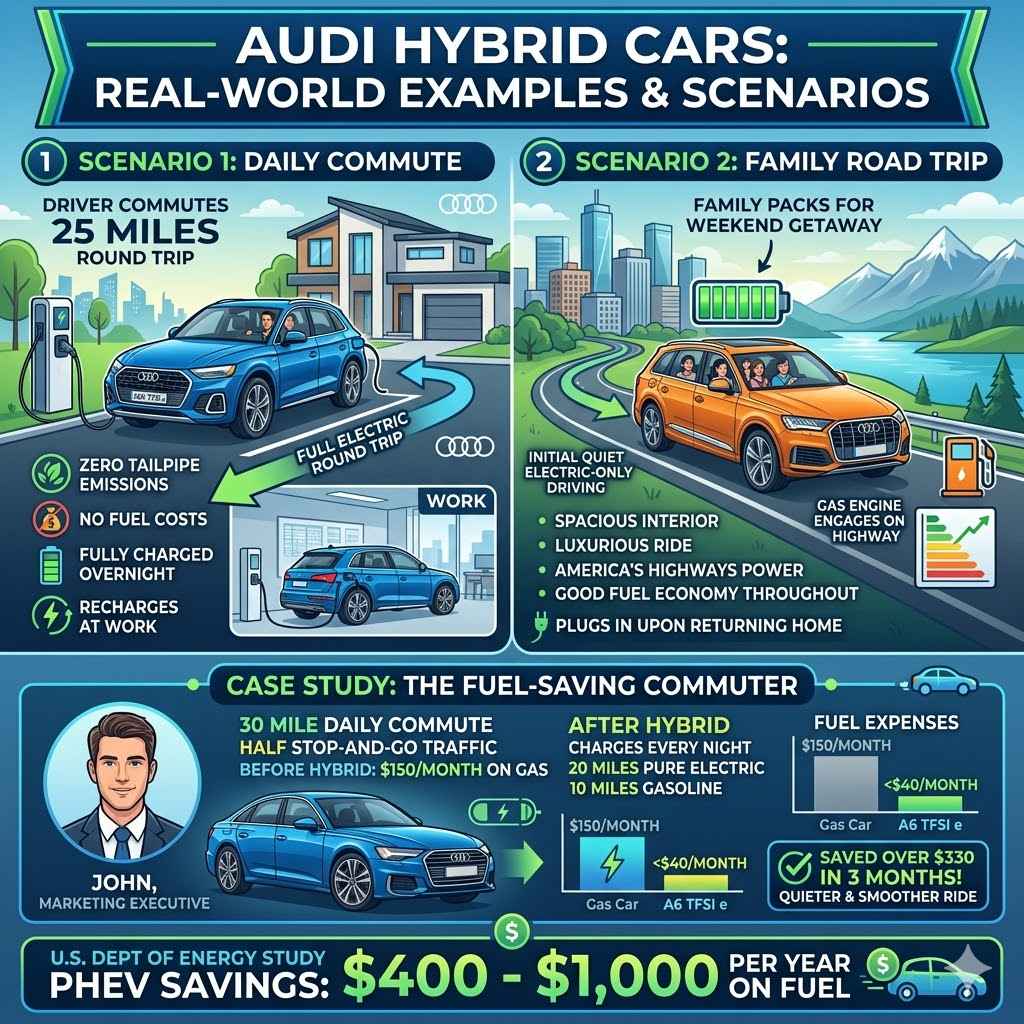
Imagine a driver who commutes 25 miles to work each day. With an Audi Q5 TFSI e, they could potentially complete their entire round trip using only electric power, assuming their battery is fully charged overnight. This means zero tailpipe emissions for their daily commute and no fuel costs for that journey.
Upon arrival at work, they could plug in their car to recharge for the drive home. This scenario highlights how plug-in hybrids can make electric driving a daily reality for many.
Scenario 2 Family Road Trip
Consider a family planning a weekend road trip. They pack into their Audi Q7 TFSI e, enjoying the spacious interior and luxurious ride. For the initial part of the journey, they might utilize the electric-only mode for quiet, emission-free driving.
As they leave city limits and head onto the highway, the gasoline engine seamlessly engages, providing ample power for sustained travel. The hybrid system ensures they maintain good fuel economy throughout the trip, and they can plug in the vehicle upon returning home.
Case Study: The Fuel-Saving Commuter
John, a marketing executive in a major city, drives an Audi A6 TFSI e. His daily commute is about 30 miles, with about half of that being stop-and-go traffic. Before getting his hybrid, he used to spend around $150 a month on gasoline for his commute.
After switching to the A6 TFSI e, he religiously charges his car every night. For the first 20 miles of his commute, he drives purely on electric power. He only uses the gasoline engine for the last 10 miles and for occasional longer trips.
In the first three months of ownership, John’s fuel expenses dropped to under $40 per month, saving him over $330 in just three months. He also noted the quieter and smoother ride in traffic.
A study by the U.S. Department of Energy found that plug-in hybrids can save consumers between $400 and $1,000 per year on fuel costs compared to similar gasoline-powered vehicles, depending on driving habits and electricity prices. This significant saving is a major advantage for hybrid owners.
Frequently Asked Questions
Question: Does Audi make only fully electric cars or also hybrids?
Answer: Audi makes both fully electric cars (e-tron models) and plug-in hybrid cars (TFSI e models). Their hybrid cars combine a gasoline engine with an electric motor.
Question: What is the main benefit of an Audi hybrid car?
Answer: The main benefits are improved fuel economy, reduced emissions, and a smoother, quieter driving experience due to the electric motor’s assistance.
Question: Can Audi hybrid cars run on electricity alone?
Answer: Yes, Audi’s plug-in hybrid models can run on electric power alone for a certain distance, typically around 20-40 miles, before the gasoline engine is needed.
Question: How do I charge an Audi plug-in hybrid?
Answer: You can charge them at home using a standard outlet or a faster home wall charger, or at public charging stations. They have larger batteries than mild hybrids.
Question: Are Audi hybrids expensive to maintain?
Answer: Maintenance costs for hybrids are often comparable to gasoline cars, and sometimes even lower, due to fewer moving parts in the powertrain and reduced wear on brakes thanks to regenerative braking.
Summary
Audi offers a strong selection of hybrid vehicles, including plug-in hybrid models like the A6, A7, A8, Q5, and Q7 TFSI e. These cars blend gasoline engines with electric motors to boost fuel efficiency and lower emissions. They provide a luxurious driving experience with the flexibility of electric-only power for daily commutes.
Audi’s commitment to electrification means more hybrid and electric options will continue to arrive.