Do Cars Have Cameras Inside: Essential Guide
Do cars have cameras inside? Yes, modern cars increasingly have cameras inside, not just outside. These internal cameras are often part of advanced safety and convenience features like driver monitoring systems, interior cameras for recording events, or even infotainment cameras. Understanding their presence and purpose is essential for every driver.
Ever wondered if that little lens you spotted in your car’s cabin is actually a camera? You’re not alone! It’s a common question many drivers have as cars become smarter and more connected. It can feel a bit mysterious, wondering what’s being watched or recorded.
Don’t worry, understanding this is simpler than you might think! We’ll break down exactly what these interior cameras are, why they’re there, and what they do. We’ll make it easy to understand, so you can feel informed and confident about your car.
Let’s dive in and discover the secrets behind those cabin cameras!
What Are Interior Car Cameras and Why Are They Used?
Cars today are packed with technology, and cameras are a big part of that. When we talk about cameras inside a car, we’re generally referring to lenses and sensors located within the passenger cabin, not just on the exterior. These aren’t typically the kind of cameras used for filming movies, but specialized units designed for specific functions.
The primary reasons car manufacturers are installing cameras inside vehicles are to enhance safety, improve convenience, and offer new features. They play a crucial role in making your driving experience better and safer by monitoring driver behavior, providing interactive capabilities, and even helping in case of incidents.
Think of them as tiny assistants working to keep you focused, informed, and secure.
Driver Monitoring Systems (DMS)
One of the most common uses for interior cameras is for Driver Monitoring Systems (DMS). These systems are designed to keep an eye on the driver, specifically their alertness and attention levels.
Here’s how they work:
Tracking Eye Movement: DMS cameras often track your eye movements and head position to see if you’re looking at the road.
Detecting Drowsiness: If the system notices your eyes are drooping or closed for too long, or your head is down, it might alert you to take a break.
Monitoring Distraction: Some advanced systems can even detect if you’re looking away from the road for an extended period and give a warning.
Ensuring Seatbelt Use: While not always a camera function, some interior DMS might also sense if seatbelts are buckled.
These systems are becoming vital in preventing accidents caused by fatigue or distraction, two major contributors to road incidents. For instance, research from the National Highway Traffic Safety Administration (NHTSA) highlights the dangers of drowsy and distracted driving. DMS technology aims to combat these risks directly.
Infotainment and Communication Cameras
In some newer, high-end vehicles, you might find a small camera integrated into the dashboard or rearview mirror that isn’t for driver monitoring. These cameras can have a few purposes:
Video Conferencing/Calls: Some luxury cars offer integrated systems that allow for video calls, using the interior camera to show the passengers.
Gesture Control: In very advanced systems, cameras might be used to recognize hand gestures, allowing you to control infotainment settings like volume or track changes without touching the screen.
Interior Security: Some vehicles have an interior camera that can be activated remotely or at specific times to check on the cabin’s interior, sometimes referred to as “vehicle-in-cabin” monitoring for security.
These features are more about enhancing the passenger experience and adding a layer of convenience or security.
Dashcams and Event Data Recorders (EDRs)
While not always built-in directly as a factory feature, many drivers choose to install aftermarket dashcams. However, some modern cars are starting to integrate their own versions of event recording.
Dashcams: These are external or internal cameras mounted on the windshield or dashboard to record driving footage. They are invaluable for capturing evidence in case of an accident, theft, or even just to document interesting drives. Many aftermarket options are available.
Event Data Recorders (EDRs): All new vehicles manufactured in the United States are required by law to have EDRs, often called “black boxes.” These devices record critical vehicle and occupant information for a brief period before, during, and after a crash. While EDRs don’t typically capture video, they record data like speed, braking, steering, and airbag deployment. Some advanced EDRs might incorporate limited interior camera data if present and activated during an event. According to the U.S. Department of Transportation, EDRs are crucial for understanding crash dynamics.
Where Are These Cameras Located?
The placement of interior cameras can vary widely depending on the car model and the specific technology it’s equipped with. They are usually designed to be discreet, blending into the car’s interior design.
Here are some common locations where you might find them:
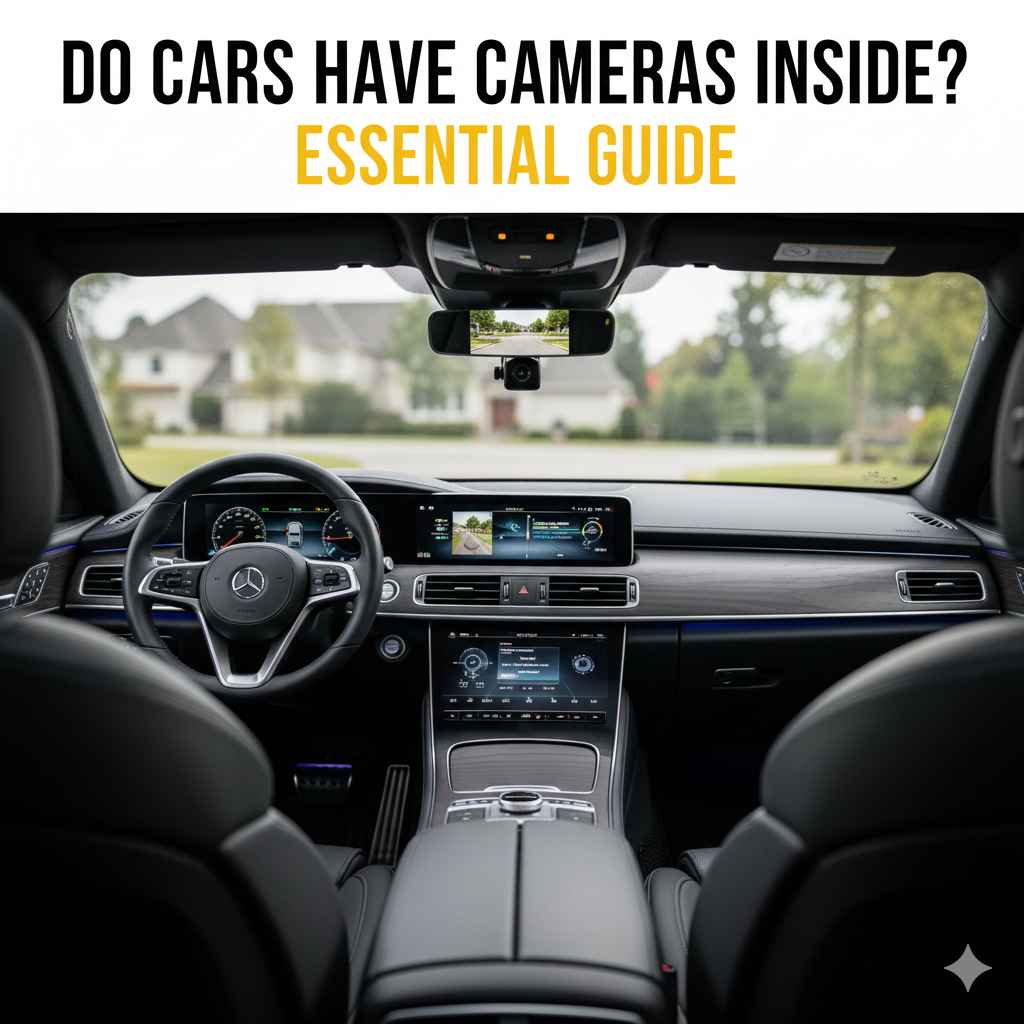
Top of the Windshield/Dashboard: Many driver monitoring cameras are situated near the rearview mirror, often integrated into the housing behind the mirror or placed on the dashboard above the steering wheel. This position allows them to have a clear view of the driver’s face.
Instrument Cluster Area: Some cameras might be subtly placed near the instrument cluster or on the steering column shroud.
Infotainment Screen Bezel: In cars with advanced infotainment systems, a small camera might be part of the trim around the central touchscreen.
Overhead Console: Less common, but in some vehicles, cameras could be integrated into the overhead interior light console.
It’s always a good idea to check your car’s owner’s manual for specific details about any cameras installed in your vehicle. It will usually describe their location and function.
Types of Interior Cameras
While the average driver might not need to distinguish between different camera technologies, understanding the principles can be helpful. Interior car cameras are typically:
CMOS Sensors: Most modern cameras, including those in cars, use Complementary Metal-Oxide-Semiconductor (CMOS) image sensors. These are energy-efficient and can process images quickly, which is ideal for real-time monitoring.
Infrared (IR) Capabilities: Many driver monitoring cameras have infrared (IR) capabilities. This means they can “see” in low light or complete darkness. The IR LEDs are often invisible to the human eye, so you won’t see a bright beam shining. This is crucial for monitoring the driver even at night or in tunnels.
These technologies allow the cameras to function effectively in a wide range of driving conditions, ensuring they can do their job accurately whether it’s daytime or nighttime.
Privacy Concerns and How Carmakers Address Them
The presence of cameras inside a car naturally brings up questions about privacy. It’s a valid concern, and car manufacturers are increasingly aware of it. Here’s how most systems are designed to address privacy:
Purpose Limitation: Cameras are typically designed for specific functions, like driver monitoring or infotainment. They are not meant for general surveillance of occupants’ private conversations or activities unless a specific feature is activated by the user (like an interior security camera).
Data Security: Carmakers generally state that data collected by these cameras is anonymized and encrypted where possible. The focus is usually on analyzing driver behavior patterns or detecting specific events, not on storing identifiable personal footage for extended periods.
User Control and Transparency: Many systems offer drivers some control. For example, you might be able to disable certain driver monitoring features or be clearly notified when an interior camera is active. Your car’s manual is the best source for understanding these controls.
Limited Storage: Data is often processed in real-time or stored temporarily. Once an alert is triggered or a driving event is analyzed, the raw footage might not be retained indefinitely. The emphasis is on the insights derived from the data, not the raw video itself.
No Unauthorized Access: Carmakers work to secure the systems against external hacking. However, as with any connected technology, it’s always wise to keep your car’s software updated.
It’s important to remember that these systems are designed with safety and functionality as their primary goals. Understanding your car’s features and privacy settings empowers you to use them confidently.
Do Specific Car Brands Have Interior Cameras?
Yes, many car brands are integrating interior cameras into their vehicles, particularly in models equipped with advanced driver-assistance systems (ADAS) or premium features.
Here’s a general overview, though specific features vary greatly by model year and trim level:
Luxury Brands: Brands like Mercedes-Benz, BMW, Audi, Lexus, and Tesla are often at the forefront of incorporating advanced interior camera technology for driver monitoring, gesture control, and enhanced infotainment experiences.
Mainstream Brands: Major automakers such as Ford, General Motors (Chevrolet, Cadillac, GMC), Toyota, Honda, Hyundai, Kia, Nissan, and Volkswagen are increasingly equipping their newer models with interior cameras, especially in higher trim levels, for driver alert systems and other safety features.
Electric Vehicles (EVs): Many EVs, known for their tech-forward design, often feature sophisticated interior camera systems as part of their standard or optional equipment.
Table: Common Features Utilizing Interior Cameras by Brand (Examples)
| Brand | Potential Interior Camera Features | Common Location of Camera |
|---|---|---|
| Tesla | Cabin Camera (for Sentry Mode, driver monitoring for Autopilot) | Near rearview mirror, interior roof lining |
| Mercedes-Benz | Driver Monitoring System, MBUX Interior Assist (gesture control) | Above steering wheel, infotainment screen bezel |
| BMW | Driver Assistance Packages, Gesture Control | Near rearview mirror, dashboard |
| Ford | Driver Alert System (in some models) | Top of windshield, near rearview mirror |
| Toyota | Driver Monitoring System (in some models) | Steering column, top of windshield |
| Hyundai/Kia | Driver Attention Warning, advanced infotainment features | Near rearview mirror, dashboard |
Note: Feature availability is highly dependent on the specific model year, trim level, and optional packages. Always consult your vehicle’s owner’s manual.
The trend is clear: interior cameras are becoming a standard component of modern automotive technology, driven by the push for safer, smarter, and more user-friendly vehicles.
How to Find Out If Your Car Has Interior Cameras
If you’re curious about whether your specific car has interior cameras, here are a few straightforward ways to find out:
1. Check Your Owner’s Manual: This is your car’s most comprehensive guide. Look for sections related to safety features, driver assistance, infotainment systems, or advanced technology. The manual should explicitly mention any cameras, their purpose, and their location.
2. Visual Inspection: Take a good look inside your car’s cabin. Pay close attention to the areas mentioned earlier: near the rearview mirror, the top of the dashboard, around the infotainment screen, and on the steering column. You’re looking for small, dark, often circular or rectangular lens-like openings.
3. Explore Your Car’s Infotainment System: Navigate through your car’s touchscreen menus. Often, settings related to driver monitoring, driver assistance, or interior cameras can be found under menus like “Settings,” “Safety,” “Driver Aids,” or “Vehicle.”
4. Research Your Car Model Online: A quick internet search for your car’s make, model, and year, combined with terms like “interior camera” or “driver monitoring system,” can yield results from reviews, manufacturer websites, or automotive forums.
5. Contact Your Dealership: If you’re still unsure, the service department or sales team at your car dealership can confirm the features present in your vehicle. They have access to your car’s specific options and specifications.
It’s easy to miss these small components, as manufacturers often design them to be as unobtrusive as possible.
What to Do If You Spot an Interior Camera
If you’ve found a camera lens inside your car and weren’t expecting it, don’t panic! Here’s a simple approach:
1. Identify its Purpose: As discussed, most cameras are for specific, beneficial functions like safety or convenience.
2. Consult Your Manual: The first and best step is always to refer to your car’s owner’s manual. It will tell you exactly what that lens is for.
3. Check Settings: If your manual mentions controllable features, explore your car’s settings menu to see if you can adjust or disable the camera’s function if you prefer. Understand what disabling it might mean for safety features.
4. Don’t Cover It (Usually): Unless you have a specific reason and understand the consequences (like disabling a critical safety system), it’s generally not recommended to cover or tamper with factory-installed cameras. Doing so might disable important safety functions.
Remember, these cameras are usually installed to help you, not to spy on you.
Frequently Asked Questions (FAQs)
Q1: Are there cameras inside every car?
A: No, not every car has cameras inside. Older vehicles, or base models of newer cars, may not be equipped with interior cameras. However, they are becoming increasingly common in modern vehicles, especially those with advanced driver-assistance systems (ADAS) and sophisticated infotainment features.
Q2: Can I disable the interior camera in my car?
A: In some cases, yes, but it depends on the car manufacturer and the specific camera system. Driver monitoring systems, for example, might have an option to be turned off in the vehicle’s settings menu. However, disabling certain safety features may impact your car’s overall safety performance. Always consult your owner’s manual for instructions and potential consequences.
Q3: Do these cameras record all the time?
A: Generally, interior cameras that are part of safety systems like driver monitoring are designed to activate only when needed – for example, when the car is in motion or when the system detects potential driver fatigue or distraction. Infotainment or communication cameras would only be active when those specific features are in use. Some security cameras might be programmed to record under specific conditions like detected motion when parked.
Q4: Who can access the footage from interior car cameras?
A: Typically, the footage is processed and used by the vehicle’s internal systems for functions like driver monitoring or event recording. Manufacturers usually state that data is anonymized and not shared without explicit consent. Access to data is generally restricted to the vehicle owner and authorized service personnel, or potentially law enforcement with a warrant, especially if it’s related to an accident investigation or EDR data.
Q5: Are interior car cameras a privacy risk?
A: While the technology itself could be perceived as a risk, car manufacturers implement various measures to protect privacy. These include data encryption, anonymization, limiting data storage, and user controls. The intention behind these cameras is primarily safety and enhanced user experience. Understanding your car’s specific privacy policies and settings is key to feeling comfortable.
Q6: What’s the difference between an interior camera and a dashcam?
A: An interior camera is a factory-installed lens inside the cabin, typically focused on driver monitoring or cabin features. A dashcam is usually an aftermarket device mounted on the dashboard or windshield to record external driving footage, serving as evidence for incidents on the road. Some cars might have both, or integrated systems that offer both internal and external recording capabilities under specific circumstances.
Q7: Can my car’s interior camera be hacked?
A: Like any connected technology, car systems can be vulnerable to cyber threats. Car manufacturers invest heavily in cybersecurity to protect their vehicles. Keeping your car’s software updated and being cautious about connecting to unsecured networks are good practices to minimize risks.
The Future of Interior Car Cameras
As technology continues to advance, we can expect interior car cameras to become even more sophisticated and integrated. Future applications might include:
Advanced Driver Behavior Analysis: Systems that learn your driving habits and provide personalized feedback for efficiency and safety.
Personalized Cabin Environments: Cameras that recognize individual drivers and passengers, automatically adjusting seat positions, climate control, music, and even ambient lighting to their preferences.
Enhanced Health Monitoring: Future systems might use subtle camera analysis to detect signs of driver medical issues, such as a sudden onset of a condition, and alert the driver or emergency services.
More Intuitive Interaction: Further development in gesture and facial recognition could lead to seamless control of vehicle functions simply by looking or gesturing.
Interior Air Quality Monitoring: Cameras integrated with sensors could potentially monitor air quality within the cabin and adjust ventilation systems accordingly.
The integration of interior cameras is a testament to how vehicles are evolving from simple modes of transportation into smart, connected, and personalized environments.
Conclusion
So, do cars have cameras inside? The answer is a resounding yes for many modern vehicles! These interior cameras are not there to be intrusive but rather to serve crucial roles in enhancing your safety, comfort, and driving experience.
From keeping you alert with Driver Monitoring Systems to offering advanced infotainment features, these cameras are sophisticated tools designed with your well-being in mind. While privacy is a valid consideration, car manufacturers are working hard to ensure data is handled securely and transparently.
By understanding where to look for these cameras, what they do, and how to manage their features (referencing your trusty owner’s manual!), you can drive with greater confidence and peace of mind. The automotive world is changing rapidly, and these interior cameras are a significant part of that exciting evolution towards smarter, safer, and more intuitive vehicles. Keep an eye on your car’s features – you might be surprised at the advanced technology that’s already on board!