How to Get Sunscreen Out of Leather Car Seats (Plus Fabric, Vinyl)
Sunscreen bonds to car seats faster than most stains because the oils, zinc oxide, and titanium dioxide in the formula soak into fabric fibers and react with leather dye and finish. On leather, it shows up first as a chalky white smear; on fabric and vinyl, it spreads into a greasy patch that is easy to miss until it sets. The fix depends on the material: leather needs a dedicated leather cleaner followed by a conditioner, while fabric and vinyl respond well to a mild dish-soap solution or diluted white vinegar.
Timing matters more than which product is used. Heat inside a parked car bakes sunscreen oils into the seat material within hours, turning a five-minute wipe-down into a stain that needs a professional detailer. Treat any spot as soon as it is noticed, then work through the steps below for the specific seat material involved.
Why Sunscreen Stains Are Such a Pain
BEST FOR LEATHER & VINYL SEATS
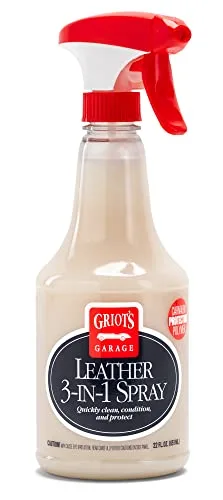 |
Griot’s Garage Leather 3-in-1 Spray – $11.99 A single spray cleans, conditions, and protects in one step, covering both the leather and vinyl seats sunscreen stains hit hardest.
|
Sunscreen stains are not ordinary dirt. Most formulas combine oils and emollients with active mineral ingredients such as zinc oxide or titanium dioxide, and those ingredients cling to upholstery and leather far more stubbornly than dust or food spills. On fabric seats, the oil wicks into the weave; on leather, the minerals can leave a whitish cast that is easy to mistake for permanent discoloration on car cloth seats.
Left alone, the stain gets worse rather than better. Heat inside a closed car bakes the oils deeper into the material, and some sunscreen formulas react with dye or fabric finishes, causing fading or a yellow tint over time. Identifying the seat material first — fabric, leather, or vinyl — determines which cleaning method is safe to use.
Cleaning Sunscreen Off Fabric Car Seats
Fabric seats absorb sunscreen quickly, so the goal is to lift the oil before it sets rather than push it deeper into the weave. Work through the following four steps in order.
Step 1: Blot, Do Not Rub
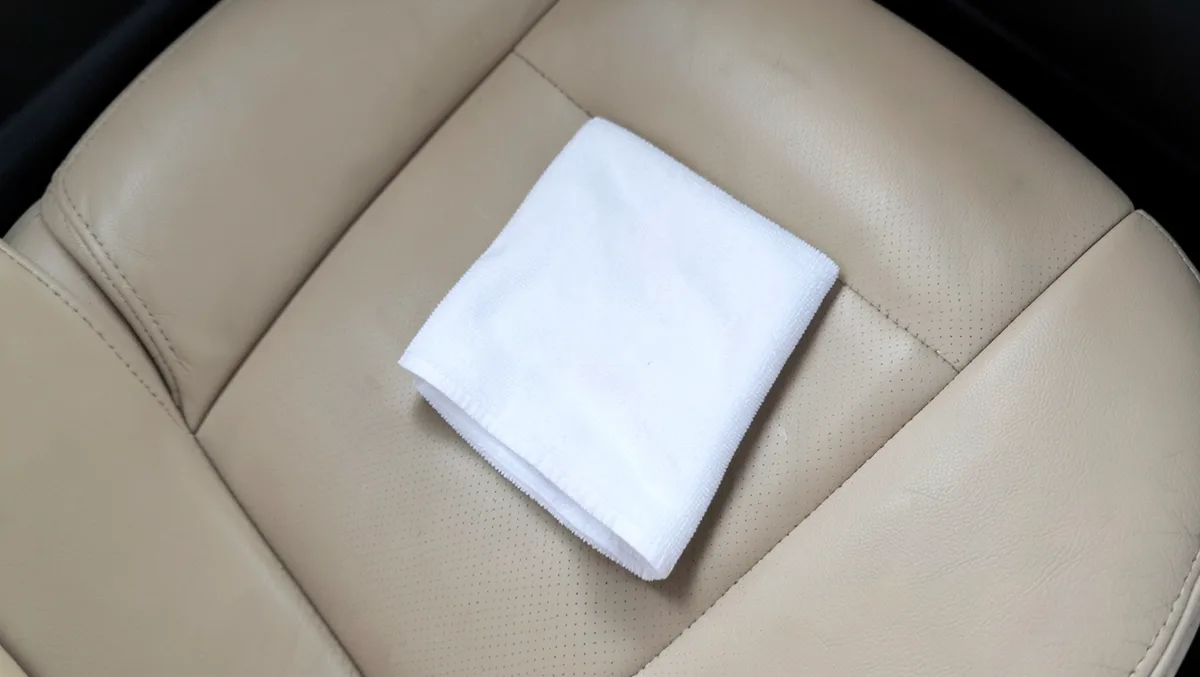
Start with a clean microfiber cloth and blot — never rub — the stain. Sunscreen is oily, and rubbing spreads it deeper into the fibers instead of lifting it out. This step works best while the sunscreen is still wet; keeping a microfiber cloth in the car is usually enough to catch most spills before they set.
Step 2: Use Dish Soap for Grease
Mix a teaspoon of dish soap, such as Dawn, with a cup of warm water. Dip a clean cloth into the solution and dab it onto the stain in small circles, working from the outside in. Dish soap breaks down sunscreen oils effectively because it is formulated to cut grease. Avoid soaking the seat — too much water encourages mold and mildew in fabric upholstery.
Step 3: Rinse and Dry
Once the stain fades, rinse the area by dabbing with a cloth dampened in plain water, then blot it dry with a separate microfiber towel. Stubborn zinc oxide residue sometimes needs two or three repetitions of the soap-and-rinse cycle before it fully lifts.
Step 4: Tackle Stubborn Stains with Vinegar
If dish soap alone does not clear the stain, mix equal parts white vinegar and water, apply it with a cloth, and let it sit for about 10 minutes before rinsing and drying. Vinegar’s mild acidity helps break down the chemical residue that soap leaves behind. Crack the windows afterward to air out the vinegar smell.
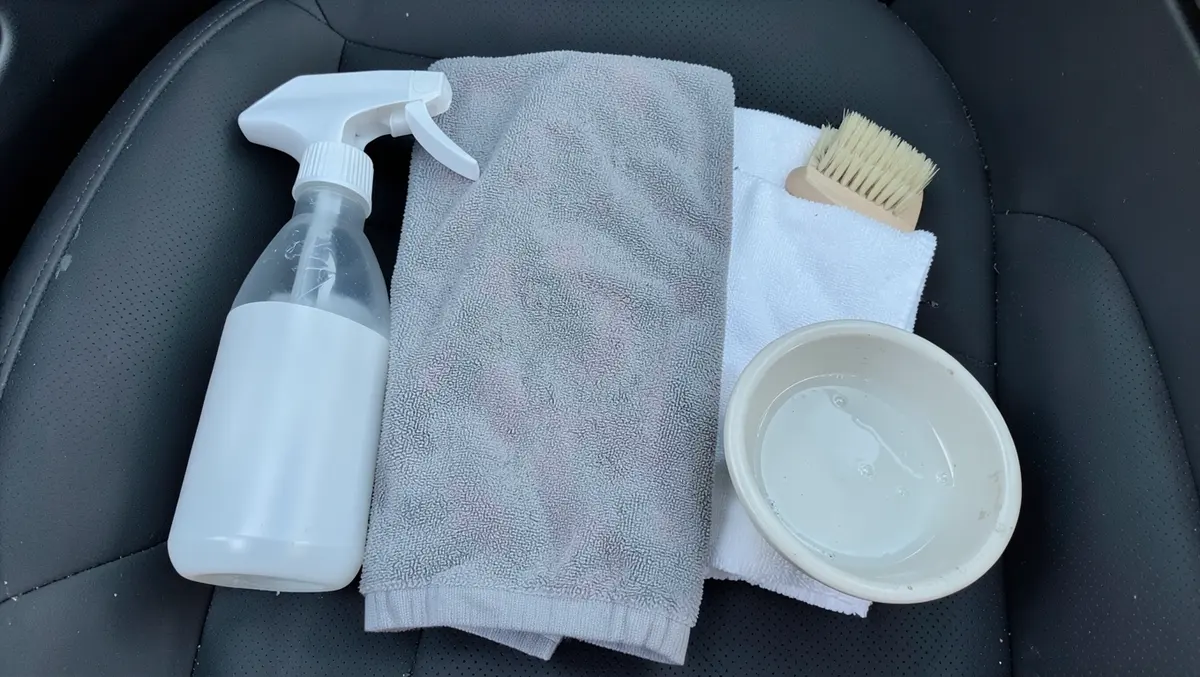
Supplies You’ll Need for Fabric Seats
A short list of supplies covers most fabric sunscreen stains:
| Item | Why It’s Useful |
|---|---|
| Microfiber cloths | Absorbs sunscreen without spreading it |
| Dish soap | Cuts through greasy oils |
| White vinegar | Breaks down chemical residues |
| Spray bottle | For applying cleaning solutions evenly |
| Soft-bristled brush | Helps scrub stubborn stains gently |
Cleaning Sunscreen Off Leather Car Seats
Leather seats show sunscreen stains fastest, since mineral sunscreens can leave a chalky white cast on the dye and finish, and any oil left untreated eventually dulls the surface or contributes to cracking. The following four steps limit the damage.
Step 1: Wipe Off Excess Sunscreen
Blot the stain with a dry microfiber cloth before applying any cleaner. Leather is far less absorbent than fabric, so a large share of the surface sunscreen comes off with this step alone, and starting dry avoids spreading the oil across a larger area.
Step 2: Use a Leather-Safe Cleaner
A cleaner formulated specifically for leather — such as Griot’s Garage, Meguiar’s, or Chemical Guys — lifts sunscreen residue without stripping the leather’s finish. Apply a small amount to a cloth and work it gently into the stain. In a pinch, a few drops of mild dish soap in water can substitute, but use it sparingly; repeated exposure to dish soap dries out leather over time.
Step 3: Condition the Leather
Cleaning strips some of leather’s natural oils along with the stain, so always follow up with a leather conditioner. Apply it with a soft cloth, let it absorb for a few minutes, then buff to a shine. This step keeps the seat supple and helps prevent the cracking that follows repeated cleaning without conditioning.
Step 4: Deal with Discoloration
Sunscreens containing titanium dioxide can leave a whitish tint on dark leather that survives normal cleaning. As a last resort, dab the area with a cotton swab dipped in rubbing alcohol diluted to 70% or less, then condition the leather immediately afterward to restore lost moisture.
Cleaning Sunscreen Off Vinyl Car Seats
Vinyl seats — including synthetic leather-look materials some automakers use, such as Toyota’s SofTex, sometimes called pleather — are non-porous, so sunscreen sits on the surface rather than soaking in. That makes vinyl the easiest of the three materials to clean.
Step 1: Blot the Stain
Blot with a microfiber cloth to remove as much sunscreen as possible before applying any cleaner. Because vinyl does not absorb liquid the way fabric does, this step alone often removes most of a fresh stain.
Step 2: Use an All-Purpose Cleaner
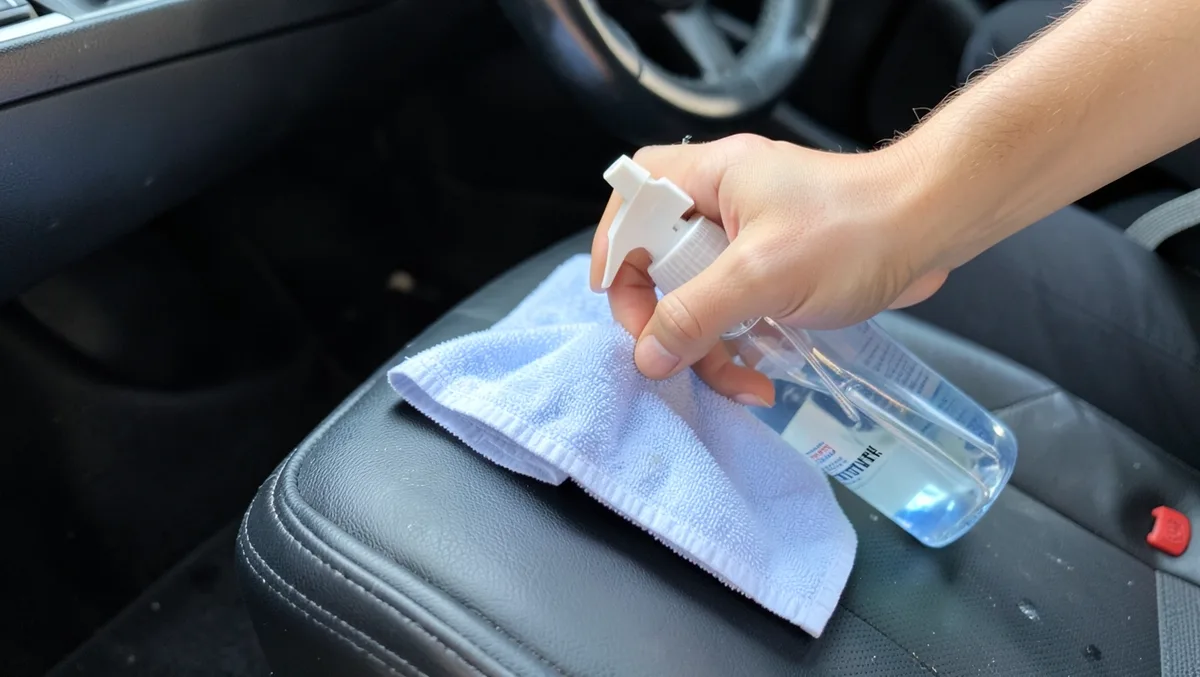
Spray a small amount of an all-purpose cleaner, such as Simple Green, onto a cloth — not directly onto the seat — and wipe the stain in a circular motion. Dish soap and water work as a substitute if an all-purpose cleaner is not on hand.
Step 3: Wipe and Dry
Wipe the area with a microfiber towel dampened in plain water to remove cleaner residue, then dry it with a second dry towel. Vinyl tolerates cleaning better than leather, but drying it fully still prevents water spots.
Preventing Sunscreen Stains in the Future
A few habits keep sunscreen off car seats in the first place:
- Apply Sunscreen Outside the Car: Letting sunscreen absorb into skin for a few minutes before getting in reduces how much transfers to the seat.
- Use Seat Covers: Washable seat covers are easier to clean than the seats themselves and take the brunt of summer spills.
- Keep a Towel Handy: Draping a towel over the seat right after applying sunscreen catches accidental smears before they set.
- Wipe Down Seats Regularly: A quick wipe with a damp cloth every couple of weeks prevents oily buildup even when no stain is visible.
What to Avoid When Cleaning Sunscreen Stains
A few common mistakes make sunscreen stains worse rather than better. Avoid bleach or ammonia-based cleaners, which can damage upholstery and strip leather finishes. Skip abrasive scrubbers like steel wool, which scratch the surface of both leather and vinyl. And avoid leaving fabric seats wet for extended periods — excess moisture trapped in the cushion foam leads to mold and a lingering musty smell that is harder to fix than the original stain.
When to Call a Professional
Some sunscreen stains do not fully lift with home methods, particularly on light-colored leather where discoloration has set in. A professional detailer has access to specialized leather cleaners and extraction tools that are not sold for home use, and most charge between $50 and $150 depending on the extent of the staining. For a high-end interior or a stain that has been sitting for weeks, that cost is often worth it compared to the risk of damaging the leather with repeated DIY attempts.
Recommended Products for Sunscreen Stain Removal
For fabric seats, a basic dish soap like Dawn handles most sunscreen residue without extra cost. For leather, a cleaner-and-conditioner combination — Meguiar’s Gold Class Leather Cleaner and Conditioner or Griot’s Garage Leather 3-in-1 Spray are two widely used options — cleans and protects in the same step. For vinyl, an all-purpose cleaner such as Simple Green covers most spills. A stack of microfiber cloths and a car upholstery cleaner that handles all three seat materials round out a basic stain-removal kit.
Why Acting Fast Matters
Fresh sunscreen stains are far easier to remove than ones that have set. Heat and time let the oils and active ingredients bond with the seat material, so a stain that takes five minutes to blot away on day one can take three times the effort a week later. Treat any spot as soon as it is noticed rather than waiting until wash day.
A Quick Note on Eco-Friendly Cleaning
Most of these methods are already environmentally friendly. Dish soap, vinegar, and water handle the majority of sunscreen stains without harsh chemicals. Dispose of used cleaning cloths properly and avoid pouring leftover cleaning solution down a storm drain.
Conclusion
Sunscreen stains on car seats are manageable once the seat material is identified. Fabric responds well to dish soap and vinegar, vinyl needs little more than an all-purpose cleaner, and leather requires a dedicated cleaner followed by a conditioner to avoid drying out the surface. Prevention — seat covers, a towel draped over the seat, or simply applying sunscreen before getting in the car — cuts down on how often any of this is needed.
For a related stain, the same blot-first, material-specific approach works on other oily spills — see how to get grease stains off car seats for the same method applied to a different mess.
FAQs
What’s the best way to remove sunscreen from fabric car seats?
Blot the stain with a microfiber cloth to remove excess sunscreen. Mix dish soap with warm water, dab it onto the stain, and work in small circles. Rinse with plain water and dry thoroughly. For stubborn stains, try a vinegar and water solution.
Can I use the same cleaner for leather and fabric seats?
Not always. Leather needs a dedicated cleaner to avoid damage, while fabric can handle dish soap or vinegar. Some multi-purpose car upholstery cleaners work for both, but check the label first.
How do I prevent sunscreen stains on my car seats?
Apply sunscreen outside the car and let it absorb into your skin. Use washable seat covers or drape a towel over the seats. Regular wiping with a damp cloth also helps.
Will sunscreen stains damage my car seats permanently?
If cleaned quickly, most stains won’t cause permanent damage. However, leaving sunscreen on leather or fabric for too long can cause discoloration or cracking, especially on leather.
When should I take my car to a professional for sunscreen stains?
If the stain is stubborn, has set in for weeks, or is on high-end leather, a professional detailer can help. They have specialized tools and cleaners to tackle tough stains safely.
Products related to this article
Sponsored / affiliate links. As an Amazon Associate I earn from qualifying purchases. I may earn additional commission from eligible campaigns.