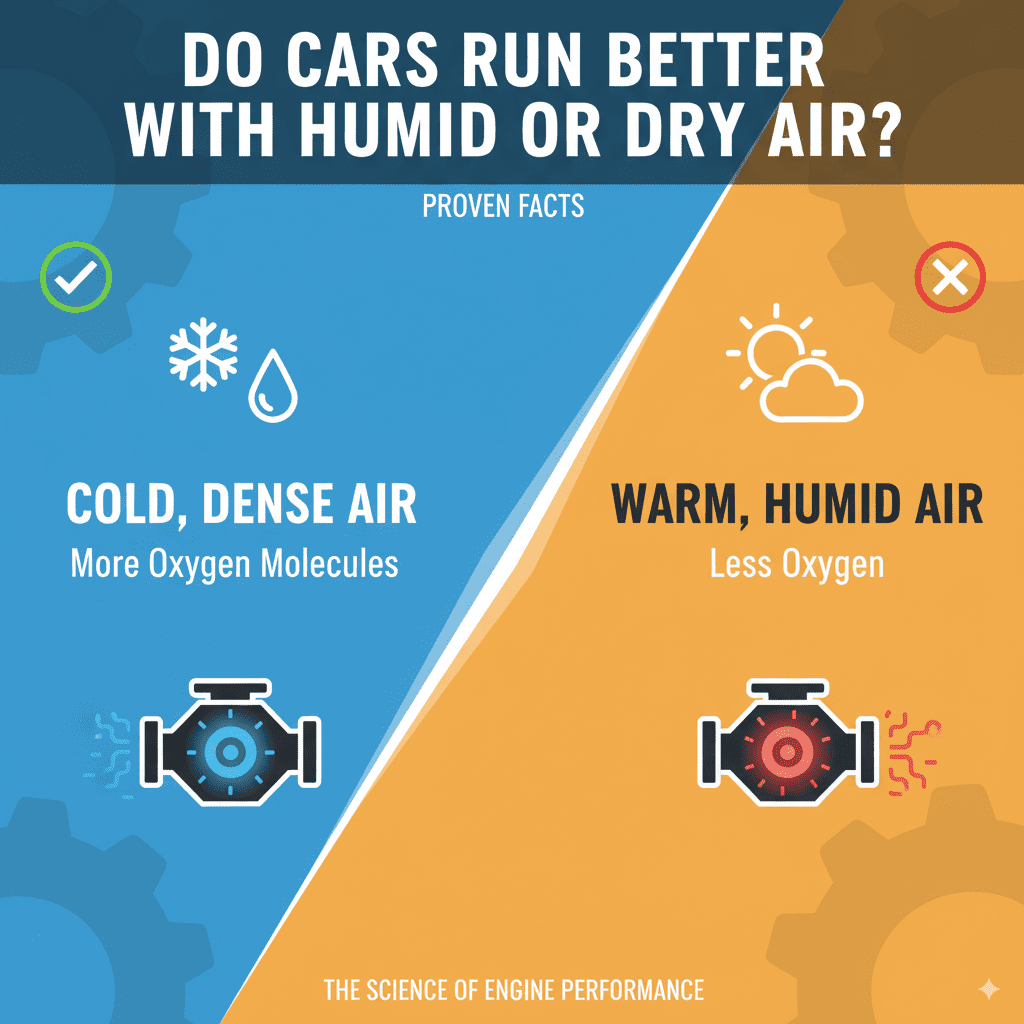
Do Cars Run Better With Humid or Dry Air? Proven Facts
Cars generally perform optimally in moderately humid air, not overly dry or excessively humid conditions. While your car’s engine management system can adapt, optimal engine efficiency and power output are often seen when humidity levels promote denser, cooler air intake, which is typically associated with moderate humidity.
Ever noticed how your car feels a little sluggish on very hot, dry days, or perhaps a bit more responsive when it’s cool and crisp outside? There’s a reason for that! The air around us, specifically its humidity and temperature, plays a surprisingly important role in how your car’s engine runs. Many drivers wonder if humid air or dry air makes their car perform better. It’s a common question, especially if you’ve ever felt your vehicle acting differently.
Don’t worry, figuring this out is simpler than you might think, and understanding it can help you appreciate your car’s performance more. We’ll break down the science behind it in easy terms, so you can feel informed and confident.
Understanding How Air Affects Your Car’s Engine
Your car’s engine is essentially an air pump that mixes fuel with air to create power. For your engine to run smoothly and efficiently, it needs the right amount of air and fuel. This is where the properties of the air, like its temperature and humidity, come into play. Think of air as a vital ingredient for your engine’s “meal” – the type of ingredient can affect the final taste and energy produced!
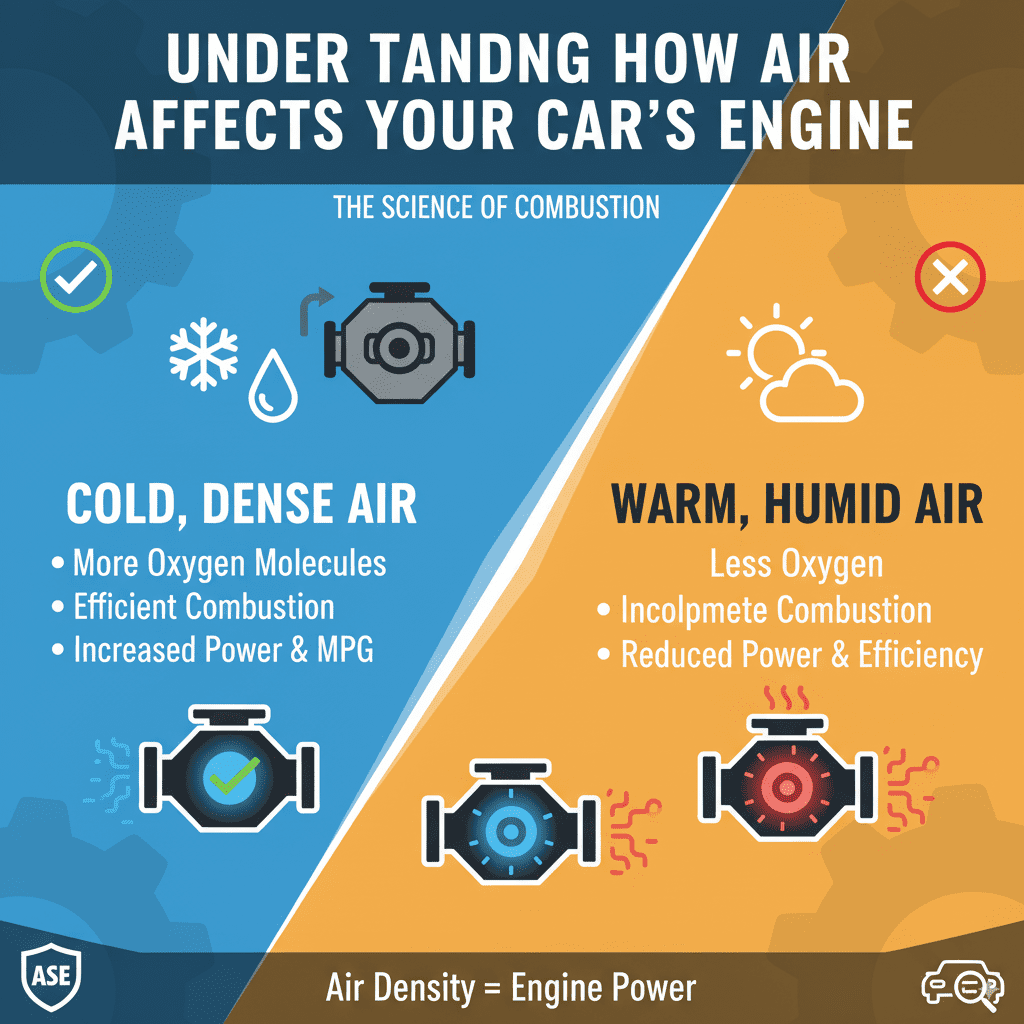
The core concept is that engines need oxygen to burn fuel. The density of the air determines how much oxygen is available. Denser air means more oxygen molecules can enter the engine with each breath (or intake stroke). This can lead to more efficient combustion and, consequently, better performance.
The Role of Humidity in Air Density
This is where it gets interesting. You might think more water vapor (humidity) would make air heavier, but it actually makes it lighter! This is a key point in understanding why “dry” air can sometimes be associated with better performance, but it’s not the whole story.
- Molecular Weight: Water molecules (H₂O) are lighter than the average molecules in dry air, primarily nitrogen (N₂) and oxygen (O₂). When water vapor enters the air, it displaces some of these heavier molecules.
- Effect on Density: As a result, humid air is less dense than dry air at the same temperature and pressure. Less dense air means fewer oxygen molecules in a given volume.
So, if less dense air means less oxygen, it seems counterintuitive that humid air might lead to better performance. However, there are other factors at play, and the term “better performance” needs careful definition.
Temperature’s Impact on Air Density
Temperature is a much more significant factor in air density than humidity. Cold air is denser than hot air. This is why many performance enthusiasts advocate for cold air intakes – they aim to supply the engine with the coolest, densest air possible.
- Cold air contains more oxygen per volume.
- More oxygen allows for more fuel to be burned, leading to stronger combustion.
- This is why cars often feel more powerful on cool, crisp mornings than on hot summer afternoons.
The U.S. Department of Energy’s Fuel Economy website highlights the importance of engine temperature and maintenance for optimal performance, which indirectly relates to the air it takes in. Well-maintained engines operate more efficiently regardless of external air conditions, but optimal conditions still exist.
Humidity’s Direct Effects on Combustion
While humidity makes the air less dense, there’s a subtle benefit it can offer to the combustion process itself:
- Cooling Effect: Water vapor in the air can absorb heat during the compression stroke inside the cylinder. This slight cooling effect can reduce the tendency for engine knocking (pre-ignition), allowing the engine to run with more advanced ignition timing.
- Detonation Suppression: Advanced ignition timing can lead to more power and efficiency. The presence of water vapor acts as a natural octane booster, helping to prevent the fuel-air mixture from igniting prematurely, which is crucial for high-performance engines.
- Combustion Facilitation: In some ways, the water molecules themselves can aid in the combustion reaction, acting as a catalyst or participating in the flame propagation.
This is the primary reason why, despite making the air less dense, moderately humid air can sometimes lead to perceived “better” performance, especially in naturally aspirated engines that aren’t turbocharged or supercharged. The negative impact of reduced oxygen density is often outweighed by the positive effects of detonation suppression and combustion facilitation.
For a deep dive into air density and its consequences, you can explore concepts at institutions like NASA, which explains atmospheric density and its relation to altitude and weather phenomena. While not directly about cars, the physics of air density are universal.
Dry Air vs. Humid Air: A Performance Comparison
Let’s break down how your car might behave in dramatically different humidity levels, assuming temperature is kept relatively constant for a fair comparison.
In Dry Air (Low Humidity)
- Air Density: Dry air is denser. This means more oxygen molecules are packed into each breath your engine takes.
- Potential for Power: Theoretically, more oxygen should allow for more fuel to be burned, potentially leading to more power.
- Risk of Knocking: However, dry air offers no detonation suppression. If the engine’s timing isn’t perfectly calibrated for these conditions or the fuel’s octane rating isn’t high enough, the engine might be more prone to knocking, especially under load or in warmer conditions.
- Engine Management System (ECU) Role: Modern car ECUs are very sophisticated. They use sensors (like the Mass Airflow Sensor and Knock Sensor) to detect the air entering the engine and adjust fuel injection and ignition timing accordingly. If the ECU detects a risk of knocking in dry air, it will retard (delay) ignition timing, which unfortunately reduces power output to protect the engine.
In Humid Air (Moderate to High Humidity)
- Air Density: Humid air is less dense. Fewer oxygen molecules are available in the same volume of air.
- Reduced Oxygen: This could mean less potential for a big power output if other factors were ideal.
- Detonation Suppression: The key benefit is that water vapor acts as an octane enhancer, suppressing detonation.
- Advanced Ignition Timing: Because knocking is less likely, the ECU can maintain or even advance ignition timing. This allows for a more efficient and powerful combustion stroke, often compensating for the reduced oxygen density.
- Cooling Effect: The minor cooling effect of evaporating water vapor can also contribute to preventing knocking and improving engine stability.
The “Sweet Spot”
The “best” performance is often found in conditions that offer a balance. Moderately humid air (around 40-60% relative humidity) combined with cool temperatures typically provides the best scenario for many engines. The cool temperature ensures good air density, while the moderate humidity offers detonation suppression, allowing the engine to take full advantage of the available oxygen by using optimal ignition timing.
Are There Specific Engine Types That Benefit More?
Yes, certain engine designs and technologies are more sensitive to air intake conditions, including humidity.
Naturally Aspirated Engines
These engines rely solely on atmospheric pressure to fill the cylinders. They are generally more sensitive to air density changes. As explained, the detonation suppression offered by humidity can be a significant advantage for these engines, allowing them to achieve their potential power output more consistently, especially when compared to very dry conditions where knocking might force timing retardation.
Forced Induction Engines (Turbocharged and Supercharged)
Turbochargers and superchargers compress the air before it enters the engine, forcing more oxygen into the cylinders. This pre-compression inherently makes the air denser. Because they are already forcing in a lot of air, the slight decrease in air density caused by humidity has a less pronounced effect on potential performance. In fact, the detonation suppression from humidity can be even more beneficial here, as the boosted air is much hotter and more prone to knocking. The water vapor can help prevent the engine from detonating, allowing the turbocharger to produce more boost safely.
A good resource for understanding forced induction is through automotive engineering societies like the SAE International (Society of Automotive Engineers), which publishes extensive research on engine technology and performance.
What About Fuel Efficiency?
Fuel efficiency is closely tied to engine performance and how efficiently it burns fuel. The same factors that influence power can also influence how much fuel is used.
- Moderate Humidity: Often leads to the most efficient combustion because knocking is suppressed, allowing for optimal ignition timing. This means the engine can extract maximum energy from the fuel.
- Very Dry Air: While it might seem like more oxygen would be better for efficiency, if it leads to the engine computer retarding ignition timing to prevent knocking, overall efficiency can decrease.
- Extremely High Humidity: Less dense air means the engine needs to work harder to draw in sufficient oxygen, which can reduce efficiency. Also, if the air is saturated with moisture, it can feel “heavy” or boggy, leading to poorer throttle response and potential fuel waste.
Therefore, moderate humidity, when paired with cooler temperatures, generally offers the best combination for both performance and fuel economy.
How Your Car Adapts: The ECU’s Role
Modern vehicles are equipped with sophisticated computer systems called Engine Control Units (ECUs). These are the brains of your engine, constantly monitoring various sensors to ensure optimal operation under different conditions.
- Mass Airflow (MAF) Sensor: Measures the amount and density of air entering the engine.
- Barometric Pressure (BARO) Sensor: Measures the ambient air pressure, which is related to altitude and weather.
- Manifold Absolute Pressure (MAP) Sensor: Measures pressure within the intake manifold.
- Oxygen (O₂) Sensors: Measure the amount of unburned oxygen in the exhaust, indicating how completely the fuel burned.
- Knock Sensor: Detects engine knock (pinging or detonation).
By analyzing data from these sensors, the ECU can:
- Adjust Fuel Injection: Calibrate the amount of fuel injected to perfectly match the amount of air (and thus oxygen) entering the engine, aiming for the ideal air-fuel ratio (stoichiometric ratio).
- Modify Ignition Timing: Advance or retard the spark timing to maximize power and efficiency while preventing engine damage from knocking.
This adaptability means your car is designed to run reasonably well in a wide range of conditions. However, even with an ECU, there are physical limits and optimal conditions under which the engine is designed to perform best.
Signs Your Car Might Be Affected by Air Conditions
While modern cars are resilient, you might notice subtle differences:
- Reduced Power/Sluggishness: Particularly on very hot, dry days or at high altitudes where air is naturally thin.
- Engine “Knocking” or “Pinging”: This is the ECU’s knock sensor working overtime, and it will retard timing, causing a noticeable loss of power. More common in very dry, hot conditions.
- Hesitation on Acceleration: The engine might hesitate for a moment before responding to throttle input.
- Slightly Reduced Fuel Economy: If the engine is struggling to breathe or has to compromise ignition timing.
Can You “Control” Humidity for Your Car?
As a car owner concerned with optimal performance, direct control over ambient air humidity is generally not feasible. You can’t change the weather!
However, you can influence the air entering your engine in a few indirect ways, primarily focused on intake temperature, which is a more dominant factor:
- Cold Air Intakes: These aftermarket parts are designed to draw cooler air from outside the engine bay, which is denser. This is generally more impactful than trying to manage humidity.
- Intercoolers (for Turbocharged/Supercharged Cars): These devices cool the compressed air from the turbo or supercharger before it enters the engine. Cooler, denser air is always beneficial.
- Water Injection Systems: In some high-performance or custom applications, water or water-methanol injection systems are used. These inject a fine mist of water into the intake. The evaporating water has a significant cooling effect and provides excellent detonation suppression. This is essentially creating an “artificial” humid environment within the intake charge to improve performance and prevent knocking.
For the average driver, focusing on regular maintenance is the best way to ensure your car’s systems (including the air intake and management) operate as efficiently as possible under all conditions.
When to Seek Professional Advice
If you notice significant, persistent changes in your car’s performance, regardless of air conditions, it’s wise to consult a mechanic. Some issues that can mimic the effects of bad air conditions include:
- Clogged air filters
- Faulty Mass Airflow (MAF) sensors
- Problems with the oxygen sensors
- Spark plug issues
- Fuel delivery problems
- Issues with the Exhaust Gas Recirculation (EGR) system
A qualified technician can diagnose these issues accurately. You can find reputable shops through resources like the National Institute for Automotive Service Excellence (ASE), which certifies automotive professionals.

Frequently Asked Questions (FAQs)
Q1: Does extremely dry air hurt my car’s engine?
Extremely dry air, especially when combined with high temperatures, can increase the risk of engine knocking or detonation. This is because the dry air offers no moisture to suppress pre-ignition. Your car’s computer will likely retard ignition timing to prevent damage, which can lead to a noticeable loss of power and slightly reduced fuel efficiency.
Q2: Is humid air bad for my car?
Overly saturated, humid air can make the air less dense, meaning fewer oxygen molecules enter the engine. This can cause a slight reduction in power. However, moderate humidity is beneficial as the water vapor helps suppress engine knock, allowing for more optimal ignition timing, which can offset the loss in oxygen density.
Q3: Which is better for my car: cold air or hot air?
Cold air is significantly better for your car’s engine. Cold air is denser than hot air, meaning it contains more oxygen molecules. More oxygen allows for a more powerful combustion when mixed with fuel, resulting in better performance and potentially better fuel economy.
Q4: How does altitude affect my car’s performance?
At higher altitudes, the air pressure is lower, and the air is naturally thinner (less dense). This means there are fewer oxygen molecules available for combustion. Cars, especially naturally aspirated ones, will typically experience a reduction in power and may see a slight decrease in fuel economy at high altitudes.
Q5: Should I worry about humidity if I live in a very humid climate?
While very high humidity can slightly decrease air density, modern ECUs are designed to manage these conditions. The key benefit of humidity for most engines is the suppression of knock. So, while extreme humidity might slightly reduce peak potential power due to less dense air, it often allows the engine to run more smoothly and efficiently by preventing detonation issues.
Q6: Does a dirty air filter affect how humidity impacts my car?
Yes, a dirty or clogged air filter will restrict airflow to your engine more significantly than altitude or humidity changes. A clogged filter will reduce the oxygen supply, regardless of external air conditions, leading to decreased power and potentially poor fuel economy. Always keep your air filter clean!
Conclusion
So, do cars run better with humid or dry air? The most accurate answer is that engines generally perform optimally in moderately humid, cool air. While dry air supplies denser, oxygen-rich air, it lacks the natural detonation-suppressing qualities that moderate humidity provides. This means that in dry conditions, your car’s engine computer might have to retard ignition timing to prevent knocking, actually reducing performance. On the flip side, excessively humid air makes the intake air less dense, which can also limit peak power.
The sweet spot is a balance: cool temperatures ensure adequate air density, while moderate humidity allows the engine’s timing to remain advanced for maximum power and efficiency. Your car’s sophisticated computer systems are designed to adapt, but understanding these underlying principles helps you appreciate why your car might feel a bit different on various days. Regular maintenance, especially ensuring a clean air filter, is your best bet for consistent performance in any weather!