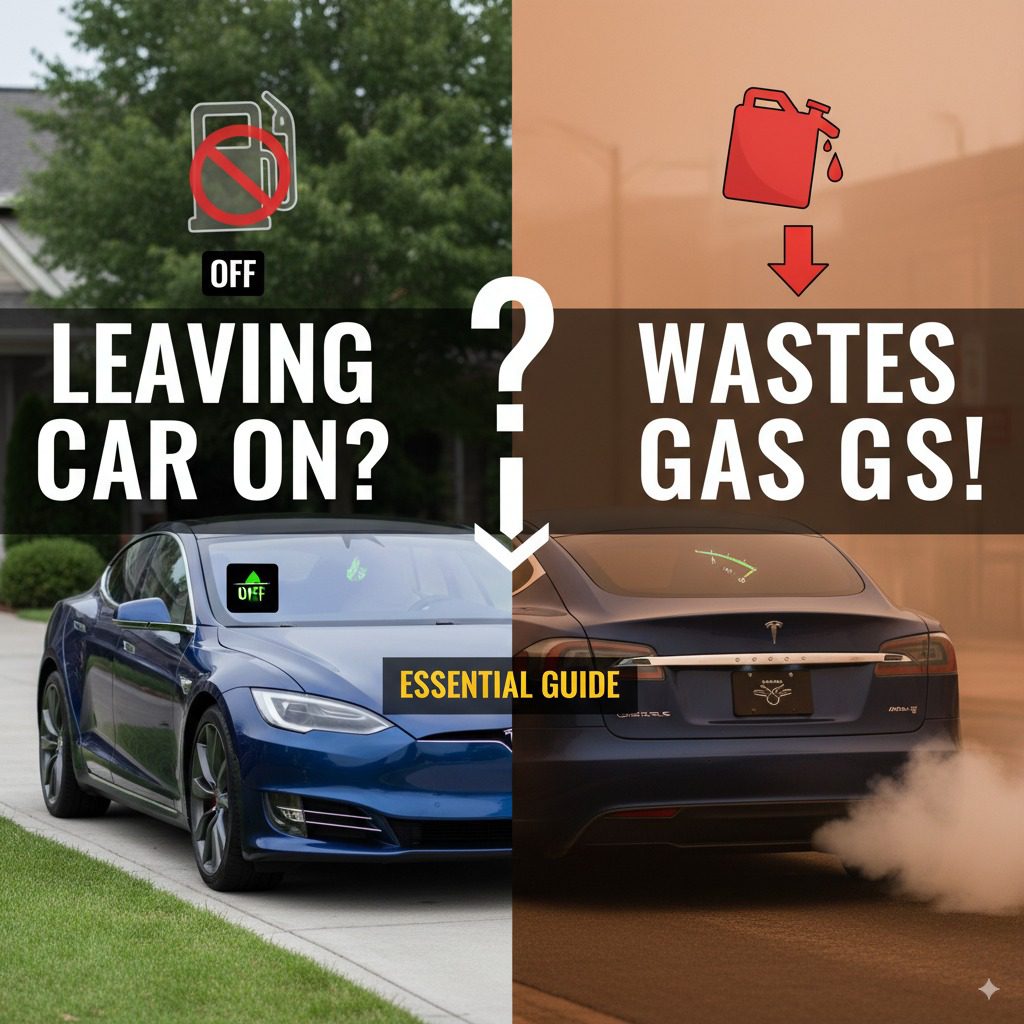
Does Leaving Your Car On Waste Gas? Cost by Vehicle Type
Yes, leaving your car running burns real fuel — a mid-size sedan uses roughly 0.3 to 0.5 gallons per hour at idle, more for an SUV or truck. The U.S. Department of Energy’s own research found idling past just 10 seconds already burns more fuel than restarting the engine, not the 30-second figure often repeated online. This guide covers exactly how much idling costs by vehicle type, when a short idle is genuinely fine, and how to build the habit of shutting off the engine instead.
Quick Answer
Yes — idling burns 0.2-1.0 gallons per hour depending on vehicle size. The DOE’s own research shows restarting the engine uses less fuel than idling past just 10 seconds, so shut it off for any stop longer than that, except in stop-and-go traffic where safety comes first.
Why Idling Your Car Wastes Gas
Think about it: when your car is running, even if you’re not moving, the engine is working. It needs fuel to keep those internal parts turning, the oil circulating, and everything powered up. This process, called idling, consumes gasoline without taking you anywhere. While newer cars are pretty good at managing this, there’s still a definite fuel cost involved.
The engine idles when the car is in gear but stopped, or in neutral/park but the engine is on. It’s essentially “treading water” in terms of fuel consumption. This fuel is burned to keep the engine from shutting off, maintaining power for systems like air conditioning, heating, and the car’s electrical components.
How Much Gas Does Idling Actually Use?
This is where things get interesting, and the answer isn’t a simple “a lot” or “a little.” It depends on several factors. Generally, a car at idle consumes about a quarter to one gallon of gas per hour. That might not sound like much on its own, but let’s put it into perspective.
Imagine you have a job where you often wait in your car for 15-30 minutes a few times a day. Over a week, that adds up quickly. For a more precise idea, here’s a general breakdown:
| Vehicle Type | Estimated Fuel Consumption (Gallons Per Hour) |
|---|---|
| Small Car (e.g., compact, economy) | 0.2 – 0.4 gallons |
| Mid-size Car (e.g., sedan) | 0.3 – 0.5 gallons |
| Large Car/SUV/Truck | 0.5 – 1.0 gallons |
| Older/Larger Engines | Can be higher than 1 gallon |
These are estimates, and the actual amount can vary based on engine size, whether the air conditioning or heating is on, and the car’s age and condition. For example, running the AC or defroster on a hot or cold day can significantly increase fuel consumption while idling.
Consider this: if your car uses 0.5 gallons per hour at idle and you idle for 10 minutes (which is 1/6th of an hour) each day, you’d be using about 0.08 gallons of gas daily. Over a year, that’s nearly 30 gallons just from those short daily idles! At an average gas price of, say, $3.50 per gallon, that’s over $100 wasted annually.
When is Idling Okay (and When to Turn Off the Engine)?
There are definitely times when letting your car idle is necessary or even recommended:
- Short Stops (less than 30 seconds): For very brief stops, like waiting for a light to change or pulling over for a moment, it’s generally fine to leave the engine on. Restarting the engine can sometimes use more fuel and cause more wear than a short idle period.
- Warming Up in Cold Weather (briefly): Modern cars don’t need long warm-ups. Letting the engine run for 30 seconds to a minute is usually enough to get the oil circulating properly. Driving gently will warm up the engine more effectively than just idling.
- Maintaining Battery Charge: If your car’s battery is low or you’re using a lot of electronics (like on a long trip with charging devices), letting the engine run can help recharge the battery.
- Traffic Jams: When you’re inching along in heavy traffic, it’s often safer and more practical to keep the engine running.
However, if you’re going to be stopped for more than a minute or two, it’s almost always better to turn off your engine. This includes:
- Waiting for someone to arrive.
- Picking up or dropping off someone who will be a while.
- Parking and waiting for an appointment or a call back.
- Excessive idling in a drive-through.
The U.S. Department of Energy’s own research (via Argonne National Laboratory) found that idling for as little as 10 seconds already burns more fuel than restarting the engine — not the 30-second figure sometimes repeated elsewhere. The one exception: don’t shut the engine off in stop-and-go traffic, since being able to move immediately matters more for safety than the small fuel savings.
Best Real-Time Fuel Economy Monitor Pick

ScanGauge SG2 Real-Time Fuel Economy Computer
Plugs into your OBD2 port and shows live MPG, so you can actually see idling drag your fuel economy down in real time instead of estimating it.
- Best for: drivers who want to see their exact idle-time fuel cost, not just an estimate
- Why we picked it: purpose-built for real-time fuel economy tracking, not a general diagnostic tool
- Main drawback: costs more than a basic code reader
Compare more fuel-tracking and diagnostic options
 Option 1 BlueDriver Pro Bluetooth Scanner
|
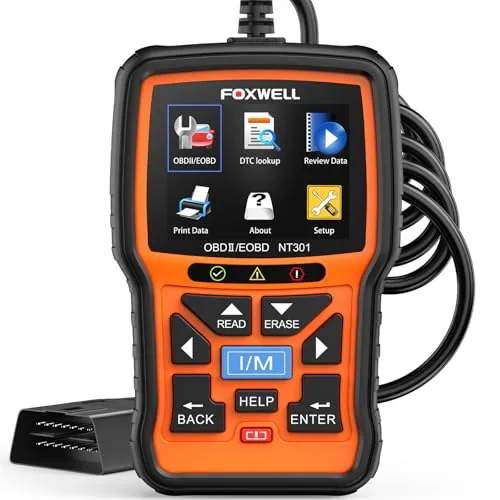 Option 2 FOXWELL NT301 Diagnostic Scanner
|
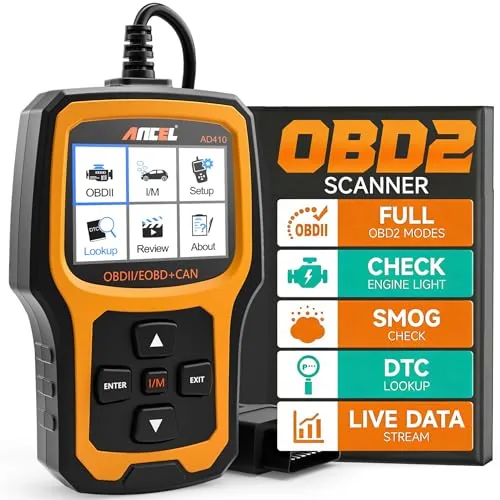 Option 3 ANCEL AD410 Enhanced Scanner
|
As an Amazon Associate we earn from qualifying purchases.
Beyond Wasted Gas: Other Downsides of Excessive Idling
While saving money on fuel is a big motivator, there are other reasons to rethink unnecessary idling. These can impact your car’s longevity and contribute to environmental issues.
Engine Wear and Tear
Though modern engines are robust, prolonged idling isn’t their most efficient operating condition in the long run.
- Incomplete Combustion: When an engine idles for a long time, especially when cold, it doesn’t reach its optimal operating temperature. This can lead to incomplete fuel combustion. Unburnt fuel can wash away lubricating oil from cylinder walls, increasing wear over time.
- Soot Buildup: Incomplete combustion can also lead to increased carbon and soot buildup. This can clog parts like fuel injectors and the exhaust system, potentially leading to costly repairs down the road.
- Spark Plug Fouling: Soot and carbon deposits can also form on spark plugs, leading to misfires and reduced engine performance.
For more technical details on engine operation and wear, checking resources like FuelEconomy.gov, a U.S. government website dedicated to fuel efficiency, can provide in-depth information.
📊 Idling an engine for as little as 10 seconds uses more fuel than stopping and restarting the vehicle, according to Department of Energy research. Source: U.S. Department of Energy, FOTW #1239.
Environmental Impact
When your car’s engine is running, it’s producing emissions. These include greenhouse gases like carbon dioxide ($text{CO}_2$) that contribute to climate change, and other pollutants like nitrogen oxides ($text{NO}_x$) and particulate matter that affect air quality and public health. Excessive idling means more of these harmful substances are released into the atmosphere without any benefit of transportation.
Reducing idling is a simple yet effective way for drivers to contribute to cleaner air. Many cities and states have anti-idling laws in place to combat air pollution, particularly around schools and sensitive areas. It’s good for your wallet and great for the planet.
Battery Strain
While idling does help charge the battery, leaving the engine running solely to power accessories like the radio or lights for extended periods can actually drain the battery faster than it charges, especially if the alternator is not producing much power at idle. If you need to use accessories for a long time without moving, turning the engine off and on periodically might be a better strategy, or using the car’s battery power sparingly.
Tips to Reduce Idling and Save Fuel
Making conscious choices to turn off your engine when it’s not necessary is the best way to cut down on wasted fuel and its negative impacts. Here are some practical tips you can start using today:
- Be Mindful of Your Stops: Before you stop, think about how long you’ll be stationary. If it’s more than a minute, plan to shut off the engine.
- Turn Off the Engine When Waiting: Whether you’re waiting for a passenger, a phone call, or an appointment, make it a habit to turn off your car.
- Drive Gently in Cold Weather: Instead of letting your car warm up for a long time, start it, let it run for about 30 seconds, and then drive gently until the engine reaches its normal operating temperature. The movement will warm it up far more effectively.
- Combine Errands: Plan your trips to minimize the number of times you stop and need to wait. Grouping your errands means fewer cold starts and less time spent idling. Think of it as a strategic driving game!
- Avoid Unnecessary Idling in Drive-Thrus: If the line is long, consider turning off your engine while you wait. Many drive-thrus don’t take long enough to warrant keeping the engine running the entire time.
Technology to Help You
Some modern vehicles come equipped with features designed to help reduce fuel consumption and emissions, including idling:
- Automatic Start-Stop Systems: These systems automatically shut off the engine when the car comes to a complete stop (like at a traffic light or in bumper-to-bumper traffic) and restart it when the brake pedal is released or the accelerator is pressed. They are designed to re-engage smoothly and quickly.
- Hybrid and Electric Vehicles: These vehicles are inherently more efficient. Hybrids often use their electric motors at low speeds or when idling, shutting off the gasoline engine entirely. Electric vehicles don’t run an engine at all, so idling isn’t an issue.
For those who don’t have these built-in features, the most effective tool is still driver awareness and good habits.
Understanding Your Car’s Fuel System
Knowing a bit about how your car uses fuel can make these tips even more impactful. At idle, the engine is running at its lowest speed (RPM – Revolutions Per Minute). Even at this low speed, the fuel injectors are still spraying a small amount of fuel into each cylinder to keep the engine turning. The amount of fuel injected is controlled by the engine’s computer (ECU) based on several sensors, but it’s always more than zero when the engine is on.
“Idling an engine for as little as 10 seconds will use more fuel than stopping and restarting the vehicle.”
To learn more about how your car’s fuel system works and how to maintain it for optimal efficiency, you can explore resources from organizations like the National Institute for Automotive Service Excellence (ASE), which provides information on automotive repair and maintenance.
Common Myths About Idling Debunked
There are a few common beliefs about warming up cars that are less relevant with modern vehicles. Let’s clear them up:
-
Myth: You need to let your car idle for 5-10 minutes to warm it up.
Fact: Modern cars with fuel injection and electronic controls don’t need this. Driving gently for a few minutes after starting is more effective and conserves fuel. -
Myth: It uses more gas to restart your engine than to idle for a short time.
Fact: Restarting does use a burst of fuel, but it’s less than idling for even 10 seconds, per DOE/Argonne research — not a full minute as some sources claim. If you’ll be stopped longer than about 10 seconds, it’s usually more efficient to turn off the engine. -
Myth: Idling doesn’t really use that much gas.
Fact: As we’ve seen, even a few minutes of idling each day can add up to gallons of wasted fuel and money over a year.
Putting It All Together: The Cost of Idling
Let’s recap the financial implications of unnecessary idling. If you drive a mid-size car that uses 0.4 gallons per hour at idle and you idle for an average of 15 minutes (0.25 hours) per day, five days a week, here’s the math:
- Daily fuel wasted: 0.25 hours 0.4 gallons/hour = 0.1 gallons
- Weekly fuel wasted: 0.1 gallons/day 5 days = 0.5 gallons
- Monthly fuel wasted: 0.5 gallons/week 4 weeks = 2 gallons
- Annual fuel wasted: 2 gallons/month 12 months = 24 gallons
If the average gas price is $3.70 per gallon, those 24 gallons would cost you:
24 gallons $3.70/gallon = $88.80 per year
This is a conservative estimate! If you idle for longer periods, more days a week, or drive a larger vehicle, that number can easily climb to $100, $200, or even more annually. Plus, you’re also contributing to wear and tear on your engine and emissions pollution.
For a broader look at whether leaving your car running at all is a good idea, see is it bad to leave your car running, or check our quick idling-cost breakdown for a faster read.
Frequently Asked Questions (FAQ)
Here are some common questions beginners have about car idling:
Is it bad for my car to turn it off and on frequently?
For modern cars, generally no. The wear and tear from starting an engine a few extra times a day is significantly less than the fuel you save and the reduced engine stress from prolonged idling. Battery technology has also improved, making frequent starts less of a strain.
How long should I let my car idle in very cold weather to warm it up?
For most modern cars, you only need to let it idle for about 30 seconds to a minute. This allows the oil to circulate properly. After that, start driving gently. Continuous idling in cold weather can actually cause fuel to condense on cylinder walls, which can be detrimental.
Does idling use more gas than accelerating and braking in traffic?
When you’re in stop-and-go traffic where you’re constantly accelerating and braking, it’s generally less fuel-efficient than maintaining a steady speed. However, prolonged idling at a complete stop uses fuel without moving you forward at all. If you’re stopped for more than 30 seconds to a minute, turning off the engine is usually the most fuel-efficient choice.
What about idling my car to run the air conditioning or heat? Is that okay?
Running the AC or heat while idling does increase fuel consumption. While it might be necessary for comfort or safety in extreme temperatures, try to minimize the time you do it. If you’re going to be stopped for an extended period, it’s better to turn off the engine and open a window or step out for a moment if safe to do so.
Will turning off my engine cause the battery to die?
This is a concern for some, but typically, turning off your engine for short periods when you’re stopped won’t cause your battery to die, especially if your battery is in good condition. The alternator is designed to recharge the battery while the engine is running. If you’re worried about battery life, get it tested at your next service.
Are there any cars that should idle for a long time?
Very old cars, particularly those with carburetors (which are rare in vehicles made after the mid-1990s), might have benefited from longer warm-up periods. However, for virtually all cars manufactured in the last 20-30 years, the advice to minimize idling is applicable. Electric vehicles don’t have this issue.
Conclusion
So, to answer the question directly: yes, leaving your car on unnecessarily does waste gas. It might seem like a small thing, but the cumulative effect of avoiding those moments of idle can lead to significant savings on fuel, reduce wear and tear on your engine, and contribute to cleaner air. By simply making a habit of turning off your engine when you plan to be stopped for more than a minute, you’re taking a smart step towards better car ownership and a more responsible impact on the environment.
Remember the tips: be mindful of your stops, turn off the engine when waiting, drive gently in the cold, and combine your errands. These small changes are easy to implement and will benefit both your wallet and your vehicle. Making these simple decisions will help you drive smarter and save money over time.
Products related to this article
Sponsored / affiliate links. As an Amazon Associate I earn from qualifying purchases. I may earn additional commission from eligible campaigns.