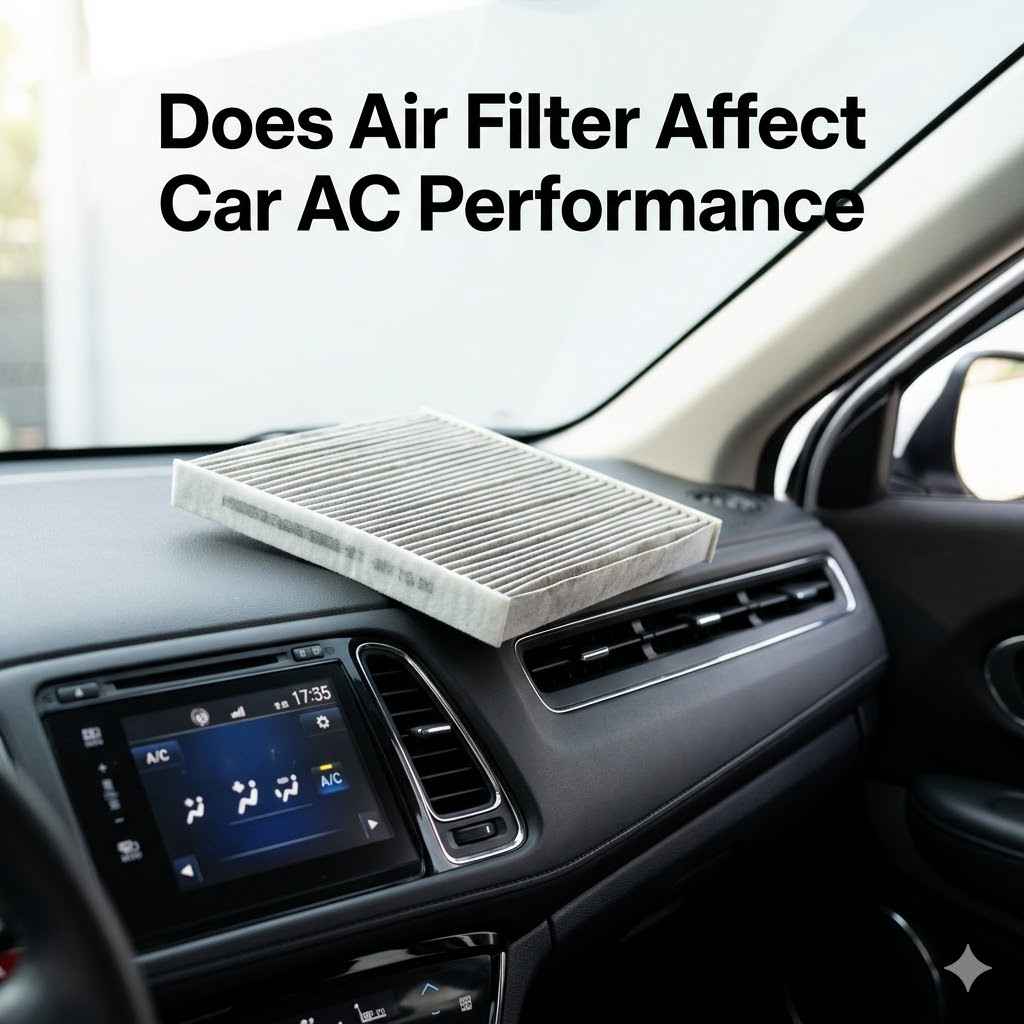
Does Air Filter Affect Car AC Performance
Many car owners wonder about their air conditioning. They ask, “Does Air Filter Affect Car AC Performance?” It sounds technical, but it’s actually quite simple! If your car’s AC isn’t as cool as it used to be, a dirty air filter could be the sneaky culprit.
Don’t worry if this seems confusing; we’ll break it down. This guide will show you exactly why it matters and how to fix it with easy steps. Let’s find out how a small part makes a big difference.
How Dirty Air Filters Impact Your Car’s AC
A clogged air filter is a common issue that can significantly hinder your car’s air conditioning system. When the filter is full of dust, dirt, and debris, it restricts the airflow into the cabin. This means the AC system has to work much harder to pull in the necessary air to cool your car.
Think of it like trying to breathe through a straw clogged with sand; it’s tough to get enough air. This extra strain can lead to poor cooling and even damage the AC components over time. Understanding this connection is key to keeping your car comfortable.
The Role of the Cabin Air Filter
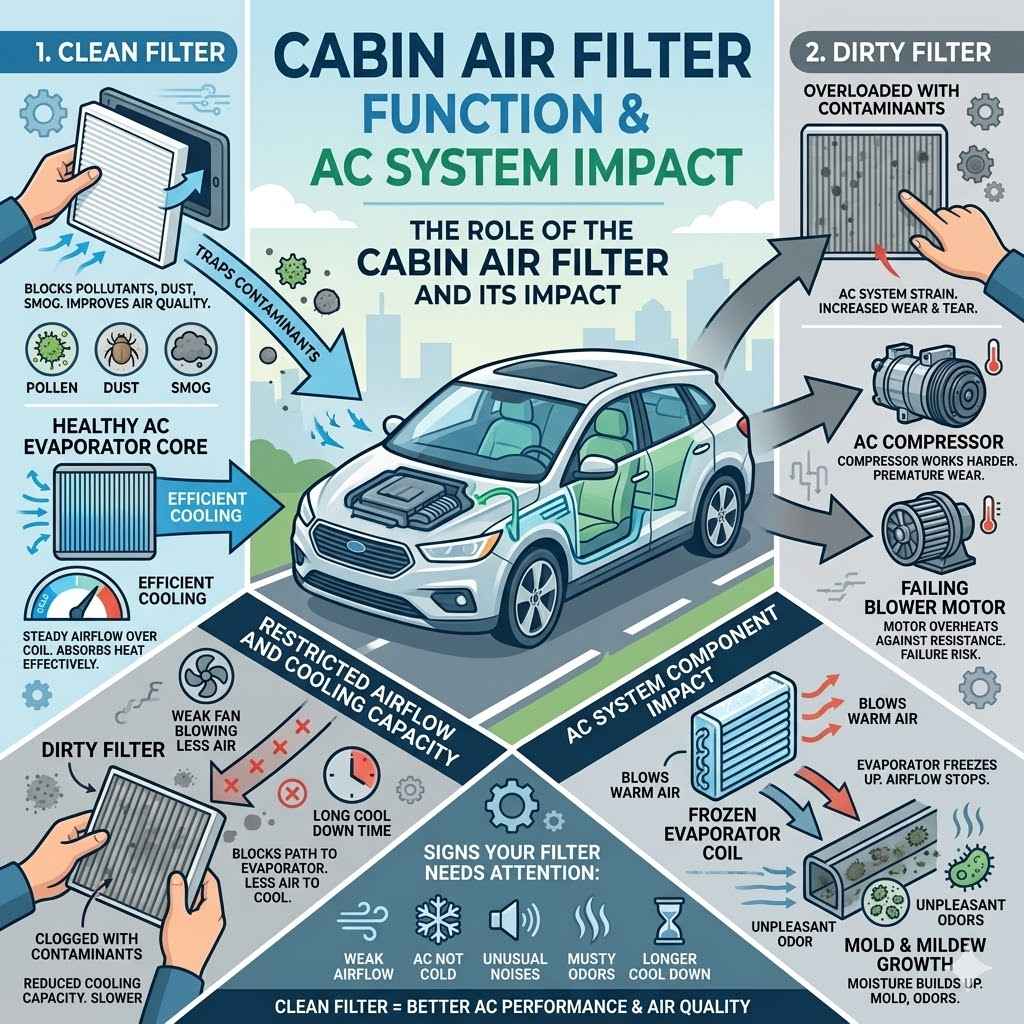
The cabin air filter is specifically designed to clean the air that enters your car’s interior. It traps pollen, dust, smog, and other tiny particles before they reach your vents. When this filter becomes overloaded with contaminants, it blocks the path of air trying to get to your AC’s evaporator core.
This core is where the cooling magic happens. If not enough air can pass through the evaporator, it can’t absorb heat effectively.
This restriction means your AC fan might blow less air, or the air it blows won’t be as cold. Some car owners notice their car takes longer to cool down on hot days. Others might hear unusual noises coming from the AC system.
These are all signs that the cabin air filter needs attention. Keeping this filter clean is a simple maintenance task that pays off in better AC performance and air quality inside your car.
Restricted Airflow and Cooling Capacity
When a cabin air filter is dirty, the volume of air moving through the HVAC system decreases. This directly impacts the AC’s ability to cool the car efficiently. The evaporator coil, which is responsible for removing heat from the air, needs a steady flow of air passing over it to work properly.
A blocked filter starves the evaporator of this crucial airflow.
The result is that the evaporator may freeze up. This is because the air isn’t moving fast enough to pick up the heat and prevent the moisture from condensing and freezing. A frozen evaporator coil completely stops air from flowing, and your AC will blow warm air.
Even before it freezes completely, the reduced airflow means the system is less effective. It has to run longer and harder to try and achieve the desired temperature, leading to increased wear and tear on the AC compressor and other parts.
Impact on AC System Components
A dirty air filter doesn’t just make your AC blow less cold air; it can also put a strain on various components of the AC system. The AC compressor is the heart of the system, pumping refrigerant to cool the air. When airflow is restricted, the system’s pressures can become unbalanced, making the compressor work harder than it should.
This excessive workload can lead to premature wear and tear on the compressor, potentially shortening its lifespan. The blower motor, which pushes air through the system, also has to work harder against the resistance of a clogged filter. Over time, this can cause the blower motor to overheat or fail.
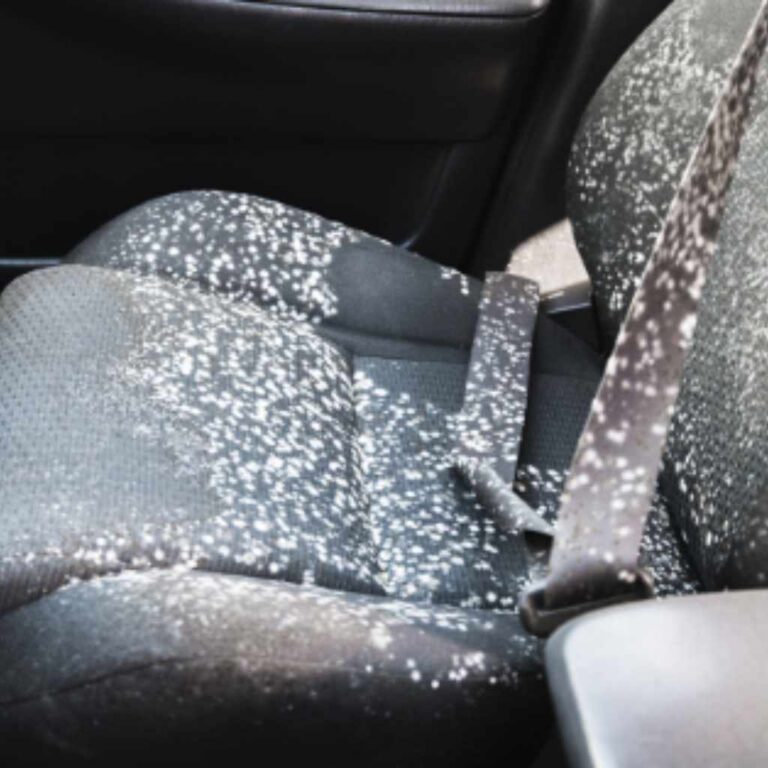
Furthermore, a lack of proper airflow can cause condensation to build up in places it shouldn’t, leading to mold and mildew growth, which can cause unpleasant odors in your car’s cabin.
Understanding Airflow Dynamics
Airflow is the fundamental principle behind how your car’s air conditioning system works. It’s a cycle that relies on air moving through different components to achieve cooling. First, air is drawn into the system.
Then, it passes through the cabin air filter, where it’s cleaned. After that, it flows over the evaporator coil, where it’s cooled by refrigerant. Finally, the cooled air is pushed into the car’s cabin by the blower motor.
The cabin air filter sits in the path of this air. If it’s clean, air passes through easily, allowing the AC system to perform optimally. However, as the filter collects dirt, dust, and debris, it becomes a bottleneck.
This restriction slows down the air and reduces the amount of air that can reach the evaporator. It’s like trying to fill a swimming pool with a garden hose that has a sock stuffed inside it; the water flow is dramatically reduced.
The Physics of Air Restriction
When air encounters resistance, like that from a clogged filter, its speed decreases, and its pressure can change. This is a basic principle in fluid dynamics. In the context of your car’s AC, a dirty cabin air filter creates significant resistance.
The blower motor, designed to move a certain volume of air, now has to push against this increased drag.
This struggle to move air affects the entire cooling cycle. The evaporator coil needs a constant flow of air to efficiently transfer heat from the cabin air to the refrigerant. With reduced airflow, the coil has less contact with the incoming air.
This means less heat is absorbed, and the air exiting the system is warmer. The system might try to compensate by running the compressor longer, but without adequate airflow, its effectiveness is severely limited.
Consequences of Reduced Air Volume
Reduced air volume from a clogged filter leads to several negative consequences for your AC. The most noticeable is that your car simply won’t cool down as quickly or as effectively on hot days. You might feel a weak stream of air from the vents, even on the highest fan setting.
This can be incredibly frustrating when you’re trying to escape the heat.
Beyond comfort, the reduced airflow can also lead to component strain. The blower motor motor can overheat as it works harder. The AC compressor may experience increased pressure, leading to potential damage.
In some cases, ice can form on the evaporator coil because the air isn’t moving fast enough to carry away the moisture. This ice buildup can completely block airflow, leading to a temporary AC failure until it thaws. It’s a cascade of problems stemming from a seemingly minor issue.
Signs Your Air Filter Needs Replacement
Recognizing the signs that your car’s cabin air filter needs replacing is crucial for maintaining your AC’s performance. Often, the first indication is a noticeable drop in the volume of air coming from your vents. Even when you turn your AC or heater to the highest setting, the airflow feels weak and uninspired.
Another common sign is an unusual odor emanating from the vents. A dirty air filter can trap not only dust but also mold, mildew, and other allergens. As these build up, they can begin to smell unpleasant, especially when the air is circulated through your car.
You might also notice that your car takes much longer to cool down on hot days, or that the defroster doesn’t clear your windows as quickly in cold weather.
Weak Airflow From Vents
This is perhaps the most direct and telltale sign of a clogged cabin air filter. When you turn on your car’s fan, whether for AC or heating, you expect a robust stream of air to circulate through the cabin. If the air coming from the vents feels weak, like a gentle breeze rather than a strong gust, it’s a strong indicator that something is obstructing the airflow.
The cabin air filter is positioned directly in the path of this air. As it becomes saturated with dirt, dust, leaves, and other debris, it acts like a wall, preventing the fan from pushing air through efficiently. The blower motor is still working, but it’s struggling against the resistance.
This results in significantly reduced air volume reaching your face and the rest of the car’s interior, making the AC or heating system feel ineffective.
Unpleasant Odors
A dirty cabin air filter can become a breeding ground for bacteria, mold, and mildew. These microscopic organisms thrive in the trapped moisture and organic matter found in a used filter. As air passes through the filter, it picks up these contaminants and circulates them throughout your car’s cabin.
The result is often a musty, stale, or even foul odor that seems to come from nowhere. This is especially noticeable when you first turn on the AC or heater. Not only is this unpleasant, but it can also be a health concern, especially for individuals with allergies or respiratory issues.
Replacing the cabin air filter can effectively eliminate these odors by removing the source of the contaminants.
Reduced Cooling or Heating Efficiency
When the cabin air filter is clogged, it directly impacts the efficiency of your car’s entire climate control system. For the air conditioning, the evaporator coil cannot effectively cool the air if there isn’t enough of it passing over it. This means the system has to run for much longer to achieve a comfortable temperature, and it may never reach the desired coolness on extremely hot days.
Similarly, for the heating system, the heater core needs proper airflow to transfer heat into the cabin. A blocked filter restricts this flow, making your car take much longer to warm up. You might find yourself sitting in a cold car for an extended period, even with the heater on full blast.
This inefficiency means your engine is working harder, and you’re not getting the comfort you expect from your vehicle’s climate control.
The Easy Fix Replacing Your Air Filter
Replacing your car’s cabin air filter is a straightforward maintenance task that most car owners can do themselves with minimal tools and effort. It’s a very rewarding DIY project that can significantly improve your car’s AC performance and air quality. The process generally involves locating the filter housing, removing the old filter, and installing the new one.
This simple replacement can make a noticeable difference in how quickly and effectively your AC cools your car. It also helps ensure you’re breathing cleaner air inside your vehicle. Many car manufacturers place the cabin air filter in an easily accessible location, such as behind the glove box or under the dashboard.
Consult your car’s owner’s manual for the exact location and specific instructions for your model.
Locating the Filter Housing
The first step in replacing your cabin air filter is to find its housing. This location varies significantly between car makes and models, but there are common spots to check. Most often, you’ll find the cabin air filter located behind the glove compartment.
To access it, you might need to remove the glove box itself or a small panel beneath it.
Another frequent location is under the dashboard, on the passenger side. Sometimes, it’s located in the engine bay, near the firewall, but this is less common for cabin filters. Your car’s owner’s manual is the best resource for precise instructions.
It will usually have a diagram showing the exact location and how to open the housing, which might be secured with clips or screws.
Step-by-Step Replacement Process
Once you’ve located the filter housing, the replacement is typically a simple process. First, open the housing. If it’s behind the glove box, you might need to press in on the sides to release it or unscrew a few small bolts.
If it’s a panel, you might need a screwdriver. Once open, you’ll see the old, likely dirty, cabin air filter.
Pull the old filter straight out. Note the direction of airflow indicated by an arrow on the filter frame. You’ll want to install the new filter with the arrow pointing in the same direction.
Place the new filter into the housing, ensuring it fits snugly. Then, close the housing, reattach any panels or the glove box, and you’re done! It’s a task that often takes less than 15 minutes.
Choosing the Right Replacement Filter
When selecting a
Standard filters are effective at trapping particles like dust and pollen. Activated carbon filters offer an additional benefit: they can also absorb odors, gases, and pollutants from the air, providing a cleaner and fresher cabin environment. While slightly more expensive, activated carbon filters are often worth the investment for enhanced air quality, especially if you live in an area with heavy traffic or pollution.
Does Air Filter Affect Car AC Performance? The Answer
Yes, absolutely! The question Does Air Filter Affect Car AC Performance? has a definitive positive answer. A clean cabin air filter is essential for your car’s air conditioning to function at its best.
When this filter becomes clogged with debris, it restricts the airflow that the AC system needs to effectively cool the air. This restriction forces the AC system to work harder, reduces cooling efficiency, and can even lead to premature wear on vital components.
Regularly checking and replacing your cabin air filter is a simple yet critical piece of car maintenance. It’s an easy DIY task that doesn’t require special tools and can save you money on costly AC repairs down the line. By ensuring a clear path for air, you keep your AC system running smoothly, providing you with optimal cooling comfort and better air quality inside your vehicle.
Don’t underestimate the power of a clean air filter!
Case Study Air Filter Impact on AC
Consider a scenario with a 2018 Honda Civic. The owner noticed the AC was blowing weaker than usual during the summer months. It took considerably longer for the car to cool down, and on particularly hot days, it struggled to maintain a comfortable temperature.
The owner initially suspected a refrigerant leak or a failing compressor, which are costly possibilities.
After about 30 minutes of research, the owner decided to check the cabin air filter as a first step. Upon removal, the filter was found to be heavily soiled with leaves, dust, and general road grime. It was so clogged that very little air could pass through it.
The owner
Statistic Air Filter Replacement Frequency
According to various automotive maintenance guides and industry recommendations, cabin air filters should ideally be replaced every 12,000 to 15,000 miles or at least once a year. However, driving in dusty or polluted environments can necessitate more frequent changes, potentially every 6,000 to 8,000 miles.
A survey by a major automotive parts retailer found that only about 40% of drivers adhere to these recommended
The Link Between Engine Air Filters and AC
While the cabin air filter is directly responsible for the air entering your car’s interior and impacting the AC’s performance, it’s important to distinguish it from the engine air filter. The engine air filter’s primary job is to protect your car’s engine from dirt and debris. It ensures that only clean air enters the engine for combustion.
However, there is an indirect connection. If the engine air filter is severely clogged, it can affect the overall performance and fuel efficiency of your vehicle. A struggling engine might mean the alternator has to work harder, and the alternator powers many of the car’s electrical systems, including the AC.
While not a direct cause of AC issues, a neglected engine air filter contributes to a car’s overall strain, which can indirectly impact the AC’s ability to operate at peak performance.
Engine Air Filter Function
The engine air filter is a critical component that ensures the longevity and efficiency of your car’s engine. Its sole purpose is to prevent harmful particles, such as dust, dirt, insects, and road debris, from entering the engine’s combustion chamber. These particles can cause significant damage to internal engine components if they make their way in.
Clean air is essential for efficient combustion. When the engine air filter is clean, it allows a sufficient volume of air to enter the engine, enabling optimal fuel burning. This leads to better engine performance, improved fuel economy, and lower emissions.
A clogged engine air filter restricts airflow, making the engine work harder and less efficiently. This can manifest as a loss of power, hesitation during acceleration, and decreased miles per gallon.
Indirect Impact on AC Systems
The connection between the engine air filter and the AC system is indirect but still relevant. The engine’s alternator is responsible for generating electricity to power various car systems, including the air conditioning compressor, fans, and control modules. If the engine is struggling due to a clogged air filter, it may not be able to generate enough power efficiently.
This reduced electrical output can sometimes affect the performance of the AC system. For instance, the AC compressor clutch might not engage properly, or the blower fan might run at a lower speed than commanded. Furthermore, if the engine is running inefficiently and consuming more fuel, it could indirectly put more strain on the overall vehicle’s systems.
Therefore, maintaining both the engine air filter and the cabin air filter is crucial for the optimal operation of all vehicle components, including the AC.
Factors Affecting Filter Lifespan
Several factors can influence how long your cabin air filter will last before needing
The amount of time you spend driving also plays a role. Someone who commutes long distances daily will accumulate more debris in their filter than someone who only uses their car for short errands. The type of filter itself can also impact its lifespan, with some premium filters designed for longer service life.
Driving Environment
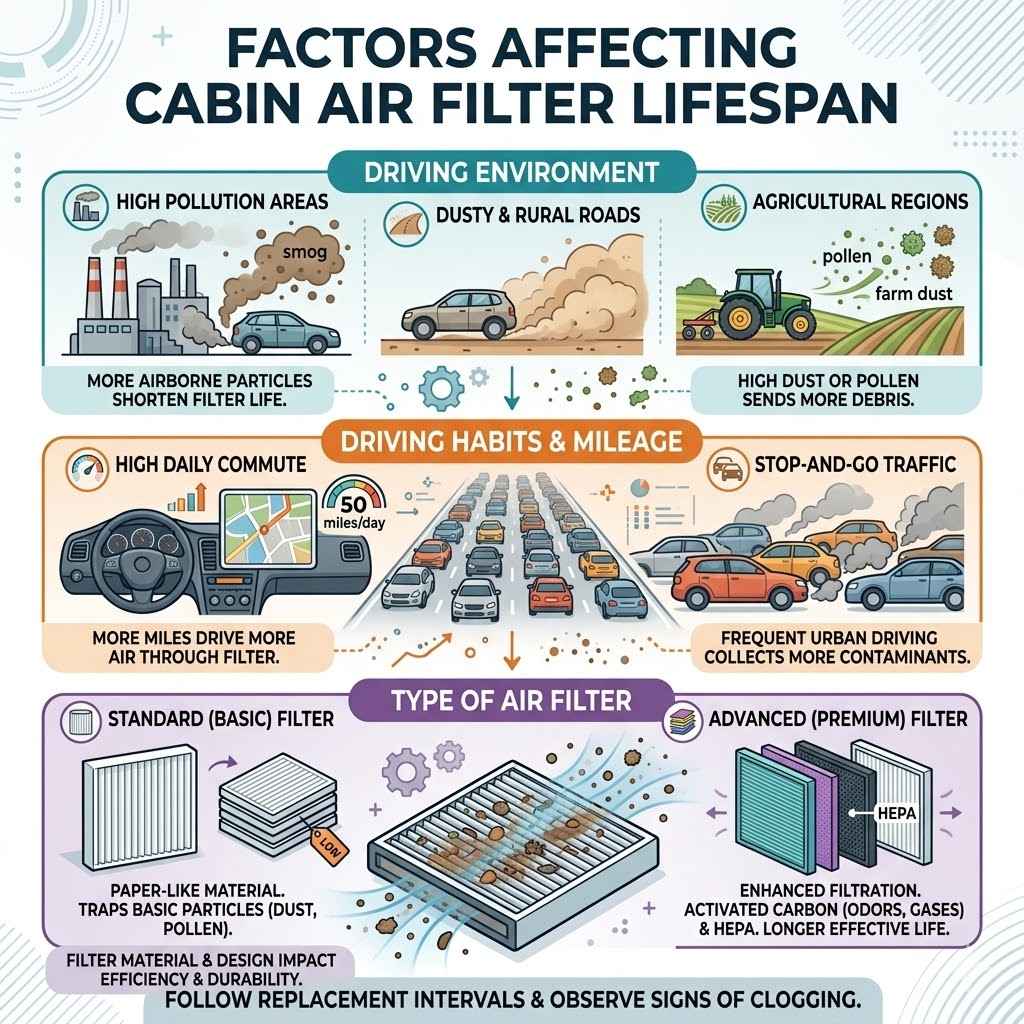
Your driving environment is a primary determinant of your cabin air filter’s lifespan. Driving in areas with a lot of airborne particles, such as deserts, agricultural regions, or cities with heavy traffic and industrial activity, will cause the filter to become saturated with contaminants much more quickly. These particles include dust, pollen, smog, exhaust fumes, and other microscopic debris.
For example, a driver who frequently travels on unpaved roads will encounter significantly more dust than someone who primarily drives on well-maintained highways. Similarly, living in a region prone to wildfires or dust storms will dramatically shorten the filter’s effective life. In such environments, checking and replacing the cabin air filter more often than the standard recommendation is wise to maintain AC performance and air quality.
Driving Habits and Mileage
Your driving habits and the total mileage you accumulate also directly affect how quickly your cabin air filter degrades. The more miles you drive, the more air is processed through the filter, and thus, the more debris it collects. A daily commuter driving 50 miles each way will fill up their filter much faster than a weekend driver who only puts on a few hundred miles a month.
Additionally, if your driving involves a lot of stop-and-go traffic, especially in urban areas, the filter will be exposed to more exhaust fumes and particulate matter than steady highway driving. Therefore, it’s not just about the calendar year; it’s about the actual usage your vehicle receives. Following mileage-based replacement intervals is a good guideline, but observing the signs of a clogged filter is even more important.
Type of Air Filter
The type of cabin air filter you choose can also influence its lifespan and performance. Standard, basic cabin air filters are typically made from paper-like material and are designed to trap common airborne particles like dust and pollen. These are generally the most affordable option.
More advanced filters, such as those with activated carbon or HEPA (High-Efficiency Particulate Air) layers, offer enhanced filtration capabilities. Activated carbon filters are particularly effective at absorbing odors, gases, and pollutants from the air, providing fresher air within the cabin. While these advanced filters may cost more initially, they often provide superior air quality and can sometimes have a slightly longer effective lifespan in certain conditions, although they still need regular replacement.
Frequently Asked Questions
Question: How often should I replace my car’s cabin air filter
Answer: It is generally recommended to replace your cabin air filter every 12,000 to 15,000 miles or at least once a year. However, if you drive in dusty or polluted areas, you may need to replace it more frequently, such as every 6,000 to 8,000 miles.
Question: Can a dirty air filter damage my AC system
Answer: Yes, a very dirty and clogged air filter can put a strain on your AC system. It restricts airflow, making the compressor and blower motor work harder, which can lead to premature wear and tear or overheating.
Question: Will replacing the cabin air filter really make my AC colder
Answer: Yes, replacing a clogged cabin air filter can significantly improve your AC’s cooling performance. By restoring proper airflow, the AC system can cool the air more efficiently, leading to colder air blowing from your vents.
Question: What is the difference between an engine air filter and a cabin air filter
Answer: An engine air filter cleans the air going into your car’s engine for combustion, while a cabin air filter cleans the air that comes into your car’s passenger compartment for you to breathe.
Question: Can I just clean my cabin air filter instead of replacing it
Answer: While you might be able to rinse off some surface dust from certain types of filters, it’s generally not recommended to clean and reuse a cabin air filter. They are designed to trap fine particles, and cleaning them often doesn’t restore their full filtering capability and can even damage the filter material.
Final Thoughts
So, does air filter affect car AC performance? Yes, it absolutely does. A clean cabin air filter is vital for your AC to work well.
When it gets dirty, airflow drops, making your AC less effective and straining its parts. Replacing it is an easy fix that brings back cool air and better air quality.