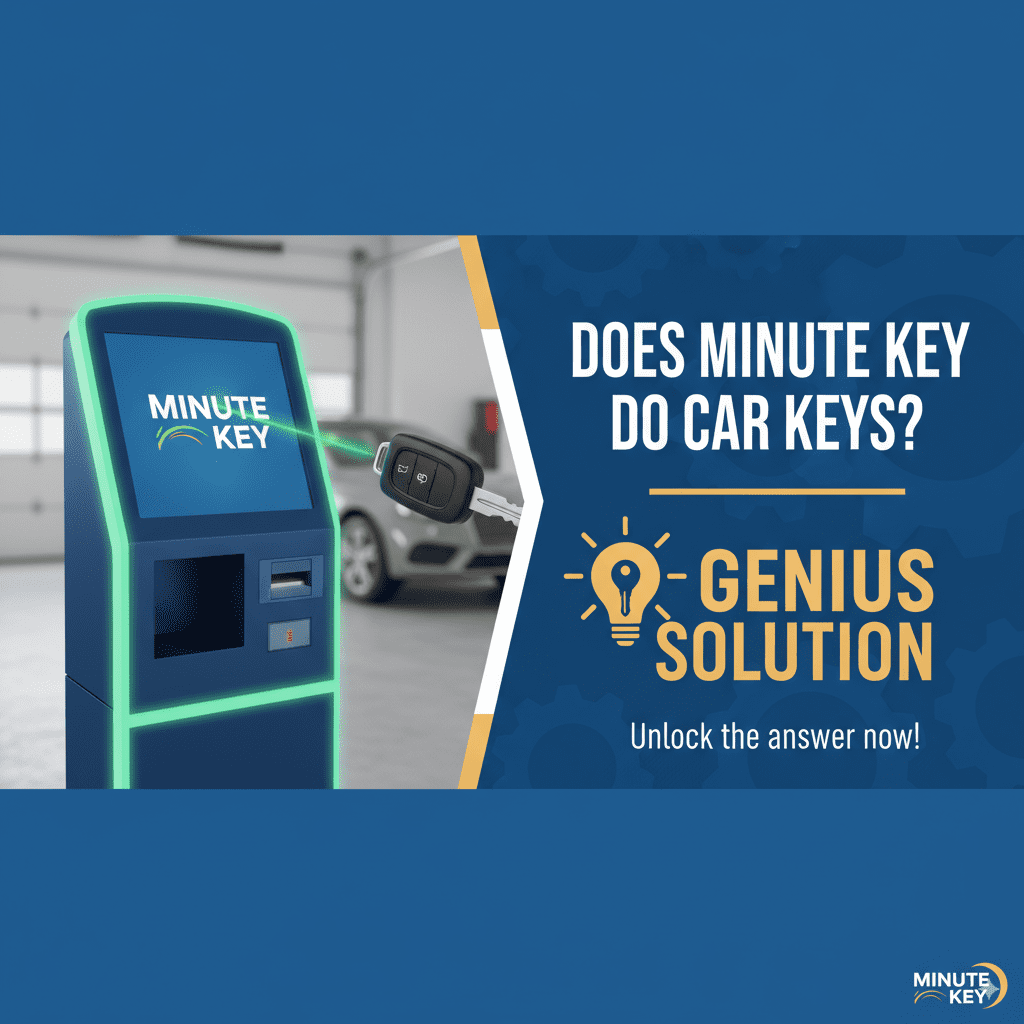
Does Minute Key Do Car Keys? Genius Solution
Yes, while Minute Key is known for duplicating house keys, they generally do not create or program new car keys for most vehicles. Their primary service focuses on basic key cutting for residential non-transponder keys. For car keys, particularly those with chips or remote fobs, you’ll typically need to visit a dealership or a specialized automotive locksmith.
Hey there, homeowners! Tanim here, your go-to guide for all things cozy and warm in your home. Sometimes, the little things that keep our homes running smoothly can be a bit confusing, right? Like figuring out when it’s time for a new furnace filter or how to get the most out of your space heater. But today, we’re tackling a different kind of home-related puzzle – one that can leave you stranded if you’re not careful. Have you ever found yourself needing a car key and wondered if that familiar blue kiosk, Minute Key, could be your quick stop?
It’s a common question, especially when you’re in a pinch and need a replacement fast. Many of us know Minute Key for their speedy house key duplication, so it’s natural to wonder if they extend that convenience to our vehicles. Let’s clear up this common confusion and explore your best options for getting a new set of car keys without any hassle. We’ll break down exactly what services Minute Key offers and provide you with straightforward solutions for all your car key needs.
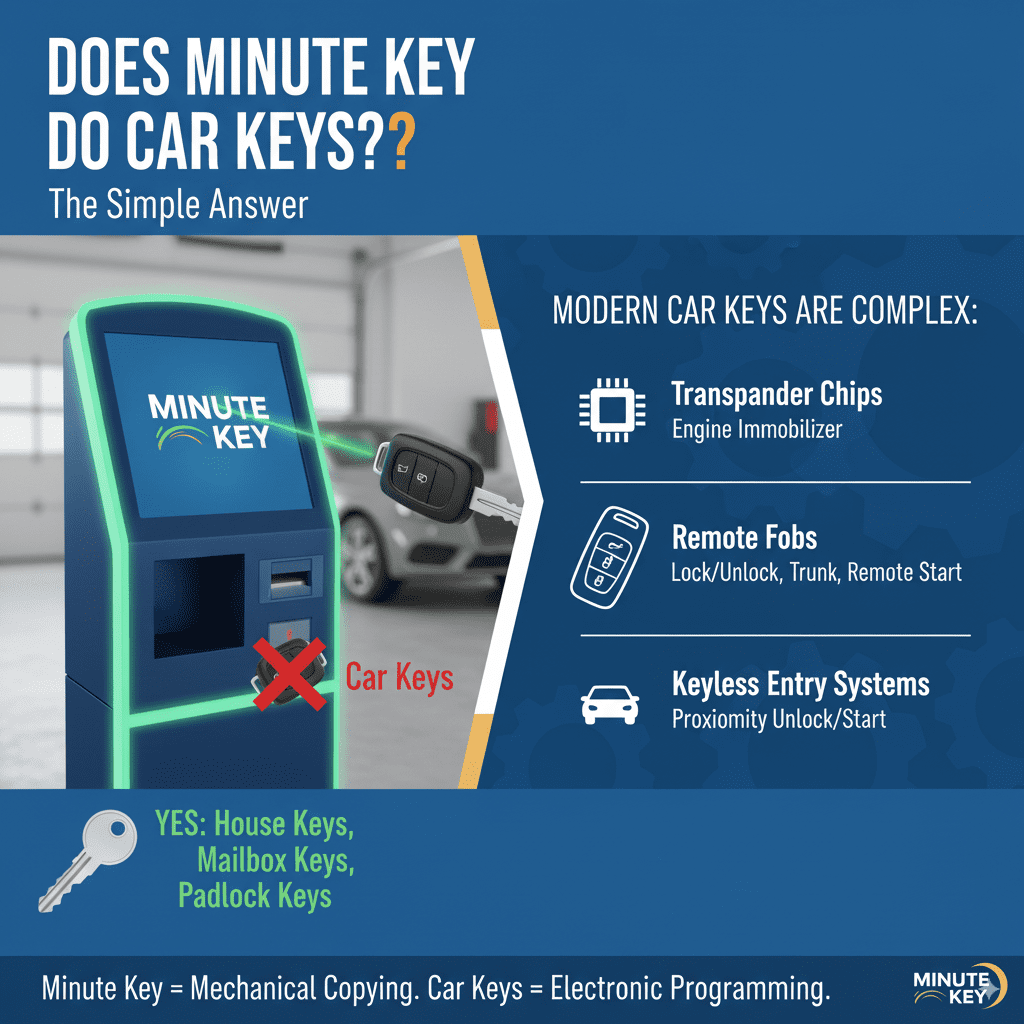
Does Minute Key Do Car Keys? The Simple Answer
When you encounter the bright blue Minute Key kiosks, often found in convenient locations like Walmart or Home Depot, your first thought might be about all the keys you can get copied. They’re brilliant for house keys, mailbox keys, and even some basic padlock keys. However, the services offered by Minute Key services generally do not extend to car keys. Traditional car keys without electronic components might, in rare instances, be cut by a locksmith’s business, but the automated Minute Key kiosks themselves are not equipped to handle the complexities involved with modern automotive keys.
Modern car keys are far more sophisticated than your average house key. They often contain:
- Transponder Chips: These are small electronic chips embedded in the key that communicate with your car’s immobilizer system. Without the correct chip and programming, your car simply won’t start, even if the key physically turns in the ignition.
- Remote Fobs: Many keys are now integrated into a remote fob that controls door locking, unlocking, trunk release, and sometimes even remote start.
- Keyless Entry Systems: These systems use proximity to unlock and start your car without a physical key at all, relying on electronic signals.
Minute Key kiosks primarily use a process of mechanical key duplication, essentially copying the existing cuts of a key. This method is not suitable for programming transponder chips or creating new remote fobs, as these processes require specialized diagnostic equipment and software that connect directly to your car’s computer system.
Understanding Car Key Technologies
To really understand why Minute Key doesn’t typically handle car keys, it’s helpful to know a bit about how car keys work these days. It’s not like the old days with just a metal key!
Types of Car Keys and Their Technology
Car keys have evolved significantly. Here’s a quick rundown:
- Standard Metal Keys: These are the basic keys that only open doors and start the ignition. They don’t have any electronic components. While theoretically a skilled locksmith could cut one if they had the right key blank and cutting machine, the automated Minute Key kiosks are not designed for this.
- Transponder Keys: These are probably the most common type of car key you’ll encounter today. They have a small chip inside that sends a radio signal to your car’s immobilizer. The car’s computer must recognize this signal for the engine to start. If the chip isn’t programmed correctly, the car won’t start.
- Remote Key Fobs: These combine a key (often a transponder key) with a remote control for locking/unlocking doors, and sometimes other functions. These are essentially small electronic devices.
- Smart Keys / Keyless Entry: These allow you to start your car with the push of a button without inserting a key. You carry a fob, and the car detects its presence.
The programming for transponder keys and smart keys is what makes them different. It’s like giving your car a secret password only its designated key can say. Minute Key kiosks don’t have the ‘vocabulary’ or the ‘decoder ring’ for these car passwords.
Why This Matters for Key Duplication
Because of these technologies, simply cutting a new metal part of the key isn’t enough. Even if you have a working transponder key, making a spare requires not just cutting the key blade to match the old one, but also copying the unique data from the original transponder chip to a new, blank programmed chip, or programming a new chip directly to your car. This is a process that requires specialized equipment and software, which is a significant barrier for a self-service kiosk designed for simple mechanical duplication.
Where Can You Get Your Car Keys Made? Your Genius Solutions
So, if Minute Key isn’t the place for car keys, where should you turn? Don’t worry, you have several excellent options, and we’ll explore the best way to get you back on the road with a working key.
1. Your Car Dealership
Pros:
- Guaranteed compatibility and correct programming.
- Access to all key types, including the latest models and advanced features.
- Often the most secure and reliable option, especially for newer or luxury vehicles.
Cons:
- Usually the most expensive option.
- Can be time-consuming, often requiring an appointment and a wait.
When to Choose: If you have a very new car, a luxury vehicle, or a complex keyless entry system and want the absolute certainty of a factory-matched key. It’s also a good choice if you’ve lost all your keys and need a completely new set programmed.
2. Automotive Locksmiths
Pros:
- Can often be more affordable than dealerships.
- Faster service, with many offering mobile services that come to you.
- Can handle a wide range of car makes and models, including transponder keys, remotes, and even ignition repair.
- Some locksmiths can create keys from your car’s VIN (Vehicle Identification Number) if you’ve lost all keys.
Cons:
- Quality and expertise can vary between locksmiths; research is recommended.
- May not have access to the very latest key technology for the newest car models compared to dealerships.
When to Choose: This is often the sweet spot for many drivers. If you need a spare key, a replacement for a lost key, or have a car that’s a few years old, an automotive locksmith is an excellent, cost-effective choice. Look for locksmiths that specialize in automotive work and have good reviews.
The Automotive Key Management Association (AKMA) can be a good resource for finding reputable automotive locksmiths in your area. They also offer insights into key technologies.
3. Online Retailers and Key Cutting Services
Pros:
- Can sometimes offer very competitive prices for key blanks and fobs.
- Convenient to order from home.
Cons:
- Requires you to find a separate service to cut and program the key, which can be tricky.
- Not all online key blanks are compatible with all programming machines.
- You’ll still need to factor in the cost and effort of programming, which can negate initial savings.
When to Choose: This is generally less recommended for beginners due to the added complexity. If you’re very specific about the blank you need and have a reliable local locksmith or auto shop that can program it, it might save money. However, for ease and certainty, stick with dealerships or specialized automotive locksmiths.
Step-by-Step Guide: Getting a New Car Key
If you need a new car key, don’t fret! Here’s a simple, step-by-step approach to make the process smooth and stress-free.
Step 1: Identify Your Car and Key Type
First, know your ride! You’ll need:
- The year, make, and model of your car.
- Whether your current key is a standard metal key, a transponder key, a remote fob, or a smart key. Look for a small chip or buttons on the key.
- If possible, have a working key with you. If you’ve lost all keys, you’ll need your Vehicle Identification Number (VIN). You can usually find this on your dashboard (visible through the windshield) or on your car’s registration or insurance documents.
Step 2: Gather Necessary Documentation
Most reputable locksmiths and dealerships will require proof of ownership to ensure they are not making keys for a stolen vehicle. Be prepared to show:
- Proof of ownership (e.g., your car’s title or registration).
- Your driver’s license or other government-issued ID.
Step 3: Choose Your Service Provider
Based on our earlier discussion, decide whether a dealership or an automotive locksmith is the best fit for your needs and budget.
- For Dealerships: Call their service department. Explain what you need (e.g., “I need to get a replacement transponder key for a 2018 Toyota Camry”) and ask about availability, pricing, and appointment scheduling.
- For Automotive Locksmiths: Search online for “automotive locksmith near me” or “car key replacement [your city]”. Look for businesses with good reviews and those that specifically advertise automotive key services. Call a few to compare prices and turnaround times.
Step 4: Get a Quote and Schedule Service
Once you’ve chosen a provider:
- Get a firm quote that includes the cost of the key, cutting, programming, and any labor charges.
- Schedule an appointment. If using a mobile locksmith, confirm they can come to your location.
Step 5: Key Cutting and Programming
This is where the magic happens! The locksmith or dealership technician will:
- Cut the physical key blade (if applicable).
- Connect their programming equipment to your car’s OBD-II port (usually under the dashboard).
- Use specialized software to program the transponder chip, remote functions, or smart key fob to your car’s unique immobilizer system. This process usually takes anywhere from 15 minutes to an hour, depending on the vehicle and the complexity of the key.
Step 6: Test the New Key
Before you leave the dealership or the mobile locksmith departs, make sure to test your new key thoroughly!
- Does it start the car?
- Do the door locks engage and disengage correctly using the remote or smart key functions?
- Does the ignition turn smoothly?
If anything isn’t working as expected, the technician should be able to troubleshoot and fix it on the spot.
Cost Considerations
The price of a replacement car key can vary significantly. Here’s a general idea:
| Service Type | Estimated Cost Range | Notes |
|---|---|---|
| Standard Car Key (Metal, no chip) | $30 – $100 | Rare nowadays, but simpler if needed. |
| Transponder Key (Cut & Programmed) | $75 – $250 | This is for keys with simple chips. |
| Remote Key Fob (Cut & Programmed) | $150 – $400 | Includes remote functions like lock/unlock. |
| Smart Key / Keyless Entry Fob | $200 – $600+ | The most advanced and costly, depends on car brand. |
| Lost All Keys (Key, Programming & possibly Immobilizer Reset) | $300 – $1000+ | Most expensive scenario, involves more complex work. |
As you can see, the technology embedded in the key is the main driver of cost. Always get a written quote beforehand to avoid surprises!
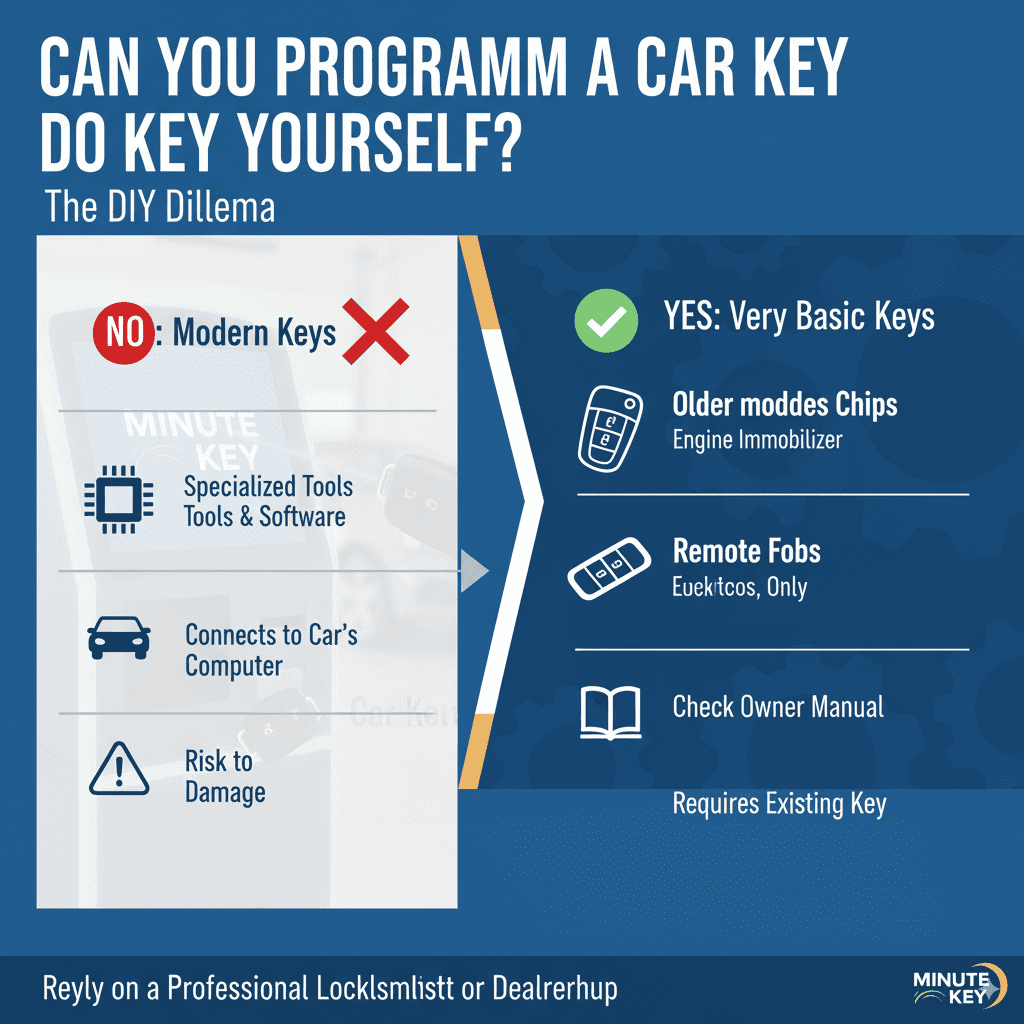
Can You Program a Car Key Yourself?
For most modern car keys, especially those with transponder chips or integrated fobs, you cannot program them yourself. The process requires specialized diagnostic tools and software that directly interface with your car’s computer system. These tools are expensive and require significant technical knowledge to operate correctly. Attempting to program a key without the proper equipment could potentially damage your car’s electronics.
However, there are a few exceptions for very basic transponder keys on certain older car models. Sometimes, there’s a sequence of turning the ignition on and off, and locking/unlocking doors that can program a new key. This information is vehicle-specific and often found in your owner’s manual or online forums dedicated to your car model. Even then, it often requires an already programmed key to “teach” the car the new key.
For the average car owner and for most situations, relying on a professional automotive locksmith or dealership is the safest and most reliable way to get your car keys programmed.
Frequently Asked Questions (FAQ)
Q1: Can Minute Key cut a spare car key?
A1: No, Minute Key kiosks are designed for duplicating basic residential keys and do not have the equipment or software to cut or program car keys, especially those with transponder chips or remote functions.
Q2: What happens if my car key breaks?
A2: If your car key breaks, you’ll need a replacement. Your best options are to visit a car dealership or an automotive locksmith. They can cut and program a new key for you based on your car’s make, model, and year.
Q3: How much does it cost to replace a car key?
A3: The cost varies widely depending on the type of key. A basic transponder key might cost $75-$250, while a smart key or keyless entry fob could range from $200 to $600 or more. Dealerships are usually more expensive than automotive locksmiths.
Q4: Can I get a new car key if I lost all my original keys?
A4: Yes, most automotive locksmiths and dealerships can create a new key even if you don’t have a working original. This process is more complex and usually requires your car’s VIN and proof of ownership. It will also be more expensive.
Q5: How long does it take to get a new car key made?
A5: It typically takes about 30 minutes to an hour at a dealership or with a mobile locksmith to cut and program a new car key, assuming they have the necessary parts in stock and you have your documentation ready.
Q6: Are online car key replacement services reliable?
A6: Online services can provide key blanks or fobs at a lower cost, but you’ll still need to find a qualified local locksmith or auto shop to cut and program it. This adds complexity and potential compatibility issues, so they aren’t always the most straightforward solution.
Conclusion
Navigating the world of car keys might seem daunting, especially when you’re used to the convenience of services like Minute Key for your house keys. The takeaway is clear: while Minute Key is your trusted friend for home keys, they aren’t equipped for the advanced technology found in modern car keys. For any automotive key needs – whether it’s a simple spare, a replacement for a lost or broken key, or a complex smart key system – you’ll get the best and most reliable service from either your car’s dealership or a specialized automotive locksmith.
Both options ensure your new key is perfectly cut and programmed to work seamlessly with your vehicle’s security system, giving you peace of mind and getting you back on the road with confidence. Keep these trusted solutions in mind, and you’ll never be left in the lurch when it comes to your car’s keys.