Does My Car Key Have a Chip? How to Check (4 Ways)
Most car keys with a plastic head and most remote or push-button keys have a transponder chip, a tiny passive chip with no battery that talks to the car’s immobilizer. A plain all-metal key almost certainly does not, and a hardware-store copy of a chip key will usually turn in the lock but not start the engine. The fastest checks are the key head, your owner’s manual and a locksmith or dealer scan.
Below are four reliable ways to check, a table that sorts the common key types by whether it carries a chip, a sourced timeline of when immobilizers arrived, and one finding that surprises many owners: in the US, “newer than 1998” is not a safe rule, because IIHS found that only 17% of 2011 Hyundai and Kia models had a standard immobilizer, against 92% of 2011 models from other brands.
Quick Answer
Your key likely has a chip if it has a thick plastic head, built-in lock and unlock buttons, or a push-button start fob, or if your owner’s manual has an immobilizer or transponder section. For a certain answer, have a locksmith or dealer scan it. Do not rely on model year alone, and do not wrap the key in foil: we found no maker source that supports that test.
How to Tell If Your Car Key Has a Chip (4 Ways to Check)
| Best Spare-Key Safety Net Pick | |
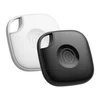 |
Life360 Tile Bluetooth Tracker, Keys Finder, 2-Pack (Black/White) Best for: anyone whose only working chip key is the one on their ring, since a lost chip key means a locksmith or dealer visit to replace and program it Why we picked it: the listing says you can ring a misplaced Tile or track it in the free app, it works with both iOS and Android, and the 2-pack was in stock at $44.99 when checked on 2026-10-12 Main drawback: it only helps you find a lost key; it does not start the car or replace a programmed spare |
As an Amazon Associate we earn from qualifying purchases. Spec-based pick from the listing, not a hands-on test.
Use the checks in this order, from cheapest to most certain. None of them needs a tool, and none involves taking the key apart.
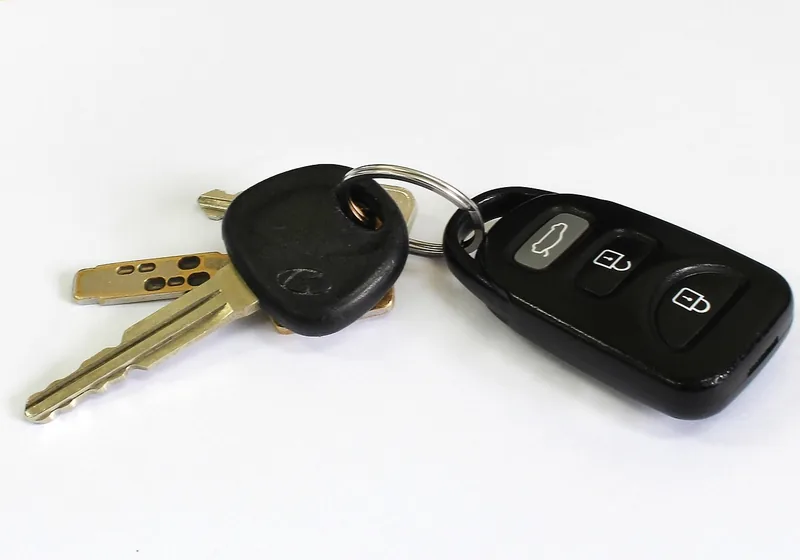
1. Look at the key head. A plain metal key with no plastic is almost always chip-free. A key with a plastic or rubber head, a visible seam where two halves of the case meet, built-in lock and unlock buttons, or a fold-out blade has room for electronics and usually carries a transponder. A thick head alone is a clue, not proof, because some plastic-head keys are just plastic over metal.
2. Read the owner’s manual. Look in the index under immobilizer, transponder, anti-theft or security system. If the manual describes a security indicator light and a programmed key, your car has an immobilizer and the key has a chip. This is the best free check for a specific year and model, and it is how to answer the common search “does my [year] [model] key have a chip” without guessing. Our guide to the blinking anti-theft light explains what that dashboard light usually means.
3. Use the plastic-head copy test, with care. If a plastic-headed key was copied at a hardware store, and the copy turns the ignition but the engine will not start while the original starts it, the original has a chip and the copy does not. This only tells you something if you already have such a copy, so do not cut one just to test it. See our key-copying guide for what hardware stores can and cannot do.
4. Ask a locksmith or dealer. This is the only fully reliable method. A professional can identify the key from the vehicle and, with the right equipment, read or program the chip in minutes. If you have lost your only key, call before you buy a blank online, because the blank has to match the car’s system.
Types of Car Keys: Which Ones Have a Chip
The key style narrows the answer more than the badge on the trunk. If you are unsure which style you hold, our comparison of mechanical keys and remote keys shows the differences side by side.
| Key type | Chip? | How to tell | Copy or programming note |
|---|---|---|---|
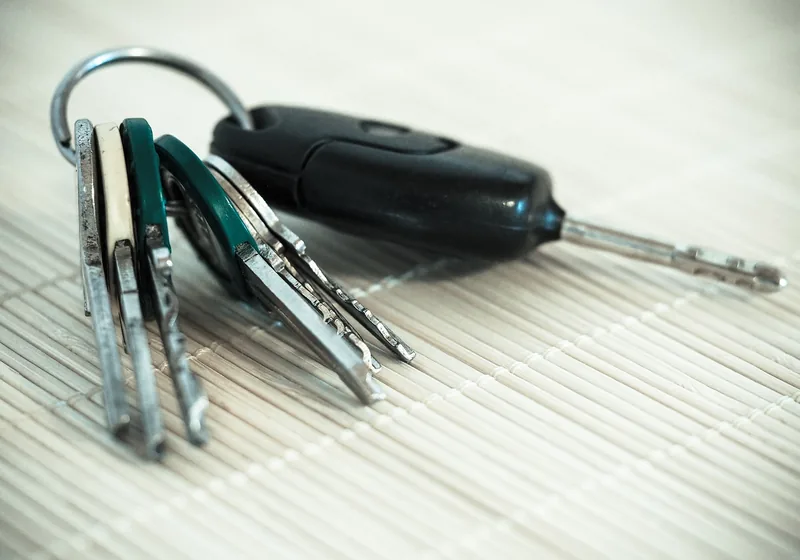
| Plain all-metal key | Almost certainly no | No plastic head, no buttons; common on older cars | A hardware store can cut it from a blank |
| Plastic-head key (turns in the ignition) | Usually yes on cars with an immobilizer | Thicker plastic head; the manual lists an immobilizer | A copy needs the chip cloned or programmed to the car, not just cutting |
| Remote-head key (buttons in the key) | Usually yes | Lock and unlock buttons built into the head | Ask the shop whether it can program both the chip and the remote buttons |
| Flip key (blade folds out) | Usually yes | Folding blade with buttons in the body | Treat as a chip key; blank and fob must match the car |
| Push-button smart key | Yes: it works with the car’s immobilizer | Starts the car with a START button, no key in a slot | Many have a hidden mechanical key for the door; programming is a dealer or locksmith job |
The table describes the typical pattern, not every make. The “usually” rows depend on whether your car has an immobilizer at all, which is why the manual and the timeline below matter. For a push-button car, Toyota’s support page says a mechanical key inside the Smart Key opens the driver’s door, and that holding the Smart Key next to the START button will most likely start the engine if its battery is dead (check your manual for the exact steps); see our key fob battery guide for the battery side.
How Transponder Keys Work
A transponder key does not run on a battery. According to the standard description of immobilizer systems, a small electromagnetic field from a ring antenna around the ignition lock induces a current in the chip, and the chip broadcasts a unique binary code. The engine control unit compares that code with the ones it has stored and only allows the engine to run if they match. On Ford’s PATS system, a code mismatch leaves the fuel and ignition disabled.
Early systems used one fixed code per key, which meant the code could in principle be copied. Later systems use rolling codes or stronger cryptography so a recorded signal is no use to a thief. This is also why the chip matters for security more than for convenience: a 2016 study in The Economic Journal concluded that the immobilizer lowered the overall rate of car theft by about 40% between 1995 and 2008.
It also explains the “turns but will not start” symptom. The metal blade only turns the lock. The car refuses to run until the chip answers correctly, so a blade with no matching chip fails at the last step.
When Did Cars Start Using Chip Keys? A Quick Timeline
This is the part many pages get wrong by treating one year as the rule for every country and brand. The dates below come from the sources we read; they are not a substitute for your owner’s manual.
| When | What happened | Source type |
|---|---|---|
| 1996 | Ford’s PATS (SecuriLock) transponder system first appears on select Ford, Lincoln and Mercury models | Ford PATS reference pages |
| 1 January 1998 | Immobilizers mandatory on new cars sold in Germany | Immobilizer reference article |
| 1 October 1998 | Mandatory in the United Kingdom (Finland also 1998) | Immobilizer reference article |
| 2001 | Reported date for Australia (the reference flags this one as needing a citation) | Immobilizer reference article |
| September 2007 | Transport Canada regulation requires immobilizers in new light vehicles and trucks manufactured in Canada | Immobilizer reference article |
| 2011 model year | IIHS: 92% of non-Hyundai and non-Kia models had standard immobilizers, against 17% of Hyundai and Kia models | IIHS (HLDI data through Dec 2023) |
| 2022 model year | IIHS: 96% of other brands, 84% of Hyundai and Kia | IIHS (HLDI data through Dec 2023) |
The reference sources we read gave no US federal mandate date, which fits what IIHS found: in the US the answer varies by manufacturer and year. That is the correction to the common advice “anything after 1998 has a chip”. It was close to true for many brands, but a 2011 Hyundai or Kia was far more likely to lack one, and thieves exploited exactly that gap.
What the Chip Does for Theft Protection
IIHS gives the clearest recent evidence of what an immobilizer is worth. In a study by the Highway Loss Data Institute (data through December 2023), Hyundai and Kia vehicles that received the software upgrade had whole-vehicle theft claim frequency 64% lower and overall theft claim frequency 53% lower than vehicles that did not get it, with Hyundai and Kia combined. The software keeps the vehicle from starting unless the owner’s key or an identical duplicate is in the ignition.
Two limits are worth knowing. A chip stops a thief starting the car without the key, but it does not stop other methods, so a chip is one layer, not the whole answer; our guides to keyless car theft and the kill switch cover the other layers. And the chip protects nothing once the key itself is in the wrong hands, which is why a lost chip key is a bigger problem than a lost plain key.
Common Issues With Chip Keys and What to Do
| What you see | Likely cause | What to do |
|---|---|---|
| Key turns but the engine will not start | The chip is missing, wrong or not recognised (for example an unprogrammed copy) | Try your original key; if it starts, the copy needs programming by a locksmith or dealer |
| Security or key light blinks or stays on | Car does not accept the key code | Check the manual for your model; see our guide to the blinking anti-theft light |
| Original key worked yesterday, fails today | Possible key damage or a car-side problem; we did not find a maker source on exact failure rates | Try a spare key; if the spare works, the first key may be damaged; if neither works, have the car scanned |
| Lost the only key | No spare to program from | Call a locksmith or dealer; some systems need extra steps when no working key is available |
Never try to bypass or disable an immobilizer yourself. The system is what keeps the car from being driven away, and defeating it can leave the car without the protection its insurer and you expect. If the car will not start and you cannot tell why, a locksmith or dealer is the safe call.
Chip Key Replacement and Programming
Programming a transponder key is a professional job on almost every car, because the car’s computer has to learn the new chip. The cost depends on key type and whether you still have a working key; see our car key reprogramming cost guide for the price side. Before buying a blank online, confirm the blank matches your vehicle and ask who will program it, since a blank without the right chip will cut and turn but not start the car.
The simplest protection is a programmed spare kept at home, which makes a lost key an inconvenience rather than an emergency. A small tracker on your main key ring, like the pick above, helps you find the key before you ever need a replacement.
Frequently Asked Questions
How Can I Tell If My Car Key Has a Chip?
Check four things in order: a plastic head, seam or built-in buttons; an immobilizer or transponder section in your owner’s manual; whether a hardware-store copy turns but will not start the car; and finally a scan by a locksmith or dealer, which is the only certain method.
What Is the Purpose of the Chip in Car Keys?
It lets the car’s engine computer confirm the key is the right one before the engine will run. The chip is powered by a small electromagnetic field from the ignition area and sends a code the car compares with stored codes. IIHS reported 64% lower whole-vehicle theft claim frequency for Hyundai and Kia vehicles that got an immobilizer-style software upgrade.
Does the Foil Test Really Work?
The foil test is repeated widely online, but we did not find a manufacturer or locksmith-industry source supporting it, and it can be misleading. We do not recommend it. Use the key head, the owner’s manual or a professional scan instead.
My Car Is Older Than 1998: Could It Still Have a Chip Key?
Yes, possibly. Ford’s PATS transponder system first appeared on select Ford, Lincoln and Mercury models in 1996, ahead of the 1998 mandates in Germany and the United Kingdom. Check the owner’s manual for an immobilizer section rather than relying on the year.
Can a Chipped Car Key Be Duplicated?
Yes, but not by cutting alone. A cut copy of a chip key will usually turn in the lock but not start the car, because the chip has to be cloned or programmed to the car. Ask the shop whether it handles chip programming before you pay for a copy.
What Happens If My Chip Key Stops Working?
Try your spare key first. If the spare starts the car, the first key or its chip may be damaged. If neither key works, the problem may be on the car side, so have it scanned by a locksmith or dealer. Do not try to bypass the immobilizer.
Check the key head and the manual first, treat model year as a hint rather than a rule, and have a locksmith or dealer confirm before you pay for a copy or a replacement.
Products related to this article
Sponsored / affiliate links. As an Amazon Associate I earn from qualifying purchases. I may earn additional commission from eligible campaigns.