Magnetic Business Signs for Cars: Best Options and What to Know
Choose magnetic business signs for cars only if your vehicle has flat steel panels and you remove the signs often; For daily highway driving, thicker 30–40 mil magnets are commonly recommended, and for short local routes, 24–30 mil can work. Poor fit or weak magnets can let signs shift, trap grit, and mar paint. This guide covers the best options by vehicle type, route, material, weather exposure, and budget.
What magnetic car signs
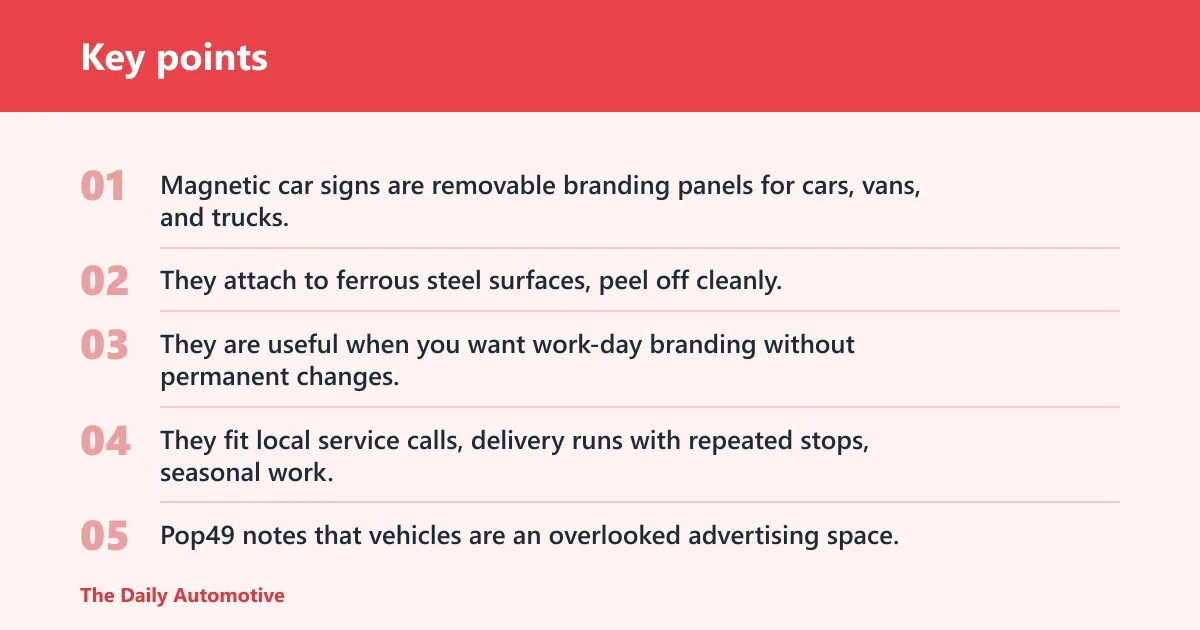


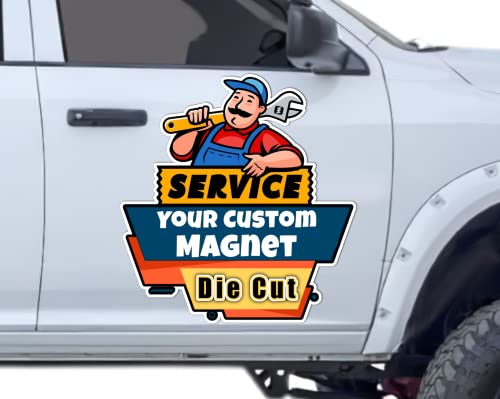
Magnetic car signs are removable branding panels for cars, vans, and trucks. They attach to ferrous steel surfaces, peel off cleanly, and leave no marks behind when the panel is clean and the magnet is stored correctly. They are useful when you want work-day branding without permanent changes.
They fit local service calls, delivery runs with repeated stops, seasonal work, and personal vehicles used during business hours. Pop49 notes that vehicles are an overlooked advertising space, and that service trucks can generate thousands of impressions monthly. That matters most when the sign stays visible during the workday and comes off after hours.
Where they work best
Flat door skins, rear quarter panels, and other broad steel areas are the usual sweet spots. Signs that fit the panel shape stay flatter, collect less grit at the edges, and are less likely to lift in wind. Curves and seams reduce contact area, which reduces holding power.
A common first-timer mistake is buying a sign that fills the whole door and then placing it across a crease or body line. That looks neat at rest, but it leaves the corners vulnerable at speed and after rain.
Can your vehicle hold them?
Magnetic signs only stick to ferrous metal. Aluminum, fiberglass, and plastic do not hold magnets, so many newer trucks and mixed-material vehicles need a close look before you buy. A refrigerator magnet gives a quick first pass, but you should also inspect the panel layout, because some vehicles mix steel doors with nonmetal body sections.
The refrigerator magnet check
Use a small household magnet on the exact area you plan to cover. If it does not hold firmly, a business magnet will not work there either. Check more than one spot on each door, since one panel can have steel in one section and aluminum or plastic in another.
Mixed-material panels to inspect
Modern pickups, vans, and SUVs can combine steel with aluminum hoods, plastic cladding, or fiberglass components. That means the “truck door” answer is not automatic. Before purchase, inspect the full panel, the mirror cap area, the lower cladding, and any body line that could break contact.
- Test the intended panel with a refrigerator magnet.
- Confirm the whole sign area is steel, not a steel strip beside plastic trim.
- Check for door seams, curves, and raised embossing.
- Measure the flat contact area before choosing size.
- Decide whether the route is local, mixed, or highway-heavy.
Magnetic sign decision table
This table maps use case to thickness, size, surface type, and expected life. It also suggests that 30 mil is often the budget starting point and that 45 mil is generally the safer choice for faster routes and longer daily use.
| Use case | Recommended thickness | Typical size range | Surface type | Expected lifespan |
|---|---|---|---|---|
| Occasional local errands, short stops, low wind exposure | 30 mil | 12 x 18 in. to 18 x 24 in. | Flat ferrous steel door | Short to moderate, with regular cleaning and dry storage |
| Mixed daily driving, suburban routes, repeated removal | 35 mil | 18 x 24 in. to 24 x 24 in. | Flat ferrous steel door or side panel | Moderate, if edges stay flat and the panel is kept clean |
| Highway routes, frequent long trips, higher wind exposure | 45 mil | 18 x 24 in. to 24 x 36 in. | Flat ferrous steel panel with full contact | Longer, especially with UV-cured printing and optional laminate |
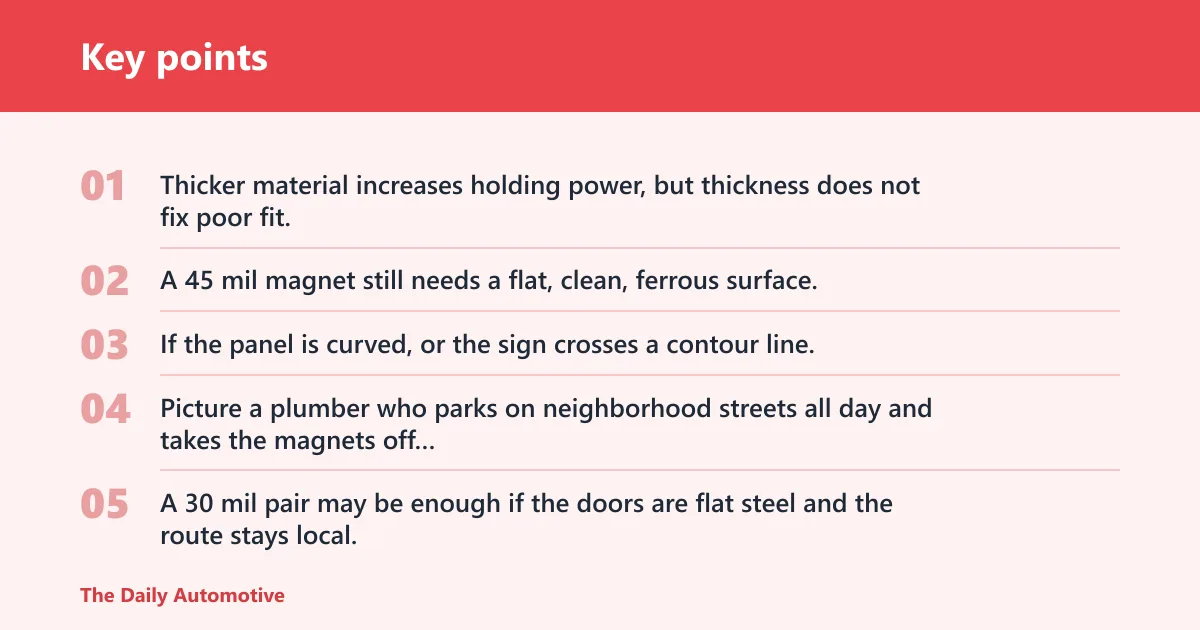
Thicker material increases holding power, but thickness does not fix poor fit. A 45 mil magnet still needs a flat, clean, ferrous surface. If the panel is curved, or the sign crosses a contour line, the edge can lift even when the material is strong.
Picture a plumber who parks on neighborhood streets all day and takes the magnets off every night. A 30 mil pair may be enough if the doors are flat steel and the route stays local. Now suppose the same van runs interstate service calls twice a week; 45 mil is the safer choice.
What size fits a car door?
Most car doors can take a sign in the 12 x 18 in. to 18 x 24 in. range, but the right size depends on the flat area, not the full outer door shape. Leave edge clearance so the magnet sits on a flat field with no seam, handle cutout, or deep curve interrupting contact.
Why panel shape matters
Flat area matters more than total door size. A smaller magnet that lies flat will stay put better than a larger one that rides a curve. On many cars, the safest placement is the middle or lower middle section of the front door, where the panel is broadest and least shaped.
When bigger is not better
Large signs can look strong on a mockup, but they are more likely to catch airflow and edge lift if the panel is not flat. If the magnet must bridge a body line, shrink it. A smaller, flatter sign usually holds better and stays cleaner.
How much do they cost?
Typical magnetic business signs for cars run from roughly $50 to $300 per pair, with size and print quality driving the price. The same source says quality magnetic signs run from about $50 to $200, while size and finish choices can push the total higher. The real cost is the purchase price, replacement frequency, reuse, and whether the sign survives your route.
What changes the price
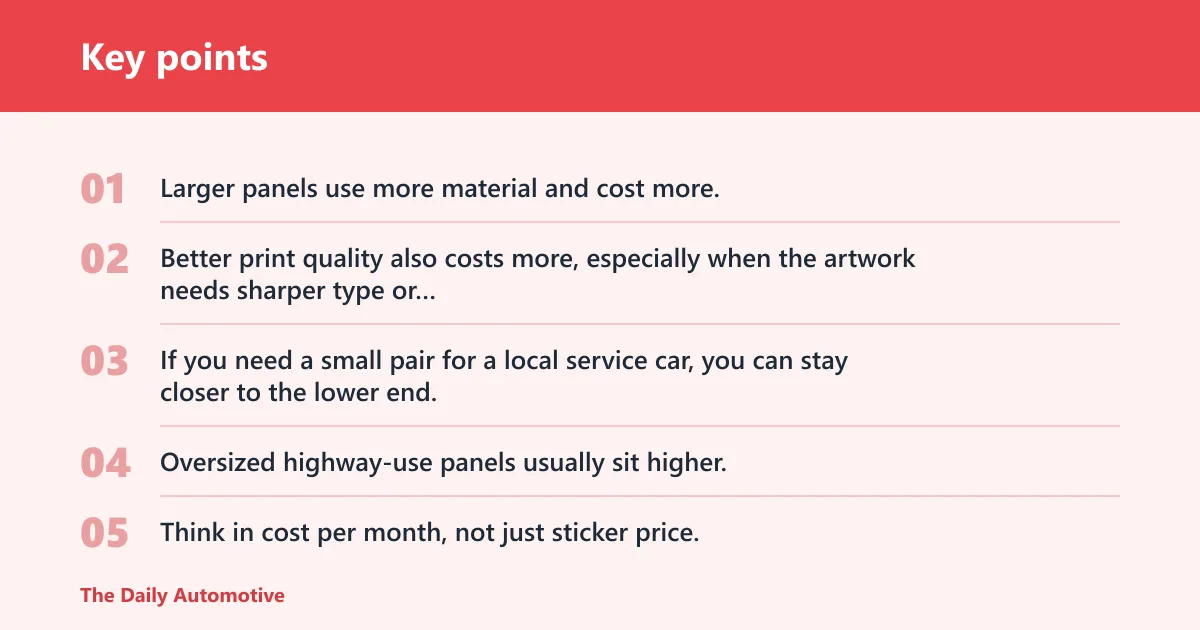
Larger panels use more material and cost more. Better print quality also costs more, especially when the artwork needs sharper type or stronger color saturation. If you need a small pair for a local service car, you can stay closer to the lower end. Oversized highway-use panels usually sit higher.
Think in cost per month, not just sticker price. A pair that lasts longer and can move to a replacement vehicle may cost less over time than a cheaper pair that fails early and gets reordered every season.
Total cost over replacement cycles
A seasonal business may buy one pair, remove it for the off-season, and reuse it next year. That lowers total ownership cost. A fleet with high mileage and heavy weather exposure may replace signs more often, so a thicker panel and better print method can be cheaper than repeated reorders.
Pop49 also notes that leased vehicles often prohibit permanent body modifications, and that seasonal businesses can swap messaging. Those two use cases tend to favor magnets over permanent graphics, provided the panel is steel.
Print and finish choices
UV-cured printing is the safer outdoor choice because it improves scratch resistance and helps prevent fading. For added protection, lamination is optional. It adds weathering and scratch protection, which matters more on vehicles parked outside, washed often, or exposed to full sun.
Glossy versus matte laminate
Glossy laminate usually looks brighter and more reflective. Matte laminate cuts glare and can hide small scuffs better. The finish changes appearance and maintenance, but it does not fix a poor fit or a weak magnetic panel. Choose the finish after you have chosen the right thickness and size.
Suppose a real estate agent parks near open houses and needs the sign to look sharp in daylight photos. Matte may reduce glare. A contractor who parks curbside and wants strong color contrast may prefer glossy. Either way, UV-cured printing is the base layer that helps the artwork last outdoors.
When should you pick something else?
Pick a wrap or decal when you need longer-term branding, coverage over complex body shapes, or graphics on nonmagnetic panels. Magnetic signs are better when you need removable branding, limited-day use, or a low-commitment solution for a leased or personal vehicle used for work.
Vehicle wraps
Vehicle wraps are the more permanent option. They typically cost about $2,000 to $5,000 and usually require professional installation. If you need full coverage or a consistent fleet look on curved bodywork, a wrap makes more sense than forcing a magnet onto the wrong panel.
Vinyl decals
Vinyl decals are semi-permanent. After peeling, they are single-use, and removal can damage paint if the adhesive has aged or the finish is weak. That makes them a better fit for long-term branding than for a shared vehicle that changes hands or changes roles often.
A common split decision is a contractor van with steel doors and plastic rear trim. The doors can take magnets, but the trim cannot. In that case, magnets on the steel sections and nothing on the plastic can be the cleaner solution.
Frequently asked questions
Are magnetic car signs safe for highway driving?
They can be, but only when the panel is flat steel, the magnet is thick enough, and the edges sit fully flush. Highway speed increases lift risk, especially on curved panels, dirty doors, or signs placed over seams. For regular highway routes, 45 mil is the safer recommendation.
What thickness should magnetic car signs be?
Use 30 mil for budget-conscious, short-route work. Move to 35 mil if the vehicle sees mixed daily driving. Choose 45 mil for highway routes or longer service life. Thicker material increases holding power, but only if the sign fits the panel and the surface is clean.
Do magnetic signs work on aluminum truck doors?
No. Magnetic signs need ferrous steel. Aluminum, fiberglass, and plastic do not hold them. That is why a quick magnet check matters before purchase, especially on modern trucks and mixed-material vehicles where one section may be steel and another section may not.
How much do magnetic business signs for cars cost?
Expect roughly $50 to $300 per pair, with size and print quality affecting the total. Smaller local-use signs usually sit lower in the range. Larger or more durable builds cost more up front, but they can lower replacement frequency if they stay flat and are stored correctly.
Do magnetic signs damage car paint?
They should not damage paint when used on clean, flat steel and removed regularly, and VistaPrint says they peel off cleanly and leave no marks behind. Problems come from trapped grit, moisture, heat, or a panel that is not flat enough for full contact. Clean both surfaces often.
How long do magnetic car signs last outside?
Outdoor life depends on thickness, print method, laminate, climate exposure, and care. UV-cured printing helps resist fading and scratching, and lamination adds more protection. A sign kept clean, dry, and flat on a suitable steel panel lasts longer than one exposed to heat, curves, and dirty roads.
When are magnetic car signs better than a wrap?
Choose magnets when you need removable branding, lower up-front cost, and easy reuse across work and nonwork hours. Choose a wrap when you need full coverage, a permanent look, or branding on complex surfaces. The same source notes that leased vehicles often prohibit permanent body modifications, which is where magnets help most.
Products related to this article
Sponsored / affiliate links. As an Amazon Associate I earn from qualifying purchases. I may earn additional commission from eligible campaigns.