What Is a Door Skin for a Car? Replacement Cost & DIY Guide
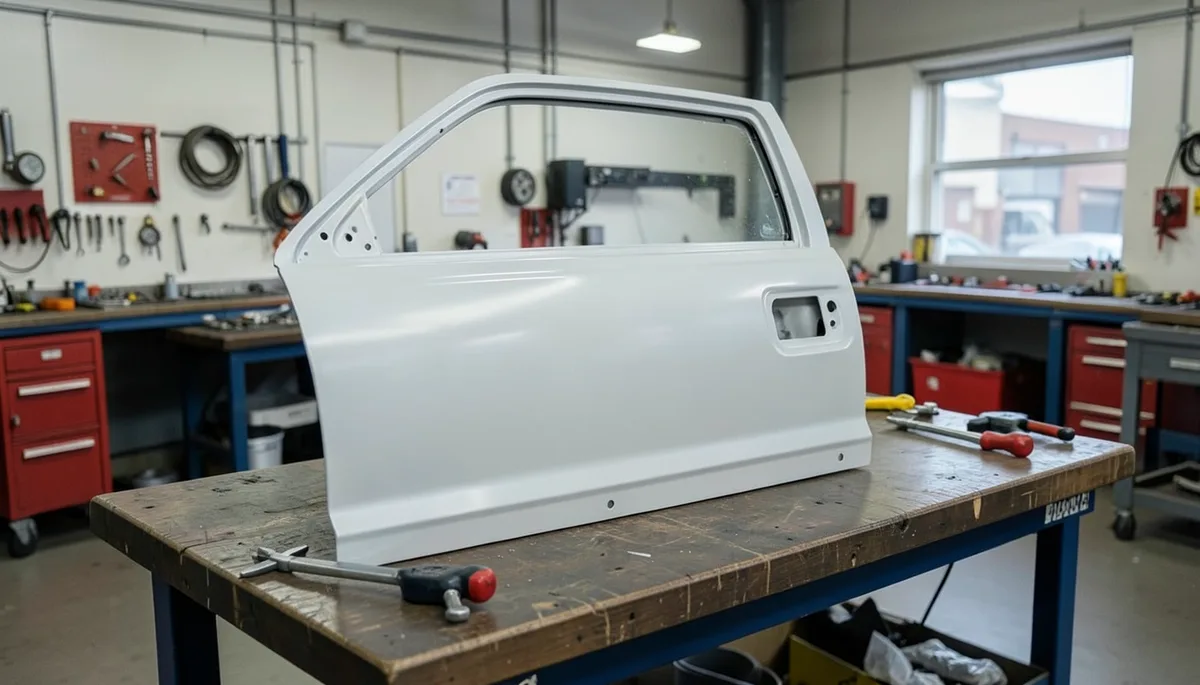
A door skin is the outer sheet-metal panel that forms the visible, painted surface of a car door. It hems over the door’s inner structural shell, the frame that carries the window regulator, latch, and hinges, so a body shop can replace just that outer panel instead of swapping the whole door assembly.
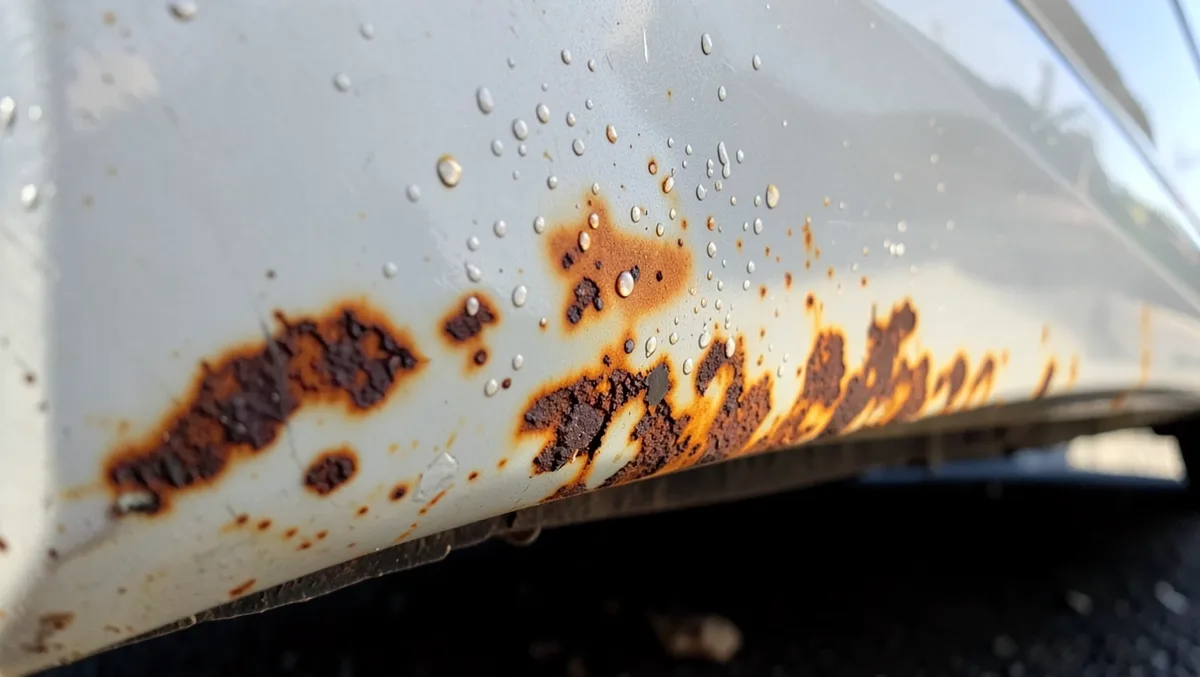
Rust eating through the bottom edge and wheel-arch line, or a crease from a parking-lot collision, are the two most common reasons a door skin gets replaced. Aftermarket steel or fiberglass skins for older and classic vehicles typically run $50 to $300 in parts, while a factory-sourced skin for a newer car can run $750 to $2,000 before labor.
What Is a Door Skin on a Car?
BEST FOR BONDING A DOOR SKIN WITHOUT WELDING
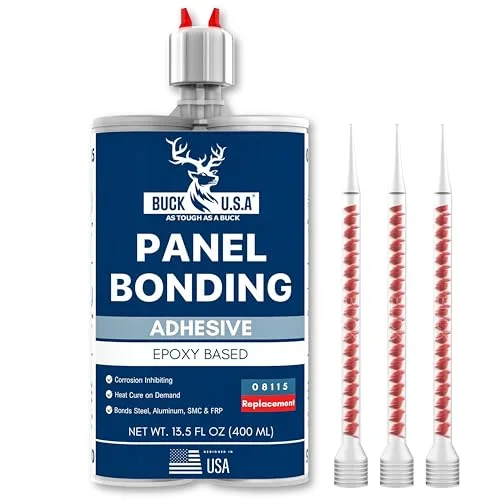 |
Buck Panel Bonding Adhesive, 400ml – $64.99 A two-part structural epoxy that lets you bond a new door skin to the inner door frame instead of spot-welding it, so the sheet metal never gets hot enough to warp.
|
A car door is really two pieces welded or bonded together: an inner shell (sometimes called the door skeleton) that holds the window glass, regulator motor, latch, speaker, and wiring, and an outer skin that you see and touch from outside the vehicle. The skin is the part that gets painted, and it is also the part that takes the brunt of rust, dings, and door dents.
Because the skin is a separate stamped piece, a shop can cut off just that outer layer and hem a new one over the existing inner frame without disturbing the window mechanism, latch, or wiring harness inside the door. That is what makes a “door skin replacement” cheaper and faster than sourcing an entire replacement door.
Rust or a Dent? How to Tell Which Repair You Need
Surface rust that is still sitting on top of the paint, without any bubbling or a soft spot when you press on it, can usually be treated and repainted without replacing anything. See how to fix rust on a car for the sanding, converter, and primer steps that handle that stage.
Once rust has actually eaten a hole through the metal, usually starting at the bottom edge or the wheel-arch seam where water sits after it drains in through the window channel, patching no longer holds. That hole is exactly what a new door skin is for. Clogged interior drain holes are the most common cause, so it is worth reading how to stop rust on a car from spreading once the new skin is on, so the same failure does not happen again.
A shallow dent or crease that has not torn or rusted through the metal can often be pulled, filled, and repainted without a full skin. And if the real complaint is that the door will not close flush or drags on the latch, the cause is frequently a sagging hinge or a misaligned striker rather than skin damage at all, worth ruling out first with how to adjust a car door before you pay for a new panel you did not need.
How Much Does a Door Skin Replacement Cost?
| Repair Scope | Typical Cost |
|---|---|
| Aftermarket steel or fiberglass skin, parts only (classic truck or car) | $50 – $300 |
| Factory-sourced skin, parts only (newer vehicle) | $750 – $2,000 |
| Full shop job: cut, hem, weld or bond, prime, and paint | $800 – $2,500+ |
| Used full door assembly (glass, regulator, latch included) | Varies by model and year, often comparable to a shop-installed skin once paint is factored in |
The part itself is rarely the expensive line item. Most of the bill is labor: cutting off the old spot welds without warping the door frame, test-fitting and hemming the new skin so its panel gaps line up with the fender and quarter panel, then priming and blending paint into the surrounding panels. A shop that finds more hidden rust once the old skin comes off, in the lower A-pillar or rocker panel behind it, will usually revise the quote upward once that damage is visible.
Steel vs. Fiberglass Door Skins
Steel is the standard material and the closest match to what came on the vehicle from the factory. It welds the same way the original panel did, holds paint the same way, and is what most aftermarket restoration-parts suppliers stock for classic trucks and cars.
Fiberglass door skins exist mainly in the classic-truck and hot-rod market as a lighter, rust-proof alternative. They are usually bonded rather than welded, which suits a builder without welding equipment, but fiberglass flexes and cracks under an impact where steel would just dent, so it is a better fit for a show vehicle than a daily driver.
How a Door Skin Is Installed: Weld vs. Bond
This is a metal-shop job more than a driveway job, but knowing the sequence helps you judge a quote or decide whether to tackle it yourself.
- Strip the door panel, glass, window regulator, latch, and speaker down to the bare inner shell.
- Grind or drill out the old skin’s spot welds and cut the damaged panel free from the hem flange.
- Clean the flange, then test-fit the new skin and pre-bend its hem edge so it seats flat with correct panel gaps.
- Coat the mating surfaces with weld-through primer, or a bead of panel bonding adhesive if you are not welding.
- Hem the new skin’s edge over the door frame flange and secure it with spot welds or the bonding adhesive, working from the top of the door down.
- Seal the seam, apply self-etching primer, block-sand, and paint to match the rest of the vehicle.
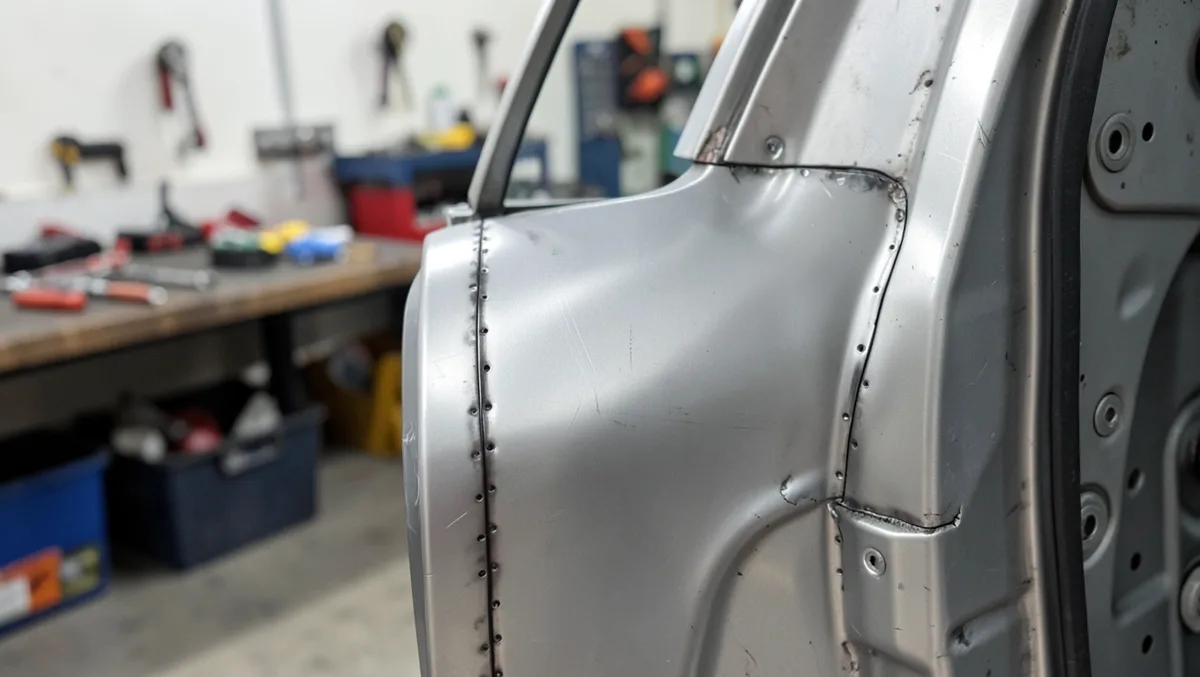
Most DIYers without prior body-shop experience get a better result paying a shop for this specific cutting, hemming, and welding step, then handling their own painting, trim, and accessories once the panel is straight.
Frequently Asked Questions
What is a door skin on a car?
A door skin is the outer, visible sheet-metal panel of a car door, the painted surface you see from outside. It hems over the door’s inner structural shell, which holds the window regulator, latch, and hinges. Replacing just the skin lets a shop fix rust or a dent without swapping the entire door assembly.
How much does a door skin replacement cost?
Expect $50 to $300 for an aftermarket steel or fiberglass skin on an older or classic vehicle, and $750 to $2,000 or more for a factory-sourced skin on a newer car. Once labor for cutting, hemming, welding or bonding, and repainting is added, a full shop job often runs $800 to $2,500 or more.
Can you replace a door skin without welding?
Yes. Two-part panel bonding adhesive lets a technician glue a new skin to the door’s inner frame instead of spot-welding it, which avoids heat-warping the sheet metal and works on both steel and aluminum panels.
Is it cheaper to replace a door skin or the whole door?
A skin-only repair is usually cheaper than a full door assembly, since you keep the existing window regulator, glass, latch, speaker, and wiring and only replace the outer sheet metal. Swapping the whole door only becomes the better option once the inner structure itself is rusted through or was bent in a serious collision.
Can I install a door skin myself?
It is possible, but it is not a beginner job. You need to grind off the old spot welds, get the new skin perfectly flat and aligned before hemming its edge over the door frame, then weld or bond and finish the seam so it does not show under paint. Most first-timers get a straighter panel by paying a shop for this one step.
What causes a car door to need a new skin?
The two most common causes are rust, usually starting inside the door where clogged drain holes trap moisture and eat through the bottom edge and wheel-arch seam, and collision or parking-lot damage deep enough that pulling and filler will not restore the panel’s original shape.
The Bottom Line
A door skin is a repair for the outer panel only, not the whole door, and knowing that distinction is what keeps a rust hole or a parking-lot dent from turning into a full door-assembly bill. Confirm whether you are actually looking at surface rust, a through-hole, or a simple alignment problem first, since only one of those genuinely needs a new skin.
Products related to this article
Sponsored / affiliate links. As an Amazon Associate I earn from qualifying purchases. I may earn additional commission from eligible campaigns.