Car Washing Brush for Hose: Water-Powered Spin Brush Guide
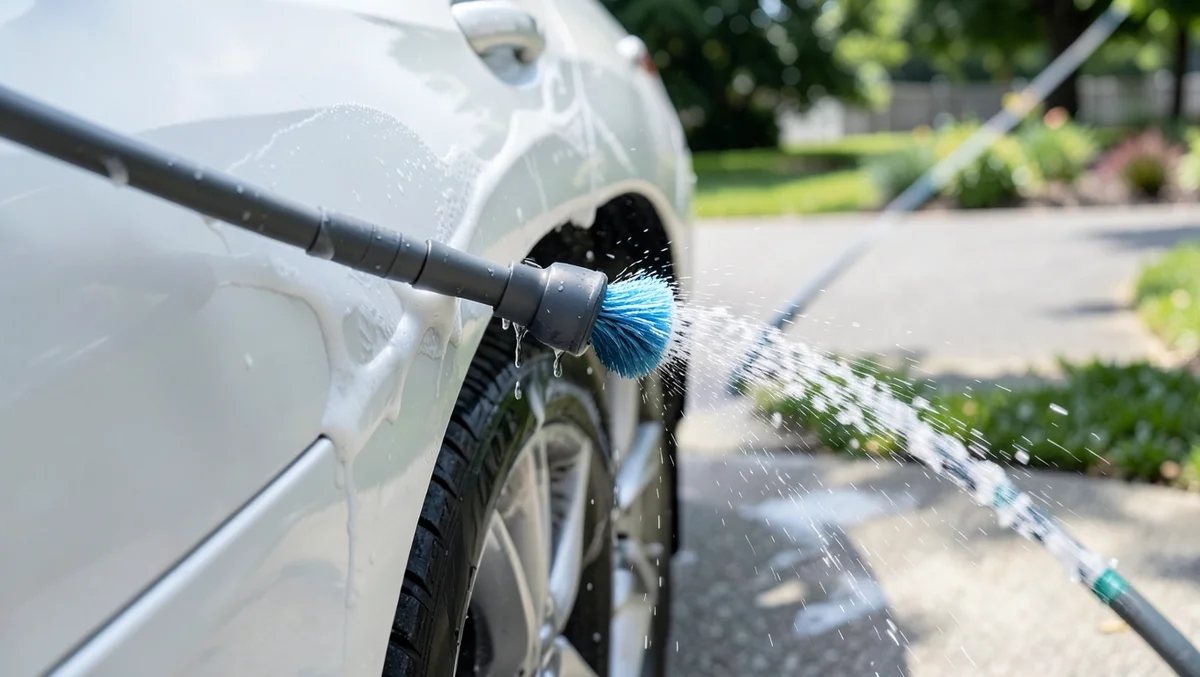
A car washing brush for hose is a brush head that connects directly to your garden hose so water pressure spins the bristles automatically — no long-handle mop swinging and no separate bucket of soapy water required.
This is a different tool from the long-handle microfiber mop kits most “car wash brush” listings show. A hose-attachment brush screws onto the end of your garden hose (or a short wand), and the water flowing through it pushes an internal turbine that spins the brush head on its own — some models also pull car shampoo from a small built-in soap dispenser and mix it into the spray as foam. You get scrubbing, rinsing, and foaming from one continuous stream instead of dipping a mitt in a bucket over and over.
What Makes a Hose-Attachment Brush Different
Most “car wash brush” pages online are really reviewing long-handle wash mitts — an aluminum pole with a soft chenille microfiber head on the end, meant for reaching the roof of an SUV or RV without a ladder. Those are great tools, but the brush itself doesn’t move; you’re the one doing all the scrubbing motion.
A hose-attachment brush works differently. The brush connects at (or very close to) the hose end, and ordinary household water pressure is enough to spin the head continuously while you hold it against the car’s surface. That mechanical rotation does some of the scrubbing work for you, which is the main reason people search out this specific style instead of a static long-handle mop.
If you’re specifically after the long-handle, non-rotating microfiber mop style instead — the kind built for reaching a tall roofline — see our separate guide to long-handle microfiber wash kits, which compares that style side by side.
How the Rotation Actually Works
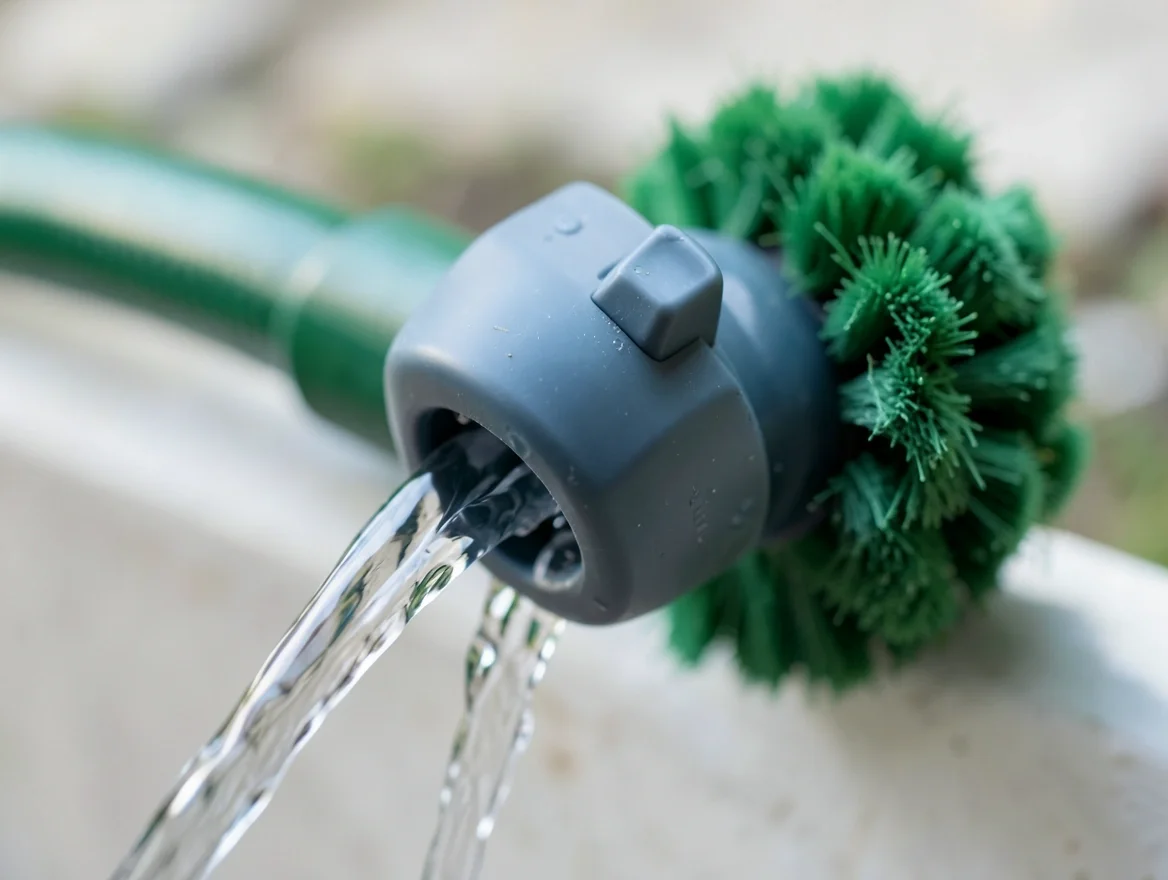
Water enters the adapter at the base of the brush, passes through an internal turbine or vane wheel, and exits through the bristles — the same water pressure that turns your spigot flow into a spray is enough to spin the head continuously, no batteries or electricity involved. Most adapters also have an on/off thumb valve right at the handle, so you can shut off water flow while you reposition without walking back to the spigot each time.
Many models add a small soap reservoir built into the handle or adapter. Turning a dial mixes car shampoo concentrate into the water stream at an adjustable ratio, so the brush lays down foam as it spins instead of just plain water — effectively combining a foam cannon and a scrub brush into one attachment. Removing the brush head on some models also converts the unit into a plain high-pressure hose nozzle for other outdoor cleaning jobs.
Practisol Car Wash Brush With Hose Attachment
IN STOCK — HOSE-ATTACHMENT PICK
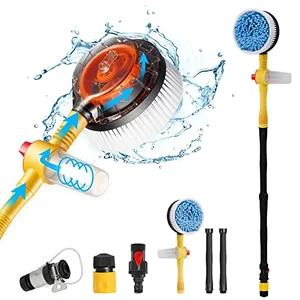 |
Practisol Car Wash Brush With Hose Attachment – $45.99 A water-powered 360° spin brush with a built-in soap dispenser, the exact style this guide covers rather than a static long-handle mop.
|
Rotating Hose Brush vs. Long-Handle Mop Brush
| Feature | Hose-Attachment Spin Brush | Long-Handle Microfiber Mop |
|---|---|---|
| Reaches roof of an SUV/RV | Only with an extension wand | Yes, that’s its main purpose |
| Brush moves on its own | Yes, water pressure spins it | No, you move it by hand |
| Needs a bucket of soapy water | No, foam mixes in at the adapter | Usually yes, unless you buy a separate foam cannon |
| Works with low water pressure | Rotation slows or stops | Unaffected, cleaning is manual |
| Typical price range | $25–$50 | $20–$40 |
Neither style is strictly “better” — they solve different problems. A hose-attachment spin brush is built for scrubbing panels, wheel wells, and lower body sections where the motorized rotation genuinely saves effort. A long-handle mop is built for reach, letting you clean a roofline while standing on the ground. Some owners keep both.
Pros and Cons
Pros
- The rotation does part of the scrubbing motion for you, which is easier on the wrist during a full detail session.
- Built-in soap dispensers skip the bucket-and-mitt setup entirely.
- Soft PVC or chenille bristle heads are generally gentle enough for painted panels when used with adequate water flow.
- Compact — no long aluminum pole to store, since the brush lives at the hose end.
Cons
- Rotation speed is tied directly to your home’s water pressure — low-pressure households will see a slower spin or none at all.
- Without an extension wand, most versions can’t reach a tall SUV or RV roof.
- The soap dispenser reservoir needs periodic refilling and occasional rinsing so old shampoo residue doesn’t clog it.
What to Check Before You Buy
- Hose thread size: most adapters fit the standard 3/4″ garden hose fitting used in the US; double-check if your hose or spigot uses a different size.
- Bristle material: soft PVC filament or chenille microfiber bristles are less likely to leave swirl marks on clear coat than stiff nylon.
- On/off valve at the handle: lets you stop water flow mid-wash without walking back to the spigot — a real time-saver, not a gimmick.
- Removable brush head: some models let you take the brush off to use the adapter as a plain high-pressure nozzle for patios, driveways, or garden watering.
Frequently Asked Questions
Is a Hose-Attachment Brush the Same as a Long-Handle Car Wash Mop?
No. A hose-attachment brush connects at the hose end and spins on its own from water pressure. A long-handle mop is a static microfiber head on an aluminum pole that you move by hand — it’s built mainly for reaching a tall roofline, not for automatic rotation.
Do These Brushes Need Batteries or Electricity?
No. The spin comes entirely from water flowing through an internal turbine — ordinary household water pressure is enough to turn the brush head continuously. There’s no battery, motor, or charging involved.
Will a Hose-Attachment Brush Scratch My Paint?
Soft PVC filament or chenille microfiber bristle heads are designed to be gentle on clear coat, but any brush can trap grit if you use it on a dry or heavily soiled panel. Rinse the car first, keep the water flowing while you scrub, and rinse the brush head itself if it picks up dirt or gravel.
What if My Water Pressure Is Too Low to Spin the Brush?
Low household water pressure will slow the rotation or stop it altogether, since there’s no motor to compensate. If that happens, you can still use the brush as a normal manual scrub brush while the water rinses through it — you just lose the automatic spinning benefit.
Can I Use One of These to Reach the Roof of an SUV or RV?
Only if the model includes (or you add) an extension wand — most hose-attachment spin brushes are built with a short handle for panels, wheel wells, and lower body sections. For roof access on a tall vehicle, a long-handle microfiber mop is the better-suited tool.
Conclusion
A car washing brush for a hose is worth choosing over a bucket-and-mitt setup when you want the brush itself to spin as you scrub, plus built-in foaming, without hauling out a separate foam cannon. It’s not a roof-reaching tool, though — for tall vehicles, pair it with (or swap in) a long-handle mop for the areas the hose-attachment brush’s shorter reach can’t cover.
Products related to this article
Sponsored / affiliate links. As an Amazon Associate I earn from qualifying purchases. I may earn additional commission from eligible campaigns.