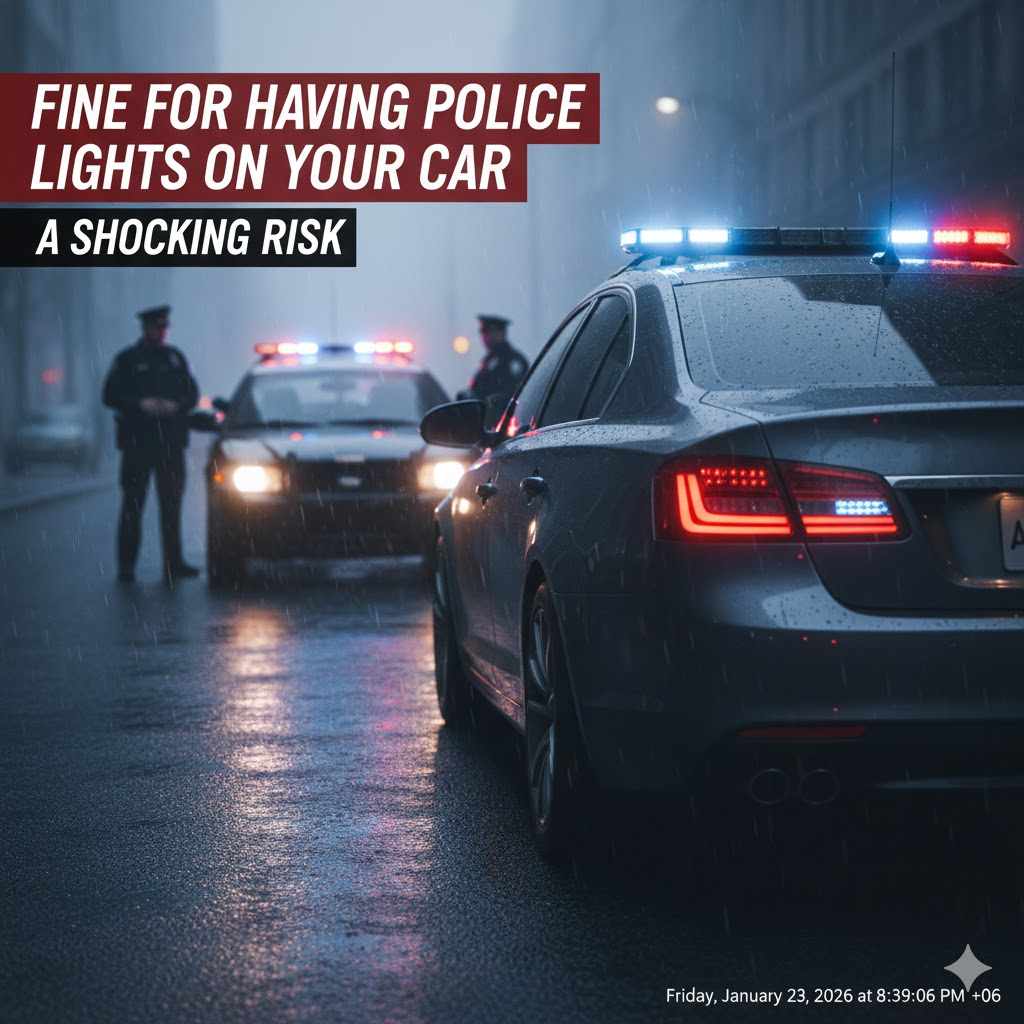
Fine For Having Police Lights On Your Car: A Shocking Risk
Yes, having unauthorized police-style lights on your car can lead to huge fines, ranging from hundreds to thousands of dollars. More shockingly, it can also result in jail time, your car being impounded, and a permanent criminal record for impersonating an officer. The penalties are severe because it creates a serious public safety risk.
Have you ever seen a car with flashing red and blue lights and wondered if you could add them to your own vehicle? Maybe you think it looks cool, or you want them for a car show. It’s a common thought, but it’s one that can get you into a world of trouble. The rules around emergency lights are strict for a very important reason: safety.
Don’t worry, I’m here to clear up all the confusion. In this guide, I’ll walk you through exactly why these lights are illegal, what the fines and other penalties look like, and what safe, legal alternatives you can use instead. We’ll make sure you stay on the right side of the law while still making your car your own.
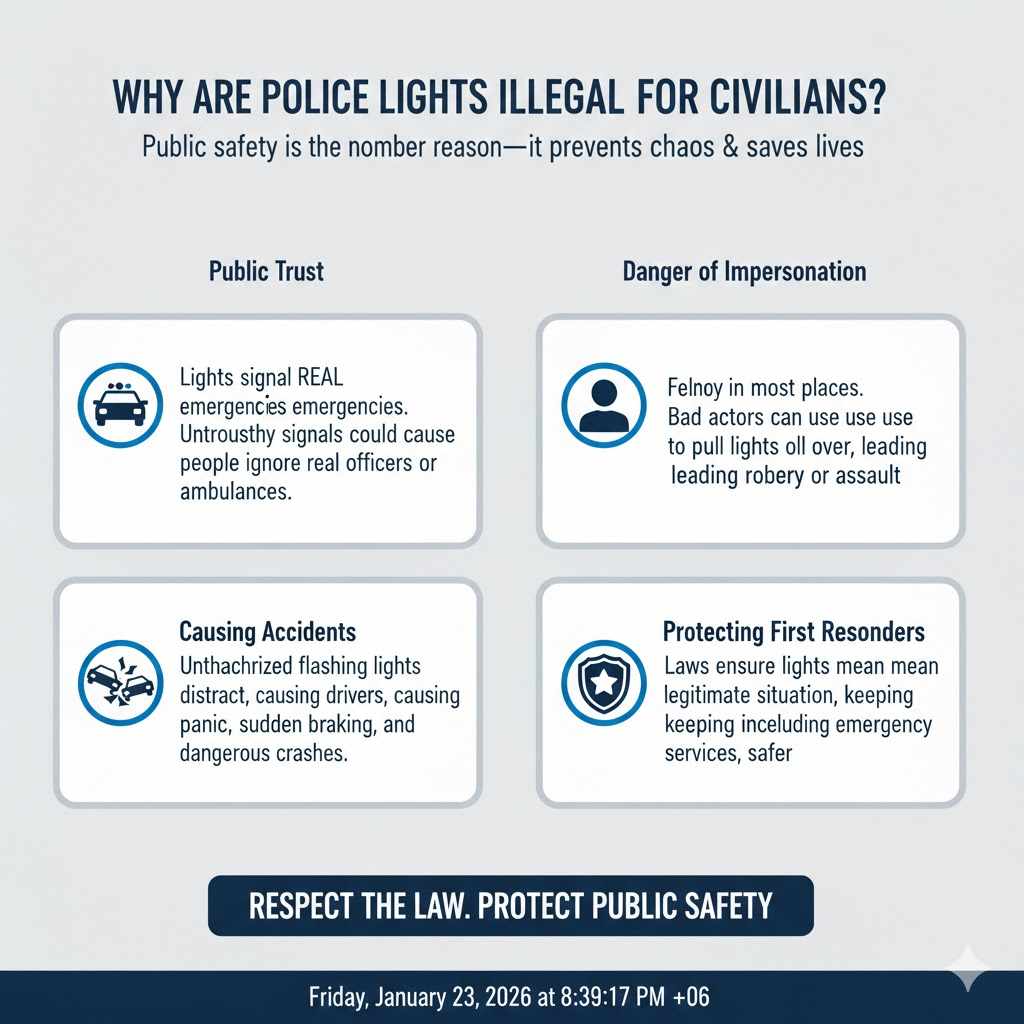
Why Are Police Lights Illegal for Civilians?
The number one reason you can’t have police-style lights on your personal car is to prevent confusion and protect public safety. Think about it: when you see flashing red and blue lights in your rearview mirror, you know to pull over for an emergency vehicle. It’s an automatic, life-saving reaction.
If anyone could use these lights, chaos would follow.
- Public Trust: Real emergency responders—police, firefighters, and EMTs—need to be instantly recognizable. Their lights signal a real emergency where seconds count. If non-emergency cars used them, people would stop trusting the signal, potentially ignoring a real officer or ambulance.
- Danger of Impersonation: The most serious risk is someone using these lights to impersonate a police officer. This is a felony in most places. A person with bad intentions could use fake emergency lights to pull someone over, which could lead to robbery, assault, or worse.
- Causing Accidents: Using unauthorized flashing lights can distract other drivers and cause them to panic or brake suddenly, leading to dangerous accidents on the road.
Laws are in place to ensure that when you see emergency lights, you know it’s a legitimate situation. It keeps everyone, including you and the first responders, safer.
What Exactly Counts as an “Illegal Emergency Light”?
When we talk about “police lights,” it’s not just the classic light bar on top of a patrol car. The laws are specific about colors and functions that are reserved for emergency and official vehicles. It’s crucial to know what to avoid.
Restricted Colors
Certain colors are heavily regulated because they are universally recognized for specific emergency roles.
- Red and Blue: This color combination is almost exclusively reserved for law enforcement vehicles. A steady or flashing blue light by itself is also typically restricted to police. A flashing red light is usually for police, fire, and ambulances. Having either of these colors, especially if they flash or oscillate, is a major red flag for law enforcement.
- White: While all cars have white headlights, flashing or strobing white lights are often part of an emergency lighting package. They are used to increase visibility and grab the attention of other drivers. Unauthorized use of flashing white lights is illegal in many states.
- Amber/Yellow: These colors are generally used for warning or caution. You’ll see them on tow trucks, construction vehicles, and snowplows. While less restricted than red and blue, some states have rules about who can use flashing amber lights and when.
Prohibited Placements and Functions
It’s not just the color, but also how and where the light is used.
- Any Flashing or Strobing Lights: Any light that flashes, strobes, or rotates is likely to be regulated, regardless of color. This is because flashing lights are designed to demand attention in a way that standard car lights do not.
- Visibility: If a light is visible from the front or sides of your vehicle and it’s a restricted color, it’s almost certainly illegal. This includes lights mounted in the grille, on the dashboard, in the visor, or anywhere else.
- Sound Devices: Along with lights, using a siren, air horn, or any other public address (PA) system that mimics an emergency vehicle is also highly illegal and carries similar, if not worse, penalties.
The Fine for Having Police Lights on Your Car: A State-by-State Glance
The penalties for having illegal lights on your car are no small matter. While the exact fine for having police lights on your car varies significantly from one state to another, it’s always a costly mistake. Fines are just the beginning; the legal trouble can escalate quickly.
Below is a table showing some examples of the potential fines and penalties in different states. Remember, these are estimates and can change based on the specific situation and current laws. This is not legal advice, and you should always check your local regulations.
| State | Potential Fine | Additional Penalties |
|---|---|---|
| California | $100 to $1,000+ | Can be charged as a misdemeanor. Points on your driving record. Vehicle may be impounded. |
| Texas | Up to $200 for a basic violation | If used to impersonate an officer, it becomes a felony with much higher fines and potential jail time. |
| Florida | $100+ | Considered a noncriminal traffic infraction for just having them, but a misdemeanor if you actually use them to pull someone over. |
| New York | $75 to $300+ | Penalties increase for repeat offenses. Can lead to a misdemeanor charge depending on the circumstances. |
As you can see, even a first-time offense can set you back hundreds of dollars. But the financial cost is often the least of your worries.
Beyond the Fine: The Other Shocking Risks
The ticket is just the tip of the iceberg. The “shocking risk” isn’t just about money; it’s about your freedom, your property, and your future. Using or even just possessing illegal lights can lead to life-altering consequences.
1. Criminal Charges: Misdemeanor vs. Felony
Simply having the lights installed might be a traffic violation or a misdemeanor. A misdemeanor is a serious crime that stays on your record. But if you actually use the lights to make another driver pull over or to imply you are law enforcement, you cross the line into a felony.
- Misdemeanor: Carries heavy fines and potential jail time, usually up to one year.
- Felony: This is the most serious category of crime. A felony conviction for impersonating an officer can lead to years in state prison and crippling fines.
A criminal record can prevent you from getting a job, renting an apartment, or even qualifying for a loan. It’s a permanent stain that follows you forever.
2. Your Car Can Be Impounded
If you are caught with illegal emergency lights, police have the authority to have your vehicle towed and impounded on the spot. This means you’ll be stranded and will have to pay expensive towing and daily storage fees to get your car back. In some cases, the illegal equipment may be permanently confiscated.
3. Insurance Nightmares
A conviction for illegal vehicle modifications or reckless driving associated with using these lights will send your insurance rates through the roof. Some companies may even cancel your policy altogether, making it incredibly difficult and expensive to get insured elsewhere.
Are There Any Exceptions? When Are Flashing Lights Legal?
There are a few very specific situations where flashing lights are allowed on non-police vehicles, but they all require proper authorization and are strictly regulated.
These exceptions are not loopholes for the general public.
- Volunteer Firefighters and EMTs: In many areas, volunteer first responders can equip their personal vehicles with emergency lights (often a specific color like blue or red, depending on state law). However, they must have official permits and can only use the lights when responding to a legitimate emergency call. For example, the North Carolina State Firefighters’ Association outlines clear rules for its members.
- Funeral Processions: Escort vehicles in a funeral procession often use flashing purple or amber lights to ensure the procession can stay together safely through intersections.
- Security Vehicles: Private security patrol cars may use flashing lights, but they are typically restricted to amber and white and cannot use blue or red. Their authority is also limited to private property.
- Off-Road and Show Use: If you install custom lights for off-roading or for a car show, that’s generally fine. The key is that they must be turned off and securely covered whenever you are driving on a public road. A fabric or plastic cover is usually required by law.
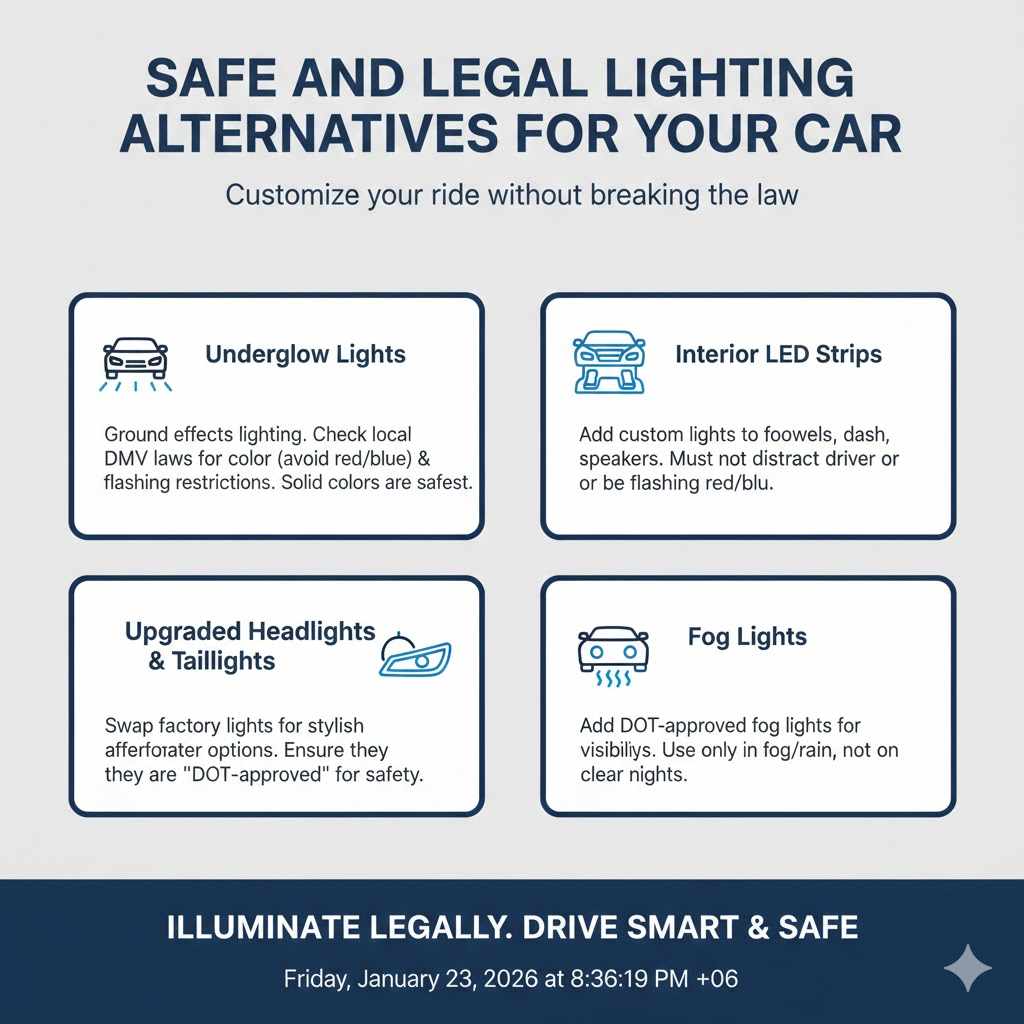
Safe and Legal Lighting Alternatives for Your Car
Wanting to customize your car is completely normal! The good news is there are plenty of ways to add a personal touch to your vehicle’s lighting without breaking the law.
Here are some great, legal options to consider:
- Underglow Lights: Also known as ground effects lighting, these kits can add a cool, colorful glow underneath your car. Laws on underglow vary by state—some restrict colors or prohibit flashing while driving—so check your local DMV regulations first. Generally, avoiding red and blue and keeping them on a solid (non-flashing) setting is the safest bet.
- Interior LED Strips: You can add custom lighting inside your car to illuminate footwells, dashboards, or speaker enclosures. As long as the lights aren’t bright enough to distract you or other drivers and are not flashing red or blue, they are typically legal.
- Upgraded Headlights and Taillights: Swapping your factory lights for stylish aftermarket options is a popular modification. Just make sure any replacement headlight or taillight assembly is “DOT-approved,” meaning it meets the Department of Transportation’s safety standards.
- Fog Lights: Adding a set of legal, DOT-approved fog lights can improve visibility and give your car a more aggressive look. Be sure to use them only in appropriate conditions, like fog or heavy rain, as their brightness can bother other drivers on clear nights.
Frequently Asked Questions (FAQ)
What colors are illegal on a car?
Red and blue are the most restricted colors, especially if they are visible from the front of the vehicle and have the ability to flash or strobe. Flashing white lights are also commonly reserved for emergency vehicles. Check your state’s specific laws, as some also have regulations on green (often for volunteer EMTs) or amber lights.
Can I have a single blue light inside my car?
No, this is almost always illegal. Even a single blue light, if it’s visible from outside the car, can be interpreted as impersonating law enforcement. Police officers are trained to look for any sign of these lights, whether it’s a full bar or a small dash light. It’s not worth the risk.
What about volunteer firefighter lights?
Volunteer firefighters and other first responders often have permits to use specific colored lights (like red, blue, or green depending on the state) on their personal vehicles. They get these permits from their local government or fire department and can only use them when officially responding to an emergency.
Is it illegal to just own police lights if they aren’t on my car?
Generally, it is not illegal to buy or own emergency-style lights. You can buy them online or in specialty stores. The crime occurs when you install them on your vehicle in a way that makes them operable and visible on public roads.
What should I do if I bought a used car with these lights on it?
You should remove them immediately. If you bought a used car, especially a former police or government vehicle, it may still have the wiring or mounts. Ensure any and all non-compliant lighting is fully disconnected and removed before you drive it on public roads. This protects you from being held responsible for the previous owner’s modifications.
Are flashing white lights illegal?
Yes, in most cases. Flashing, strobing, or oscillating white lights are part of the emergency lighting system on police cars and ambulances to make them more visible. Using them on a civilian vehicle is prohibited in most states. Standard, non-flashing white headlights and daytime running lights are, of course, legal and required.
What’s the difference between a warning light and an emergency light?
Emergency lights (red, blue) signal a life-threatening or urgent situation and legally require other drivers to yield the right-of-way. Warning lights (usually amber/yellow) signal a caution or a potential hazard, such as a slow-moving tow truck or a wide load. Drivers should be cautious around warning lights but are not legally required to pull over and stop.
Conclusion: Stay Safe, Stay Legal, Stay Smart
Adding a personal touch to your car is one of the great joys of ownership, but it should never come at the expense of safety or the law. The allure of flashing police-style lights can be tempting, but the reality is a mountain of risk. From a simple fine for having police lights on your car to life-changing felony charges, the consequences are far too severe.
Remember, the laws restricting these lights exist to protect everyone on the road. They ensure that when you see a flash of red and blue, you know that help is on the way for someone who truly needs it. By respecting these rules, you are doing your part to keep the roads safe for your community, first responders, and yourself.
Instead, explore the many exciting and legal lighting options available to you. With a little creativity, you can make your car stand out in a positive way, without the shocking risk of fines, jail time, or a criminal record. Drive smart, and drive safe!