What Are Running Lights on a Car? DRL Meaning and Rules
Running lights on a car are usually daytime running lights (DRL): front lights that switch on by themselves when the car is started, so other drivers can see it in daylight. Under US federal rules they are optional, in Canada they are required, and the owner’s manuals cited here say they are not a substitute for headlights at dusk or in rain. This page explains what running lights are, how they differ from low beams, parking lights and fog lights, why your tail lights may stay dark, and what to do when one stops working.
What Are Running Lights on a Car?
| Best Light Circuit Check Pick | |
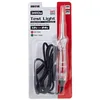 |
Innova 3410 Test Light/Circuit Tester Best for: checking whether a lamp socket or fuse circuit is getting voltage when a running light, tail light or other bulb stays dark Why we picked it: the listing describes a transparent handle with bright LEDs, red for voltage present and green for ground present, plus 6-foot test leads, and it was in stock at $15.70 when checked on 2026-10-14 Main drawback: it only shows that voltage is present, it does not test a bulb or an LED unit, and your owner’s manual or service information decides where it is safe to probe |
As an Amazon Associate we earn from qualifying purchases. Spec-based pick from the listing, not a hands-on test.
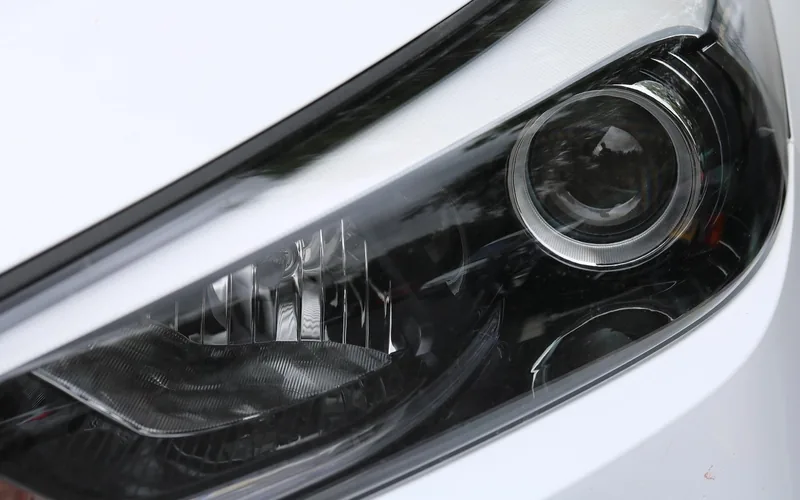
“Running lights” is a loose phrase, and most people searching it mean daytime running lights. In the US lighting standard, FMVSS 108 (49 CFR 571.108, read on the eCFR), section S6.1.1.4 says a pair of front lamps “may be wired to be automatically activated, as determined by the manufacturer of the vehicle, in a steady burning state as daytime running lamps (DRLs).” The pair can be any front pair, “other than parking lamps or fog lamps.”
So in the US, DRL are a maker’s choice, they are front-only, and they are not the parking lamps or fog lamps. Some drivers also say “running light” for a small marker lamp or a rear tail lamp, which is a different system covered below.
DRL are also not meant to light the road. The standard sets a brightness window for a dedicated DRL lamp: in S7.10.13, at least 500 candela at the straight-ahead test point and no more than 3,000 candela at any location in the beam. Transport Canada adds that DRL do not give enough light to drive safely in the dark or in bad weather: the job is being seen, not seeing.
Running Lights vs. Other Vehicle Lights
The four lights below are often confused because they all sit at the front of the car and can all be on at once. The table sums up what the standard and the manuals cited on this page say about each one.
| Light | Main job | Comes on when | Tail lights lit? |
|---|---|---|---|
| Daytime running lights (DRL) | Make the car easier to see in daylight | Automatically after start-up. Example: the 2025 Nissan Leaf manual says once the EV system is started and the parking brake is released | Not necessarily. The same manual says tail lights are not on when the DRL are active with the headlight switch off |
| Low beam headlights | Light the road ahead at night and in poor weather | You select them, or the AUTO setting does it in the dark. In the Kia and Nissan manuals cited, DRL give way once headlights come on | Normally yes. The Nissan manual says the other lighting positions change the DRL to the park function |
| Parking (position) lights | Mark the car at low brightness | Part of the lights-on switch positions | Yes, they belong to the lights-on setting. FMVSS 108 keeps parking lamps out of the DRL pair |
| Fog lights | Add short-range light low on the car in fog | Only when the driver turns them on with their own control | Not a tail lamp function. The Kia manual says DRL turn off when the front fog lamps are on |
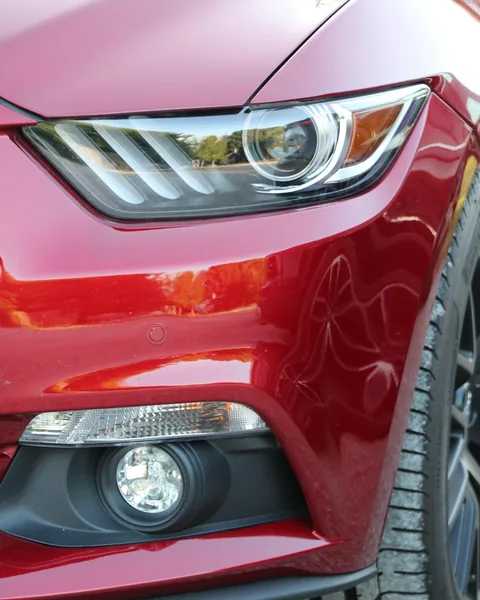
A DRL is not a headlight, and no light in the table stands in for another. Canadian rules require DRL to switch off while driver-activated front fog lamps are lighting the road, a change that took effect on September 1, 2020. For fog driving itself, see our guide on how to turn on car lights in fog.
Why Your Tail Lights May Be Off With Running Lights On
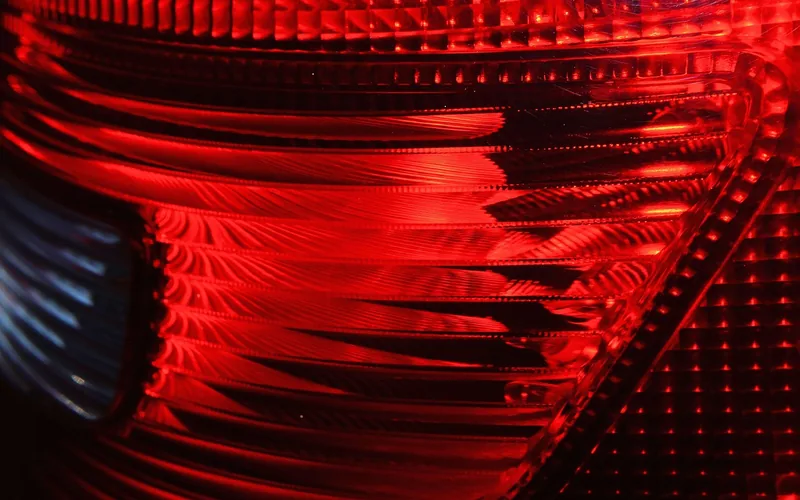
This is the safety point most drivers miss. With DRL running, the front of the car looks lit, yet the back may be completely dark. The 2025 Nissan Leaf owner’s manual spells it out in a warning: when the LED DRL are active with the headlight switch in the OFF position, the tail lights are not on, and it is necessary to turn on the headlights at dusk. The manual adds that failing to do so could cause an accident injuring you and others.
Transport Canada addressed the same gap. From September 2021 its lighting rule requires every new vehicle sold in Canada to have one of three solutions: tail lights that come on automatically with the daytime running lights, headlights and marker lights that switch on automatically in the dark, or a dashboard that stays dark to alert the driver to turn on the lights. The third option shows the problem clearly.
The Kia manuals cited here show the opposite design. Their DRL turn off once the taillamps come on, and the newer one adds that the taillight comes on in the dark with the light switch in the auto position. In that design the automatic setting is what keeps the rear lit. Two cars can behave differently on the same road, so your own manual matters more than any general rule.
The habit that covers every design: at dusk, in rain, in fog or in a tunnel, turn the headlights on yourself or confirm that the AUTO setting has done it.
How Do Running Lights Work?
In every manual cited here the DRL are automatic. They need no switch input, they switch themselves off when the headlights take over, and they depend on the parking brake and the engine or power state. The table compares the wording of four owner’s manual sections read for this page. None of them names a separate DRL on/off switch.
| Manual | DRL come on | DRL turn off |
|---|---|---|
| Nissan Leaf, 2025 | When the EV system is started and the parking brake is released, with the headlight switch in AUTO and the headlights off. They do not come on if the parking brake is applied before start-up | Other lighting positions change the DRL to the park function, and the DRL stay on until the power switch is OFF |
| Nissan X-Trail, 2024 | Even with the headlights off, after starting the engine | When the headlight switch is turned to the headlight positions |
| Kia web manual (code SK3, 2024; model not named on the page) | The page does not say when they come on | When the headlamps, the taillamps or the front fog lamps are on, when the vehicle is off, or when the parking brake is engaged |
| Kia web manual (code NQ5KH, 2026; model not named on the page) | With the headlamp switch in OFF or AUTO (when daylight is detected), electronic parking brake released | When the headlamps are on, the vehicle is off, the taillight is on, or the parking brake is engaged |
Can you turn running lights off?
In the manuals above, the answer is mostly no: the DRL turn off by themselves when the situation calls for it, such as headlights on or the car switched off. The Canadian regulation, read on the Justice Laws website, does allow a vehicle to let the driver shut the DRL off manually, but if it does, the lamps must come back on automatically, at the maker’s choice after the vehicle travels more than 100 m or exceeds 10 km/h. If your manual does not describe a setting, do not pull a fuse or alter the wiring to disable them. Ask a dealer, because the DRL are part of how the car meets its lighting rules.
Regulations and Requirements for Running Lights
United States
In the US, DRL are optional. FMVSS 108 does not make a maker fit them, but it does set rules for any that are fitted. A DRL that is not combined with a turn signal must sit at least 100 mm from the turn signal’s optical center, unless an exception applies, one of which is that the DRL switches off while the turn or hazard signal is on (S7.10.10.1). A separate DRL lamp must carry the letters DRL on its lens, at least 3 mm high, unless it is optically combined with a headlamp (S6.5.2). The full text is on the eCFR page for 49 CFR 571.108.
Canada
Canada goes further. The Motor Vehicle Safety Regulations, Schedule IV, section 108, say every vehicle shall be equipped with daytime running lamps. They must activate no later than when the vehicle is set in motion under its own power, must turn off while the low beams light the road, and may turn off with the parking brake applied or the transmission in park or neutral and the vehicle not moving. A Transport Canada lamp-location table for trucks, buses and MPVs (page modified 2018) lists DRL as required for Canada and optional for the US, so the same model can behave differently on either side of the border.
Is It Illegal to Drive With a Running Light Out?
The federal text we read is a standard for how vehicles are built and equipped, not a ticketing rule for drivers. We did not verify any state or provincial law on a burned-out DRL, and that varies by place. If your car has failed lights, check your state’s vehicle code or your inspection rules through its official site, and fix the fault either way, because the lamp is a safety device. For aftermarket lighting rules, our article on whether LEDs are illegal in a car covers the related questions.
Do Daytime Running Lights Reduce Crashes?
Many pages repeat a crash-reduction percentage for DRL, and few say where it came from. The most direct primary source we read is NHTSA report DOT HS 811 029, The Effectiveness of Daytime Running Lights for Passenger Vehicles, dated September 2008 (read on the NHTSA crash statistics site). It compared real-world crashes of DRL-equipped and non-DRL vehicles for three crash types: two-vehicle crashes excluding rear-end ones, a single vehicle hitting a pedestrian or cyclist, and a single vehicle hitting a motorcycle.
Its abstract reports that DRL had no statistically significant overall effect on those three target crashes, and none when they were combined. Split by vehicle type, DRL in light trucks and vans significantly reduced those vehicles’ involvement in the target two-vehicle crashes by 5.7 percent, while the other effects were not statistically significant. The report also notes possible unintended effects for pedestrians and motorcyclists, which were not statistically significant.
The takeaway is a correction, not an argument against DRL. A single large figure such as the often-quoted “up to 12 percent” is not what this 2008 NHTSA analysis concluded, and the report covers specific crash types in one dataset. We did not find a current IIHS page on DRL to cite, so this page gives no other crash-reduction number. DRL are best treated as a visibility aid that does nothing for you after dark.
Troubleshooting Common Running Light Issues
One Running Light Not Working
The manuals read for this page do not describe replacing a failed DRL, so follow the section of your own manual on light bulbs. The Kia manual’s contents list a Light bulbs entry in its Maintenance chapter, and your manual will show whether the lamp is a bulb or a sealed unit. If you cannot find a procedure, a dealer or a qualified shop should do it. Fix it promptly, since the lamp is a safety device.
A test light like the one in the box shows only whether voltage reaches a socket or fuse. It cannot tell you whether an LED unit has failed.
Running Lights Not Turning On
- Check the parking brake. The Nissan Leaf manual says the DRL do not light if it is applied before start-up, and the Kia NQ5KH page requires the electronic parking brake to be released.
- Check the headlight switch. The Kia NQ5KH page says the DRL operate with the switch in OFF or AUTO, the X-Trail page says they go off in the headlight positions.
- Check that the engine or EV system is on. The Kia manuals list vehicle off as a switch-off condition.
- If none of this explains it, have the lighting fault checked, because the headlights may still be working.
Running Lights Staying On With the Headlights
In the manuals above, and in the Canadian rule for low beams, the DRL should step aside once the headlights are lit. A DRL that stays on with the headlights is a fault or a setting for a service check, not something to ignore. Treat any exterior light you need at night as a reason to stop driving after dark until it is fixed. If your headlights, brake lights or turn signals also fail, see a professional right away.
FAQs About Car Running Lights
Are running lights the same as headlights?
No. Running lights, meaning DRL, are front lamps that come on automatically so the car is easier to see in daylight. Headlights light the road. In the manuals cited on this page, the DRL give way when the headlights come on, and Transport Canada says DRL do not give enough light to drive safely in the dark.
Do running lights turn off when I turn on my headlights?
Usually yes. The Kia and Nissan manuals cited here describe the DRL turning off or switching to the park function once the headlights are on, and the Canadian regulation requires DRL to turn off while the low beams light the road.
Can I turn off my daytime running lights?
In the manuals read for this page, there is no separate DRL switch. They go off with the headlights, the parking brake or the ignition. Canadian rules let a maker add a manual shut-off, but the lamps must reactivate automatically. Ask a dealer before changing wiring or fuses.
Are daytime running lights required in the US?
No. FMVSS 108 section S6.1.1.4 lets the manufacturer wire a pair of front lamps as DRL, but does not make them mandatory. Canada requires them.
Products related to this article
Sponsored / affiliate links. As an Amazon Associate I earn from qualifying purchases. I may earn additional commission from eligible campaigns.
 Circuit Probe Tester,Automotive Short Circuit Protection Diagnostic Tool with 4M Long Cable Overload Protection Auto Electrical System Test Pen
 Power Circuit Probe Tester, 9V - 30V Automotive Circuit Tester, Test Light Automotive Power Fuse Tester, Voltage Tester 0.3V-70V for Continuity Test Resistance Test