First Car With AC: The Pioneering Cadillac
What was the first car to have AC? This question often sparks curiosity among automotive enthusiasts, touching on a significant innovation that dramatically improved driving comfort. The advent of air conditioning in automobiles transformed the driving experience, especially in warmer climates.
This post will explore the groundbreaking vehicle that first introduced this revolutionary feature and the impact it had.
The first car to feature factory-installed air conditioning was the 1953 Cadillac, marking a significant milestone in automotive comfort technology.
Key Takeaways
- The first car to have AC was the 1953 Cadillac.
- This groundbreaking feature was known as the “Comfort Control” system.
- Early AC systems were bulky, expensive, and primarily offered on luxury models.
- The introduction of car AC paved the way for widespread adoption in vehicles across all segments.
- Innovations in refrigeration technology were crucial for making car AC more practical and affordable.
The Birth of Automotive Climate Control
Before the mid-20th century, driving in hot weather was often an uncomfortable, sweaty affair. Drivers and passengers relied on open windows, manual ventilation, or cumbersome aftermarket cooling units. The concept of actively cooling the car’s interior was a luxury that few could even imagine — see our related guide, What Car Has the Most Comfortable Seats in 2026.
However, pioneering engineers at General Motors, specifically within Cadillac, were determined to change this.
The development of automotive air conditioning was not a simple task. It required significant advancements in refrigeration technology, miniaturization of components, and robust engineering to withstand the rigors of a moving vehicle. The initial attempts were met with challenges, but the vision of a comfortable, climate-controlled cabin persisted.
This vision would soon materialize into a reality that would redefine automotive luxury and convenience.

Introducing the 1953 Cadillac “Comfort Control”
The year 1953 marked a watershed moment for the automotive industry. Cadillac, a brand synonymous with luxury and innovation, unveiled its latest models equipped with a revolutionary new option: factory-installed air conditioning. This system, dubbed “Comfort Control,” was not just a minor addition; it was a complete climate control system designed to regulate the interior temperature of the vehicle.
Unlike previous attempts or aftermarket solutions, this was integrated seamlessly into the car’s design and operation.
The engineering behind the Comfort Control was impressive for its time. It utilized a compressor driven by the engine, a condenser, an expansion valve, and an evaporator unit. These components worked together to chill the air and circulate it throughout the cabin.
The system was a testament to the ingenuity of GM’s engineers, who managed to package complex refrigeration technology into a passenger car. While rudimentary by today’s standards, it was a giant leap forward in automotive comfort.
The Comfort Control system was available on Cadillac’s Eldorado and Series 75 models. Initially, it was a very expensive option, costing around $600, which was a substantial sum back then – nearly the price of a small car itself! This prohibitive cost meant that only the wealthiest consumers could afford the luxury of a cool car.
Despite the price, the sheer novelty and the promise of unmatched comfort generated significant buzz.
How the Early Cadillac AC Worked
The original Cadillac air conditioning system operated on the principles of vapor-compression refrigeration, a concept already established in household appliances and commercial cooling. However, adapting it for a vehicle presented unique challenges. The system needed to be compact enough to fit within the car’s chassis and engine bay while being durable enough to withstand vibrations and temperature fluctuations.
The core components included:
- Engine-Driven Compressor: A belt-driven compressor, mounted to the engine, compressed the refrigerant gas, initiating the cooling cycle.
- Condenser: Located typically in front of the radiator, the condenser released heat from the refrigerant into the outside air, turning it from a gas into a high-pressure liquid.
- Expansion Valve: This valve controlled the flow of refrigerant into the evaporator, causing a significant drop in pressure and temperature.
- Evaporator: Housed within the dashboard or a separate unit, the evaporator absorbed heat from the cabin air as the refrigerant flowed through it, thus cooling the air.
- Blower Fan: A fan then pushed the cooled air out into the passenger compartment through vents, typically integrated into the dashboard or rear package shelf.
Unlike modern automatic climate control, the 1953 system was more manual. Drivers would typically set the desired temperature and fan speed, and the system would work to maintain it. The controls were often simple knobs located on the dashboard.
The effectiveness was also limited compared to today’s systems, with airflow and cooling capacity being less potent.
The Impact and Legacy of Cadillac’s AC
The introduction of air conditioning in the 1953 Cadillac wasn’t just a feature; it was a paradigm shift. It elevated the status of the automobile from a mere mode of transportation to a comfortable, personal environment. This innovation set a precedent that other luxury automakers would soon follow.
The desire for comfort became a driving factor in automotive design and engineering, influencing everything from interior layouts to powertrain considerations.
While Cadillac was the first to offer factory-installed AC, other manufacturers quickly recognized its appeal. By the mid-1950s, a handful of other luxury makes began offering similar systems. However, the cost remained a significant barrier for mass adoption.
It would take further technological advancements and a decrease in manufacturing costs for automotive air conditioning to become a standard feature.
The legacy of the 1953 Cadillac’s Comfort Control system is undeniable. It was the catalyst that ignited the trend toward in-car climate control, a feature now considered indispensable by most drivers worldwide. The pursuit of comfort, sparked by this pioneering effort, continues to drive innovation in the automotive industry, leading to sophisticated multi-zone climate systems, heated and ventilated seats, and advanced cabin air filtration.
Challenges and Evolution of Car AC
The early automotive air conditioning systems, while revolutionary, were far from perfect. They were incredibly complex, prone to leaks, and required significant engine power to operate, impacting fuel economy. Maintenance was also a specialized and costly affair.
Here’s a look at some key challenges and how the technology evolved:
| Era | Key Challenges | Technological Advancements |
|---|---|---|
| 1950s – 1960s | Bulky components, high cost, limited cooling, engine drag, frequent maintenance | Vapor-compression cycle established, integrated systems introduced. |
| 1970s – 1980s | Environmental concerns (CFCs), system efficiency, cost reduction | Transition to R-12 refrigerant, improved compressor designs, wider availability. |
| 1990s – Present | Energy efficiency, climate control precision, R-134a and HFO refrigerants | Automatic climate control, dual-zone systems, more efficient compressors, environmentally friendly refrigerants (R-1234yf). |
The shift from manual to automatic climate control was a major step, allowing drivers to set a desired temperature rather than just fan speed. The development of more efficient compressors and heat exchangers also significantly reduced the parasitic drag on the engine and improved overall cooling performance. Furthermore, environmental regulations played a crucial role, driving the transition from ozone-depleting chlorofluorocarbons (CFCs) like R-12 to less harmful refrigerants such as R-134a and eventually R-1234yf.
Warning: Early AC refrigerants contained CFCs, which were later phased out due to their detrimental impact on the ozone layer. Modern systems use environmentally safer alternatives.
The Role of Refrigerants
The heart of any air conditioning system is its refrigerant. The choice and management of refrigerants have evolved significantly since the 1950s. The initial systems in cars like the 1953 Cadillac likely used a refrigerant similar to Freon, though the exact composition might have varied as the technology matured.
These early refrigerants were effective but posed environmental risks.
Here’s a breakdown of common refrigerants used in automotive AC:
- CFC-12 (R-12 or Freon): Used from the 1950s through the early 1990s. Highly effective but a potent ozone-depleting substance. Its use was banned by the Montreal Protocol.
- HFC-134a (R-134a): Became the standard replacement for R-12 in the mid-1990s. It does not deplete the ozone layer but is a potent greenhouse gas.
- HFO-1234yf: The latest generation of refrigerant, widely adopted in new vehicles since the mid-2010s. It has a very low global warming potential (GWP) and is considered the most environmentally friendly option currently available for automotive AC.
The transition to new refrigerants required redesigning AC system components, including compressors, seals, and hoses, to ensure compatibility and prevent leaks. The industry has worked diligently to balance cooling efficiency with environmental responsibility.
Who Benefited from Early Car AC?
Initially, the primary beneficiaries of automotive air conditioning were affluent individuals living in or traveling through hot climates. Owning a Cadillac with factory AC in the 1950s was a symbol of status and a significant luxury that few could afford.
Consider these groups:
- Wealthy Individuals: Those who could afford the premium price tag of luxury vehicles like Cadillacs, Lincolns, and Imperial.
- Business Executives and Professionals: People who frequently traveled for business, especially in southern regions, and valued comfort and arriving at meetings refreshed.
- Drivers in Hot Climates: Residents of states like Arizona, Texas, Florida, and California who experienced extreme heat and found open windows insufficient.
- Tourists and Travelers: Those undertaking long road trips through warm weather, making the journey significantly more pleasant.
- Early Adopters of Technology: Individuals who sought out the latest innovations and were willing to pay a premium for cutting-edge features.
While the initial adoption was limited to a niche market, the demand for in-car comfort grew steadily. This demand fueled further research and development, eventually leading to more affordable and efficient systems that became accessible to a broader range of consumers.

Frequently Asked Questions
What year did car air conditioning become common?
Car air conditioning began to become more common in the 1960s and 1970s as prices decreased and efficiency improved. However, it wasn’t until the late 1980s and 1990s that it started appearing in a majority of new vehicles as a standard or widely available option.
Was the 1953 Cadillac the only car with AC that year?
While the 1953 Cadillac was the first to offer factory-installed, integrated air conditioning as an option, some other high-end luxury brands and custom car builders might have experimented with or offered aftermarket solutions around the same time. However, Cadillac’s “Comfort Control” system is widely recognized as the first true, mass-produced automotive AC.
How much did the first car AC systems cost relative to the car’s price?
The “Comfort Control” system on the 1953 Cadillac cost approximately $600. This was a significant amount, as a typical car at the time could range from $1,500 to $2,500. Therefore, the AC option could add 25-40% to the base price of the vehicle, making it a very exclusive feature.
Did early car AC systems require special maintenance?
Yes, early car AC systems required specialized maintenance. They were complex, prone to leaks, and the refrigerants used were hazardous. Technicians with specific knowledge and equipment were needed for servicing, which further contributed to the high cost of ownership.
What is the difference between manual and automatic climate control?
Manual climate control involves the driver setting the fan speed and temperature manually, and the system works to achieve those settings. Automatic climate control, introduced later, uses sensors to monitor cabin temperature and automatically adjusts the fan speed, air intake, and even blend doors to maintain a precise, pre-set cabin temperature and humidity level.
Final Thoughts
The journey from the first car to have AC, the 1953 Cadillac, to today’s sophisticated climate control systems highlights incredible technological progress. Cadillac’s pioneering “Comfort Control” system didn’t just cool a car; it fundamentally changed the automotive experience, setting a standard for comfort that continues to evolve. This innovation remains a cornerstone of modern vehicle design, ensuring that drivers and passengers can enjoy a comfortable ride regardless of the weather outside.
Products related to this article
Sponsored / affiliate links. As an Amazon Associate I earn from qualifying purchases. I may earn additional commission from eligible campaigns.
 Lueytut 16 PCS Car Air Conditioning Valve Core Kit, R134a R12 Valve Core Repair Accessory with Disassemblyl Tool, Universal AC System Charging Port Maintain Accessories, for Most Cars (Black)
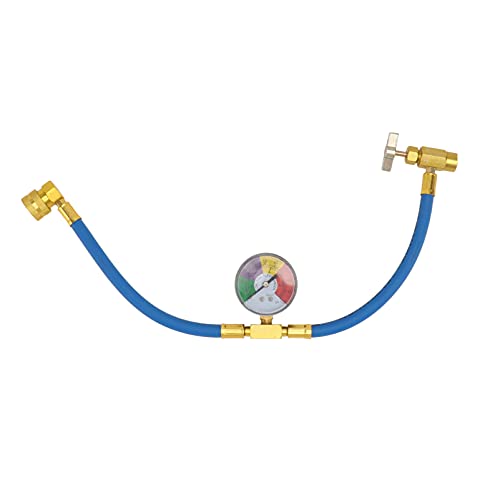 Car Recharge Kit Recharge Hose for Car Air Conditioning Piercing Tap 1/2 Can Opener with Gauge DIY Replacement