Flag Magnet for Car: Will It Stay On at Highway Speed?
A flag magnet can stay on at highway speed only if it is a purpose-built, high-strength magnet on clean, flat steel, with no vinyl wrap, rust, curve, or dirt; otherwise, no. Lose it at speed and it can strike another vehicle, damage paint, or become a road hazard. This guide explains the airflow and surface-contact limits, the common failure points, and a simple yes/no check for safe use.
Why edge lift starts at 55 mph and how seams break contact
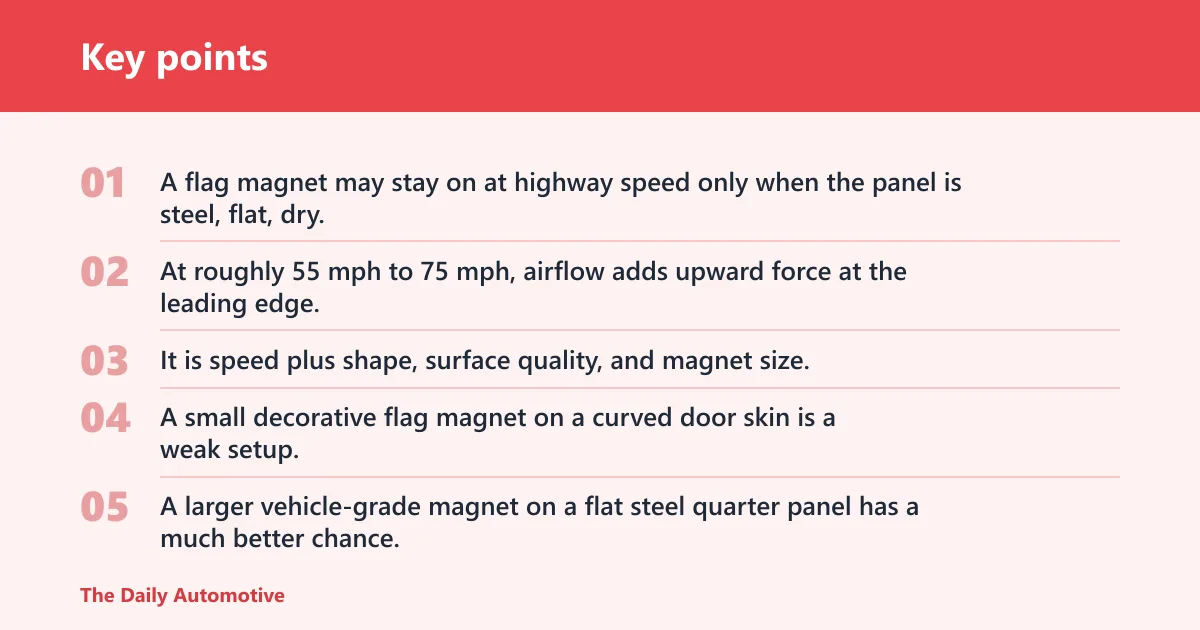


A flag magnet may stay on at highway speed only when the panel is steel, flat, dry, clean, and large enough for full contact. At roughly 55 mph to 75 mph, airflow adds upward force at the leading edge, and vibration from mirrors, seams, and body curvature can make edge peel more likely.
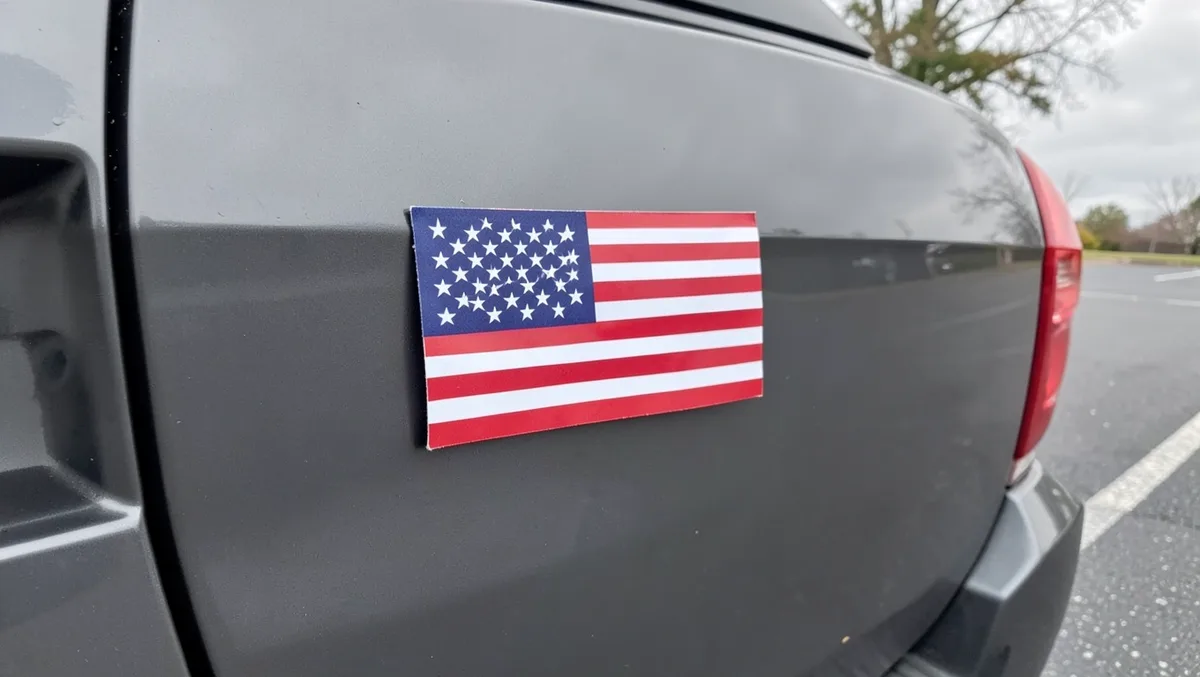
The key issue is not speed alone. It is speed plus shape, surface quality, and magnet size. A small decorative flag magnet on a curved door skin is a weak setup. A larger vehicle-grade magnet on a flat steel quarter panel has a much better chance.
Why 55 mph to 75 mph changes the retention problem
Air moving over a vehicle creates pressure differences, and those differences matter more as speed rises. At highway speed, the front edge of a magnet is the first part likely to lift. Once air gets under an edge, the rest can peel quickly.
That is why a magnet that seems fine around town can fail on the freeway. The road adds vibration, and the vehicle body adds turbulence around seams, mirrors, wheel arches, and contour changes. The magnet is fighting both airflow and motion.
What edge lift looks like in real driving
Edge lift usually starts as a corner that looks slightly raised or feels loose when checked by hand. If the edge is not fully sealed to the panel, highway air can work under it and widen the gap. A loose edge is not a cosmetic issue; it is the first stage of failure.
Suppose a 6-by-9-inch flag magnet sits across a door seam on a warm afternoon. The seam breaks the contact patch, the leading corner starts to curl, and the panel flex plus airflow can loosen it within a short highway drive. The problem is the loss of full contact, not the flag design itself.
When the answer is yes, maybe, or no
Yes only when the magnet is purpose-built, large enough, fully flat on steel, clean, dry, and away from seams or body lines. Maybe when the panel is steel but slightly curved, the magnet is small, or the weather is wet or hot. No when the panel is not magnet-compatible or the surface is dirty.
How car magnets hold to metal
Vehicle-grade flexible magnetic sheet sticks to ferrous metal, usually steel. Vehicle-grade flexible magnetic sheet is often around 30 mil to 60 mil thick, and that thickness can help create holding force while still allowing the sheet to conform to a panel.
Raw magnet strength matters, but contact area matters just as much. If the edges lift, the magnet loses effective grip even when the center is still attached. That is why a wide, flat contact patch beats a small magnet with a strong claim on the packaging.
Why only ferrous panels work
Magnets generally do not hold to aluminum, carbon fiber, fiberglass, or plastic panels. Those materials are common on many vehicles, especially on hoods, liftgates, mirrors, and some body sections. If the panel is not steel or another magnet-compatible metal, the answer is simple: do not use the magnet there.
Why surface contact matters more than raw magnet claims
A magnet with a large contact area spreads holding force across the panel. A magnet that bridges over a crease, seam, or curve loses that advantage. The more panel shape breaks full contact, the easier it is for airflow to pry up an edge.
Edge seal quality matters too. A magnet that sits flat across its full outline is much more stable than one with curled corners. A strong center means little if the perimeter is leaking air.
How size, shape, and thickness affect grip
Thicker magnets generally hold better than thin novelty magnets, but thickness is only part of the picture. A thicker sheet may improve grip, yet it still needs enough flexibility to follow the panel. For road use, a thin novelty magnet is usually the wrong tool.
| Factor | Better for road use | Poorer for road use |
|---|---|---|
| Panel material | Steel or other magnet-compatible metal | Aluminum, carbon fiber, fiberglass, plastic |
| Magnet thickness | About 30 mil to 60 mil vehicle-grade sheet | Thin novelty magnet |
| Panel shape | Flat, full-edge contact | Heavy curve, seam, body line, corner |
| Surface condition | Clean, dry, wax-free | Dust, moisture, salt, polish residue |
Flag magnet checklist
Use this checklist before any highway drive. A single bad answer on panel material, cleanliness, or panel shape is enough to move the decision toward removal. The more boxes that fail, the more likely the magnet is to lift, curl, or drop at speed.
| Check | Yes or no | What to look for |
|---|---|---|
| Panel material | Yes if steel | Must be ferrous metal, not aluminum, plastic, fiberglass, or carbon fiber |
| Thickness | Yes if about 30 mil to 60 mil | Vehicle-grade flexible sheet, not a thin novelty magnet |
| Panel curvature | Yes if flat or nearly flat | No body lines, ridges, seams, or sharp curves under the magnet |
| Cleanliness | Yes if clean and dry | No dust, wax, salt, or moisture under the full footprint |
| Edge seal | Yes if all edges lie flush | No curling corners, lifted edges, or trapped air gaps |
| Weather | Yes if mild and dry | Rain, heavy spray, or extreme heat raises risk |
| Wash exposure | Yes if it will be removed first | Do not leave it on for automatic washes or high-pressure spray |
| Temperature | Yes if the panel is not hot | Sun-heated panels can soften backing and encourage curling |
| Magnet size | Yes if the size gives broad contact | Larger surface area usually holds better than a tiny piece |
| Driving speed | Yes if the magnet is rated or suited for highway use | 55 mph to 75 mph is a higher-risk range for edge lift |
Verdict rule: all 10 checks yes = suitable; 7 to 9 yes = caution; 6 or fewer yes, or any non-compatible panel = remove. If the panel is not steel, or if the magnet crosses a seam or curve, the answer is remove even if the rest looks good.
What makes a car magnet fall off?
A car magnet falls off when airflow gets under an edge, vibration widens that gap, or the surface contact weakens. At highway speed, the leading edge is usually the first trouble spot. Once that edge loosens, the rest of the magnet can peel under the load of moving air.
Lift from airflow at the leading edge
The leading edge faces the first hit from road wind. If it is not fully sealed, the airflow can push a thin wedge of air beneath it. That creates lift, which reduces the contact patch and makes the magnet easier to peel away.
Vibration from seams, mirrors, and curved body panels
Body seams and curves do not just reduce flat contact. They also create tiny repetitive motions as the vehicle moves. That vibration can work the magnet loose, especially near mirrors, wheel openings, and panel breaks where the body shape changes quickly.
Loss of contact from dirt, wax, salt, or moisture
Dirt and wax act like spacers. Salt holds moisture and adds contamination. Water itself can reduce the contact patch and let the magnet slide or lift more easily, especially if the panel is already warm and the edges are stressed by airflow.
A common first-timer mistake is placing a magnet on a door that looks clean from a few feet away. A thin film of wax residue or road film is enough to spoil full contact, and the magnet may start to creep after the first long stretch at speed.
Will it scratch paint?
Yes, it can scratch or dull paint if grit is trapped underneath or if the magnet is dragged across the panel. The risk rises when the magnet is moved without being lifted, or when it is left on a dirty surface long enough for dust and salt to collect underneath.
How trapped grit causes dulling and scratches
Any abrasive particle between the magnet and the paint can act like sandpaper when the magnet shifts. That does not require a dramatic event. A small amount of grit, plus vibration and movement, is enough to mark the finish over time.
Why you should lift, clean, and reset the magnet
Regular removal is part of safe use. Lift the magnet, wipe the panel and the back of the magnet, and reinstall only after both are clean and dry. That prevents grit buildup, reduces paint dulling, and helps preserve a full contact patch.
When paint risk is highest
Risk is highest after rain, road salt exposure, dusty driving, or any wash that leaves residue behind. It is also higher on hot panels, because heat can soften backing materials and make the edges more likely to curl, exposing more paint to debris.
How to decide before you drive
Use the checklist, then decide by tier. The goal is not to guess whether the magnet feels strong in the hand. The goal is to judge whether it can survive airflow, vibration, and surface conditions at highway speed.
Suitable
Suitable means all 10 checklist items pass. The panel is steel, flat enough for full edge contact, clean and dry, the magnet is vehicle-grade and thick enough for road use, and the magnet is not crossing seams or body lines. This is the only category that should be considered highway-ready.
Caution
Caution means some conditions are acceptable but not ideal. Examples include mild curvature, warm weather, or a smaller decorative magnet on a steel panel with otherwise good contact. In this tier, city-speed use may be reasonable, but highway use should wait until the surface and fit improve.
Remove
Remove means any non-compatible panel, a dirty or wet surface, heavy curvature, or a magnet that cannot lie flat. If the edge seal is poor, the panel is not steel, or the magnet sits over a seam, do not send it onto the highway.
Frequently asked questions
Will a magnetic car sign stay on at highway speed?
It can, but only on a clean, flat steel panel with full edge contact and a purpose-built magnet. Highway airflow increases lift and peel force, especially at the leading edge. If the sign is thin, curved, dirty, or mounted to a non-metal panel, the safer answer is no.
How fast can you drive with a magnet on your car?
There is no universal safe speed. A magnet that is fine at about 30 mph may fail at around 65 mph because airflow and vibration can rise quickly. For highway use, the decision should depend on panel material, flatness, cleanliness, magnet thickness, and whether every edge sits flush.
Do car magnets scratch paint at high speed?
They can if grit gets trapped underneath or if the magnet slides across the panel. Speed itself is not the scratch source; movement plus debris is. Lift the magnet to clean it, clean the panel too, and reinstall only on a dry surface with full contact.
Will a flag magnet work on curved car panels?
Sometimes, but curved panels are less reliable because they reduce contact area and make edge lift easier. A mild curve may be acceptable for short, low-speed use, but a heavy curve, seam, or body line is a poor match for highway driving.
Can you use a flag magnet in rain or car washes?
Rain lowers the margin, and automatic car washes are a no. Remove the magnet before any automatic wash or high-pressure spray, then reinstall only after the panel is fully dry. Wet surfaces, soap film, and spray pressure all make edge lift and loss of grip more likely.
Products related to this article
Sponsored / affiliate links. As an Amazon Associate I earn from qualifying purchases. I may earn additional commission from eligible campaigns.