Custom Car Magnets: What to Know Before You Buy and Install
Pick a magnet that sits on a flat steel panel, uses at least 30 mil thickness for daily driving, and covers the full contact area. If the panel is curved, recessed, aluminum, or plastic, skip a magnet. Poor fit causes sliding, edge lift, trapped grit, and paint damage. This guide covers panel fit, thickness choices, vehicle-specific limits, and the install mistakes that make magnets fail.
Will a car magnet stick to your vehicle?
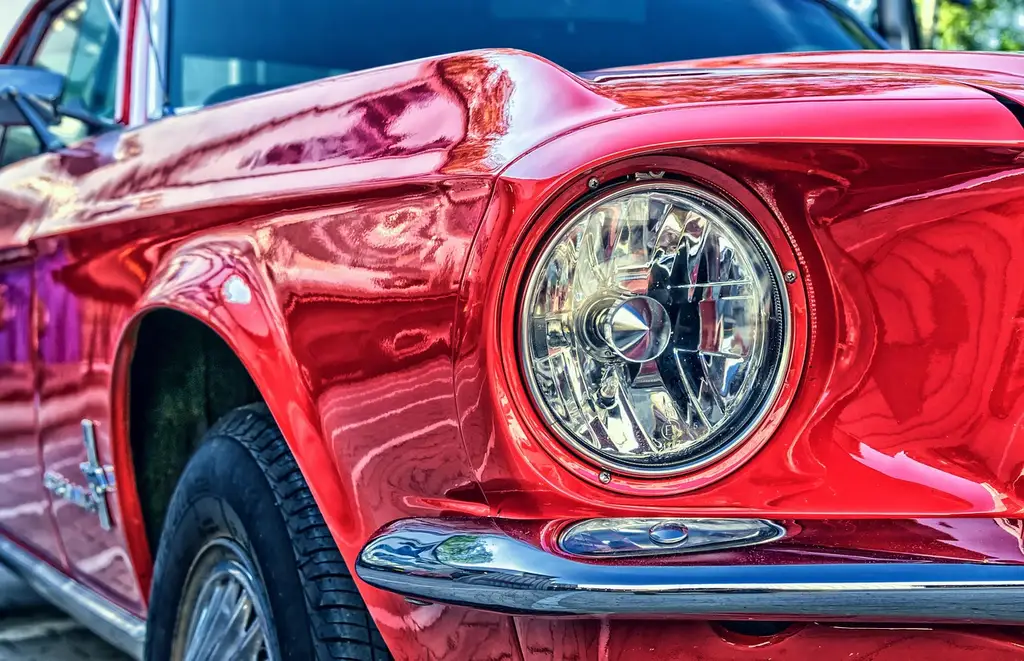


A car magnet will stick only to a ferrous metal panel, usually steel or iron. A quick kitchen-magnet test can tell you whether the surface is magnetic, but it does not prove the panel is fit for road use. If the magnet will not hold at all, the panel is not compatible.
Quick compatibility test with a kitchen magnet
Press a refrigerator magnet against the door, quarter panel, or tailgate. If it falls off right away, that surface is not a candidate for custom car magnets. If it clings lightly, the panel may be magnetic, but the test still does not confirm that the shape, paint, or route are suitable for highway use.
Which vehicle panels are usually magnetic?
Many passenger cars, SUVs, pickup trucks, vans, and light commercial vehicles still have steel or iron outer panels in at least some areas. Doors and rear quarter panels are the most common mounting zones. Aluminum-heavy trims, plastic bumpers, fiberglass bodywork, and many composite panels will not hold a magnet.
When repaired or composite panels fail the test
Body filler, thick paint repair, and replacement skins can reduce pull enough to make a magnet unreliable even when a small test magnet seems to stick. A repaired door may pass a quick check and still fail under wind load. If the panel has been filled, skimmed, or replaced with composite material, treat it as suspect until verified.
Magnet thickness and holding strength
For most passenger vehicles, 30 mil is the practical starting point. It offers the flexibility needed for ordinary door curves while still giving useful hold for daily branding. Heavier 45 mil magnets are better suited to larger panels, tougher duty, and flatter mounting areas where extra stiffness and pull matter more than easy flex.
Why 30 mil fits most passenger vehicles
Thirty mil balances flexibility and retention. It conforms better to standard curved door panels than thicker stock, which helps the full face stay in contact. That matters because gaps at the edges let air get under the magnet, and once that happens the leading corner can start to lift.
When 45 mil or heavier makes sense
Choose 45 mil or thicker for larger signs, more frequent use, or panels that are mostly flat and large enough to support the extra stiffness. That thickness is common on specialty applications where the magnet needs stronger pull and a more rigid sign face. It is not the best choice for every curved door.
How thickness affects flexibility and edge lift
Thickness changes how much the magnet can bend. A thinner magnet flexes more and follows gentle curvature better, while a thicker one resists bending and can bridge across the middle of a curved panel. Bridging reduces contact area, which increases edge lift risk at speed.
Most manufacturers list magnetic pull in pounds per square foot. A common rule of thumb is roughly 70 to 90 lbs per square foot for 30 mil stock, with thicker specialty materials reaching about 100 lbs per square foot or more, though exact numbers can vary by formulation. Stronger pull helps, but fit still controls real-world retention.
Choose the right size for your panel
Match the magnet to the usable flat area, not the vehicle’s overall size. A door may look roomy, but handles, moldings, seams, fuel doors, and body lines shrink the safe zone. The magnet should sit on a flat, clean section with full contact and enough margin from edges.
Common sizes and where they fit
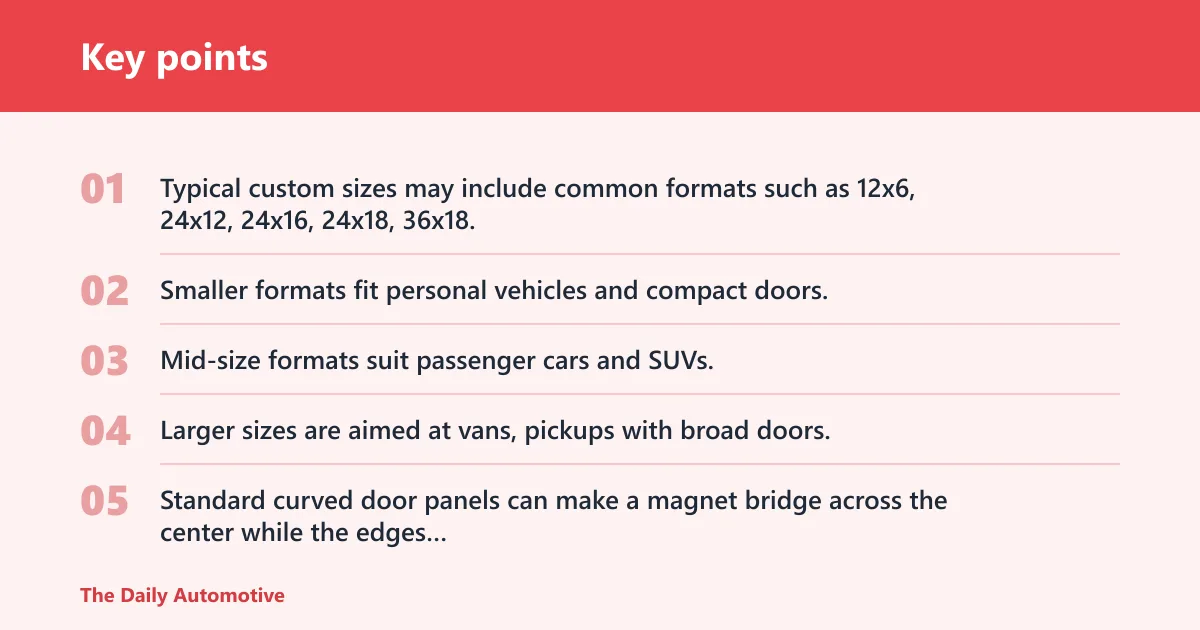
Typical custom sizes may include common formats such as 12×6, 24×12, 24×16, 24×18, 36×18, 48×24, and 60×24. Smaller formats fit personal vehicles and compact doors. Mid-size formats suit passenger cars and SUVs. Larger sizes are aimed at vans, pickups with broad doors, and light commercial vehicles with wide side panels.
Door curvature, seams, and full-contact placement
Standard curved door panels can make a magnet bridge across the center while the edges contact first. That is a setup for wind lift. The full back of the magnet needs to lie flat against the panel; do not place it across seams, body creases, trim edges, or recessed stampings.
Say your sedan has a 24×12 magnet, but the rear door has a strong body line running through the middle. That magnet may seem to fit at first, then start lifting at the top corner during highway driving because only part of the face is touching the panel.
Passenger cars, SUVs, pickups, vans, and light commercial vehicles
Passenger cars usually need smaller or medium sizes because the mounting area is tighter and more curved. SUVs often have taller door sections that can take a larger panel. Pickup trucks and vans offer broader flat areas, and light commercial vehicles often work best with larger formats when the side panel is truly flat.
Buyer checklist decision table
| Vehicle panel material | Panel curvature | Driving speed | Intended use | Recommended thickness | Red-flag installation risks |
|---|---|---|---|---|---|
| Steel door or tailgate | Light curve | City and suburban driving | Business branding or event use | 30 mil | Dirt under magnet, edge near seam, storage curled |
| Steel panel | Moderate curve | Mixed local and highway driving | Frequent business use | 30 mil if panel is flat enough; consider 45 mil only on flatter zones | Bridging over curve, partial contact, placement over body line |
| Steel panel | Flat and wide | Frequent highway use | Light commercial route work | 45 mil | Small contact area, dirty paint, repeated wet storage |
| Aluminum, plastic, fiberglass, or repaired with filler | Any | Any | Any | Not compatible | Magnet will not hold, false positive from tiny test magnet, paint damage risk from failed retention |
Use the table as a first pass, then confirm the exact panel with a kitchen magnet and a flatness check. If the panel passes magnetically but fails on shape, the safer choice is a decal or another mounting method.
How to install without damage
Clean installation is the difference between a magnet that stays put and one that traps grit, edges up, or marks paint. The panel must be clean and dry. The magnet back should be clean and dry too. Install on a flat area, press from the center outward, and avoid the usual trouble spots.
- Wash the target panel with mild soap and water.
- Dry the panel completely, including seams near the mounting area.
- Clean the back of the magnet so no dust or grit remains.
- Place the magnet on a flat section, away from seams, trim, and body lines.
- Press across the full face so the entire panel makes contact.
- Remove and reapply on a regular schedule to clean both surfaces.
Avoid seams, trim edges, and body lines
Seams and trim create tiny air gaps. Body lines create high spots and low spots. Both can reduce contact and let air work under the edge. If the magnet crosses a seam, the edge nearest the gap is the first place to lift.
Remove, dry, and reapply on a regular schedule
Periodic removal matters more than many buyers expect. Moisture trapped under the sign can sit against paint for hours or days, and dust can turn into an abrasive layer. Remove the magnet, wipe the panel and the back of the sign, then reinstall only after both are dry.
Suppose a van carries a 36×18 magnet through a wet week of service. If the sign stays on for days without removal, moisture and road grime can collect under the edges. Regular removal prevents that buildup and lowers the chance of curling or paint marring.
Can custom car magnets fall off at highway speeds?
Yes, they can, especially when the fit is poor or the panel is curved. Speed increases wind pressure on any lifted edge. A magnet that feels secure in a parking lot can sometimes peel at highway speeds if it bridges over a curve, sits across a seam, or has dirt trapped underneath.
Why poor fit matters more at speed
At highway speed, even a small edge gap becomes a lifting point. Air gets under the corner, the corner lifts, and the exposed edge catches more airflow. The bigger the gap, the faster the failure can spread. Fit matters more than raw magnetic pull once the vehicle is moving fast.
How dirt, curl, and panel gaps cause lift
Dirt acts like a spacer. Curl from bad storage keeps the sign from laying flat. Panel gaps and body seams break contact. Those three problems often show up together, and each one increases the chance that the magnet will slide, flutter, or come loose on the road.
Route type and daily driving patterns
A local route with short, slow trips is easier on magnets than daily highway commuting. Frequent stop-and-go use is less demanding than long, fast runs, but neither removes the need for fit checks. If your route includes regular freeway driving, pick the flattest panel and check it more often.
Magnetic signs vs vinyl decals
Choose a magnetic sign when removability matters and the vehicle panel is truly magnetic. Choose a vinyl decal when you need a permanent look, the panel is not ferrous, or the surface shape is too curved for full contact. The better choice depends on paint sensitivity, route use, and how often you need the branding off.
When removability matters most
Magnetic signs work well for seasonal campaigns, weekend events, service calls, and personal vehicles that need temporary branding. They come off cleanly when used correctly and stored flat. That makes them a strong fit when the same vehicle has multiple roles.
When a decal is the better fit
If the panel is aluminum, plastic, fiberglass, or repaired in a way that weakens magnet hold, a decal is usually the better route. A decal also makes sense for heavily curved surfaces where a magnet would bridge or lift. For long-term branding on incompatible panels, a decal avoids the fit problem entirely.
Frequently asked questions
What thickness should I buy for custom car magnets?
Start with 30 mil for most passenger vehicles and everyday use. It offers a practical mix of flexibility and hold. Move to 45 mil only when the panel is flat enough, the sign is larger, or the application is more demanding. Thicker is not automatically better on curved doors.
Will a car magnet stick to my vehicle?
Only if the panel is ferrous metal, usually steel or iron. A kitchen magnet is a quick first check, but not a full guarantee. Aluminum, plastic, fiberglass, and many repaired panels will not hold a magnet well enough for safe road use.
How do I install a car magnet without damaging paint?
Install it on a clean, dry, flat panel. Remove dirt from both the vehicle and the magnet, place it away from seams and trim, and press the full face into contact. Remove it regularly, dry both sides, and store it flat so moisture and curling do not damage the finish.
Can car magnets fall off at highway speeds?
Yes. Highway speed exposes edge gaps, dirt, curl, and poor fit very quickly. A magnet that bridges a curve or crosses a seam can lift at the corner and peel away. Full-surface contact is the main defense, not thickness alone.
How do I clean and care for car magnets?
Wash the magnet and the vehicle panel with mild soap, then dry both completely before reinstalling. Remove the sign on a regular schedule, especially after rain or road spray. Store it flat when possible, and keep it away from heat, moisture, and sharp bends that can cause curling.
Should I choose a magnetic sign or vinyl decal?
Choose a magnetic sign when you need removability, temporary branding, or a seasonal display and the panel is magnetic and flat. Choose a vinyl decal when the panel is non-magnetic, heavily curved, or better suited to long-term graphics. The right choice follows the vehicle surface first, then the route and use pattern.
Products related to this article
Sponsored / affiliate links. As an Amazon Associate I earn from qualifying purchases. I may earn additional commission from eligible campaigns.
 Custom Vinyl Lettering, Vinyl Decals for Vehicles, Custom Car Sticker for Windows, Trucks, Storefront, Cups & Laptop, Die Cut Personalized Lettering, Waterproof Vinyl
 Custom Vinyl Lettering, Vinyl Decals for Vehicles, Custom Car Sticker for Windows, Cups, Laptop, Trucks & Storefront, Personalized Window Decals