Automotive Smoke Machine Leak Tester: is it worth it?
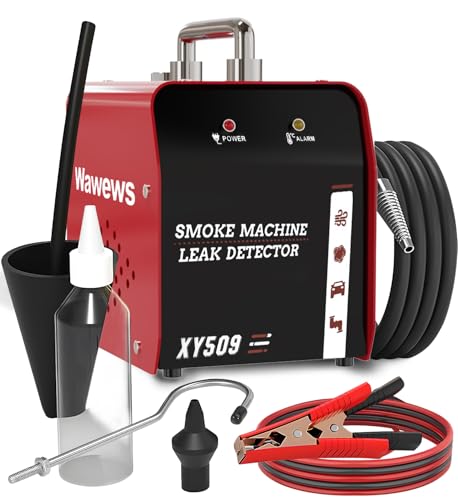
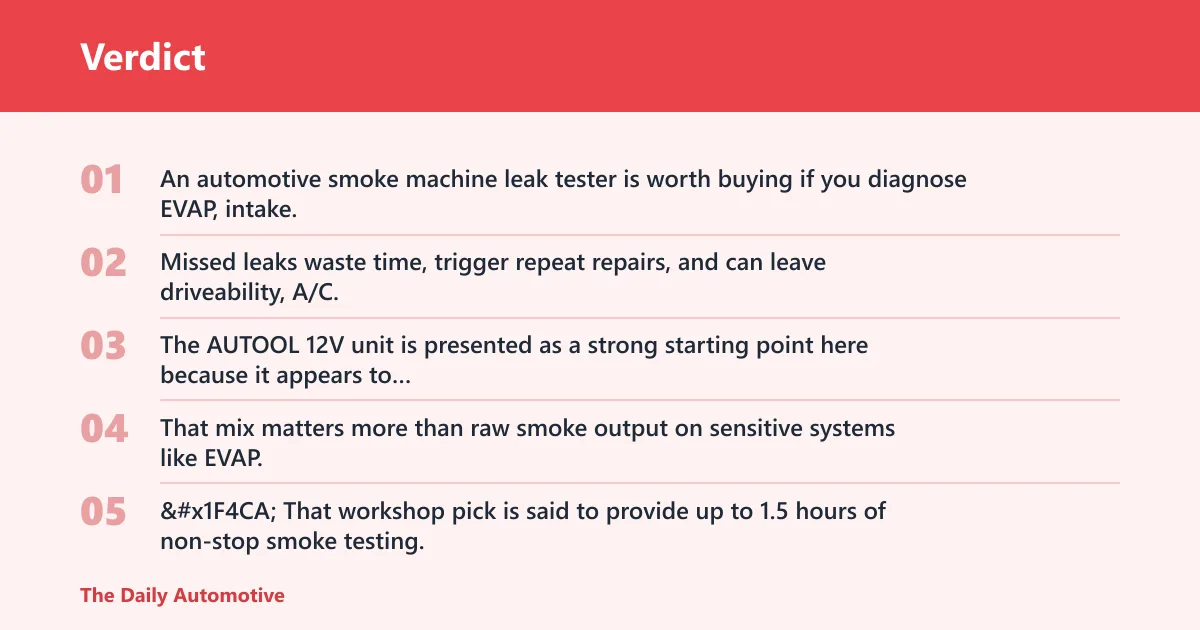
An automotive smoke machine leak tester is worth buying if you diagnose EVAP, intake, vacuum, or HVAC leaks more than a few times a year, or if one shop smoke test would cost near the tool’s price. For a one-off fault, rent one or pay a shop. Missed leaks waste time, trigger repeat repairs, and can leave driveability, A/C, or emissions problems unsolved.
This guide is part of our Car cooling and climate control guide series.
Verdict

- Built-in air pump for portable operation
- External pressure gauge for accurate monitoring
- Equipped with overheat and freeze smart protection
The AUTOOL 12V unit is presented as a strong starting point here because it appears to pair a built-in air pump with an external pressure gauge and protective features. That mix matters more than raw smoke output on sensitive systems like EVAP, where low pressure and controlled flow separate a useful diagnostic from a damaged hose, seal, or purge line.
📊 That workshop pick is said to provide up to 1.5 hours of non-stop smoke testing. Source: 10 Best Professional Automotive Smoke Machines Of 2026: EVAP Leak ….
Specs at a glance
| Spec | AUTOOL 12V EVAP leak detector | What that means in practice |
|---|---|---|
| Smoke source | Built-in air pump | No external compressor needed; easier for driveway use |
| Power | 12V DC | Fits garage and mobile work setups |
| Monitoring | Pressure gauge | Helps keep test pressure low on sensitive systems |
| Protection | Overheat and freeze smart protection | Useful for short, repeated diagnostic sessions |
| Use cases | EVAP, vacuum, fuel pipe leakage locating | Good fit for common leak-finding jobs |
Who it is for
Quick picks
| Best for | Pick | Key spec | Price |
|---|---|---|---|
| Most DIY owners | AUTOOL 12V EVAP leak detector | Built-in air pump, pressure gauge, smart protection | $75.00 |
| Lowest upfront buy-in for broad accessory coverage | EGNGY Pro accessories kit | 23 cap plugs plus hose and seal accessories | $27.99 |
| Shop-style continuous use | AutoLine Pro HyperSmoke | Built-in compressor motor, adjustable pressure | $64.99 |
Occasional DIY owners should buy only if leak hunting is becoming routine. If you are chasing repeated check-engine lights, EVAP faults, or slow vacuum leaks on a family car, the tool starts to pay off quickly.
Hobby mechanics who work on intake, boost, or HVAC sealing jobs often get more value from a unit with a gauge, a flow meter, and a serious adapter kit. Mobile techs and small shops should lean toward compressor-driven units or heavier-duty units because runtime and setup speed matter more there.
What it can actually test
Smoke testers can cover EVAP, intake, exhaust, cooling, and fuel tank systems, but the useful part is not the smoke itself. It is the ability to pressurize a sealed or nearly sealed circuit at low pressure and make a small leak visible at the exact point of escape.
EVAP system leak testing
EVAP diagnostics are the classic use case. The system is tied to emissions and check-engine lights, and a smoke machine can help locate small leaks in hoses, caps, purge lines, canisters, and tank-side connections. On EVAP, low-pressure diagnostic use matters because the system is not built for brute force.
Vacuum, intake manifold, and boost checks
Vacuum system testing is equally practical. Smoke can expose hose leaks, intake manifold leaks, disconnected fittings, and small seal failures that may not show up with soap alone. On turbo engines, it can also help trace boost leaks in charge piping, couplers, and clamps.
HVAC and cautious coolant-related use
Some smoke machines can help with HVAC sealing or selected low-pressure cooling-system checks, but that is where caution matters most. Cooling systems are not a generic smoke-test target, and a good result depends on the machine’s pressure regulation and the exact system being tested. Never assume all coolant complaints belong on a smoke machine.
What does not
A smoke machine is not a cure-all, and it can create false confidence if the setup is wrong. Normal vents may release smoke, caps can be left open, service ports may be disconnected, and the adapter itself can leak before the vehicle system does.
The other hard limit is pressure. More smoke is not better on a sensitive circuit. If a machine lacks a clear pressure gauge and controllable flow, it is easier to over-pressurize a small hose, force smoke into places it should not go, or miss a leak because the machine is not sealed well enough at the adapter.
Common failure cases to watch for
- Smoke escaping from an open fuel cap or disconnected EVAP service point.
- Smoke coming from normal HVAC vents and being mistaken for a leak.
- Smoke leaking at a loose cone adapter instead of the vehicle.
- Using too much pressure on a fragile hose or seal.
- Assuming visible smoke means the whole system is sealed elsewhere.
Alternatives

- Features HyperSmoke Technology for thick visible smoke
- Includes OEM approved smoke fluid
- Built-in air compressor motor with adjustable pressure
AutoLine Pro HyperSmoke. This is the better pick if you want a built-in compressor motor and adjustable pressure in a compact package. Based on the spec sheet and owner feedback, it fits DIY and small-shop work well, but the tradeoff is that it still needs careful setup on sensitive systems, and the product data leans more toward convenience than broad accessory completeness.

- Includes inflatable intake adapter for large intakes
- Comes with 7 precision sealing cones
- Features heavy-duty stainless steel connections
EGNGY Pro accessories kit. This is not a full smoke machine, but it is worth considering if you already have a tester and need better sealing hardware. The 7 sealing cones and inflatable intake adapter are useful for awkward intakes, though it does not solve the core machine problem and will not help if you need a pressure gauge, smoke output, or runtime.
What works
The best thing a smoke machine does is narrow diagnosis fast. It turns a vague symptom into a visible leak path, which is especially useful for small EVAP leaks, intake leaks, and hose sealing problems that would otherwise get parts swapped at random.
It also helps confirm a repair. If a hose clamp, cap, or seal was the issue, you can close the system and verify that smoke no longer escapes. That matters on cars with repeat check-engine lights because it saves the next round of guesswork.
A common first-timer mistake is to chase a small vacuum complaint with spray bottle checks only. Suppose a 2.0-liter turbo car has a rough idle and a thin hiss at the back of the intake manifold. Smoke makes the leak path obvious in seconds; soap may never reach the exact crack.
What works not
Smoke volume alone is not the buying criterion. Pressure control, gauge visibility, adapter quality, and the machine’s ability to maintain stable output matter more on EVAP and other low-pressure circuits. A loud machine with poor regulation is often a worse choice than a quieter one with better controls.
The product roundup also shows why use-case matching matters. A heavy-duty workshop pick that works with any air compressor and can provide up to 1.5 hours of non-stop smoke testing is great for shops, but that runtime advantage is less important for an owner who only needs two or three leak checks a year.
Can a smoke machine find EVAP leaks and vacuum leaks?
Yes. That is the core job for most DIY buyers, and it is the reason this tool shows up so often in emissions and drivability diagnostics. EVAP leak testing and vacuum leak testing are both low-pressure jobs where smoke can reveal tiny openings that are hard to see any other way.
For EVAP, the system’s regulatory relevance matters because a small leak can turn into a persistent check-engine light. For vacuum, the payoff is often smoother idle, better fuel trim behavior, and faster confirmation that a hose or manifold seal is the problem.
Do not confuse “can find” with “can safely pressurize anything.” On EVAP and HVAC-related checks, pressure should stay low and controlled. On some cooling-system checks, it may be better to stop and use the right shop procedure instead.
Do I need an air compressor or a built-in pump smoke machine?
If you are a DIY owner, a built-in pump model is usually the easier buy because it is self-contained, portable, and does not need an external air source. If you work in a shop, an air-compressor-driven smoke machine makes more sense because it is better suited to longer sessions and faster repeat setups.
Built-in pump models
Built-in air pump units are popular because they are simpler to move and set up. The AUTOOL 12V unit is a good example of a compact 12V DC design for garage or mobile work, and the no-external-source operation makes it easier for someone without a full compressor setup.
Air-compressor-driven units
Compressor-driven machines fit shop use better. The AutoLine Pro pick is described as working with any air compressor, which is useful when runtime and repeatability matter more than portability. The tradeoff is obvious: you gain endurance, but you also add another dependency and more setup steps.
How much pressure should I use when smoke testing a car?
Use the lowest pressure that produces a stable smoke trace. For EVAP, HVAC sealing, and many hose-based checks, the rule is controlled low pressure, not a flood of smoke. A pressure gauge is more important than output volume because it helps prevent damage on sensitive circuits.
The budget-friendly kit listed here is described as including 20–25 PSI output, but that does not mean every system should be tested anywhere near the top of that range. The right setting depends on the vehicle system, the sealing quality, and whether the circuit is designed for low-pressure diagnostic use.
As a practical rule, if the system is small, fragile, or emissions-related, start low and watch the gauge. If smoke appears at the adapter, the cap, or a service fitting, fix the setup first before you assume the vehicle has a leak.
What accessories should come with a smoke machine leak tester?
Good kits should include cone adapters, hose adapters, pipe caps, bladders, plug assortments, fluid, a usable hose length, and storage for the parts you actually need. The all-in-one diagnostic choice in this group includes 23 cap plugs plus hose and seal accessories, which is the kind of coverage that reduces setup friction.
Accessory kits matter because many failures are sealing failures at the tool interface. If the intake opening is odd-shaped, an inflatable adapter may work better than a hard cone. If the line is small, the right plug is safer than improvising with tape or oversized fittings.
Is a smoke machine better than a spray bottle test for finding leaks?
Yes, when the leak is hidden, internal, or too small for spray and visual checks to catch quickly. Smoke gives you a path to the failure point. A spray bottle is still useful for obvious external leaks, but it is less effective on buried intake cracks, EVAP pinholes, and many vacuum faults.
Soapy water is often enough when the suspect area is exposed and the leak is easy to reach. Smoke is the better diagnostic when symptoms persist after hose checks, when the leak is intermittent, or when you need to separate a true leak from a normal vent path.
Can one smoke machine work for intake, EVAP, and cooling systems?
Some can, but not all should be used that way. Many smoke testers can cover EVAP, intake, exhaust, cooling, and fuel tank systems according to the product roundup, yet the safe and useful pressure window changes from one circuit to another. That is why feature matching matters so much.
For intake and EVAP, low pressure plus a gauge and flow control is usually the priority. For cooling-related checks, be far more cautious and use only the systems the machine is actually designed to test. A machine that claims broad coverage is not automatically appropriate for every coolant fault.
What is the best smoke machine for a home garage?
For a home garage, the best smoke machine is usually a built-in pump unit with a pressure gauge, smart protection, and enough adapters to connect without improvising. The AUTOOL 12V model is the best fit here because it combines portability with the monitoring tools that matter most for DIY diagnostics.
If your use is more accessory-driven than machine-driven, the EGNGY kit is a useful add-on, but it is not a substitute for a smoke source. If you want something closer to shop behavior, the AutoLine Pro unit is the stronger path because it works with any air compressor and is aimed at longer sessions.
Are cheaper smoke machines reliable enough for occasional use?
Sometimes, but cheap units often cut corners on seal quality, accessory completeness, and thermal protection. That does not make them useless. It does mean you should expect more setup fuss and a higher chance of fighting the tool instead of diagnosing the car.
If you only need occasional EVAP or vacuum checks, a lower-cost model can still be worth it if it has a real gauge and acceptable adapters. If you plan to use it on multiple systems, the extra cost for better regulation and safer controls is easier to justify.
Should you buy it
Buy a smoke machine if you are tired of repeated leak diagnosis, if EVAP faults keep coming back, or if you regularly work on intake and vacuum issues. That is the point where the tool starts saving time instead of adding another item to the shelf.
Rent or pay a shop if the fault is isolated, the vehicle is a one-off, or the system is sensitive enough that you do not want to learn on it. The payback is simple: if one shop smoke test is close to the tool price, two or three avoided visits usually tip the math toward ownership.
Simple payback framework: tool price ÷ shop diagnostic fee = visits to break even. At $75, the AUTOOL unit can make sense if you avoid even a small number of paid smoke tests over time. Add the value of fewer guess-and-check parts swaps, and the case gets stronger.
Frequently asked questions
Is an automotive smoke machine leak tester worth it for DIY use?
Yes, if you diagnose EVAP, vacuum, intake, or HVAC leaks more than a few times a year. It is less compelling for a single fault. The purchase makes the most sense when repeated diagnosis, hidden leaks, or emissions-related check-engine lights keep coming back.
What leaks can a smoke machine find on a car?
It can help find EVAP leaks, vacuum leaks, intake manifold leaks, boost leaks, HVAC leaks, and some low-pressure cooling-system leaks when the machine and procedure are appropriate. It is especially useful for small openings that are hard to see with a flashlight or spray test.
Do I need an air compressor or a built-in pump smoke machine?
Built-in pump models are usually better for DIY because they are portable and self-contained. Compressor-driven units fit shop use better because they are better suited to longer sessions and frequent setup. If you already own a compressor, a shop-style unit can be a good value.
How much pressure should I use when smoke testing a car?
Use low pressure and monitor it with a gauge. Sensitive systems like EVAP and some HVAC circuits can be damaged by too much pressure, so the point is controlled smoke delivery, not maximum output. Start low and increase only as the system and instructions allow.
What accessories should come with a smoke machine leak tester?
Look for cone adapters, hose adapters, pipe caps, bladders, plug assortments, smoke fluid, and enough hose length to reach the test point comfortably. A good kit should also include storage or organization so the adapters are easy to find and less likely to be lost.
Is a smoke machine better than a spray bottle test for finding leaks?
Usually yes for hidden leaks. A spray bottle is fine for obvious external leaks, but smoke is better when the leak is buried, intermittent, or too small to react strongly to soapy water. Smoke also makes it easier to see where air is actually escaping.
Products related to this article
Sponsored / affiliate links. As an Amazon Associate I earn from qualifying purchases. I may earn additional commission from eligible campaigns.