Flat White Paint for Cars: Best Picks & DIY Application Guide
Flat white paint for cars is a single-stage acrylic urethane finish, like Custom Shop’s Hot Rod Flatz, that dries to a low-gloss satin sheen and skips the clear coat most white paints need. Using a glossy base coat without a matching flat clear instead leaves a shiny white car, not the stealth matte look you wanted. This guide covers three tested-style picks, real per-gallon costs, and the DIY steps to apply it.
Quick Answer
Flat white paint for cars is a single-stage acrylic urethane (no clear coat needed) or a white base coat sealed under a dedicated flat/matte clear. Expect to pay $80–$150 per gallon for the color coat, plus $200–$700+ for a full professional job. Once cured, wash by hand only — wax and machine buffing both add sheen a flat finish can’t hide.
What Is Flat White Paint for Cars?
Flat white paint is a low-gloss automotive coating that reflects almost no light, giving a car a chalky, matte-white look instead of a mirror shine. Most flat white products sold for DIY use, like Custom Shop’s Hot Rod Flatz line, are single-stage acrylic urethanes — the color and the protective coating are the same product, pre-flattened at the factory so no separate clear coat is applied on top.
If you’d rather explore matte finishes in other colors — black is the most common request — our guide to matte paint for cars covers those options separately.
Best Flat White Paint for Cars
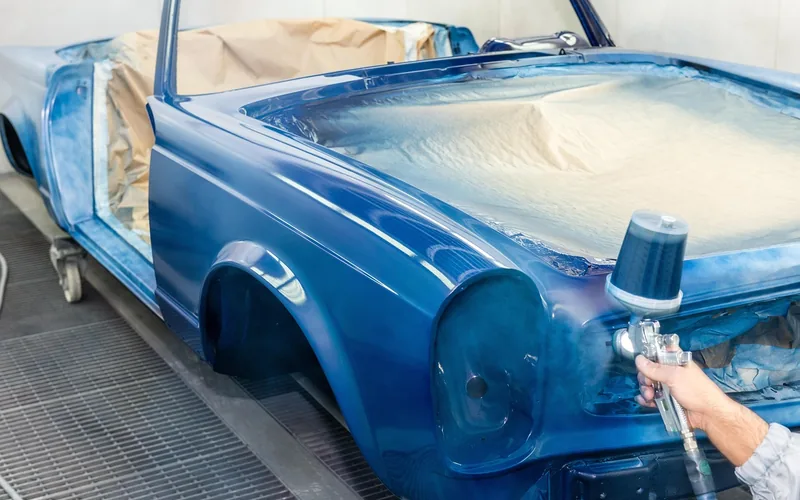
These three options span a full single-stage repaint kit, a second true flat/matte shade from the same manufacturer, and a budget rattle-can pick for touch-ups or testing the look before you commit to a full job.
Best Flat White Paint Pick
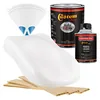
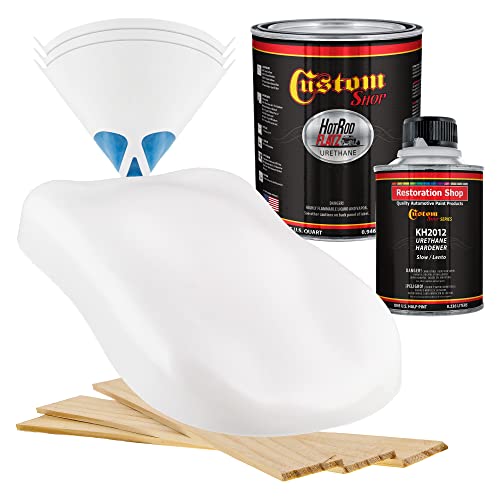
Custom Shop Arctic White Hot Rod Flatz – Quart Kit
Single-stage acrylic urethane that sprays a consistent low-gloss satin white with no clear coat step.
- Best for: Painting a single panel, hood, or small car with a true single-stage flat white finish
- Why we picked it: No clear coat needed, mixes at a simple 4:1 ratio, and comes pre-flattened to a consistent low-gloss satin sheen
- Main drawback: A quart only covers about one panel to a small car — most full vehicles need the gallon kit instead
Compare more flat white paint options
 Option 1 Custom Shop Classic White Hot Rod Flatz – Gallon Kit
|
 Option 2 Custom Shop Championship White Hot Rod Flatz – Quart Kit
|
 Option 3 Rust-Oleum 2X Ultra Matte White Spray Paint
|
As an Amazon Associate we earn from qualifying purchases.
Single-Stage vs. Base Coat + Flat Clear: Which System Should You Use?
Not every white “base coat” sold for cars is flat — most base coats dry to a gloss and need a dedicated flat or matte clear sprayed on top to lose the shine. According to Dupli-Color’s own product page for its Paint Shop Finish System, the color coat “must be clear coated” — skip that step and a white base coat stays glossy, not flat.
| System | What’s Included | Clear Coat Needed? | Best For |
|---|---|---|---|
| Single-stage urethane (e.g. Hot Rod Flatz) | Color + hardener in one product | No — pre-flattened, ready to spray | DIYers who want the simplest, cheapest path to a true flat finish |
| Base coat + flat clear (2-stage) | Separate color coat plus a dedicated flat/matte clear | Yes — a standard gloss clear will make it shiny | Painters who want extra UV/chemical protection or plan to blend factory panels |
| Rattle-can acrylic enamel | Color only, in a spray can | Optional (can be sprayed with a clear enamel) | Small touch-ups or testing a color before a full repaint |
How to Apply Flat White Paint to a Car
The prep work matters more than the paint itself — flat and matte finishes show every imperfection in the surface underneath since there’s no gloss to hide it. Our full walkthrough on how to sand and prime a car covers grit sequence in more depth; here’s the short version for a flat white job specifically.
- Sand the surface: Use a dual-action sander with 80–180 grit to strip failing paint or clear coat down to a stable substrate — bare metal or factory primer.
- Repair and block-sand: Fill dents with body filler, then block-sand with a contrasting guide coat and 320–400 grit paper until the panel is flat with no low spots.
- Prime and cure: Mask trim and glass, spray 1–2 coats of epoxy primer, and let it cure 24 hours before sanding 400 through 800 grit for a smooth base.
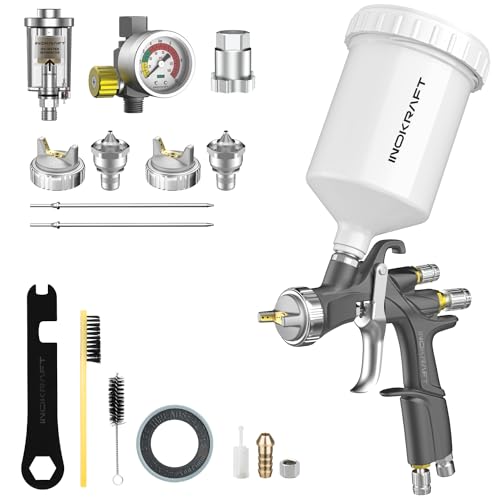
- Spray the color coat: Wipe the panel with a prep solvent, mix single-stage urethane at a 4:1 ratio, and apply in thin, even passes with a paint gun.
- Let it cure without waxing or buffing: Give the flat finish at least 24–48 hours to cure, and skip wax or polish — both add unwanted sheen that can’t be removed without repainting.
How Much Does Flat White Paint Cost?
A quart of single-stage flat white urethane runs about $99, and a full gallon kit (enough for most sedans) runs around $275. Paying a shop to do the work instead costs significantly more once labor, materials, and booth time are added in — and if you’re weighing paint against a full vinyl wrap, our paint vs. wrap cost and durability guide breaks down which option comes out cheaper for your situation.
📊 A standard full-car repaint averages around $4,000, and specialty finishes like matte or custom colors add to that because they require more precise application — Source: Frank & Son Auto Body, 2026 cost guide
Is Flat White Paint Hard to Maintain?
Flat white paint isn’t less durable than gloss white — the pigment and protective resin are the same — but it does need different care. Skip wax and polish entirely, since both are designed to add shine and will leave permanent glossy patches on a matte surface. Hand-wash only, and see our guide on how long to wait before washing a car after paint for the right cure time before that first wash.
“Hot Rod Flatz Acrylic Urethane System is a high-performance professional, easy-to-use single-stage paint coating system designed for overall automotive refinishing. No clearcoat is required or recommended.”
If a rock chip or scuff does get through, you can’t spot-buff it out the way you could with gloss paint — matte finishes can’t be machine-polished without leaving a shiny patch, so most repairs mean repainting the whole panel. For deeper restoration background on faded or damaged paint in general, see how to restore old car paint.
Is It Legal to Paint Your Car Matte White?
Yes — painting a car matte white, or any other legal color, is allowed in every U.S. state. What varies is whether you have to report the change: some states require you to update your vehicle title or registration when the color changes, while others don’t track color at all. Either way, notify your auto insurance company after a repaint, since your policy is written against the car’s recorded description, including color.
Frequently Asked Questions
What Is Flat White Paint for Cars?
Flat white paint for cars is a low-gloss white automotive coating, most often a single-stage acrylic urethane, that reflects almost no light and needs no separate clear coat.
Do You Need a Clear Coat Over Flat White Paint?
No, if you’re using a true single-stage flat urethane like Hot Rod Flatz — it’s pre-flattened and ready to spray as-is. Yes, if you’re using a white base coat, since base coats dry glossy and need a dedicated flat or matte clear on top to look flat.
Is Flat White Paint Durable for Cars?
Yes. Single-stage urethane resists chipping, cracking, and UV fading about as well as gloss urethane. The tradeoff is repairability: matte finishes can’t be machine-buffed if they’re scratched, so most damage means repainting the panel rather than polishing it out.
Can I Apply Flat White Paint Myself?
Yes, with a DA sander, epoxy primer, a paint gun, and a well-ventilated space or spray booth. Prep work — sanding, filling, and priming — takes far longer than spraying the color coat itself, and skipping steps shows more on a flat finish than it would under gloss.
Is Flat White Paint Hard to Maintain?
It needs different care, not more care. Hand-wash only with a pH-neutral soap, skip automatic car washes with brushes, and never apply wax or polish — all three can leave shiny patches on a matte surface that won’t buff out.
Is It Legal to Paint Your Car a Different Color Like Matte White?
Yes, in every U.S. state. Some states require you to report a color change on your registration or title, and your insurer should be notified either way since your policy lists the car’s color.
For most DIYers, a single-stage acrylic urethane like Custom Shop’s Hot Rod Flatz is the simplest path to a true flat white finish — no clear coat, a straightforward 4:1 mix, and real chip and UV resistance once it’s cured. Prep the surface properly, skip the wax afterward, and it should hold up for years.
Products related to this article
Sponsored / affiliate links. As an Amazon Associate I earn from qualifying purchases. I may earn additional commission from eligible campaigns.