Best Car Battery for High-Electronics Loads: we compared
Choose the best AGM battery by matching reserve capacity and cycle life to your load, then CCA to your climate; for electronics-heavy driving, prioritize higher RC over the biggest Ah label when specs are close. Buy the wrong balance and you get weak starts, shorter battery life, or accessory voltage sag. This guide ranks AGM replacement priorities for high-load cars, SUVs, and start-stop systems.
This guide is part of our Car battery basics: troubleshooting, charging and care series.
Quick comparison
| Product | Badge | Best for | Price | ||
|---|---|---|---|---|---|
 |
OPTIMA® Batteries High Performance D34/78 YELLOWTOP® SealedOPTIMA | Our pick | 750 Cold Cranking Amps with Spiralcell Technology | $309.99
Price as of 11 Oct 2026
|
View |
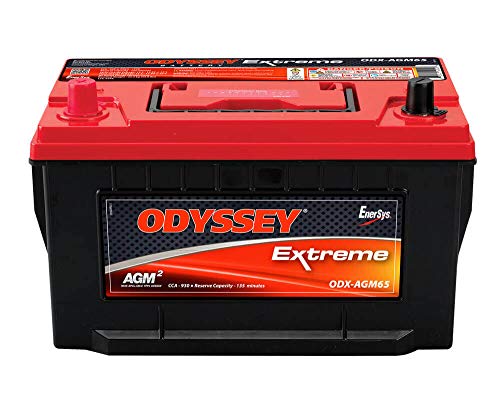 |
Odyssey Battery ODX-AGM65 Extreme Series AGM BatteryOdyssey | Upgrade pick | 930 Cold Cranking Amps Extreme Series AGM | $412.34
Price as of 11 Oct 2026
|
View |
 |
ACDelco Gold 94RAGM (88864542) 36 Month Warranty AGM BCIACDelco | Also great | AGM BCI Group 94R with 36 Month Warranty | $212.32
Price as of 11 Oct 2026
|
View |
Use the table to match your driving pattern first, then check group size and terminal layout before price. A battery that fits the tray and matches the load profile usually beats a larger battery that only looks stronger on paper.
How we chose
We compared fitment, reserve capacity, amp-hour rating, CCA, and cycling focus. We also weighted warranty value and cost per year, because a premium AGM only makes sense if the spec balance fits the vehicle.
The shortlist favors H8 / Group 49 for modern accessory-heavy vehicles, but it also flags where Group 48, 94R, or Group 65 can make more sense. That matters if your car was not built around an H8 tray.
AGM construction gets priority here because sealed, maintenance-free batteries usually handle higher accessory loads and repeated cycling better than flooded designs. Still, you need to check the charging system and parasitic draw before you buy.
| Use case | Minimum CCA | Minimum Ah | Minimum RC | Likely group sizes |
|---|---|---|---|---|
| Start-stop commuting with heated seats and infotainment | 800+ | 70+ | 140+ | H8 / Group 49, 94R |
| Audio upgrades with amps and long idle time | 750+ | 85+ | 160+ | H8 / Group 49, Group 48 if tray space is limited |
| Parked accessory drain from dash cams or telematics | 700+ | 80+ | 160+ | H8 / Group 49, 94R, sometimes Group 48 |
| Cold-climate daily driver with moderate electronics | 850+ | 70+ | 130+ | H8 / Group 49, 94R |
Two-sentence takeaway: For cold starts, CCA matters most. For parked accessory use and heavy infotainment loads, RC and Ah usually matter more than chasing the biggest starting number.

Best overall for high-electronics loads: H8 / Group 49 AGM
This is the default fit for many modern cars and SUVs with strong electrical demand, especially when the vehicle calls for an H8 / Group 49 battery and the owner wants high reserve capacity. The Odyssey Battery ODX-AGM65 Extreme Series AGM Battery is said to list 930 Cold Cranking Amps, which suggests strong starting headroom, and its 135 minutes of reserve capacity would make it more useful than a starter-only battery when the engine is off.
What stands out is the combination of Group 65 format, tin-plated brass SAE automotive posts, and an AGM build aimed at repeated use. For buyers comparing spec sheets, that is a practical mix for dependable starting and accessory support.
The drawback is price. At $412.34, it costs more than many mainstream AGM replacements, so it makes the most sense when the vehicle genuinely needs the extra reserve and starting margin.
Best for start-stop commuters: AGM with high cycling durability
Start-stop traffic changes the battery job. It has to restart often, support deeper cycling, and recover quickly, so a strong AGM with good cycle life usually makes more sense than a conventional flooded battery with a high CCA headline.
In this class, the short list should favor batteries built for repeated cycling, not only cold starts. That is why AGM is usually the first stop for cars with start-stop systems and dense electronics.
Battery choice also depends on fitment and charging strategy. A start-stop vehicle with an old alternator map or undercharging issue can kill even a good AGM early, so spec matching has to include the car’s charging profile.
Best for audio systems and parked accessory drain: higher Ah and RC
When the engine is off but the accessories stay on, reserve capacity usually matters more than raw CCA. Audio amps, dash cams, telematics, and cabin electronics can pull enough current that a battery with more RC and Ah will hold voltage better than a battery chosen mainly for starting.
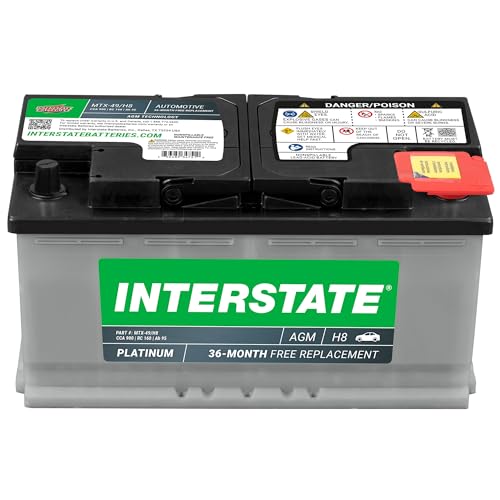
The UPLUS Group 49 AGM battery is rated at 95Ah, lists 900CCA, and lists 160RC. That is a strong combination for parked-accessory use and long idle periods, especially if your vehicle already calls for a Group 49 case.
The obvious drawback is that a higher Ah figure does not solve a draw problem caused by bad wiring or a module that will not sleep. If the car has a parasitic draw, fix that first.
What spec balance it offers: CCA, Ah, and RC
CCA tells you how much starting power the battery can deliver in the cold. RC tells you how long it can support accessories with the engine off. Ah shows total storage capacity, which matters more when the vehicle sits in accessory mode or supports sustained electrical demand.
For electronics-heavy cars, the best battery is usually the one with enough RC and Ah to keep voltage stable, plus enough CCA for your winter climate. The biggest label is not the best answer.
Which battery spec matters most for your vehicle?

Choose the spec that matches the failure mode you are trying to avoid. Cold-start problems point toward higher CCA, accessory sag points toward reserve capacity, and sustained electrical load points toward Ah and cycling durability. AGM becomes worth the extra cost when the vehicle needs more than simple starting power.
High CCA for cold starts
If winter mornings are the problem, CCA gets priority. A battery around 850 to 900 CCA is a sensible target for many cold-weather drivers, provided it still fits the tray, posts, and hold-down hardware.
Higher RC for engine-off accessory use
If the complaint is low voltage after sitting with the ignition on, RC usually matters more than CCA. Around 160 RC can be a useful benchmark for accessory-heavy vehicles that spend time powering infotainment, lights, dash cams, or audio gear with the engine off.
Higher Ah for sustained electrical demand
Ah becomes more valuable when the vehicle regularly runs multiple loads for long periods. The UPLUS Group 49 AGM battery at 95Ah is the kind of spec that suits that use pattern better than a battery that only advertises a high crank number.
When AGM is worth the extra cost
AGM is worth the extra cost when the vehicle is start-stop equipped, heavily optioned, or exposed to vibration and repeated cycling. The sealed, spill-proof, maintenance-free design also helps if convenience matters and you do not want to check water levels.
How to choose the right battery for your car
Start with group size. If the tray, terminal layout, or hold-down system does not match, the battery is the wrong fit no matter how strong the specs look.
- Check the battery group size first.
- Match the terminal layout and hold-down style.
- Compare RC and Ah against your actual accessory use.
- Check CCA against your coldest weather.
- Confirm the charging system can support AGM if the car was designed for it.
Check the battery group size first
H8 / Group 49 is a common fitment in modern cars and SUVs, but it is not universal. Group 48 and 94R are also common in electronics-heavy vehicles, and the right answer is the size the vehicle was engineered to hold.
Check the charging system and alternator output
A bigger AGM cannot fix undercharging. If the alternator output is weak or the charging profile is wrong for AGM, the battery may never reach full state of charge and its life will drop.
Watch for parasitic draw or accessory overload
If the battery keeps going flat overnight, suspect parasitic draw before buying a larger battery. Dash cams, telematics modules, amplifiers, and stuck relays can drain even a strong AGM.
Match the battery to the electronics profile, not the biggest label
Suppose a crossover has heated seats, a large infotainment screen, and a dash cam that runs while parked. A Group 49 AGM with strong RC is a better fit than a starter battery with a big CCA number and weak reserve.
A common first-timer mistake is buying the highest CCA battery available and calling it a fix. If the car sits in accessory mode, the better battery is often the one with more reserve capacity and the right case size.
Best automotive batteries for accessory-heavy vehicles: what to look for
Accessory-heavy vehicles need reserve capacity first, then enough CCA for the climate. AGM is usually the better construction because it is sealed, spill-proof, maintenance-free, and generally better at handling repeated cycling than flooded batteries.
Good candidates also need fitment discipline. Group 49, 48, and 94R are the sizes shoppers should check most often, and H8 is especially common in modern cars and SUVs with start-stop systems.
What are good car batteries for cars with lots of electronics?
Good batteries for electronics-heavy cars are AGM units with strong RC, enough Ah, and the correct group size. The goal is stable voltage under accessory load, not just a strong burst for cranking the engine.
That is why H8 / Group 49 often rises to the top for these vehicles. It gives a useful balance of starting power, reserve capacity, and case size for many late-model cars and SUVs.
Do I need AGM for a car with high electronics load?
Usually yes, if the car has a start-stop system, heavy accessory use, or repeated short trips that never fully recharge the battery. AGM is sealed, maintenance-free, and better suited to frequent cycling than a basic flooded battery.
If the car only has a few accessories and the factory battery is flooded, AGM may still help, but fitment and charging compatibility should be checked first. A mismatch can waste money without solving the real issue.
How much reserve capacity do I need for electronics-heavy driving?
For many electronics-heavy drivers, around 160 RC is a sensible target. That gives more cushion for parked accessory use, infotainment time with the engine off, and short idle periods where the alternator is not fully catching up.
If the vehicle only needs dependable starting and light accessory support, lower RC may be fine. But once audio systems, dash cams, or telematics enter the picture, reserve capacity matters quickly.
How to diagnose whether the problem is battery capacity, alternator output, or parasitic draw
Start with the symptom. Slow cranking in cold weather points toward CCA or battery health, repeated dead batteries after parking point toward parasitic draw, and dimming or voltage sag with accessories on can point toward reserve-capacity limits or charging-system weakness.
If a replacement battery dies quickly, do not assume the battery was too small. The alternator may be undercharging, or a module may be drawing power while the car is asleep.
Battery capacity problem
If the battery cannot keep up with normal parking and driving patterns, more RC or Ah may help. This is common in vehicles with audio upgrades or lots of key-off accessory time.
Alternator output problem
If voltage stays low during driving, the alternator or charging control may be the issue. A stronger battery can hide the problem for a while, but it will not cure it.
Parasitic draw problem
If the battery drains overnight or after a day or two, inspect for parasitic draw. Dash cams, telematics, aftermarket amplifiers, and stuck relays are common suspects.
Best battery for vehicles with heated seats and infotainment
For heated seats and infotainment, pick an AGM with enough reserve capacity to hold voltage under accessory load and enough CCA for your climate. That usually points toward H8 / Group 49 or 94R in vehicles that already specify those sizes.
The better choice is the battery that matches the factory tray and gives a strong RC figure, not simply the model with the loudest starting number. Heated seats and screens drain energy in a way CCA alone cannot solve.
Which one should you buy
Buy the Odyssey if you want the strongest starting margin and you are comfortable paying for it. Its 930 CCA and 135 minutes of reserve capacity make it the most aggressive choice here for demanding drivers.
Buy the UPLUS if your vehicle needs H8 / Group 49 fitment and you want strong reserve capacity and a 95Ah spec at a lower price point than the Odyssey. It is the most balanced pick for accessory-heavy use, but confirm the case and terminal layout first.
Buy the ACDelco if you want a mainstream Group 94R AGM with a long warranty and a lower upfront price. Based on the spec sheet, owner feedback, and common use patterns, it is the most value-oriented option in this group, though it may not be the first pick for maximum reserve capacity.
Suppose you drive a start-stop SUV with heated seats and a factory H8 tray. The right answer is not the biggest battery available; it is the best-fitting AGM with strong RC, enough CCA for winter, and the correct terminals.
For budget-sensitive buyers, compare warranty length against expected service life, then divide price by years covered. That gives a rough cost-per-year view that is more useful than a sticker price alone.
Best overall for high-electronics loads: ACDelco Gold 94RAGM
This is the fit-first choice for drivers whose vehicle calls for Group 94R rather than H8 / Group 49. The ACDelco Gold 94RAGM is a Group 94R AGM with a 36 Month Warranty, and that makes it attractive for shoppers who want a mainstream replacement with a lower entry price at $212.32.
Its spec sheet points to durability rather than headline output. The high density negative paste, calcium lead positive grid, and envelope separator are useful signs for buyers who care about long-term reliability and short-circuit protection.
The drawback is that the listing does not give the same CCA, Ah, or RC detail as the strongest spec-led competitors here. If you need a battery for heavy parked accessory use, you may want a model with clearer reserve-capacity data.
Best for start-stop commuters: OPTIMA YellowTop D34/78
This is the pick for drivers who want a sealed AGM with strong vibration resistance and solid reserve capacity. The OPTIMA D34/78 YellowTop is rated at 750 Cold Cranking Amps and offers 120 minutes of reserve capacity, which suits start-stop use, heavy accessory demand, and rougher-road durability.
The maintenance-free design is a plus for convenience, and the claim that it is fifteen times more resistant to vibration than standard batteries makes it appealing for trucks, SUVs, and vehicles that see rough pavement or load-shifting use.
The drawback is the lower CCA compared with the top-output batteries in this list. In very cold climates, buyers may want more starting headroom if the vehicle’s factory spec allows it.
Which car batteries are the best for high electronics loads?
The best batteries for high electronics loads are usually AGM units with strong reserve capacity, enough Ah, and the correct group size. For many modern vehicles, H8 / Group 49 is the most useful starting point because it often balances starting power and accessory support well.
Examples from this list show the range: the UPLUS Group 49 AGM is rated at 95Ah with 900CCA and 160RC, while the Odyssey ODX-AGM65 lists 930 CCA and 135 minutes of reserve capacity. The right one depends on whether your load is more about cold starts, parked accessories, or both.
What are the best automotive batteries for accessory-heavy vehicles?
The best automotive batteries for accessory-heavy vehicles are AGM models with higher RC and enough Ah to support sustained accessory use. If the vehicle is start-stop equipped, cycling durability matters too, because the battery will be asked to recover much more often than a basic starter battery.
For fitment, H8 / Group 49, Group 48, and 94R are the common sizes to check first. If the battery does not match the tray, hold-down, and terminals, the spec sheet is not enough.
What are good car batteries for cars with lots of electronics?
Good car batteries for electronics-heavy vehicles are sealed AGM batteries with strong RC, stable CCA, and a size that matches the factory mount. Look for around 160 RC when the vehicle sees a lot of engine-off accessory use, and move up in Ah when demand stays high for longer periods.
That is why the UPLUS Group 49 AGM, with 95Ah, 900CCA, and 160RC, is a strong example for this use case. It gives the kind of balance that suits screens, audio, and parked loads better than a battery chosen on CCA alone.
Do I need AGM for a car with high electronics load?
Most likely, yes, if the car has start-stop, heavy accessory use, or repeated short trips. AGM batteries are sealed, maintenance-free, spill-proof, and usually better at handling cycling than flooded batteries, which is why they are the default for many high-load vehicles.
Still, AGM is not automatic. The battery has to fit the vehicle, and the charging system has to be compatible with the battery type the car expects.
How much reserve capacity do I need for electronics-heavy driving?
Around 160 RC is a practical target for many electronics-heavy vehicles, especially if the battery has to support infotainment, audio, or dash cams with the engine off. If the vehicle only sees light accessory use, less may be enough, but margin helps.
When RC and Ah are both strong, the battery is better prepared for long waits with accessories on. That matters more than a high CCA label in this use case.
What battery group size fits an H8 or Group 49 vehicle?
H8 and Group 49 are often treated as the same fitment family, but the case dimensions, terminal layout, and hold-down hardware still need to match the car. If the tray was designed for H8 / Group 49, another group size should only be used if the fit is confirmed.
Group 48 and 94R are common alternatives in similar vehicles, but they are not automatic substitutes. The wrong case can create install problems even when the electrical spec looks better.
Is a higher CCA battery better for lots of accessories?
Not by itself. Higher CCA helps with dependable starting power, especially in cold weather, but it does not directly solve accessory drain when the engine is off. For that, reserve capacity and Ah matter more.
If your problem is weak starts after a cold night, CCA deserves priority. If the problem is voltage sag after parking with accessories on, look first at RC and Ah.
What battery is best for start-stop cars with heavy electronics?
Start-stop cars with heavy electronics usually do best with an AGM battery that combines strong cycling durability, good reserve capacity, and the correct factory fitment. The battery has to tolerate frequent restarts and repeated partial discharge without falling apart early.
That is why H8 / Group 49 AGM batteries are common recommendations in this category. They often align well with the electrical load and the physical constraints of the vehicle.
Frequently asked questions
which car batteries are the best for high electronics loads
The best batteries for high electronics loads are AGM batteries with strong reserve capacity, solid Ah, and the correct group size. For many vehicles, H8 / Group 49 is the most useful starting point because it balances starting power and accessory support well.
what are the best automotive batteries for accessory-heavy vehicles
Accessory-heavy vehicles usually need AGM batteries with higher RC first, then enough Ah for sustained demand. Start-stop vehicles should also get a battery with strong cycling durability, not just a high cold-cranking number.
what are good car batteries for cars with lots of electronics
Good choices are sealed, maintenance-free AGM batteries that match the tray and terminal layout. Look for around 160 RC when the vehicle spends time with the engine off, and use CCA to cover the climate rather than as the only buying rule.
do I need AGM for a car with high electronics load
Usually yes, especially for start-stop systems and cars that use a lot of power while parked or idling. AGM’s sealed construction and better cycle life make it a better fit than a basic flooded battery in most high-load cases.
how much reserve capacity do I need for electronics-heavy driving
About 160 RC is a strong target for many electronics-heavy drivers. It gives more cushion for accessory use with the engine off, though the correct amount still depends on the vehicle’s load and how long accessories stay on.
what battery group size fits an H8 or Group 49 vehicle
Use the group size the vehicle was designed for, with H8 and Group 49 often treated as the same fitment class. Check case dimensions, terminal layout, and hold-down hardware before buying, because electrical spec alone does not guarantee fit.
Products related to this article
Sponsored / affiliate links. As an Amazon Associate I earn from qualifying purchases. I may earn additional commission from eligible campaigns.