Is a Heated Steering Wheel Cover Worth It?
A heated steering wheel cover makes sense if your car lacks built-in wheel heat and you drive often in subfreezing weather. In mild winters, it usually does not. A poor cover can slip, block buttons, or create hot spots that make daily driving annoying or unsafe. This guide breaks down fit, power draw, safety limits, winter comfort, and better alternatives.
Verdict
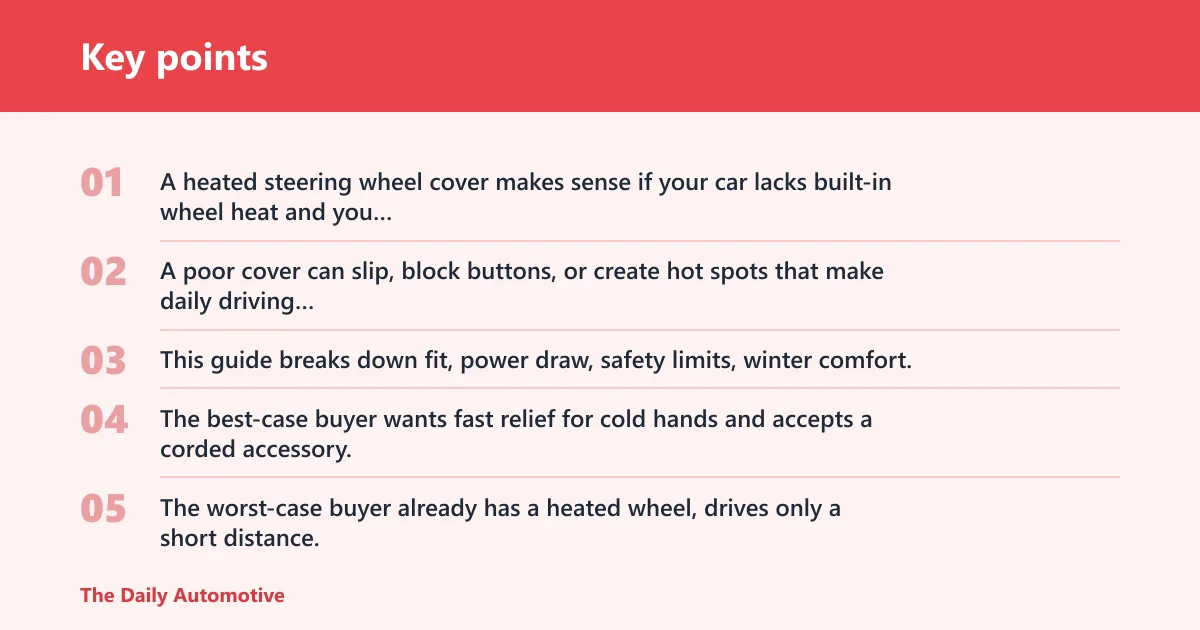

The best-case buyer wants fast relief for cold hands and accepts a corded accessory. The worst-case buyer already has a heated wheel, drives only a short distance, or has a crowded accessory socket setup, because the cover can create more hassle than comfort.
📊 Car and Driver says SEG Direct is sized for steering wheels 14.5 inches to 14.75 inches. Source: Caranddriver.
Specs at a glance
| Check | What matters | Why it matters |
|---|---|---|
| Power source | 12V power outlet | Most plug-in covers depend on the vehicle’s accessory socket. |
| Fit target | Steering wheel diameter | Common fit ranges cluster around 14.5-15 inches; your wheel has to match. |
| Design | Corded plug-in design | The cord must reach cleanly and stay out of the way while you drive. |
| Materials | Velour, faux wool, leatherette | These change warmth, grip, and how bulky the cover feels in hand. |
| Stability | Non-slip backing | It helps keep the cover from sliding on the wheel. |
| Heat-up time | About 1 minute to 3 minutes | That is the difference between useful morning warmth and a slow wait. |
Who it
Heated steering wheel covers make the most sense for drivers without factory wheel heat who spend real time in winter traffic. They are also useful for older vehicles, trucks, and SUVs where a cold wheel stays cold for a long time after startup. If the cabin is freezing and your hands hate gloves, the upgrade can feel immediate.
Drivers without factory wheel heat
If your car has no heated wheel from the factory, an aftermarket heated steering wheel cover is one of the few direct fixes you can add without replacing the vehicle. Most models plug into a 12V power outlet, so the first question is compatibility with your accessory socket, not just the wheel itself.
Short-commute drivers in cold climates
Short trips are where these covers can pay off, because you feel the benefit early and do not need a long warm-up cycle. They are less compelling in mild winters, where a cabin heater reaches comfort fast enough and the corded accessory can feel like extra clutter.
Truck, SUV, and older-car owners
Heavier vehicles and older cabins often stay cold longer, which makes a quick-warm wheel more appealing. That said, size still matters. A common fit window runs around 14.5-15 inches, and some listed products narrow that further, such as Warmitory’s fit up to 15 inches and SEG Direct’s 14.5 inches to 14.75 inches sizing.
Heated wheel decision matrix
This table separates comfort gain from the real downsides. A heated steering wheel cover is not a blanket yes or no; the value changes sharply depending on whether the car already has wheel heat, how much driving you do, and how much cord management you are willing to accept.
| Scenario | Comfort gain | Fit risk | Cord hassle | Safety notes | Best alternative |
|---|---|---|---|---|---|
| Factory heated wheel | Low to moderate; the wheel already warms without an add-on | Medium; cover may interfere with wheel controls or heat transfer | High; the cord adds clutter for little gain | Better to avoid anything that changes grip or button access | Use the built-in heated wheel |
| No heated wheel | High in subfreezing weather, especially at startup | Medium; wheel diameter must match the listed range | Medium; the cord is manageable if the outlet placement works | Check non-slip backing and keep cable clear of spokes and shifter | Remote start or cabin preheating if available |
| Very short commute | Low; heat may arrive after the trip is nearly over | Medium | High relative to the payoff | Remove it if it makes quick trips more distracting than helpful | Gloves or a preheated cabin |
Can you use it safely?
Yes, but only if fit, cord routing, and surface temperature are controlled. A heated steering wheel cover should not slide, bunch up, block buttons, or force your hands into an awkward grip. If any of those show up, the accessory stops being a comfort upgrade and becomes a distraction.
Grip, bulk, and non-slip backing
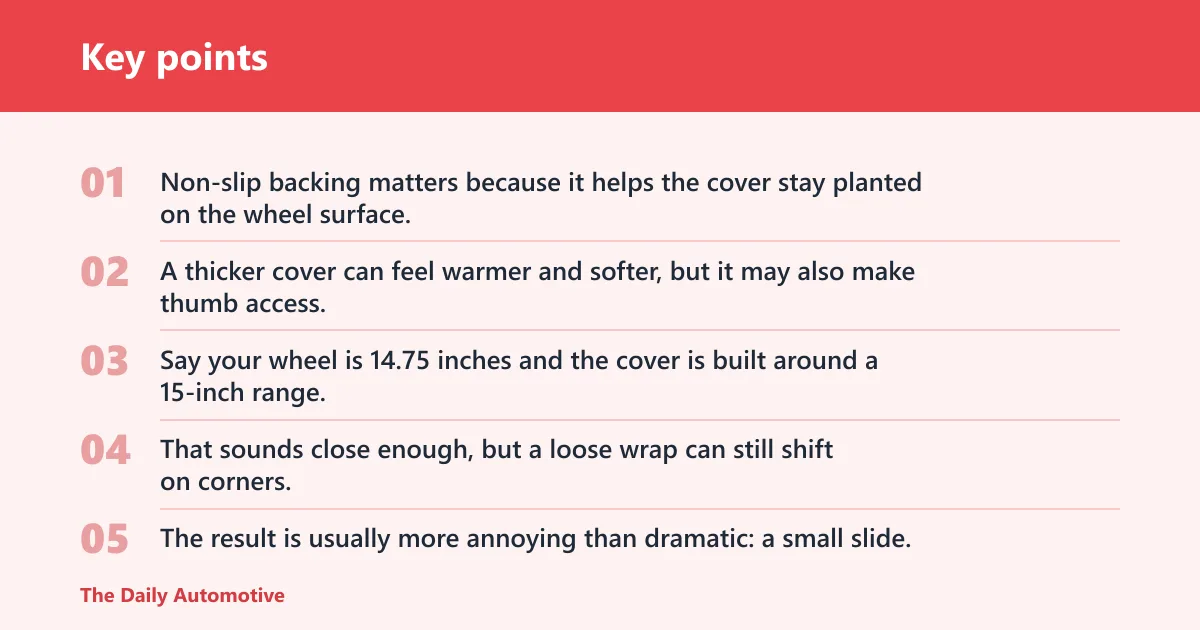
Non-slip backing matters because it helps the cover stay planted on the wheel surface, especially during turns. Bulk is the tradeoff. A thicker cover can feel warmer and softer, but it may also make thumb access, button reach, and hand placement less precise than the bare wheel.
Say your wheel is 14.75 inches and the cover is built around a 15-inch range. That sounds close enough, but a loose wrap can still shift on corners. The result is usually more annoying than dramatic: a small slide, then a repeated adjustment every few minutes.
Cord routing and driver movement
Corded plug-in design is the biggest daily-use drawback. The cord has to reach the 12V outlet without crossing the steering path, the gear selector, or your right knee. If your accessory socket sits low or far back, the cable can become a constant nudge against usability.
Picture a driver in a truck with the outlet near the center stack and the wheel set high. The cover may work, but the cable can hang where a hand brushes it during turns. In that setup, comfort depends as much on routing as on heat output.
Heat level and surface-temperature checks
Marketing claims vary widely: Zone Tech is described as able to heat up to 90 degrees in one minute, while Warmitory heats from zero to 101 degrees Fahrenheit in three minutes. Those numbers sound quick, but the real question is whether the surface feels warm without becoming hot enough to irritate hands or create hot spots.
Turn it off or remove it if the wheel surface feels uneven, if the cover traps heat in one section, or if the material changes grip as it warms. A good cover should warm the wheel surface without changing your steering control.
What works
The biggest win is simple: faster warmth than a bare wheel. For drivers without factory heat, that can be the difference between clenching a freezing wheel for ten minutes and getting a tolerable grip almost immediately. Car and Driver also notes that heated covers can improve grip on snowy roads.
Better winter comfort than gloves for some drivers
Gloves help, but they also change steering feel. A heated cover can give you warm contact while keeping bare-hand control, which some drivers prefer for parking, lane changes, and longer highway runs. Velour, faux wool, and leatherette can all add a warmer touch than a cold factory rim.
Removable setup for seasonal use
Because these covers are usually removable, they fit seasonal use better than permanent modifications. That makes sense for drivers who only need extra warmth from late fall to early spring. It also lets you take the accessory out if the weather improves or if the cord starts to feel like a nuisance.
What does not?
The downsides are practical, not theoretical. Fit problems, cable annoyance, and weaker-than-expected heat are the most common reasons a cover disappoints. A universal fit claim is not a guarantee; without checking steering wheel diameter and outlet placement, you can end up with a poor match.
Fit problems and diameter mismatch
Wheel size is the first filter. Warmitory fits wheels up to 15 inches, and SEG Direct is sized for steering wheels 14.5 inches to 14.75 inches. Zone Tech’s leather option is also described as designed for a 15-inch wheel. Those ranges are helpful, but they are not the same as true universality.
Cord annoyance and cabin clutter
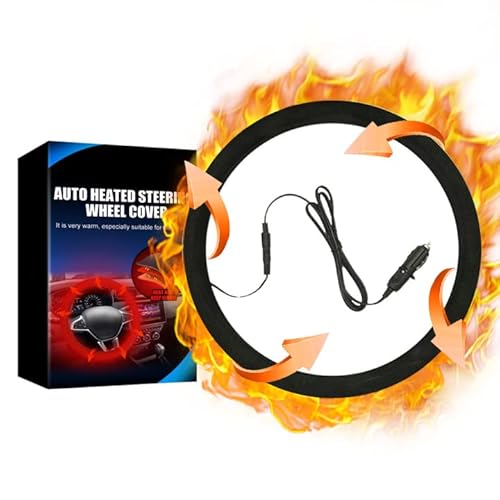
A corded plug-in design can be fine in a well-laid-out cabin and irritating in a cramped one. The accessory socket has to be compatible with the vehicle layout, and the cable should not cross the wheel, pedals, or shifter area. If it does, the add-on may solve one problem and create another.
Heat that is slower or weaker than expected
Some buyers expect a factory-heated-wheel feel and get something less consistent. Car and Driver describes Kimpex as heated between 30 and 60 degrees, which shows how much output can vary by product. If you want the quickest possible warm-up, compare the published heat-up time carefully before buying.
Alternatives to consider
If the cover looks marginal for your car, the best alternative may be simpler. Gloves, remote start, and cabin preheating all avoid some of the fit and cord problems. A factory heated steering wheel is the cleanest long-term answer if you are choosing a vehicle or a retrofit path.
Gloves and liners
Gloves are the least complicated option. They do not need a 12V outlet, they do not depend on steering wheel diameter, and they do not add cord clutter. The downside is obvious: they do not warm the wheel itself, and thick gloves can dull steering feel more than a warmed cover does.
Remote start and cabin preheating
Remote start helps if your vehicle supports it, because the cabin and wheel begin warming before you get in. That does not replace a heated steering wheel cover’s direct contact warmth, but it can reduce the need for one in very short or moderate cold-weather drives. It is a better fit when the whole cabin matters more than the wheel alone.
Factory heated steering wheel
If you are shopping for a vehicle or weighing a retrofit, factory wheel heat is still the cleaner solution. It avoids cord routing, fit uncertainty, and the extra bulk of an aftermarket cover. For many drivers, that matters more than a quick seasonal add-on.
Should you buy it?
Buy a heated steering wheel cover if you have no factory wheel heat, drive often in serious winter weather, and have a 12V outlet that can support a clean cable route. Skip it if you already have a heated wheel, if your commute is very short, or if a loose cord would bother you every day.
For most drivers, the real decision is not whether the cover works at all. It is whether the fit, outlet access, and cable handling are good enough to make the warmth feel worth the hassle.
Alternatives
Svzadipe’s wireless rechargeable cover avoids the 12V cord issue, which is its biggest advantage for daily convenience. The tradeoff is battery management, so it suits drivers who want cordless use more than they want plug-in simplicity. The 14.5-15.5 inch fit range still needs a wheel-size check.

WARMITORY is the strongest plug-in option on paper if you care about a clear heat-up claim, since it is described as reaching warmth in 3 minutes and includes overheat protection. The downside is price and the same basic fit-and-cord questions that affect the whole category.
DEFEK’s PU leather version is aimed at drivers who want a soft, non-slip feel and quick heat from a 12V outlet. It is a reasonable middle-ground pick for cars, SUVs, and trucks, but the corded design still means you need to manage routing carefully.
Frequently asked questions
Are heated steering wheel covers worth it?
They are worth it for drivers without factory wheel heat who spend real time in freezing weather and can tolerate a corded accessory. They are usually not worth it for mild climates, very short commutes, or cars where the cover would interfere with controls, grip, or clean cabin layout.
Can I put a cover on a heated steering wheel?
Yes, but it is often a bad idea unless the cover is specifically compatible with your wheel and does not interfere with heat transfer, grip, or button access. On an already heated wheel, a cover can add bulk and slow the feel of the factory system.
What size heated steering wheel cover do I need
Measure the steering wheel diameter first. Many covers target a range around 14.5-15 inches, while some products are narrower or wider. If the size is off, the cover can slip, bunch up, or sit loose enough to make steering feel inconsistent.
Do heated steering wheel covers get hot enough to matter?
They can, especially on a cold start, but the result depends on the model and the cabin temperature. Published claims range from about 1 minute to 3 minutes for heat-up, and listed heat figures vary widely. The best ones should feel warm quickly without creating hot spots.
Are heated steering wheel covers safe to use while driving?
They can be safe if they fit well, stay put, and keep the cord out of the steering path. Safety drops fast if the cover slips, blocks buttons, or changes your grip. If that happens, remove it rather than trying to adapt to a poor fit.
Are heated steering wheel covers better than gloves?
Sometimes. Covers warm the wheel itself, so they can give a more natural steering feel than thick gloves. Gloves win on simplicity because they do not need a 12V outlet, a wheel-size match, or cord management, and they are easier to use across vehicles.
Products related to this article
Sponsored / affiliate links. As an Amazon Associate I earn from qualifying purchases. I may earn additional commission from eligible campaigns.