How Does CarMax Value Your Car: Proven Methods
CarMax values your car by looking at many things like its age, mileage, condition, and what similar cars are selling for. They use a mix of computer data and expert eyes to give you a fair offer.
Thinking about selling your car can feel a bit like a puzzle. You want to get a good price, but how do you even know what your car is worth? If you’re considering selling to CarMax, you’re probably curious about their process. It’s a common question, and understanding it can give you peace of mind. You’re not alone if this feels a little confusing! We’re here to break down exactly how CarMax figures out your car’s value, step by step, in a way that’s easy to understand. Let’s uncover the “secret sauce” together, so you feel confident in the offer you receive.
How Does CarMax Value Your Car? A Deep Dive
CarMax is known for its transparent car-selling process. When you bring your car in (or get an online appraisal), they have a systematic approach to determine its value. It’s not just a random number; it’s based on data, market conditions, and the specific details of your vehicle. Think of it like a comprehensive check-up that leads to a price tag.
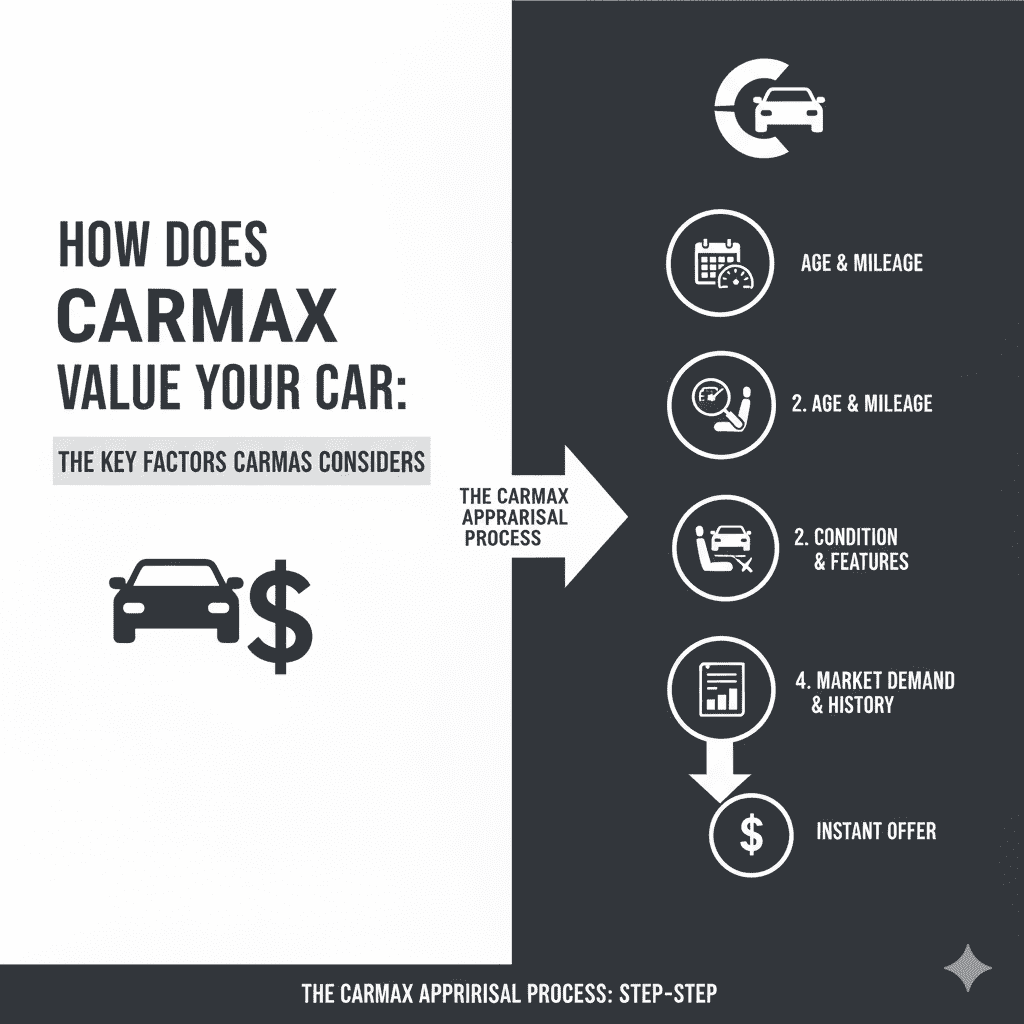
The Key Factors CarMax Considers
CarMax looks at several important elements to arrive at a fair appraisal. These aren’t secrets, and knowing them can help you understand their offer better.
- Age and Mileage: These are two of the biggest indicators of a car’s value. Newer cars with lower miles generally fetch higher prices.
- Vehicle Condition: This includes both the interior and exterior. Are there dents, scratches, worn-out upholstery, or major cosmetic issues?
- Mechanical Health: How does the car run? Are there any engine, transmission, or braking problems? CarMax inspects these critical components.
- Trim Level and Features: A car with a premium sound system, leather seats, a sunroof, or advanced safety features will be valued more than a base model.
- Market Demand: What are similar cars selling for in your local area and national markets? CarMax constantly monitors trends.
- Vehicle History Report: They check for accidents, title issues (like salvage or flood damage), and the number of previous owners. A clean history is crucial.
- Optional Equipment and Modifications: Aftermarket additions or factory options can sometimes increase value, but poorly done modifications can decrease it.
The CarMax Valuation Process: Step-by-Step
When you visit a CarMax store or start an online appraisal, here’s typically what happens:
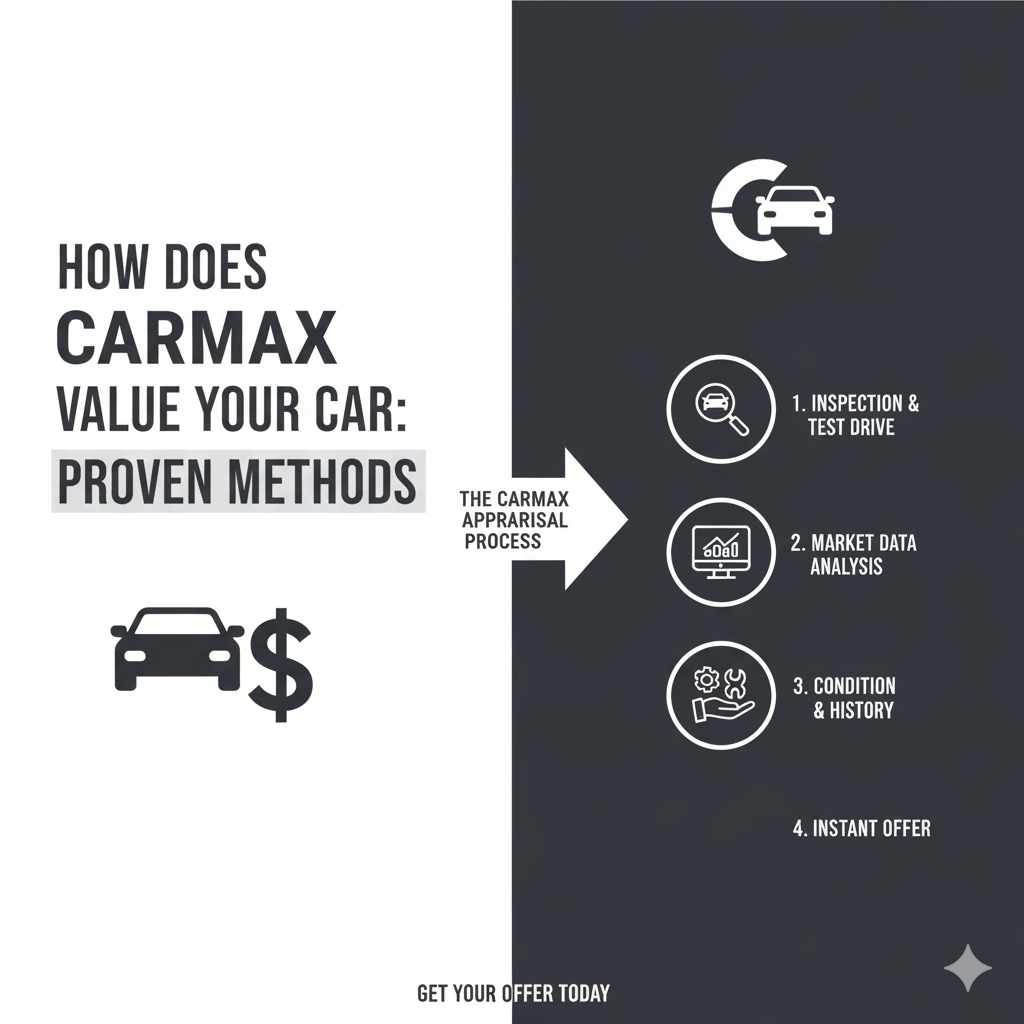
- Initial Information Gathering: This is where you provide details about your car, such as the year, make, model, and mileage. If you’re online, you might fill out a form.
- The Walk-Around Inspection: A CarMax associate will physically inspect your vehicle. They’ll check the exterior for dents, scratches, and paint condition. They’ll also look inside at the upholstery, dashboard, and overall cleanliness.
- Test Drive and Mechanical Check: The associate will take your car for a short test drive to assess how it performs. They’ll listen for unusual noises and check the brakes, steering, and acceleration. They may also look under the hood.
- Checking the Vehicle History: CarMax uses resources like AutoCheck or CARFAX to pull a vehicle history report. This flags any reported accidents, title issues, or previous use (e.g., rental car). You can learn more about vehicle history services from the National Highway Traffic Safety Administration (NHTSA) on VIN usage.
- Data Analysis and Offer Generation: All the gathered information – condition, mileage, history, features, and market data – is fed into CarMax’s proprietary valuation system. This system compares your car to recently sold vehicles and current inventory.
- The Offer: You’ll receive a written offer that’s typically valid for seven days.
Understanding Your CarMax Offer: What’s Included?
CarMax’s offer is presented clearly, usually listing the wholesale price they are willing to pay you. It’s important to understand that this offer is based on what they can sell the car for, minus their costs for reconditioning and profit. They aim to be competitive, but they are a business.
The Difference Between Retail and Wholesale Value
It’s helpful to know that CarMax is buying your car to resell it. Therefore, their offer will be closer to the wholesale value (what a dealer would pay) rather than the retail value (what they’ll sell it for on their lot). Retail prices include the dealership’s markup to cover overhead, reconditioning, and profit.
Consider this simple analogy: If you bake a cake, you might sell it to a bakery for $10 (wholesale), and then the bakery sells it to a customer for $25 (retail). CarMax is acting as the wholesale buyer in this scenario when they buy your car.
How Market Data Influences the Offer
CarMax invests heavily in market intelligence. They analyze sales data from auctions, other dealerships, and their own sales records across the country. This helps them understand:
- National Trends: Is the demand for SUVs high nationwide? Are sedans struggling?
- Local Market Conditions: What are prices like in your specific city or region? A popular car in one area might be less desirable in another.
- Current Inventory: If CarMax already has many similar cars on its lot, they might be less inclined to pay top dollar for another one.
This real-time data allows them to adjust their offers to reflect what cars are actually selling for at that moment.
CarMax’s Appraisal Tools and Technology
CarMax uses sophisticated tools to ensure consistency and accuracy in their valuations. While they don’t reveal the exact algorithms, the principles behind them are rooted in data science and automotive market analysis.
Proprietary Valuation Software
CarMax has developed its own software that takes all the inspected data and market information and processes it to generate an offer. This software is designed to:
- Analyze thousands of data points.
- Account for regional pricing differences.
- Adapt to changing market dynamics.
- Provide a consistent valuation across all their locations.
This technology helps them move beyond subjective opinions and arrive at an objective price.
The Role of the Trained Appraiser
While technology plays a huge role, the trained eye of a CarMax appraiser is also critical. They are trained to:
- Identify subtle cosmetic imperfections that might be missed by a purely data-driven system.
- Assess the overall mechanical integrity beyond what a basic report might show.
- Understand the nuances of wear and tear specific to different car models.
The appraiser’s notes are fed into the system, ensuring a comprehensive evaluation.
What Can You Do to Maximize Your CarMax Offer?
While you can’t change your car’s age or mileage, there are definitely steps you can take to get the best possible appraisal from CarMax.
| Action | Why It Helps | DIY Difficulty |
|---|---|---|
| Thoroughly Clean Your Car (Inside & Out) | A clean car looks well-maintained and cared for, impressing the appraiser and making it more appealing to future buyers. | Easy |
| Fix Minor Cosmetic Issues | Small dents, scratches, or chipped paint can be noted by the appraiser. Addressing them can improve the perceived condition. | Medium (for DIY, easier to pay a professional) |
| Address Mechanical Issues (If Minor) | If your check engine light is on or brakes are squealing, fixing these before the appraisal can prevent value deductions. | Medium to Hard (depending on issue) |
| Organize Your Paperwork | Have your title, registration, maintenance records, and any repair receipts ready. This shows you’ve been a responsible owner. | Easy |
| Remove Personal Items | Empty the car completely to give the appraiser a clear view and avoid any hassle. | Easy |
For more comprehensive guides on car maintenance that can improve condition, consider resources like Edmunds’ Car Maintenance Section.
The Impact of Maintenance Records
Having a documented history of regular maintenance can significantly boost your car’s perceived value. When you can show proof of oil changes, tire rotations, and other scheduled services, it tells CarMax that the car has likely been well-cared for. This can translate into a more favorable offer compared to a car with no service history.
Cosmetic vs. Mechanical Repairs
CarMax will deduct for necessary repairs. Generally, they factor in a certain amount for reconditioning any car they buy. However, significant cosmetic flaws (like a large dent or faded paint) and obvious mechanical problems (like a transmission slip) will lead to larger deductions.
For example, if your car has a small paint chip, they might estimate a ~$50-$100 repair cost. If it has a significant dent requiring bodywork and repaint, that could be a $500-$1000+ deduction, depending on the severity. Similarly, a worn set of tires might result in a deduction equal to the cost of new tires.
CarMax vs. Other Valuation Methods
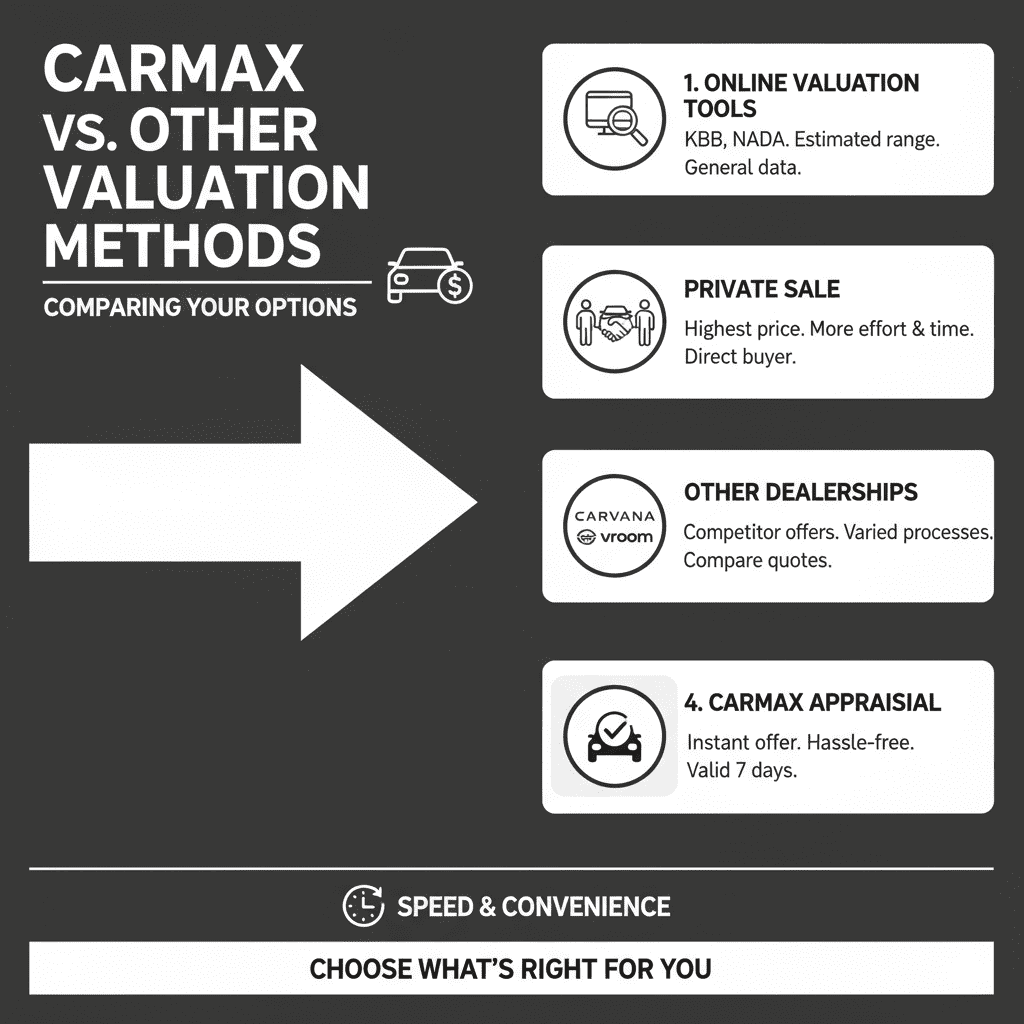
It’s always a good idea to compare offers. How does CarMax’s valuation stack up against other ways to determine your car’s worth?
- Online Valuation Tools (e.g., Kelley Blue Book, NADA Guides): These give you an estimated range based on your input. They are great for getting a ballpark figure but don’t account for your car’s exact condition or local market specifics as precisely as a live appraisal.
- Private Sale: Selling directly to another individual often yields the highest price. However, it requires more effort, time, and dealing with potential buyers.
- Other Dealerships: Competitors like Carvana, Vroom, or local dealerships will also make offers. Their processes and algorithms may differ slightly, potentially leading to different valuations.
CarMax’s strength lies in its efficiency and ability to provide an immediate offer with minimal hassle. They are a convenient option when you want a straightforward sale without the complexities of a private listing.
Frequently Asked Questions About CarMax Car Valuation
Q1: How long is a CarMax offer valid?
A1: CarMax offers are typically valid for seven days. This gives you time to consider the offer and compare it with other options without feeling pressured.
Q2: Can CarMax buy a car with a loan on it?
A2: Yes, CarMax can buy cars with outstanding loans. They will pay off the remaining balance directly to your lender, and you’ll receive any remaining equity.
Q3: What if my car has a salvage title?
A3: Cars with salvage, rebuilt, or flood titles are generally not purchased by CarMax, as they cannot be resold on their lots. However, policies can vary, so it’s always best to ask directly.
Q4: Does CarMax charge fees for an appraisal?
A4: No, CarMax does not charge any fees for an appraisal, whether you do it online or in person. It’s a free service.
Q5: Are CarMax offers negotiable?
A5: CarMax offers are generally firm. They aim to provide a competitive, no-haggle price based on their valuation system.
Q6: Can I get an online appraisal first?
A6: Yes, CarMax offers an online appraisal tool that gives you an estimate. This estimate is then refined through an in-person inspection to provide a firm offer.
Q7: What happens if the in-person inspection changes the offer significantly?
A7: If the in-person inspection reveals significant discrepancies or issues not apparent from the initial information or online appraisal, the offer may be adjusted. CarMax will explain any changes to you.
Conclusion
Understanding how CarMax values your car demystifies the process and empowers you as a seller. By combining advanced technology with hands-on inspections and real-time market data, CarMax aims to provide a quick, convenient, and fair appraisal. While their offer reflects a wholesale price suitable for resale, knowing the factors they consider and taking steps to prepare your vehicle can help you achieve the best possible outcome. Whether you choose CarMax or another selling method, this knowledge is a valuable tool for any car owner.