How Long to Let a Car Cool Before Adding Coolant
When your car’s engine gets hot, its cooling system works hard to keep things from overheating. Sometimes, you might need to add more coolant. But when the engine is hot, doing this can be tricky, especially if you’re new to car care.
People often wonder, How Long to Let a Car Cool Before Adding Coolant? It’s a common question because dealing with hot engine parts and liquids can seem a bit scary. Don’t worry, this guide will show you exactly what to do in simple steps.
We’ll make it easy so you can confidently handle this car task.
Why Waiting Is Important When Adding Coolant
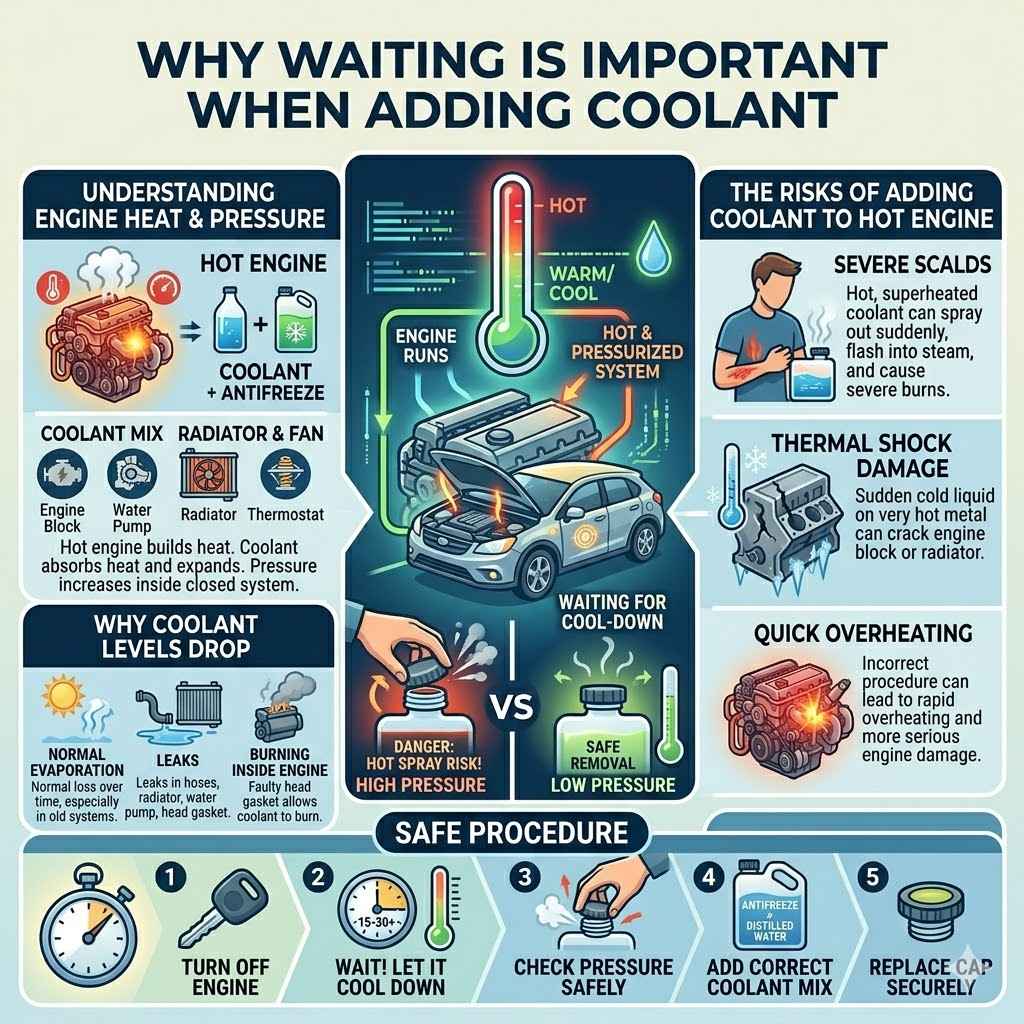
Adding coolant to a hot engine is a common situation that can cause trouble if not handled correctly. The cooling system in your car uses a pressurized mixture of water and antifreeze. When the engine runs, this mixture gets very hot and builds up pressure.
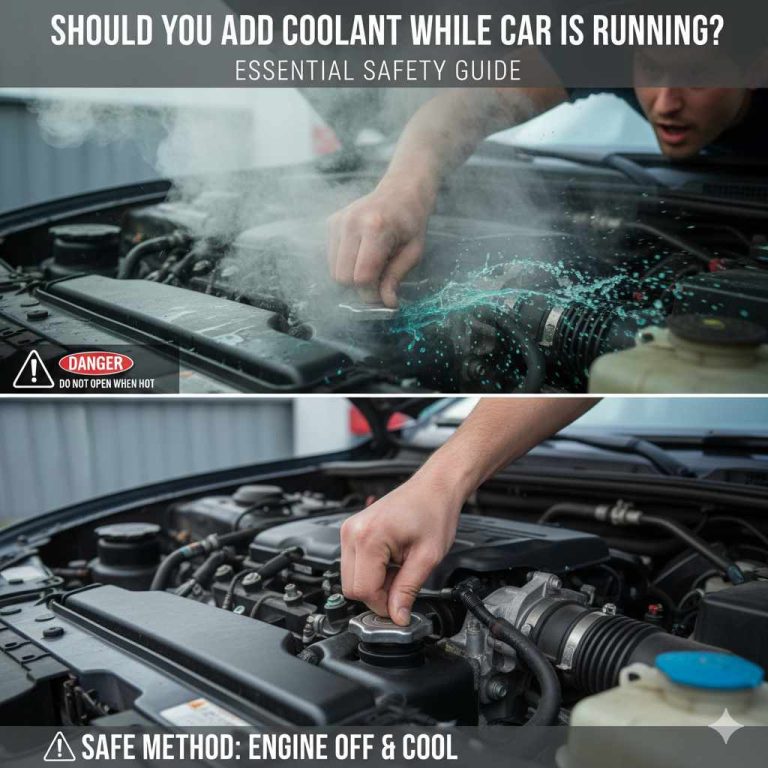
If you open the coolant reservoir or radiator cap when it’s hot and pressurized, the hot liquid can spray out suddenly. This can cause serious burns. Waiting for the engine to cool down allows this pressure to decrease safely.
It also lets the hot components cool down, reducing the risk of thermal shock, which is when a very hot part suddenly contacts a cooler liquid, potentially causing damage.
Understanding Engine Heat and Pressure
An engine generates a lot of heat when it’s running. This heat needs to be managed by the cooling system. The system uses coolant (a mix of antifreeze and water) to absorb heat from the engine block and then dissipate it through the radiator.
As the coolant heats up, it expands, and the pressure inside the closed cooling system increases. Think of it like a sealed pot of water on a stove; as it heats, the steam builds up pressure. Car cooling systems are designed to handle this, but they are at their highest pressure when the engine is hot.
The main components involved are the engine block, the water pump, hoses, thermostat, and the radiator. The water pump circulates the coolant. The thermostat controls the flow of coolant to the radiator.
The radiator is where the heat is released into the air. All these parts get hot when the engine is running.
When you turn off the engine, the heat doesn’t disappear instantly. The engine block and coolant slowly start to cool down. However, for a significant period, the system can remain hot and pressurized.
This is why knowing how long to wait is key to safety.
The Risks of Adding Coolant to a Hot Engine
The biggest risk is getting burned by hot, pressurized coolant. When the cooling system is hot, the coolant is above boiling point, even though it might not be boiling due to the pressure. If you release this pressure too soon by opening a cap, the superheated liquid can flash into steam and spray out with force.
This spray can cause severe scalds.
Another risk is damaging your engine. If you add cold coolant to a very hot engine or a hot radiator, the sudden temperature change can cause metal parts to crack. This is called thermal shock.
For example, a hot cast-iron engine block suddenly encountering a large amount of cold liquid could crack.
Finally, if you don’t add enough coolant and the system is still hot, the engine might overheat again quickly, potentially leading to more serious damage like a blown head gasket or even engine seizure. Safety and proper procedure are paramount.
Why Coolant Levels Drop
Coolant levels can drop for several reasons. The most common is normal evaporation over time, especially in older systems or in very hot climates. Small leaks in hoses, the radiator, the water pump seal, or even a faulty head gasket can also cause coolant loss.
Sometimes, the coolant might be burning up inside the engine if there’s a head gasket issue. Regular checks are important to catch these problems early.
How Long to Let a Car Cool Before Adding Coolant
Figuring out exactly How Long to Let a Car Cool Before Adding Coolant is a common question for many drivers. The general rule of thumb is to wait until the engine is cool to the touch. But what does that really mean?
For most cars, this means waiting at least 30 minutes after the engine has been turned off. However, this can vary. If the car was driven for a long time or in very hot weather, it might take even longer, perhaps an hour or more, to cool down sufficiently.
The best indicator is that the engine feels cool to the touch, and there is no steam or hissing coming from under the hood. The coolant temperature gauge on your dashboard should also be back to its normal resting position. This shows the engine is no longer running at high temperatures.
Always prioritize your safety.
The Minimum Waiting Time
The absolute minimum time you should wait is generally considered 30 minutes after turning off the engine. This is a guideline, and it assumes typical driving conditions. If you’ve just completed a short drive in mild weather, 30 minutes might be enough.
During this time, the engine’s heat dissipates into the surrounding air, and the internal pressure decreases.
However, this 30-minute window is a baseline. It’s not a hard and fast rule for every situation. Factors like the ambient temperature, how long the engine was running, and how hard it was working all play a role in how quickly the engine cools.
For instance, after a long highway drive on a hot day, the engine will be significantly hotter and will take much longer to cool down.
It’s always better to err on the side of caution. Waiting a little longer ensures that the system has cooled down enough to be safely opened without risk of burns or damage. If you’re unsure, wait longer.
Factors Affecting Cooling Time
Several things influence how long your car’s engine needs to cool before it’s safe to add coolant.
- Ambient Temperature: On a hot summer day, your car will retain more heat and take longer to cool down compared to a chilly winter morning. The surrounding air temperature directly impacts how fast heat escapes the engine.
- Driving Conditions: A short trip around town at low speeds generates less heat than a long drive at high speeds on a highway, especially uphill or with a heavy load. The harder the engine works, the hotter it gets, and the longer it takes to cool.
- Engine Size and Type: Larger engines typically generate more heat. Some engine designs also retain heat differently.
- Engine Compartment Design: The way the engine bay is designed can affect airflow and heat dissipation. Cars with more enclosed engine bays might cool down slower.
- Recent Engine Usage: If the engine has been running for an extended period or at high RPMs, it will be hotter and require more time to cool down than if it was only run for a few minutes.
These factors mean there’s no single, exact time that fits all situations. Always use your senses to check if it’s safe.
Checking for Coolness Safely
Before even thinking about opening any caps, take a look under the hood. Listen for any hissing sounds, which might indicate escaping steam or pressure. Also, look for any visible steam.
If you see or hear these, the engine is definitely too hot to touch anything.
The most reliable way to check for coolness is by touch. Gently, and with extreme caution, touch a metal part of the engine that you know shouldn’t be directly exposed to coolant, like the top of the engine block or a metal hose. If it’s too hot to keep your hand on it for more than a second or two, it’s too hot to open.
Another good indicator is the engine temperature gauge on your dashboard. When the engine has cooled down, this gauge will return to its normal resting position, usually pointing to the middle of the gauge or a bit lower. If the needle is still high, it means the engine is still hot.
If you are unsure, wait longer. It is always better to be safe than sorry when dealing with a hot engine.
The Correct Way to Add Coolant
Once you’ve confirmed your engine is cool enough, you can proceed with adding coolant. It’s important to use the right type of coolant for your car and to add it correctly to avoid causing problems. Always refer to your car’s owner’s manual for specific recommendations.
What Type of Coolant to Use
Cars require specific types of coolant, often referred to by color (like green, orange, pink, or blue) and a formulation like IAT, OAT, or HOAT. These different types have varying chemical compositions that protect your engine’s metal components from corrosion and ensure proper heat transfer. Using the wrong type of coolant can lead to reduced effectiveness, corrosion, and even blockages in your cooling system.
For example, mixing traditional green IAT coolant with modern orange or pink OAT coolant can cause the chemicals to react. This reaction can create a sludge that clogs up radiators and heater cores. Always check your owner’s manual or the cap of your current coolant reservoir for the correct specification.
Most auto parts stores can also help you find the right coolant if you provide your car’s make, model, and year.
It’s also important to use a 50/50 mix of coolant and distilled water. Coolant concentrate by itself is not as effective at transferring heat and can also damage your system. Distilled water is used because it doesn’t contain minerals that can build up and cause corrosion or clogs.
Locating the Coolant Reservoir and Radiator Cap
Most modern cars have a translucent plastic coolant reservoir, often called an expansion tank. This tank usually has “MIN” and “MAX” lines marked on it, indicating the proper fill levels. You can often add coolant directly to this reservoir.
The level in the reservoir will rise and fall with engine temperature.
The radiator cap is typically found on the radiator itself, usually at the front of the engine. This is where the highest pressure is contained. You should only open the radiator cap when the engine is completely cold. Opening it when hot can lead to the dangerous spray of hot coolant.
Some cars, especially older models, might only have a coolant reservoir and no distinct radiator cap you can easily access. In these cases, the reservoir is the primary point for adding coolant. Always consult your owner’s manual if you are unsure where to find these components.
Steps for Adding Coolant
Once you’ve waited for the engine to cool down, and you have the correct coolant and distilled water mixture, follow these steps:
- Ensure the engine is cool. Double-check by touch or by looking at the temperature gauge.
- Locate the coolant reservoir. It’s usually a translucent plastic tank with markings for minimum and maximum levels.
- If the coolant level is below the “MIN” line, you need to add coolant.
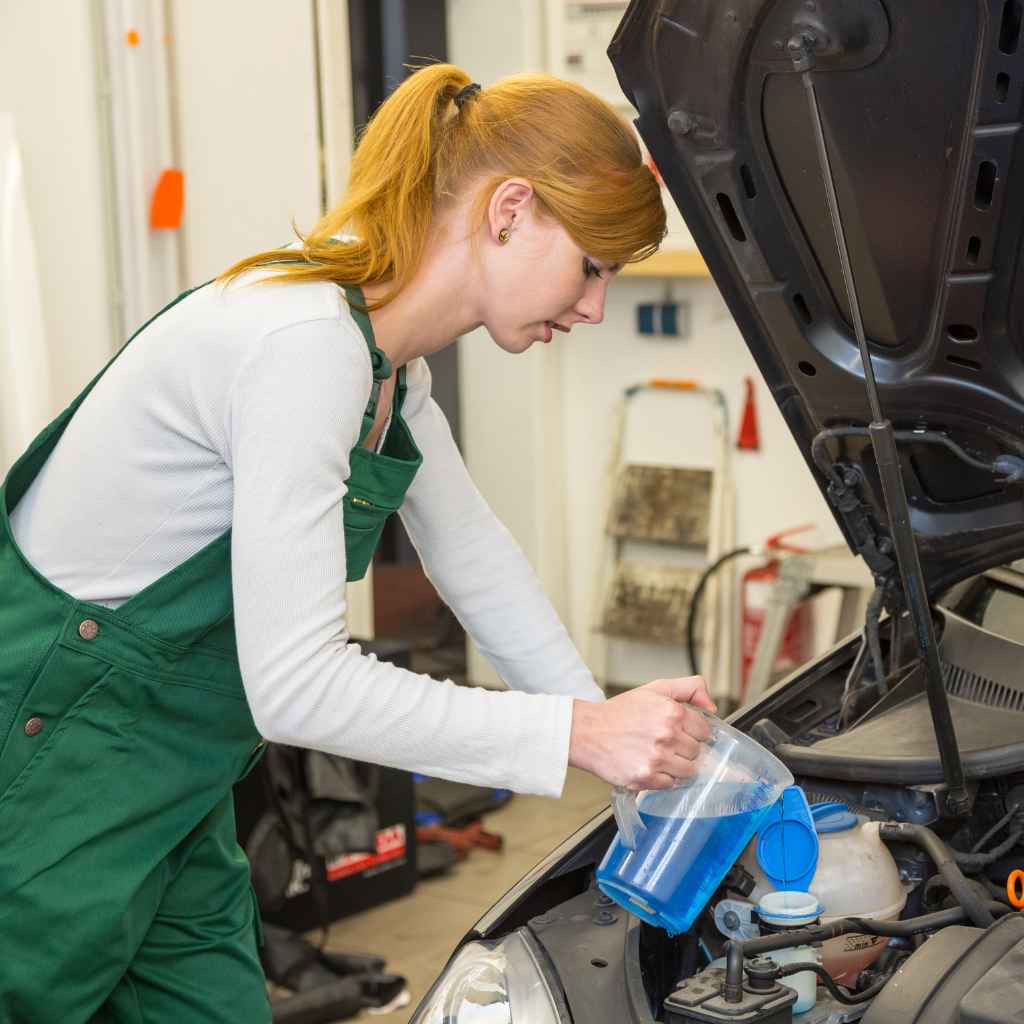
- Carefully open the cap of the coolant reservoir. You may want to wear gloves and eye protection just in case.
- Using a funnel, slowly pour the 50/50 coolant and distilled water mixture into the reservoir until it reaches the “MAX” line. Do not overfill.
- If your car has an accessible radiator cap and the reservoir is full but you suspect it’s still low (which is rare in modern cars), ensure the engine is completely cold and then carefully open the radiator cap. Fill until coolant is visible and then replace the radiator cap securely.
- Replace the cap on the reservoir (or radiator) securely.
- Start the engine and let it run for a few minutes. Keep an eye on the temperature gauge.
- Turn off the engine and let it cool down again.
- Check the coolant level in the reservoir one more time after it has cooled. You may need to top it off slightly if the level has dropped as the system has circulated the new coolant and purged any air pockets.
What is a 50/50 Coolant Mix?
A 50/50 coolant mix means you combine equal parts of concentrated antifreeze and distilled water. For example, if you need to add 1 gallon of coolant to your car, you would mix 0.5 gallons of concentrated antifreeze with 0.5 gallons of distilled water. Pre-mixed coolant is also available, which is already at the correct 50/50 ratio, making it easier for many people to use.
This mixture provides the best balance for keeping your engine cool in hot weather and preventing it from freezing in cold weather. It also contains additives that prevent corrosion and lubricate the water pump.
What If My Car Doesn’t Have a Reservoir?
Some older vehicles might not have a separate coolant reservoir. In these cars, the radiator serves as the main place to check and add coolant. However, this makes working with a hot engine even more dangerous.
If your car doesn’t have a reservoir, you must be extremely patient and wait for the engine to cool down completely.
To add coolant to such a vehicle, you would typically locate the radiator cap. Once you are absolutely sure the engine is cold, you would carefully remove the radiator cap and use a funnel to pour in the 50/50 coolant mixture. You would fill it until the coolant is visible at the top of the radiator neck.
Then, you would replace the radiator cap tightly.
It’s crucial to monitor the temperature gauge closely after adding coolant to these vehicles, as there’s no easy visual indicator like a reservoir level.
Troubleshooting Coolant Issues
If you find yourself frequently needing to add coolant, or if the level drops quickly, it’s a sign that there might be a problem with your cooling system. Don’t ignore these signs.
Common Signs of Cooling System Problems
Pay attention to these warning signs:
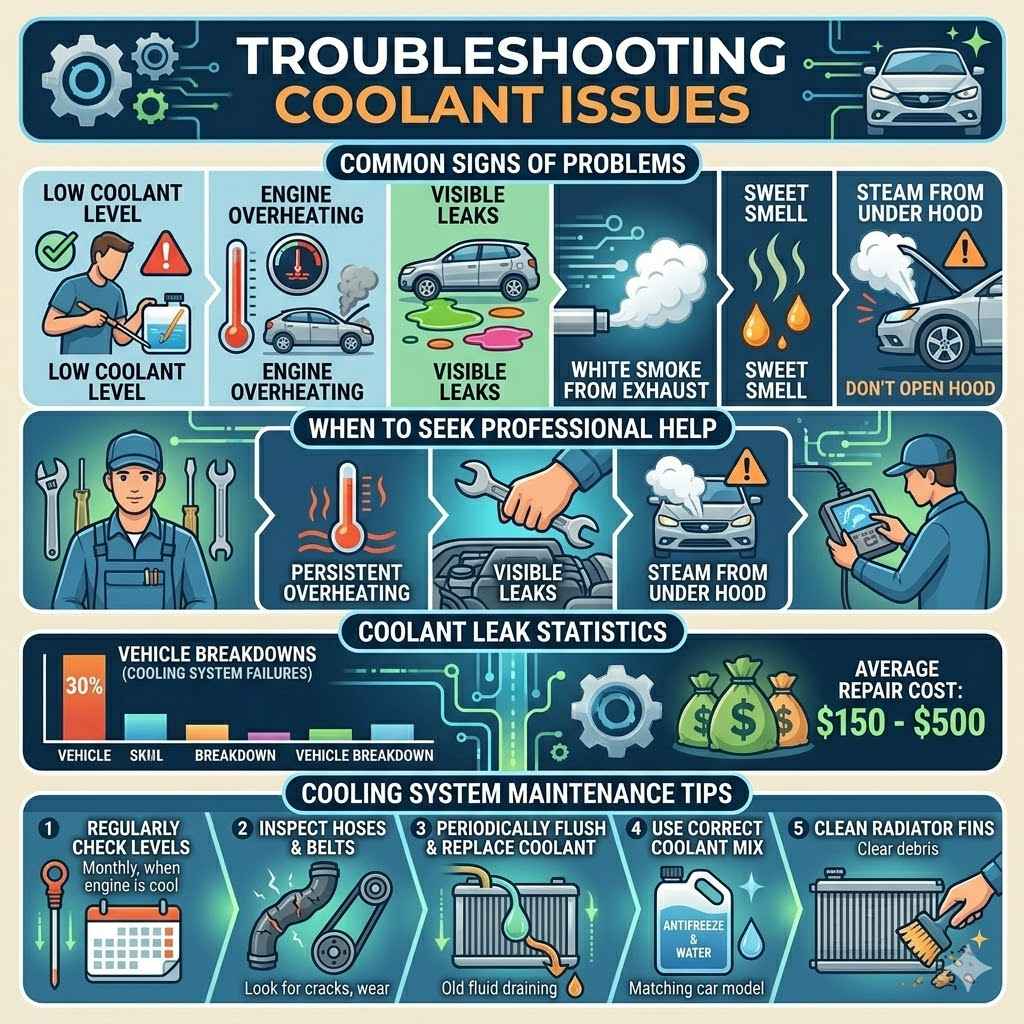
- Low Coolant Level: Regularly needing to top off coolant is the most obvious sign. If you’re adding coolant more than once every few months, there’s likely a leak or another issue.
- Engine Overheating: If your temperature gauge creeps into the red zone or warning lights come on, your engine is overheating. This is a critical sign that your cooling system isn’t working properly.
- Visible Leaks: Puddles of colored liquid (usually green, orange, or pink) under your car are a clear indicator of a coolant leak. Check around hoses, the radiator, and the water pump area.
- White Smoke from Exhaust: If you see white smoke coming from your tailpipe, it might mean coolant is leaking into the combustion chamber and burning.
- Sweet Smell: A sweet, syrupy smell can indicate a coolant leak, as coolant has a distinct odor when it’s hot.
- Steam from Under the Hood: This is a very serious sign of a major leak or overheating and means the engine is extremely hot. Do not open the hood.
If you notice any of these, it’s time to get your car checked by a mechanic.
When to Seek Professional Help
While simple topping off of coolant can be a DIY task if the engine is cool, more significant issues require professional attention. If you notice any of the warning signs above, especially persistent overheating, visible leaks, or steam, it’s best to have a qualified mechanic diagnose and repair the problem.
Mechanics have the specialized tools and knowledge to identify and fix leaks in hoses, radiators, water pumps, or more complex issues like head gasket failures. Trying to repair these yourself without proper training could lead to further damage or personal injury. A professional can also flush and refill your cooling system, ensuring it’s working at optimal efficiency.
It’s also wise to have your cooling system inspected periodically as part of your car’s regular maintenance. This can help catch potential problems before they become serious and costly.
Coolant Leak Statistics
According to some automotive repair surveys, cooling system leaks are among the most frequent reasons for vehicle breakdowns. For instance, one study indicated that approximately 30% of all vehicle breakdowns are related to cooling system failures. These can range from minor hose leaks to more severe radiator or water pump issues.
Another statistic suggests that the average repair cost for a cooling system leak can range from $150 to $500, depending on the severity and the parts that need replacing. Early detection and repair of small leaks can prevent more expensive damage down the line, such as engine overheating or component failure.
Cooling System Maintenance Tips
Regular maintenance can prevent many common coolant issues. Here are a few key tips:
- Regularly Check Coolant Levels: As mentioned, make it a habit to check your coolant level at least once a month. Do this when the engine is cool.
- Inspect Hoses and Belts: Look for cracks, bulges, or signs of wear on coolant hoses. Also, check the drive belts that power the water pump.
- Flush and Replace Coolant Periodically: Your owner’s manual will recommend a schedule for flushing and replacing your coolant. This removes old, degraded coolant and any debris that may have accumulated.
- Use the Correct Coolant: Always use the type and mixture of coolant recommended by your car manufacturer.
- Clean the Radiator Fins: Keep the front of your radiator clear of debris like leaves and bugs. This ensures proper airflow and cooling.
Following these simple steps can help keep your cooling system in good shape and prevent unexpected issues.
Frequently Asked Questions
Question: How long should I wait to add coolant if my car was just driven for 10 minutes?
Answer: If your car was only driven for 10 minutes, it likely won’t be extremely hot. However, it’s still best to wait at least 20-30 minutes after turning off the engine. Touch a metal part gently to ensure it’s cool enough.
Question: Can I just use water if I’m out of coolant?
Answer: In an emergency, you can use plain water, but only if the engine is completely cool. However, this is a temporary fix. Water alone does not have the anti-corrosion or anti-boil properties of proper coolant and can freeze in winter.
You must flush and refill with the correct coolant mixture as soon as possible.
Question: My car’s coolant light is on. What should I do?
Answer: If your coolant light is on, it means the coolant level is low or there’s a system malfunction. Safely pull over when possible, let the engine cool completely, check the coolant level, and add if needed. If the light stays on or the level is consistently low, have it inspected by a mechanic.
Question: Is it safe to open the radiator cap on a cold engine?
Answer: Yes, it is generally safe to open the radiator cap on a cold engine, provided the engine has been off for a sufficient amount of time and has cooled down. However, always check the owner’s manual as some systems are under constant pressure.
Question: What happens if I overfill the coolant reservoir?
Answer: Overfilling the coolant reservoir can cause excess coolant to be expelled from the system as the engine heats up and the coolant expands. This can create a mess and may lead to coolant loss, ironically causing the level to drop below the proper fill line.
Summary
Knowing how long to let a car cool before adding coolant is key for safety. Always wait at least 30 minutes, or until the engine is cool to the touch. Use the right type of coolant and a 50/50 mix with distilled water.
Check your car’s manual for specifics. If you frequently lose coolant, get it checked by a mechanic.