How Many Cars Have Fallen Off the Bay Bridge? Real Incidents & Data
There is no official yearly count of cars that have fallen off the Bay Bridge – no state agency publishes a running tally, and it is not a routine several-per-year event the way some older articles on this topic have claimed.
What does exist is a small number of individually documented, newsworthy incidents on a bridge that carries roughly 260,000 vehicles every single day. Most of the verified cases involve a driver fleeing law enforcement, a high-speed crash, or impaired driving – not a bridge that is somehow prone to letting cars slip over the edge.
This guide covers the specific, sourced incidents on record for the San Francisco–Oakland Bay Bridge, what actually causes a vehicle to go over the rail, how the bridge’s safety barriers compare with other major crossings, and what to do if you are ever in a car that goes into the water.
Is There an Official Count of Cars That Have Fallen Off the Bay Bridge?
No. Caltrans and the California Highway Patrol track collisions and fatalities on the Bay Bridge as part of general traffic-safety reporting, but neither agency publishes a specific, standalone statistic for “vehicles that went over the railing.” That kind of event is rare enough that it does not get its own tracked category – each occurrence shows up individually in CHP incident logs and local news coverage rather than in an annual summary report.
That matters because several older articles on this topic present a specific per-year table (for example, claiming exact counts like 3 in one year and 5 in another) with no source behind it. Those numbers do not match any publicly available Caltrans, CHP, or Metropolitan Transportation Commission dataset, and this article does not repeat them. What follows instead is a list of individually verified incidents, each tied to a real news source.
IN CASE YOUR CAR ENTERS WATER
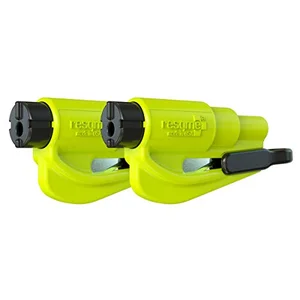 |
resqme Emergency Keychain Car Escape Tool (2-Pack) – $17.95 Several documented Bay Bridge incidents involve a vehicle going into the water below – a spring-loaded window breaker and seatbelt cutter you can reach in seconds is the difference between a fast exit and a trapped one.
|
Documented Incidents on the Bay Bridge
The most significant single event in the bridge’s history is not a car going over the side – it is a section of the bridge itself failing. On October 17, 1989, the magnitude 6.9 Loma Prieta earthquake caused a roughly 50-foot section of the upper deck to break loose and collapse onto the lower deck. One driver, whose car dropped into the gap left by the missing section, was killed. The bridge was closed for about a month for repairs, and the earthquake damage is the direct reason the eastern span was eventually rebuilt as a modern self-anchored suspension bridge, which opened in September 2013.
Beyond that one structural event, the incidents that are actually documented on the Bay Bridge are individual, sourced news stories rather than a routine occurrence:
| When | What Happened | Outcome |
|---|---|---|
| October 1989 | Loma Prieta earthquake collapsed a 50-foot section of the upper deck onto the lower deck | One driver killed; bridge closed roughly a month |
| Reported by CBS News / Fox News | A woman evading police in a stolen car went over a bridge railing and fell about 75 feet into the water | She survived and was pulled from the water by a passing dump truck driver |
| July 2024 | A driver in a Kia Soul, involved in a two-vehicle crash while apparently fleeing law enforcement, went over the eastbound side of the bridge | Rescued by the U.S. Coast Guard |
| May 2025 | A multi-vehicle, high-speed collision on the bridge (a sedan striking a slower car from behind) | One driver killed; vehicles stayed on the roadway |
Note the last row: most Bay Bridge crashes, including fatal ones, are collisions between vehicles on the roadway – they do not involve a car leaving the bridge. Going over the railing into the water is the less common outcome even among serious incidents.
About the Bay Bridge
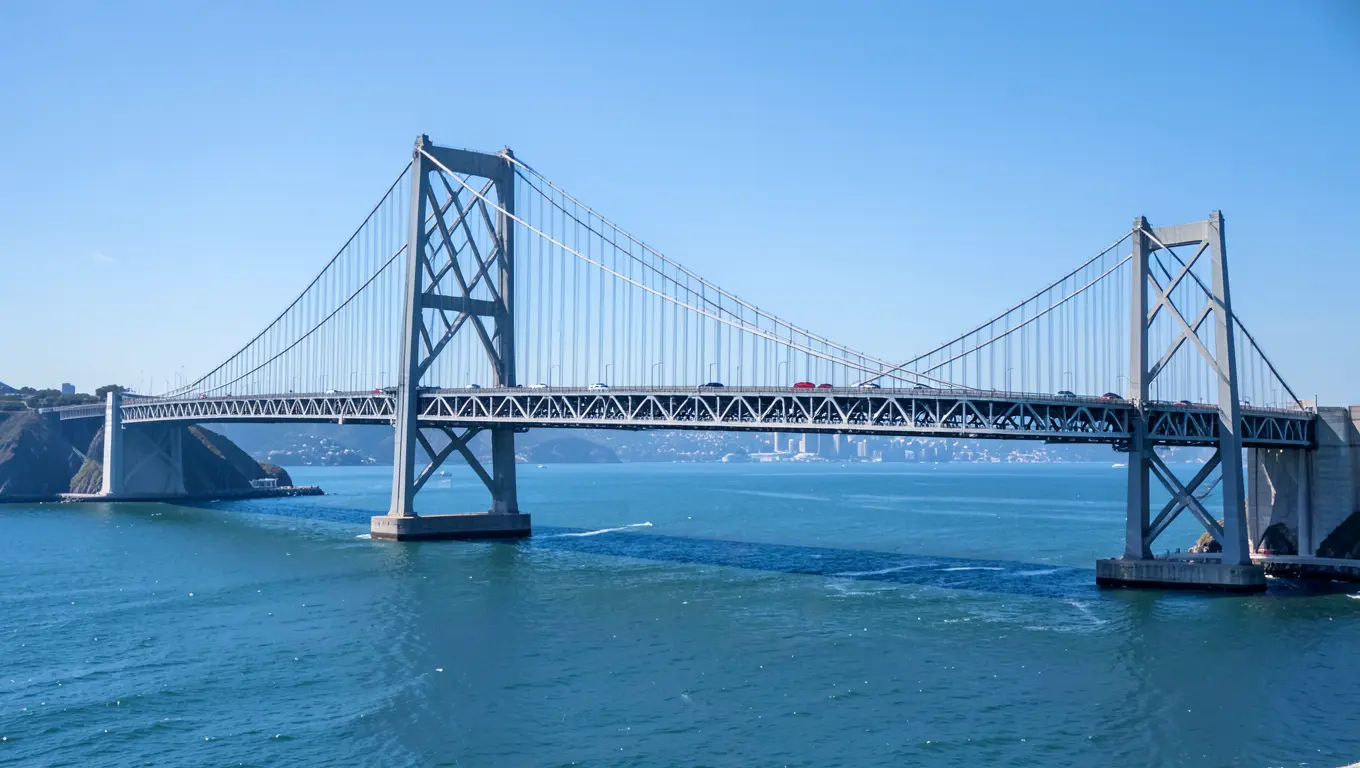
The San Francisco–Oakland Bay Bridge opened on November 12, 1936, six months before the more famous Golden Gate Bridge. It runs about 4.5 miles between San Francisco and Oakland, passing through a tunnel on Yerba Buena Island partway across, and carries Interstate 80.
It is a double-deck bridge, but not in the way people sometimes assume. Since a 1963 reconfiguration, the upper deck carries only westbound traffic (into San Francisco) and the lower deck carries only eastbound traffic (into Oakland) – each deck is strictly one-way, not a shared two-way roadway.
The eastern half of the bridge is a modern self-anchored suspension span with a single tower roughly 525 feet tall, completed in 2013 to replace the older cantilever section damaged in the 1989 earthquake. The western half, closer to San Francisco, is an older twin suspension span dating to the bridge’s original 1936 construction.
What Actually Causes Vehicles to Go Off the Bridge
Based on the documented cases above, three factors show up repeatedly:
- Fleeing law enforcement or evading arrest. Two of the clearest documented cases – the stolen-car incident and the July 2024 Kia Soul case – both involved a driver trying to get away from police, losing control, and going over the rail.
- High-speed collisions. The bridge carries dense, fast-moving commuter traffic. A vehicle traveling well above the flow of traffic that rear-ends a slower car, as happened in the May 2025 crash, is a recurring pattern in Bay Bridge collision reports, even when the outcome does not involve leaving the roadway.
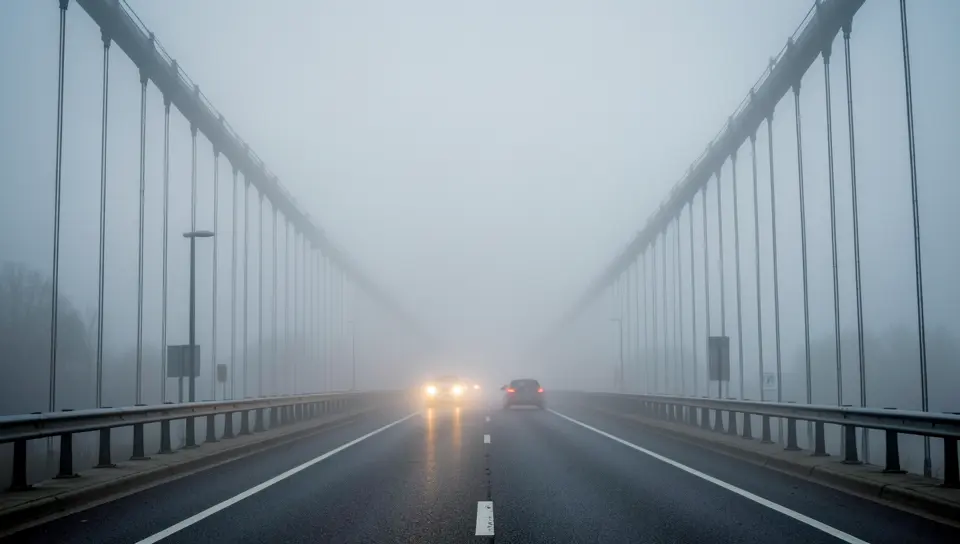
- Reduced visibility from fog. The Bay Area is known for dense marine fog rolling in off the water, and elevated, exposed spans like the Bay Bridge lose visibility fast when it settles in. Fog is one of the most commonly cited contributing factors in Bay Area bridge crash reports generally.
Alcohol and distracted driving are common contributing causes in general California traffic-fatality data, but neither shows up as a specifically documented factor in the sourced Bay Bridge over-the-rail cases above – it would be inaccurate to claim otherwise without a source, so this article does not.
Bay Bridge Safety Barriers and Measures
Every lane of the Bay Bridge is bordered by a raised concrete barrier and steel railing designed to keep a vehicle on the roadway, and the rebuilt eastern span added a dedicated bicycle and pedestrian path separated from traffic by its own barrier. Caltrans performs regular structural inspections of the bridge’s cables, deck, and towers, and the California Highway Patrol maintains an active enforcement presence on the span, including regular patrols and DUI checkpoints on approach roads.
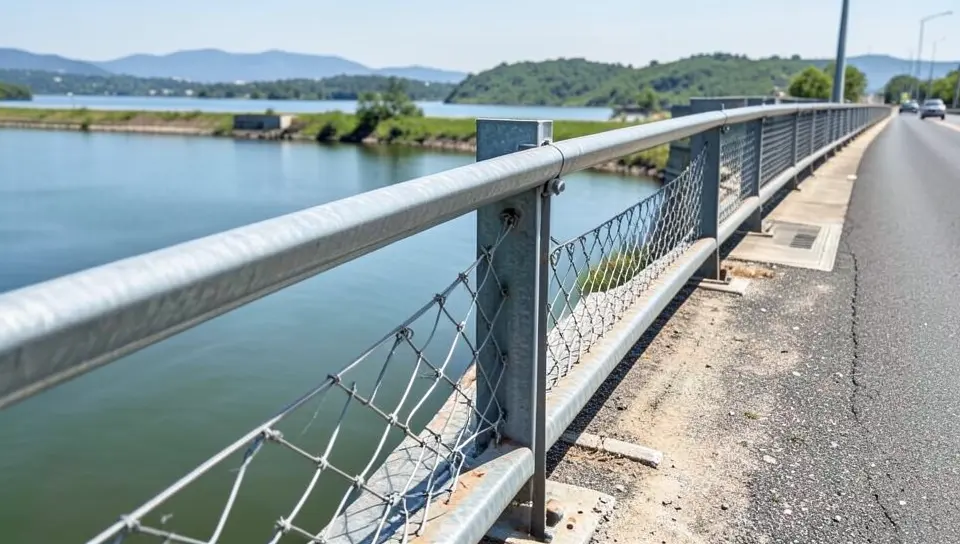
No barrier design fully eliminates the risk from a driver intentionally trying to get around it – which describes most of the documented over-the-rail cases on this bridge – but the current railing and barrier design is a substantial upgrade over the bridge’s original 1936 construction, and it is a standard part of Caltrans’s ongoing bridge maintenance program rather than a one-time fix.
How the Bay Bridge Compares to Other Major Bridges
None of the major California or East Coast bridges publish an official “cars that went over the side” statistic either, so a like-for-like numeric comparison is not something any source can honestly provide. What can be compared is the type of documented incident:
- Golden Gate Bridge. Its documented vehicle incidents include a 2001 prank where engineering students tethered a gutted VW Beetle shell to the railing and dropped it into the bay, and a series of high-speed crashes into the tollbooth area and pedestrian walkway barriers – a different pattern than the Bay Bridge’s police-pursuit and high-speed-collision cases. You can see actual crossing-volume figures in our Golden Gate Bridge traffic guide.
- Mackinac Bridge (Michigan). A very different structure – a much narrower, higher suspension bridge over open water – with its own separately documented incident history. See our Mackinac Bridge incident guide for specifics on that crossing.
The takeaway across all of these bridges is the same: going over the rail is a rare outcome tied to specific circumstances – fleeing police, extreme speed, or in the Golden Gate case, an intentional stunt – not a routine hazard of driving across a major span.
Frequently Asked Questions
Has Anyone Actually Driven Off the Bay Bridge?
Yes. It is documented but rare. The clearest sourced cases are a woman who went over the railing into the water while fleeing police in a stolen car and survived, and a July 2024 incident involving a Kia Soul that went over the eastbound side during a pursuit-related crash; the driver was rescued by the U.S. Coast Guard. Separately, one motorist was killed in October 1989 when a 50-foot section of the upper deck collapsed during the Loma Prieta earthquake and her car fell through the gap – a structural failure rather than a vehicle leaving the roadway on its own.
How Many Cars Cross the Bay Bridge Every Day?
Roughly 260,000 vehicles cross the San Francisco–Oakland Bay Bridge on an average day, making it one of the busiest bridges in the United States. For comparison, the number of documented over-the-rail incidents on record is a tiny handful across the bridge’s nearly 90-year history – the risk to any individual crossing is extremely low.
Is the “Bay Bridge” in This Article the Same as the Chesapeake Bay Bridge?
No, and this is a common mix-up. This article covers the San Francisco–Oakland Bay Bridge in California. The Chesapeake Bay Bridge is a separate, unrelated bridge in Maryland that connects the Eastern Shore to the rest of the state. The Chesapeake Bay Bridge carries about 61,000 vehicles on an average weekday, rising to roughly 90,000–95,000 on peak summer weekend days, and it has its own separate incident history and safety record.
What Is Gephyrophobia, and Does It Apply to the Bay Bridge?
Gephyrophobia is the clinical term for a fear of crossing bridges, and it is commonly discussed in connection with long, elevated, or exposed spans in general – including bridges like the Chesapeake Bay Bridge, the Mackinac Bridge, and, for some drivers, the Bay Bridge’s elevated eastern approach. It typically involves anxiety, a racing heart, or panic while driving over water on an exposed roadway, and it is a recognized, treatable anxiety-related condition rather than an irrational overreaction.
What Should You Do If Your Car Goes Into the Water Off a Bridge?
Unbuckle your seatbelt immediately and try to open a window or door before the car is fully submerged – electric windows often still work for a short window after impact. If the doors will not open due to water pressure, wait until the cabin fills enough to equalize pressure, then push the door open, or break a side window with a dedicated tool (not your fist or an elbow) and exit through it. Get children out first if you have passengers, and get everyone as far from the sinking vehicle as possible before swimming to the surface.
Have Barriers on the Bay Bridge Been Upgraded Over Time?
Yes. The 2013 replacement of the eastern span included modern railing and barrier standards that did not exist on the original 1936 structure, along with a physically separated bicycle and pedestrian path. Caltrans also carries out ongoing structural inspections and maintenance across the whole bridge as part of its standard bridge-safety program, rather than only reacting after a specific incident.
Conclusion
Cars going off the Bay Bridge is a real but rare event, not the routine several-per-year occurrence some older coverage of this topic has implied. The verified cases on record are almost all tied to a driver fleeing police or an extreme-speed crash, plus one historic structural failure during the 1989 earthquake. With roughly 260,000 vehicles crossing safely every day, the actual risk to an individual driver is very low – but keeping an emergency escape tool within reach and driving cautiously in fog or heavy traffic remain the two most practical things a driver can control.
Products related to this article
Sponsored / affiliate links. As an Amazon Associate I earn from qualifying purchases. I may earn additional commission from eligible campaigns.