How Much Antifreeze in a Car: Essential Guide
For most cars, the coolant system capacity ranges from 1.5 to 3 gallons (6 to 12 quarts). Always check your owner’s manual for the exact amount and type of antifreeze your specific vehicle needs. Using the correct ratio of antifreeze to distilled water (typically 50/50) is crucial for optimal engine protection and preventing overheating or freezing.
Hey there, fellow car owner! Ever popped your hood and stared at the coolant reservoir, wondering, “Just how much antifreeze does this thing need?” You’re not alone! Keeping your car’s cooling system happy is super important, and knowing the right amount of antifreeze can seem a bit mysterious. But don’t worry, it’s actually quite straightforward. With a little guidance, you’ll be a pro at understanding your car’s coolant needs. We’ll walk through everything you need to know, from finding the right type of antifreeze to getting the perfect mixture. Let’s dive in and get your engine running smoothly!
How Much Antifreeze Does My Car Actually Need? An Essential Guide
Your car’s engine generates a lot of heat, and without a properly functioning cooling system, it can quickly overheat. Antifreeze, also known as coolant, is the lifeblood of this system. It prevents the coolant from freezing in cold weather and boiling in hot weather, while also protecting your engine’s metal components from corrosion. But how much of this vital fluid does your car need? The answer isn’t a one-size-fits-all figure. It depends on your car’s make, model, and year, and crucially, the size of its cooling system. Understanding this will not only save you a trip to the mechanic but also ensure your car stays reliable and safe on the road.
Understanding Your Car’s Cooling System

Before we talk about amounts, let’s get a basic understanding of how your car’s cooling system works. It’s a closed loop designed to manage engine temperature. Here are the key components:
- Radiator: This is where the hot coolant releases its heat into the outside air.
- Coolant Hoses: These flexible tubes carry the coolant between the engine and the radiator.
- Water Pump: This circulates the coolant throughout the system.
- Thermostat: This valve opens and closes to regulate coolant flow, ensuring the engine reaches and maintains its optimal operating temperature.
- Expansion Tank/Reservoir: This is the plastic tank you typically add coolant to. It allows for the expansion and contraction of the coolant as it heats and cools.
The total amount of coolant that the system holds is often referred to as the “coolant capacity” or “system capacity.” This includes the coolant in the radiator, engine block, hoses, and reservoir.
The Magic Number: Finding Your Car’s Coolant Capacity
So, how much antifreeze does your car actually need? The most reliable way to find this information is your car’s owner’s manual. Think of it as your car’s personal instruction book!
Where to Find Your Coolant Capacity Information
Your owner’s manual is your primary resource for all things related to your car’s maintenance. Look for a section on “Capacities” or “Fluid Specifications.” If you can’t find your physical manual, most manufacturers have digital versions available on their official websites. A quick search for “[Your Car Make and Model] owner’s manual PDF” should do the trick.
If the manual doesn’t specify the exact coolant capacity in gallons or quarts, it will often list the recommended coolant type and mixture ratio. You’ll then need to estimate the system size, though this is less precise.
Typical Coolant Capacities by Vehicle Type
While you should always consult your manual, knowing typical ranges can give you a general idea:
| Vehicle Type | Typical Coolant Capacity (Gallons) | Typical Coolant Capacity (Quarts) |
|---|---|---|
| Small Sedans (e.g., Honda Civic, Toyota Corolla) | 1.5 – 2.0 | 6 – 8 |
| Mid-size Sedans (e.g., Toyota Camry, Honda Accord) | 2.0 – 2.5 | 8 – 10 |
| SUVs and Trucks (e.g., Ford F-150, Toyota Highlander) | 2.5 – 3.0+ | 10 – 12+ |
| Larger Trucks/Commercial Vehicles | 3.0 – 5.0+ | 12 – 20+ |
Remember, these are just averages! Your specific vehicle might fall outside these ranges.
What Type of Antifreeze Should I Use?
Using the wrong type of antifreeze can be just as bad as using the wrong amount, if not worse! Antifreeze formulations have evolved over the years, and mixing incompatible types can lead to corrosion, sludge, and reduced cooling efficiency. Coolant is color-coded, but relying solely on color can be misleading as manufacturers sometimes use different colors for similar formulations. It’s crucial to match the chemistry.
The Main Types of Antifreeze
Here’s a breakdown of the most common types:
- Traditional Inorganic Additive Technology (IAT) – Green: This is the older, legacy coolant. It’s still used in some older vehicles but has a shorter lifespan and is less environmentally friendly.
- Organic Acid Technology (OAT) – Orange/Red/Pink: These have longer service intervals and provide excellent corrosion protection. Common in many newer American and European cars.
- Hybrid Organic Acid Technology (HOAT) – Yellow/Orange/Pink/Blue: A blend of IAT and OAT, offering a balance of protection and extended life. Commonly found in many Japanese and some domestic vehicles.
- 5th Generation Extended Life Coolant (ELC) – Various Colors (e.g., Pink, Blue, Orange): These are designed for even longer service intervals (up to 10 years or 150,000 miles).
The safest bet is to use the antifreeze recommended by your vehicle manufacturer. This information is usually found in your owner’s manual, often alongside the coolant capacity. You can also check online forums or automotive databases for your specific car model.
Why is Coolant Color Not Always Reliable?
While color can be a quick indicator, it’s not a definitive identifier. For example, both OAT and HOAT coolants can be orange or pink. Relying on color alone can lead to mixing incompatible types, which can cause significant damage to your cooling system components, like the water pump seals and radiator. Always confirm the specification or P-number (e.g., G12, G13, G30, etc.) recommended by your car manufacturer.
The Crucial 50/50 Mix: Antifreeze and Water
You usually won’t pour straight antifreeze into your cooling system. Antifreeze is highly concentrated and needs to be mixed with distilled water. Why distilled water? Because tap water contains minerals that can cause deposits and corrosion within your cooling system. The standard and most recommended mixture is 50% antifreeze and 50% distilled water.
What Does the 50/50 Mix Do?
This specific ratio is critical for several reasons:
- Freeze Protection: In a 50/50 mix, most coolants will protect your engine down to about -34°F (-37°C).
- Boil-Over Protection: The mixture raises the boiling point of the coolant to around 265°F (129°C) when under the pressure of the cooling system.
- Corrosion Inhibition: Antifreeze contains additives that prevent rust and corrosion. Water alone would allow this to happen rapidly.
A higher concentration of antifreeze (e.g., 70% antifreeze, 30% water) offers more freeze protection but can reduce boiling protection and cooling efficiency, as pure antifreeze transfers heat less effectively than a water mixture. A lower concentration (e.g., 40% antifreeze, 60% water) offers less freeze protection and is generally not recommended, especially in colder climates.
Pre-mixed vs. Mixing Yourself
You have two main options:
- Pre-mixed Coolant (50/50): This is the easiest option for DIYers. It’s already mixed with distilled water in the correct ratio. You just pour it in. Look for coolant labeled “50/50 Premixed.”
- Concentrated Antifreeze: This is a more cost-effective option if you’re buying in bulk or need a specific ratio. You’ll need to buy distilled water separately and mix it yourself in a clean container.
To mix your own, use a clean container and precisely measure equal parts concentrated antifreeze and distilled water. For example, if you need 2 gallons of coolant, mix 1 gallon of concentrated antifreeze with 1 gallon of distilled water.
For specific temperature protection, you can adjust the ratio, but always consult a chart provided by the antifreeze manufacturer or your car’s manual. For example, a common chart might look like this:
| Antifreeze % | Distilled Water % | Freeze Protection (°F) | Freeze Protection (°C) |
|---|---|---|---|
| 30% | 70% | ~ -8°F | ~ -22°C |
| 50% | 50% | ~ -34°F | ~ -37°C |
| 60% | 40% | ~ -62°F | ~ -52°C |
| 70% | 30% | ~ -80°F | ~ -62°C |
For most climates, the 50/50 mix is ideal. If you live in an extremely cold region, you might consider a 60/40 or 70/30 mix, but be sure it’s recommended for your vehicle.
How to Check and Top Off Your Antifreeze Level
Checking and topping off your coolant is a simple maintenance task that can prevent major problems. Here’s how to do it safely:
Step-by-Step Guide to Checking Coolant
Important Safety Note: NEVER open the radiator cap or the coolant reservoir cap when the engine is hot. The system is under pressure, and hot coolant can spray out, causing severe burns. Always wait until the engine has cooled down completely.
- Ensure the Engine is Cool: Park your car on a level surface and let the engine cool down for at least 2-3 hours, or until the hood feels cool to the touch.
- Locate the Coolant Reservoir: This is usually a translucent plastic tank connected to the radiator, often with “Min” and “Max” or “Cold” and “Hot” level markings on the side.
- Inspect the Level: Look at the markings on the reservoir. The coolant level should be between the “Min” and “Max” (or “Cold” and “Hot”) lines when the engine is cold.
- Check the Color and Condition: While you’re there, take a peek at the coolant’s color. It should be bright and clear, not rusty, muddy, or opaque. If it looks dirty or has debris floating in it, it might be time for a flush and refill.
Topping Off Your Coolant
If the coolant level is below the “Min” or “Cold” line:
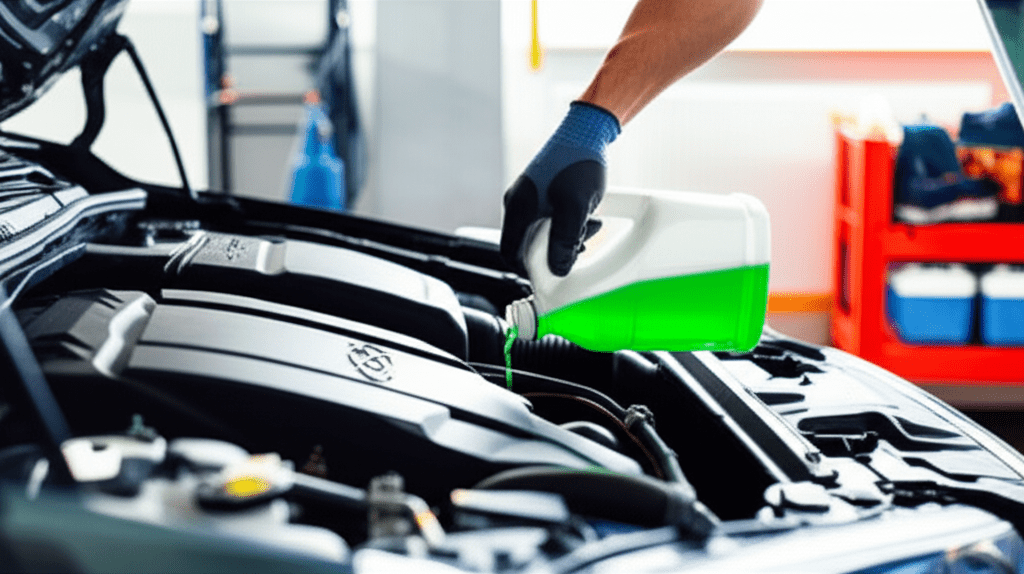
- Open the Reservoir Cap: Wear gloves and safety glasses. Slowly twist and remove the cap from the coolant reservoir.
- Add the Correct Coolant/Water Mixture: Using a funnel, add the pre-mixed 50/50 coolant or your own 50/50 mixture of concentrated antifreeze and distilled water. Fill it up to the “Max” or “Cold” line.
- Replace the Cap: Securely screw the cap back onto the reservoir.
- Start the Engine: Start your car and let it run for a few minutes. Keep an eye on the reservoir level. The level may drop slightly as the coolant circulates through the system. If it drops significantly, you might have a leak.
- Re-check the Level: Once the engine has cooled again, re-check the level and top off if necessary.
If you need to add a significant amount of coolant regularly, or if you notice other issues like coolant leaks (puddles under your car) or steam from the engine, it’s best to have your cooling system inspected by a professional.
When to Flush and Refill Your Cooling System
Coolant doesn’t lastforever. Over time, the additives that protect your engine break down, reducing its effectiveness. This is why regular flushing and refilling are necessary.
Signs Your Coolant Needs Changing
- Manufacturer’s Recommended Interval: The most straightforward guide. Check your owner’s manual for the recommended service interval, typically every 30,000 to 100,000 miles, or every 2-5 years, depending on the coolant type.
- Discolored or Dirty Coolant: If the coolant looks rusty, brown, muddy, or you see particles floating in it, it’s a clear sign the additives have degraded.
- Low Coolant Level (without a visible leak): A recurring low coolant level can indicate internal system issues or that the coolant is no longer effectively doing its job.
- Engine Overheating: If your car is frequently overheating, even after topping off, the coolant might be old or the wrong type.
The Coolant Flush Process (DIY vs. Professional)
A coolant flush involves draining the old coolant, cleaning the system, and refilling it with fresh coolant. While it can be a DIY job, it requires careful execution and proper disposal of old coolant, which is toxic. Many people opt for professional service to ensure it’s done correctly and safely.
If you decide to DIY, you’ll need:
- New, correctly specified antifreeze (concentrated or 50/50 premix)
- Distilled water (if using concentrate)
- A drain pan
- A funnel
- Safety glasses and gloves
- A radiator flush additive (optional, but recommended for thorough cleaning)
- A method for safe disposal of old coolant (contact local recycling center)
The basic steps involve draining the old coolant from the radiator petcock and reservoir, flushing the system with water (sometimes with a cleaning additive), and then refilling with the fresh 50/50 mixture. You can find detailed guides on sites like AutoZone or via video tutorials from reputable automotive sources.
Frequently Asked Questions (FAQ)
Q1: Can I put straight antifreeze in my car?
A1: No, unless it’s specifically labeled as a pre-mixed 50/50 solution. Concentrated antifreeze needs to be mixed with distilled water (typically a 50/50 ratio) to provide both freeze and boil-over protection, as well as optimal heat transfer. Pure antifreeze has a higher boiling point but actually transfers heat less efficiently than a water mixture and can still freeze at very low temperatures.
Q2: How do I know if I have the right amount of antifreeze?
A2: Check the coolant level in the translucent reservoir tank when the engine is cool. It should be between the “Min” and “Max” or “Cold” and “Hot” lines marked on the tank. If it’s below the lower line, you need to top it off with the correct 50/50 antifreeze and distilled water mixture.
Q3: What happens if I put too much antifreeze in my car?
A3: Putting too much antifreeze (i.e., a mixture that is over 70% antifreeze) can actually decrease the cooling system’s efficiency. While it offers excellent freeze protection, it doesn’t dissipate heat as well as a proper 50/50 mix, potentially leading to overheating, especially in hot weather or