How Much Does a Dyno Tune Cost for a Vehicle?
Figuring out How Much Does a Dyno Tune Cost for a Car? can feel tricky when you’re just starting. There are many different answers, and the car world has its own unique language! Don’t worry, though; it’s not as hard as it sounds. This post will break down the costs and what influences them so you can get a clear picture. We’ll explore the main factors affecting dyno tuning prices and help you prepare. Let’s get started!
What is a Dyno Tune and Why Does It Matter?
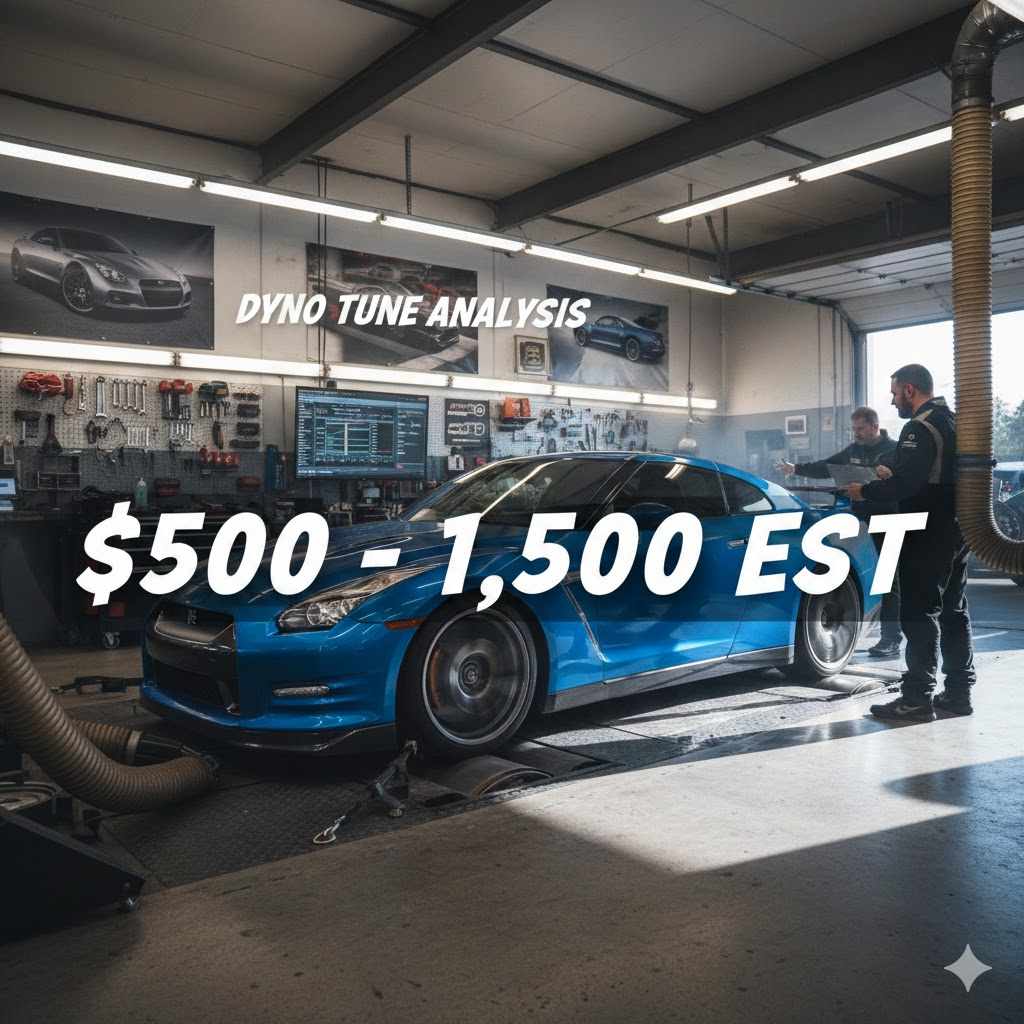
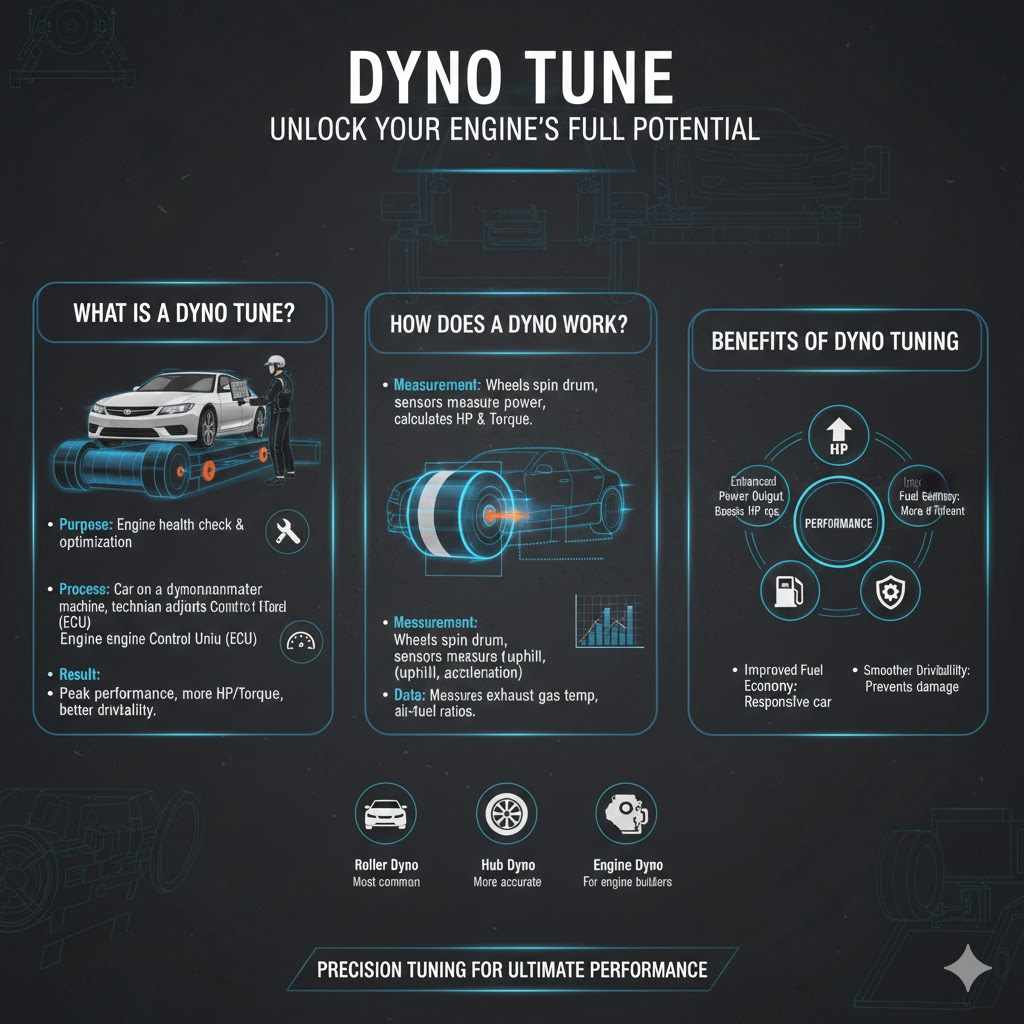
A dyno tune, short for dynamometer tune, is like a health checkup for your car’s engine. A dynamometer, or “dyno,” is a machine that measures the power your car puts out. During a dyno tune, your car is strapped onto the dyno, and the engine is run through various tests. A skilled technician then adjusts your car’s engine control unit (ECU), which is the computer that manages the engine, to make it run at its best.
This process ensures your car’s engine operates with peak performance. The dyno tune optimizes several critical engine functions. This includes the fuel delivery and ignition timing to match your car’s current modifications or intended use. This often results in more horsepower and torque, and better drivability. This is especially helpful if you’ve made modifications such as adding a new exhaust system, intake, or turbocharger.
How Does a Dyno Work?
The dyno itself measures the power your car puts out by simulating real-world driving conditions. When your car is on the dyno, the wheels spin a large drum. Sensors on the dyno measure how quickly the drum spins. From this information, the dyno calculates the engine’s horsepower and torque. This gives the tuner precise data on how the engine is performing.
Modern dynos can do more than measure power. They can also simulate different driving conditions, like going uphill or accelerating quickly. The dyno can also measure other data, like exhaust gas temperatures and air-fuel ratios. This information is very important for proper tuning.
- Roller Dynos: These are the most common type, using rollers that the car’s wheels sit on. The rollers spin as the car runs, and sensors measure the power.
- Hub Dynos: Instead of rollers, these dynos bolt directly to the car’s wheel hubs. This design is often more accurate.
- Engine Dynos: These dynos test engines directly without the car’s drivetrain. This is mostly used for engine builders.
The Benefits of Dyno Tuning
There are several advantages of a dyno tune. One of the main benefits is increased power and torque. By fine-tuning the engine, you can often unlock extra horsepower that was hidden before. Another benefit is improved fuel efficiency. A well-tuned engine runs more efficiently, which means it uses less fuel for the same amount of driving.
Dyno tuning can also improve drivability. This means your car will respond better to your commands. It might accelerate more smoothly and feel more responsive. Beyond that, a dyno tune can protect your engine. The tuner makes sure the engine is running within safe limits, which helps prevent damage from excessive heat or stress.
- Enhanced Power Output: Dyno tuning can significantly boost horsepower and torque.
- Improved Fuel Economy: A well-tuned engine is often more efficient.
- Smoother Drivability: The car becomes more responsive and easier to drive.
- Engine Protection: Tuning can help prevent engine damage.
Factors Influencing the Cost of a Dyno Tune
Several things affect the final cost. These range from the type of car you drive to how complex the tuning needs to be. Understanding these factors is key to knowing what to expect when getting your car dyno-tuned.
The price for a dyno tune isn’t fixed. Instead, the cost varies based on many things. These include the shop’s location and reputation. Additionally, the type of car, any modifications, and the tuner’s experience are all parts of the price. The total price is often higher if your car has many modifications or needs extensive adjustments.
Car Type and Modifications
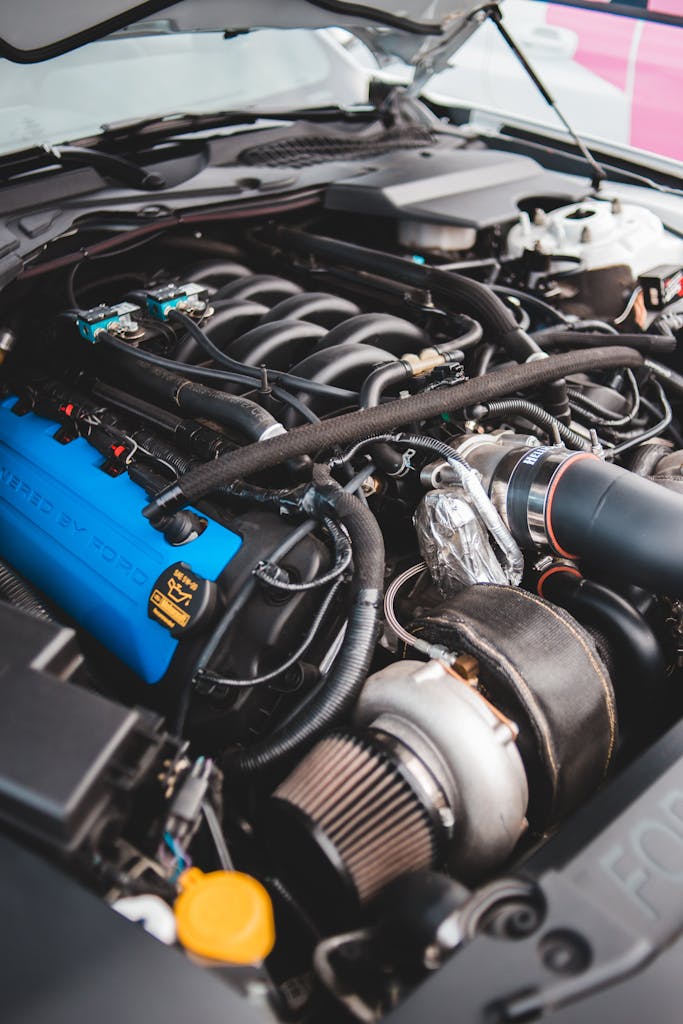
The make and model of your car are big factors in the cost. Some cars have more complex engine control systems than others, which means more work for the tuner. Older cars might be simpler and need less tuning time, while newer cars with advanced technologies often take longer. Also, if you’ve made changes to your engine, like adding a new turbocharger or upgrading the fuel system, the tuning process becomes more involved and, therefore, more expensive.
A sports car with a turbocharged engine will require a different tuning strategy than a family sedan. Modified engines usually need more detailed adjustments. This is because these alterations change how the engine works, and the ECU must be adapted accordingly. The more modifications you have, the more the price can go up.
- Make and Model: Some cars require more tuning time.
- Engine Type: Turbocharged engines may cost more to tune.
- Existing Modifications: Modifications mean more extensive tuning.
Tuner Experience and Shop Reputation
The skill and experience of the tuner play a major role in the price. Experienced tuners with a strong reputation often charge more for their services, but their expertise and attention to detail often justify the cost. They are more likely to achieve optimal results and avoid potential issues.
Reputable shops invest in top-quality dyno equipment and employ skilled technicians. The shop’s reputation can also influence the cost. Shops with positive reviews and a history of successful tunes usually charge more. This is because you are paying for their proven ability to get the best performance from your vehicle while ensuring its safety.
- Tuner Experience: More experienced tuners often have higher rates.
- Shop Reputation: Reputable shops may have premium pricing.
- Equipment Quality: Modern dynos can cost more to use.
Time and Complexity of the Tuning Process
How much time is needed to tune your car significantly impacts the cost. A basic tune might take a few hours. A car with numerous modifications or with problems can require a whole day or more. The tuner spends time connecting the car to the dyno, taking measurements, making adjustments, and testing again.
The complexity of the tuning process depends on the specific needs of the car. For example, a car with a simple modification, such as a cold air intake, might need only basic adjustments to the ECU. A car with a complete engine rebuild, new turbo, and custom exhaust system needs a very detailed tune. The more complex the tuning job, the more it will cost, which is determined by the technician’s time.
- Basic Tune: Simple adjustments that require less time.
- Complex Tune: Detailed adjustments requiring more time and effort.
- Troubleshooting: Finding and fixing engine problems adds time and cost.
Breaking Down Dyno Tuning Costs
When you’re looking into dyno tuning, it helps to understand the typical prices involved. The total cost is made up of different parts. This part will explain where the money goes and what you get for it.
The price of a dyno tune isn’t always the same. Instead, it changes based on what the tuner is doing and what the car needs. The cost is often divided into different categories. This helps customers see the value of each service.
Hourly Rates vs. Package Deals
Many shops charge by the hour. These rates can vary depending on where you live. An hourly rate offers flexibility. You only pay for the time the tuner spends on your car. Package deals are also common. These are pre-set rates that include a certain number of hours and services. They’re often cheaper than paying by the hour, especially for basic tunes.
Some dyno tuning facilities offer both hourly rates and package deals. Hourly rates are often used for complicated jobs where the tuner cannot predict the tuning time. Package deals are a cost-effective choice for common tuning scenarios. These packages frequently bundle dyno time, tuning adjustments, and a before-and-after performance report.
- Hourly Rates: Charges based on the time spent on your car.
- Package Deals: Pre-set prices that include a set of services.
- Included Services: Most packages also include before/after reports.
Cost of Additional Services
The base cost of a dyno tune usually covers the basic engine adjustments. However, you might need additional services, which can increase the total cost. These extras may include data logging, wideband sensor installation, or chassis dyno runs. Data logging involves collecting and analyzing data from your car’s sensors to help the tuner make informed decisions.
Other costs can include a wideband sensor, which accurately measures the air-fuel ratio. This is essential for proper tuning. The price of these extra services varies depending on what is needed. For example, a wideband sensor could cost a few hundred dollars to install. It’s always good to ask the tuner for a detailed list of services and their associated costs before you agree to the work.
- Data Logging: Recording and analyzing engine data.
- Wideband Sensor: Measures air-fuel ratio.
- Diagnostic Work: Fixing problems can add to the cost.
Geographical Location’s Impact
The cost of dyno tuning can change a lot depending on where you live. In big cities or areas with high living expenses, like major metropolitan areas, dyno tuning services tend to be more expensive due to higher costs for things like rent, utilities, and labor. Small towns and areas with lower overall costs of living often have lower prices.
Local competition is another factor. In areas with many dyno tuning shops, you might see more competitive prices as shops try to attract customers. In areas with fewer shops, the limited competition may give shops more flexibility in setting their prices. Researching and comparing prices from shops in your area can help you get the best deal.
- Cost of Living: Areas with high living costs usually have higher prices.
- Local Competition: Competition can lower prices.
- Shop Availability: Fewer shops can result in higher prices.
| Factor | Impact on Cost |
|---|---|
| Location (City vs. Rural) | Higher in cities, lower in rural areas. |
| Car Modifications | More modifications mean higher costs. |
| Tuner Experience | More experienced tuners may charge more. |
How to Save Money on Dyno Tuning
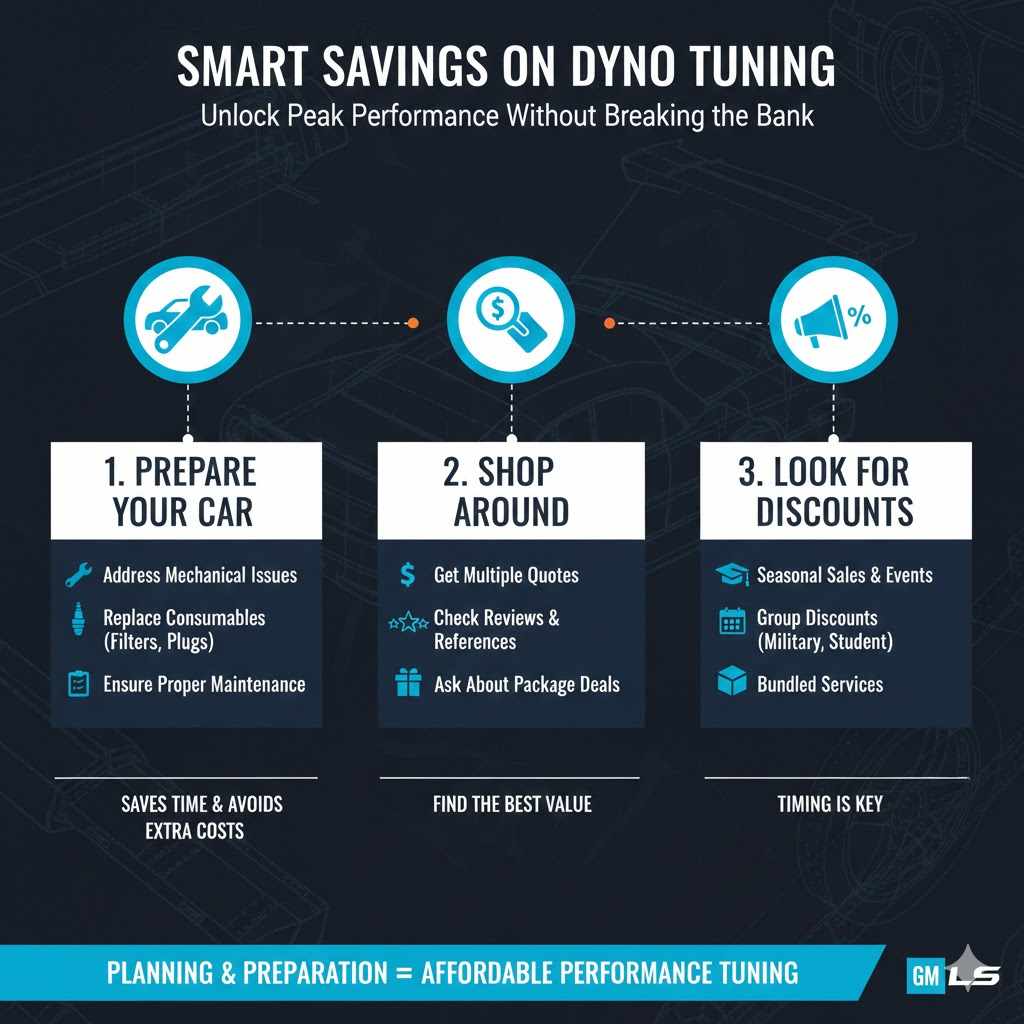
Dyno tuning is a way to make your car run its best, but you don’t have to break the bank. Several smart tips can help you save money without sacrificing quality. Planning and doing your homework can result in lower costs.
Saving money on a dyno tune means being smart. This could mean shopping around to see which shop has the best price. Another key tip is to make sure your car is ready before you get it tuned. You’ll also want to know what to expect from the dyno tuning process.
Prepare Your Car Before Tuning
Before you take your car in for a dyno tune, do some basic maintenance. Make sure your car is in good working order. Address any current mechanical issues before scheduling a dyno tune. This way, the tuner can focus on optimizing the engine’s performance instead of fixing problems.
Replacing any worn-out parts can also help. This includes the spark plugs, air filter, and fuel filter. All of these components affect your car’s engine performance. By getting these parts right, you can save time and money. This avoids the cost of troubleshooting and extra adjustments. A well-maintained car is easier and quicker to tune, which can reduce the overall cost.
- Address Mechanical Issues: Fix any existing problems.
- Replace Consumables: Change filters and spark plugs.
- Ensure Proper Maintenance: A well-maintained car is easier to tune.
Shop Around and Compare Prices
Don’t just go to the first shop you find. Take the time to shop around and compare prices from different dyno tuning shops in your area. Look at their websites, read reviews, and ask for quotes. This helps you understand what each shop offers and how much it costs. This will give you the best chance of finding a shop that offers good value for your money.
Ask about package deals and what they include. Ask to see examples of their previous work, if possible. You can also ask for references. Sometimes you can find shops offering discounts or special promotions. By comparing options, you’ll be able to make an informed choice. You can find the best deal for your needs.
- Get Multiple Quotes: Compare prices from different shops.
- Check Reviews: Read what other people say about their services.
- Ask About Package Deals: These are often a better value.
Ask About Discounts and Promotions
Many dyno tuning shops run discounts or promotions, especially during slower times of the year. Always ask about any current special offers or discounts available. Some shops offer discounts to specific groups, such as students or military personnel. Other shops might provide discounts if you bundle multiple services together. This saves money.
You can also keep an eye out for seasonal sales or special events. This may be the best time to get your car tuned at a lower price. Following shops on social media or signing up for their email newsletters can keep you informed about promotions. Doing this helps you be ready to grab the chance to save money on your dyno tune.
- Seasonal Sales: Look for discounts during certain times of the year.
- Group Discounts: Ask about discounts for students or military personnel.
- Bundled Services: Many shops provide discounts if you get more than one service.
Frequently Asked Questions
Question: How long does a dyno tune take?
Answer: A basic tune can take a few hours, while a complex tune for a heavily modified car might take a full day or longer.
Question: Will a dyno tune void my car’s warranty?
Answer: It depends. If the tune causes engine damage, your warranty might be affected. Always check your warranty details.
Question: Can I dyno tune my car myself?
Answer: It’s possible to do a DIY tune, but it requires a lot of knowledge and special equipment. It is best to have a professional.
Question: What’s the difference between a chassis dyno and an engine dyno?
Answer: A chassis dyno measures power at the wheels, while an engine dyno measures the engine’s power directly.
Question: How do I know if my car needs a dyno tune?
Answer: If you’ve modified your engine or notice performance issues, it’s a good idea to get a dyno tune.
Final Thoughts
You now have a better idea of what influences How Much Does a Dyno Tune Cost for a Car?. Pricing depends on factors like your car type, modifications, and the tuner’s skill. Costs can range widely, so doing your homework is critical. Consider the type of tune you need, whether it’s an hourly rate or a package. Be sure to shop around and get quotes from multiple shops to see what each shop offers. Remember to prepare your car, and look for discounts. This makes your experience more cost-effective.
With careful planning, you can find a dyno tune that fits your budget. Understanding these aspects allows you to make smart choices. By exploring your options and gathering information, you can get the best results for your vehicle. By understanding the process, you can find a suitable shop for your car’s needs, optimizing its performance. This ensures you enjoy a better driving experience. Good luck!