How Much is Wrap for a Car: Cost Breakdown & Tips
A full vinyl wrap usually costs $2,500 to $6,000 for a standard passenger car, with partial wraps often starting around $500 to $1,500. Low quotes can hide weak prep or thin film, which can lead to bubbling, lifting edges, and removal costs that climb toward repaint levels. This guide breaks down material, labor, prep, and risk so you can judge whether an installer’s quote is fair.
Car wrap cost breakdown


Wrap pricing is a stack of separate charges, not one flat number. Material, labor, prep, and removal all move the total, and vehicle size changes each bucket. A quote that looks low at the top can turn expensive once panel removal, paint correction, or edge sealing is added.
Full wrap versus partial wrap
A full wrap covers the painted exterior panels that the installer can safely film. Partial wraps cover fewer panels, such as a roof, hood, mirrors, or a set of accent stripes, so they use less film and fewer labor hours. The catch is that partial work still needs careful layout and edge finishing.
For cost control, partial wraps usually make sense when the goal is a color accent, a branding panel, or a limited refresh. Full wraps make more sense when the entire vehicle needs a new look or uniform branding across all visible sides.
What a quote should include
A useful quote separates the film cost from the labor cost and lists what prep work is included. It should also say whether trim pieces come off, whether emblems are removed, and whether the shop will handle edge sealing or reassembly. If those items are not listed, they are often billed later.
Typical cost bands by vehicle size
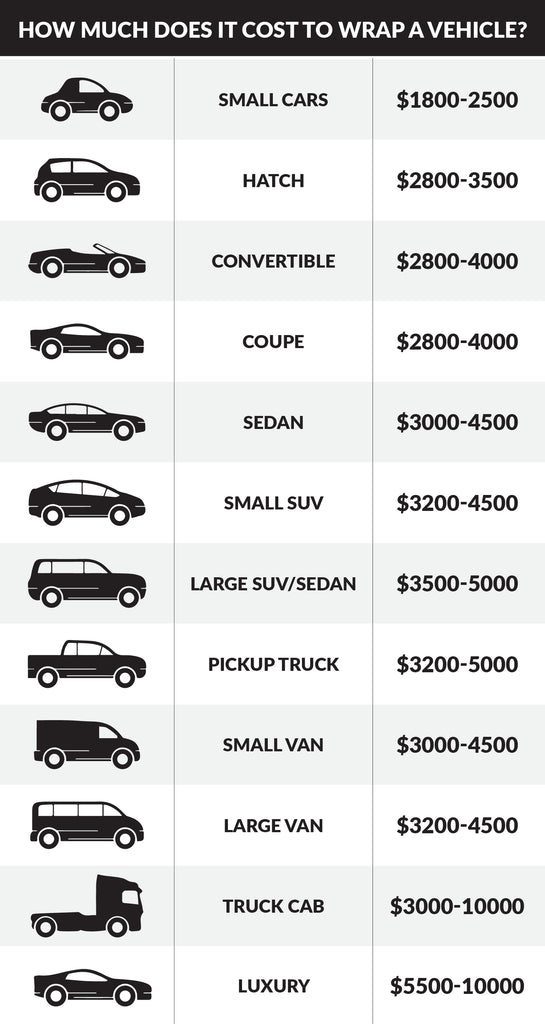
Size is one of the biggest cost drivers because larger vehicles need more film and more install time. A compact car usually sits at the low end, while SUVs, trucks, and vans rise as panel count and surface area increase. Deep curves and tall body sides add even more labor.
| Vehicle size | Typical full-wrap range | Typical partial-wrap range | Cost pressure |
|---|---|---|---|
| Compact car | $2,500 to $3,500 | $500 to $1,200 | Lower film use, fewer large panels |
| Sedan | $3,000 to $4,500 | $700 to $1,500 | More panel area and more edges |
| SUV | $3,500 to $5,500 | $800 to $1,800 | Large surface area and taller sides |
| Truck or van | $4,000 to $6,500+ | $900 to $2,000+ | More material, higher ladder time, bigger panels |
What affects the price?
Three things move the quote most often: vehicle size, body complexity, and installer labor. Curves, spoilers, mirrors, and tight bumper shapes raise the risk of visible seams or lift points, so a shop with more experience will often charge more. That higher price can be justified if it reduces rework.
Vehicle size and panel count
Panel count matters because each door, bumper, fender, and hatch takes time to prep, align, and finish. A two-door coupe may use less material than a tall SUV, but a coupe with aggressive bodywork can still take longer than a plain sedan. The quote should reflect both surface area and complexity.
Complex shapes, spoilers, and mirrors
Sharp body lines, recessed handles, roof spoilers, and mirror caps make a wrap harder to stretch cleanly. More complex shapes often need extra film, more heat work, and more trimming. That is where lower-bid quotes can fail, because the film may bridge over a curve instead of conforming to it.
Installer skill and shop setup
Installer experience matters because a wrap is only as good as the preparation and panel finish behind it. A shop with a controlled workspace, proper lighting, and clean removal tools can usually deliver tighter edges and fewer blemishes. Quotes that are far below the market often skip the time needed for careful prep.
Picture an SUV with black plastic trim, roof rails, and a rear spoiler. The body itself may be straightforward, but the trim removal and edge finishing can add more time than a cleaner sedan would need. That extra time should appear in the estimate.
Material and finish choices
Material choice changes both price and durability. Cast vinyl usually costs more than calendared vinyl because it conforms better, shrinks less, and handles compound curves more cleanly. Finish also matters: matte, satin, gloss, chrome, and color-change films do not price the same, and some need more careful handling.
Cast versus calendared vinyl
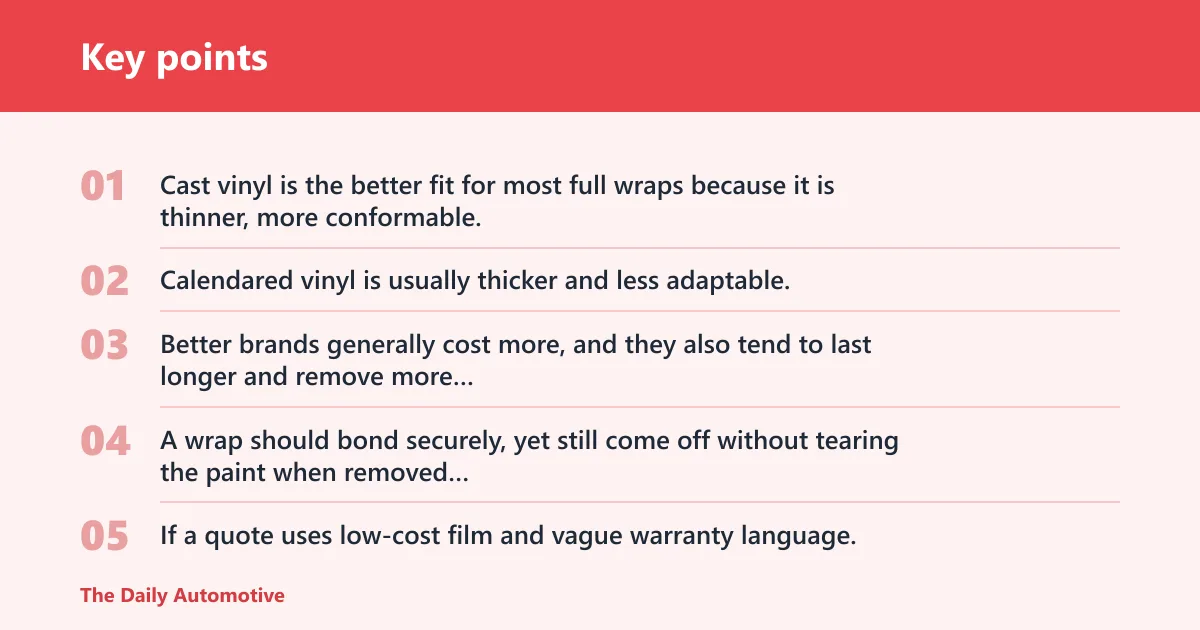
Cast vinyl is the better fit for most full wraps because it is thinner, more conformable, and less likely to fight complex curves. Calendared vinyl is usually thicker and less adaptable, so it is often better for flatter surfaces or shorter-term use. Better brands generally cost more, and they also tend to last longer and remove more cleanly.
Thickness is not the only quality marker. Adhesive behavior matters too. A wrap should bond securely, yet still come off without tearing the paint when removed within its intended life. If a quote uses low-cost film and vague warranty language, ask what brand and film type are actually included.
Matte, satin, gloss, and chrome
Matte and satin films often sit in a mid-range, while gloss films can cost a bit more or less depending on the brand and color. Chrome and specialty finishes usually sit at the top end because they are harder to install and less forgiving during stretching and trimming. Color-change wraps often cost more than a simple solid-color change because the film choice is broader and the finish is more demanding.
Color-change wraps and premium films
Premium films are often chosen for appearance, but the price difference also reflects handling and durability. A higher-grade film can reduce the risk of visible texture, lifting edges, and premature fading. That said, a premium material does not rescue poor prep or a damaged panel.
Wrap quote checklist
Use a line-item quote, not a one-line number. The checklist below helps you compare installers apples-to-apples and spot add-ons that are reasonable versus charges that should already be part of the job. If a shop will not itemize the estimate, ask for a revised version before you book.
| Line item | What it should include | Common add-on charges | Red flags |
|---|---|---|---|
| Material | Brand, film type, finish, and coverage area | Premium colors, chrome, color-shift finishes | No brand listed, no film grade listed |
| Labor | Install time, panel wrapping, trimming, finishing | Complex body lines, mirror caps, bumper work | Suspiciously low labor or no labor line at all |
| Surface prep | Wash, decontamination, drying, cleaning | Paint correction, clay work, adhesive removal | Prep described as “basic clean” only |
| Trim removal | Badges, handles, lights, emblems, small trim | Panel removal, reassembly, retainer replacement | Installer plans to wrap around everything |
| Edge sealing | Finishing at seams, corners, and tucked edges | Extra sealing on high-lift zones | No mention of edges on bumpers or mirrors |
| Warranty | Film and install coverage terms, length, exclusions | Longer film coverage or labor coverage | No written warranty, or one with major exclusions |
| Wrap removal | Safe film removal and adhesive cleanup | Old wrap removal, residue removal, paint touch-up | No plan for end-of-life removal |
- Compare the film brand and finish first.
- Check whether prep work is included.
- Confirm what trim must come off.
- Ask how edge sealing is handled.
- Read the warranty in writing.
- Get the removal cost before you sign.
Is a wrap cheaper than paint?
A wrap is often cheaper than a quality repaint, especially if you want a reversible color change and the paint underneath is already in good shape. Repainting can be the better buy when the vehicle needs real bodywork, rust repair, or panel refinishing. If the surface is poor, a wrap may save money up front but cost more later.
When wrapping makes sense
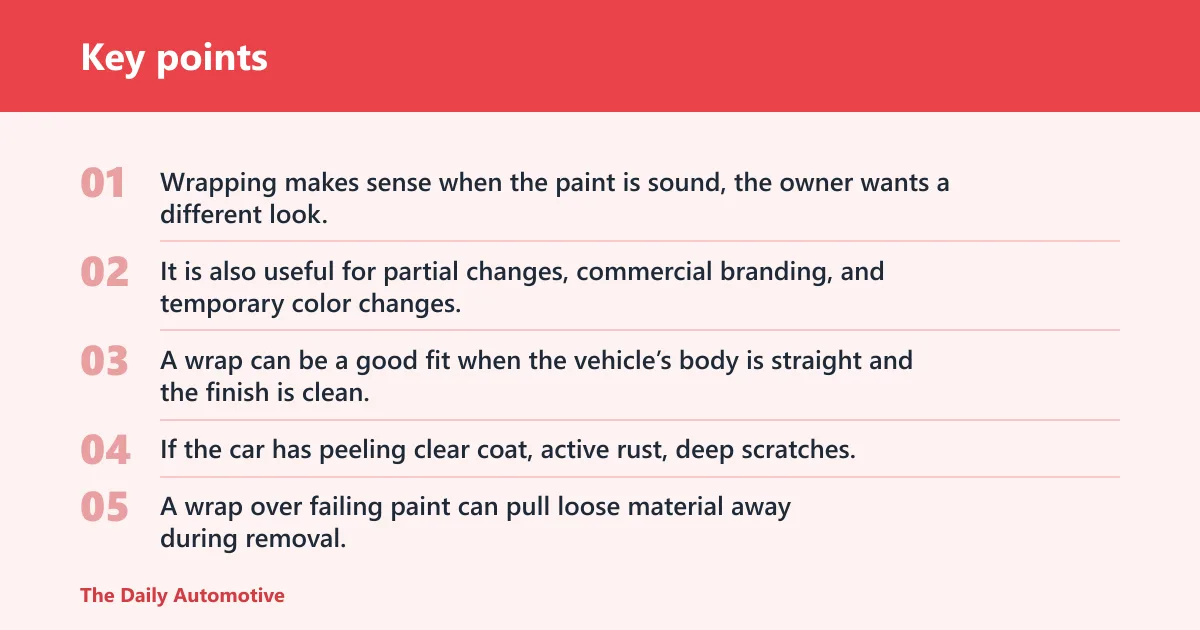
Wrapping makes sense when the paint is sound, the owner wants a different look, and the goal is to preserve the original finish. It is also useful for partial changes, commercial branding, and temporary color changes. A wrap can be a good fit when the vehicle’s body is straight and the finish is clean.
When repainting is the better buy
If the car has peeling clear coat, active rust, deep scratches, or poorly repaired bodywork, repainting is usually the safer choice. A wrap over failing paint can pull loose material away during removal. That can turn a cosmetic project into a paint repair bill.
A common first-timer mistake is wrapping over a hood with peeling clear coat because the quote is lower than paint. The film may stick at first, but the underlying coating can fail later, and removal can take loose paint with it. In that case, the cheaper quote is not the cheaper outcome.
Partial wrap strategies for tighter budgets
When the full-car quote is out of reach, partial wraps can deliver a cleaner budget target. Roof-only, hood-only, mirror caps, and accent pieces cost far less than a whole-vehicle wrap and still change the look. This approach works best when the goal is style, not full color change.
What hidden costs should you expect?
Hidden costs usually come from condition, disassembly, and removal. A quote may look complete until the installer finds scratched paint, old adhesive, broken trim clips, or a panel that needs extra prep. Those are legitimate charges when they are disclosed early, but they should not appear as surprises at pickup.
Surface repair and paint correction
Wraps do not hide every flaw. Dents, scratches, rust, and peeling clear coat can all telegraph through the film or interfere with adhesion. Shops may charge for paint correction, dent repair, or surface smoothing before the wrap goes on.
Trim, badge, and panel removal
Removing badges, emblems, mirror caps, and trim pieces often improves the final look because the film can tuck under edges instead of stopping short. It also adds labor and may require new clips or adhesive. That cost should be listed if the shop expects clean edge work.
Wrap removal and end-of-life costs
Wraps do not last forever, and removal takes time. If the film has aged, baked in the sun, or been installed over rough paint, removal can be slow and messy. End-of-life charges often include film removal, adhesive cleanup, and sometimes limited paint touch-up.
How long does a wrap last?
Most wraps last several years, but lifespan depends on film quality, finish, exposure, and care. Better cast films usually hold up longer than cheaper calendared films, and garage-kept vehicles often age better than daily drivers parked in harsh sun. Warranty terms should match those expectations.
Warranty expectations
Ask whether the warranty covers material only, labor only, or both. A long material warranty is not very useful if the installer will not cover edge lift or install defects. Read the exclusions closely, especially for sun exposure, pressure washing, and panels that were already in poor condition.
Aftercare and wash methods
Wrap care is simple, but it matters. Use wrap-safe wash methods, mild soap, and soft microfiber tools. Avoid abrasive pads, harsh solvents, and strong degreasers unless the installer specifically approves them. Clean the wrap on a regular schedule so dirt does not sit on the film for long periods.
UV exposure and storage
Sunlight is hard on any wrap. Covered parking, garage storage, and reduced UV exposure usually help the film keep its color and finish longer. If the vehicle lives outside, a higher-quality film and a realistic maintenance routine matter more than a low sticker price.
Suppose a midsize SUV sits outside every day in a hot climate. A premium film with a proper warranty and careful edge sealing can be worth more than the cheapest quote, because heat and UV raise the odds of fading and edge lift. The vehicle’s storage pattern changes the value of the wrap.
Frequently asked questions
How much does it cost to wrap a car?
The final price depends on film type, vehicle size, surface condition, and how much labor the installer includes in the quote.
What affects the price of a full car wrap?
The biggest factors are vehicle size, body complexity, film quality, and prep work. Curves, spoilers, mirrors, and complicated bumpers raise labor time. Paint condition matters too, because scratches, dents, rust, and peeling clear coat can add repair work before the wrap can be installed.
Is a vinyl wrap cheaper than paint?
Often, yes, if the paint is already in good shape and you want a reversible color change. A wrap can be cheaper than a quality repaint, but it is not a fix for damaged panels. If the car needs rust repair or clear-coat repair, paint may be the better long-term buy.
How much does it cost to wrap a truck or SUV?
Trucks and SUVs usually cost more than sedans because they have larger surface areas, taller sides, and more panel work. A typical SUV often sits above the sedan range, and full truck or van wraps can move higher still when the body is large, complex, or fitted with extra trim.
Do matte, gloss, and color-change wraps cost different amounts?
Yes. Matte and satin films often fall in the middle, gloss can vary by brand, and chrome or specialty color-change films usually cost more. The price difference comes from material cost, install difficulty, and how unforgiving the finish is during stretching, trimming, and edge finishing.
How long does a car wrap last?
Life span depends on film quality, installation quality, sun exposure, and maintenance. Better cast films generally last longer than cheaper calendared films, and garage storage helps. Warranty terms should be read carefully, because coverage often changes based on finish, location, and how the vehicle is washed and stored.
Products related to this article
Sponsored / affiliate links. As an Amazon Associate I earn from qualifying purchases. I may earn additional commission from eligible campaigns.