Floor Mats vs Cargo Liners: What to Buy for Your Car
Pick floor mats for cabin footwells, and cargo liners for the trunk. If you haul pets, muddy gear, or spills, the cargo zone needs its own liner. Skip that split, and you end up with stained carpet, soaked padding, trapped grit, and tougher resale cleanup. I judge this by the mess paths I see in real vehicles, and the right setup for winter driving, dogs, and hauling is clear.
This guide is part of our Car accessories guide series.
Floor mats vs cargo liners: the short answer
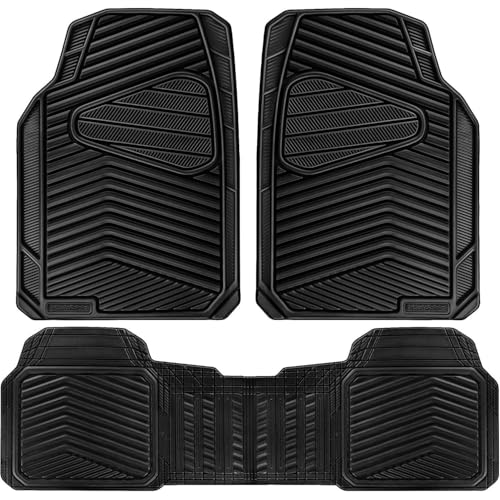

Floor mats protect the cabin footwells. Cargo liners protect the rear storage area. People mix them up because both sit on the floor, but the messes land in different places and move differently once the vehicle is moving.
In practice, floor mats are for the driver, front passenger, and rear passenger footwells, while cargo liners are shaped for the trunk floor or rear hatch area. The right choice depends on where the dirt, water, and cargo movement actually happen.
| Decision factor | Floor Mats | Cargo Liners | Winner |
|---|---|---|---|
| Primary protection zone | Cabin footwells | Trunk or rear cargo area | Tie |
| Best at containing spills | Good only when molded and edged | Usually better because of tray-style coverage | Cargo Liners |
| Fit to vehicle contours | Often flat or universal, unless premium custom-fit | Usually shaped to the load floor and cargo walls | Cargo Liners |
| Cabin comfort and lighter-duty use | Strong choice for dry, light use | Not intended for footwell use | Floor Mats |
| Best for groceries, tools, pets, coolers | Not the right zone | Built for those loads | Cargo Liners |
Primary protection zone
This row splits cleanly. Interior floor mats are built to protect the driver, front passenger, and rear passenger footwells, while cargo and trunk mats protect the rear storage area where items slide, tip, leak, and grind dirt into carpet. One product cannot stand in for the other.
Best at containing spills
Cargo liners usually win because they are built like trays. Floor liners can also hold liquid well, but a flat mat with no sidewall still lets water reach carpet when the spill shifts or the vehicle brakes hard.
Fit to vehicle contours
Custom-fit cargo liners and floor liners track the vehicle better than universal fit mats. Universal fit mats are only approximate in size, so edges may leave gaps where slush, grit, and melted snow can reach the carpet.
Cabin comfort and lighter-duty use
A traditional floor mat is often enough when the vehicle sees light use and dry weather. Flat mats sit on top of floor contours and are usually chosen for appearance, easy removal, and basic dirt protection.
Best for groceries, tools, pets, coolers
Cargo liners are generally made for load floors rather than feet. That matters when the load is a cooler, a toolbox, a pet crate, or a bag of groceries that may tip over and leak under braking.
According to Floor Mats vs Floor Liners: What’s Actually the Difference? — CustoArmor lists floor liner raised edges at 1–2 inches.
Floor mats vs floor liners: what changes in construction?
The core difference is shape. A traditional floor mat is usually flat and covers the footwell floor only, while a floor liner is molded to the vehicle and wraps the floor contours with raised edges to hold messes in place.
Flat mat construction
Flat mats are simple and familiar. They sit on top of the floor contours, which makes them easy to remove and clean, but also means they cover less area and can leave more open carpet around the edges.
Molded liner construction
Floor liners are often built from vehicle-specific templates tied to a year, make, and model. That vehicle-specific shape is what lets them hug the floor, cover more surface, and resist shift under repeated entry and exit.
Raised edges and sidewall coverage
Raised edges matter because liquid wants the lowest path out. CustoArmor lists floor liner raised edges at 1–2 inches, and that wall height helps contain slush, road salt water, and melted snow before it runs into carpet or padding.

Coverage and fit: why the vehicle-specific template matters
Vehicle-specific templates matter because messes do not spread evenly. A liner that matches the floor well keeps its edge where the mud and water are most likely to move, while a loose universal fit mat leaves open corners and channels for runoff.
Custom-fit templates versus universal fit mats
Custom-fit templates are the better answer when the vehicle sees wet weather, kids, pets, or winter boots. Universal fit mats can be fine for light use, but the lower coverage and edge gaps make them a weaker choice when liquid or grit reaches the perimeter.
Front footwells and rear footwells
Front footwells often take the most wear from driver traffic, but rear footwells also matter in family vehicles and rideshare use. If rear passengers track in snow or mud, those back seats need the same containment logic as the front.
Why gaps matter in wet weather
Even a good liner can fail if the water lands outside its edge. Once slush gets under a corner, it spreads into carpet fibers and padding, where it is harder to dry and can hold odor long after the surface looks clean.
Do I need floor mats or floor liners for winter?
For winter, floor liners are the safer buy in the footwells because they are built for all-weather protection, spills, and heavy outdoor exposure. A basic mat can work in dry climates or for drivers who are careful about wiping their shoes, but snow and salt usually push the decision toward liners.
Snow, slush, and road salt in the cabin
Winter creates a wet-dry cycle that ordinary mats handle poorly. Shoes bring in slush, it melts, then the water runs toward the lowest point and stains the carpet if the mat has no containment wall.
Which zones need containment most
The front footwells take the most repeated moisture. Rear footwells are also a concern in family vehicles, because kids and passengers can track in more snow that stays in the back until it melts.
When a basic mat is enough
A basic mat is enough when the vehicle lives in a dry climate, the use is mostly commuting, and the foot traffic is light. It is also a reasonable choice for owners who want a simpler look and accept less containment.
What a cargo liner does that cabin mats cannot
A cargo liner protects the rear load floor, not the footwells. It is shaped for the trunk or rear hatch area and is built for cargo that slides, tips, leaks, and sheds dirt into the rear of the vehicle.
Trunk and hatch load-floor coverage
Cargo liners fill a different job than cabin mats. They sit under groceries, tools, sports gear, strollers, coolers, and pet crates, and they are often tray-style with higher edges so the load zone is easier to rinse or wipe down.
Spills, pet hair, and heavy-item scuffing
Pet hair clings to carpet. Wet bags leak. A toolbox grinds dust into the fibers. A cargo liner keeps that wear off the original trim and makes cleanup faster after a messy trip.
Raised edges for groceries and coolers
Raised edges help when a milk jug tips or a cooler sweats onto the floor. If the liner has enough edge height and the cargo stays inside the tray, the mess stays contained instead of wicking into the cargo carpet.
Which product to buy by use case
Use the zone, the mess type, and the vehicle layout to decide. The right buy changes when the vehicle is a commuter, a family hauler, or a work truck.
Commuter only
- Front footwells: Buy traditional floor mats if the commute is mostly dry and the interior sees light dirt only. They protect against dust, crumbs, and minor shoe wear.
- Rear footwells: Skip unless passengers regularly ride in back. If used, a basic mat is usually enough for light traffic.
- Cargo area: Buy a cargo liner only if the trunk carries gym bags, groceries that may leak, or work items that scuff the floor. Otherwise, a bare cargo floor may be acceptable.
Family and pet use
- Front footwells: Buy floor liners for mud, spilled drinks, wet shoes, and winter slush.
- Rear footwells: Buy floor liners again, because child seats, snack spills, and back-seat mud are common failure points.
- Cargo area: Buy a cargo liner for pet hair, crates, wet strollers, and groceries that can tip or leak.
Hauling-heavy use
- Front footwells: Buy floor liners if the vehicle sees jobsite dirt, rain, or repeated boot traffic.
- Rear footwells: Buy liners if workers or passengers ride there with tools, grit, or wet clothing.
- Cargo area: Buy a cargo liner immediately. Tools, coolers, camping equipment, and sports gear are exactly the kind of loads that grind and shift.
Choose floor mats if… / Choose cargo liners if…
Choose floor mats if you drive light-duty, mostly dry miles, and want simple cabin protection with a lower-coverage footprint. Choose cargo liners if the rear area carries groceries, pets, tools, or camping gear, because that zone needs tray-style containment and easier cleanup.
Choose floor mats if you drive light-duty and dry most of the time
Traditional mats make sense for commuters in dry climates, owners who care about a clean factory look, and drivers who mainly want protection from dust and small bits of debris. They are also the easier buy when the budget is tight and the mess stays modest.
Choose floor liners if you need all-weather containment in footwells
Floor liners win when snow, slush, muddy shoes, or spills are part of normal use. Their molded shape, custom-fit templates, and raised edges make them better for keeping liquid off carpet and preventing grime from spreading into the footwell.
Choose both if your cabin and cargo zone see different kinds of mess
Many vehicles need both products. A family SUV may need liners in the footwells and a cargo liner in back, while a commuter sedan may need only front mats and a trunk liner for groceries or a leaking gym bag.
Frequently asked questions
Floor mats vs floor liners: what’s the difference?
Floor mats are usually flatter and cover the footwell floor only. Floor liners are molded to the vehicle, wrap the floor contours, and use raised edges to contain water, slush, and dirt. Liners are the stronger pick when containment matters more than a simple protective layer.
Do I need floor mats or floor liners for winter?
For winter, floor liners are usually the better choice because snow and road salt melt into water that needs sidewall containment. A basic mat can work in a dry climate or on short trips, but it gives up spill control and edge protection.
Are all weather floor mats better than floor liners?
No. “All weather” on a mat does not automatically mean liner-level containment. If the product is still flat or loosely fitted, it may resist dirt but still let water run under the edge. A molded liner is usually better for slush, spills, and heavy use.
What is the difference between floor mats and cargo liners?
Floor mats protect the cabin footwells. Cargo liners protect the trunk or rear cargo area. The load zone sees different abuse: items slide, tip, and leak there, so the cargo liner is shaped more like a tray and often has higher edges.
Do cargo liners and floor mats protect the same areas?
No. They protect different zones and should be bought separately if both zones need coverage. A cabin mat does little for a wet cooler in the trunk, and a cargo liner does nothing for muddy boots in the driver footwell.
When is a dedicated trunk liner worth it?
A dedicated trunk liner is worth it when the cargo area regularly carries groceries, tools, sports gear, pet crates, coolers, or camping equipment. It is also the right buy when the load shifts, leaks, or sheds dirt often enough to stain the factory carpet.
Can one product protect both the cabin and cargo area?
Not well. Cabin footwells and cargo areas fail in different ways, so one product usually leaves one zone underprotected. The better setup is a floor liner or mat for the footwells and a separate cargo liner for the rear storage area.
What should I buy for groceries, pets, and muddy gear in the trunk?
Buy a cargo liner. That is the zone built for bags that leak, pet hair that sticks, and muddy gear that grinds dirt into carpet. A tray-style liner with higher edges is the safer choice when the load can shift or tip in transit.
Products related to this article
Sponsored / affiliate links. As an Amazon Associate I earn from qualifying purchases. I may earn additional commission from eligible campaigns.