How Much Does a Winter Car Battery Cost?
A winter car battery usually costs about $120 to $300 installed for a standard flooded lead-acid unit, and about $200 to $450 for AGM; if the battery tests good, do not buy one yet. Ignore a weak battery and you can pay for towing, repeated jump-starts, or a wrong replacement. This guide breaks down winter battery prices, when AGM is worth the extra money, and how to tell a dead battery from a charging or starter problem.
Winter battery cost table
| Battery type | Typical battery-only price | Typical installed total | When this makes sense in cold weather |
|---|---|---|---|
| Flooded lead-acid | $100 to $160 | $120 to $300 | Standard 12-volt replacement for many older or simpler cars. Best when the vehicle does not call for AGM or EFB and the climate is only mildly cold. Cold starts are weaker than with higher-spec batteries. |
| AGM | $200 to $325 | $250 to $450 | Better fit for start-stop vehicles and some cold-climate drivers who need stronger reserve power. Sealed construction and higher cold-start performance can justify the higher price. |
| EFB | $140 to $250 | $170 to $350 | Middle ground for some start-stop cars. It sits between flooded and AGM on price and durability, so it can be the right buy when the car was designed for it. |
| Hard-to-reach or registered battery | $100 to $325, plus the vehicle-specific battery cost | $180 to $550+ | Use this line when the battery is buried under trim, in a trunk, or behind a wheel well, or when the vehicle needs battery registration after replacement. |
| Don’t buy yet | $0 for a free test | $0 to $0 | Choose this first when the car will not start, but the battery age is unknown or the symptom could be charging-system related. Free testing at major auto parts stores can keep you from buying the wrong part. |
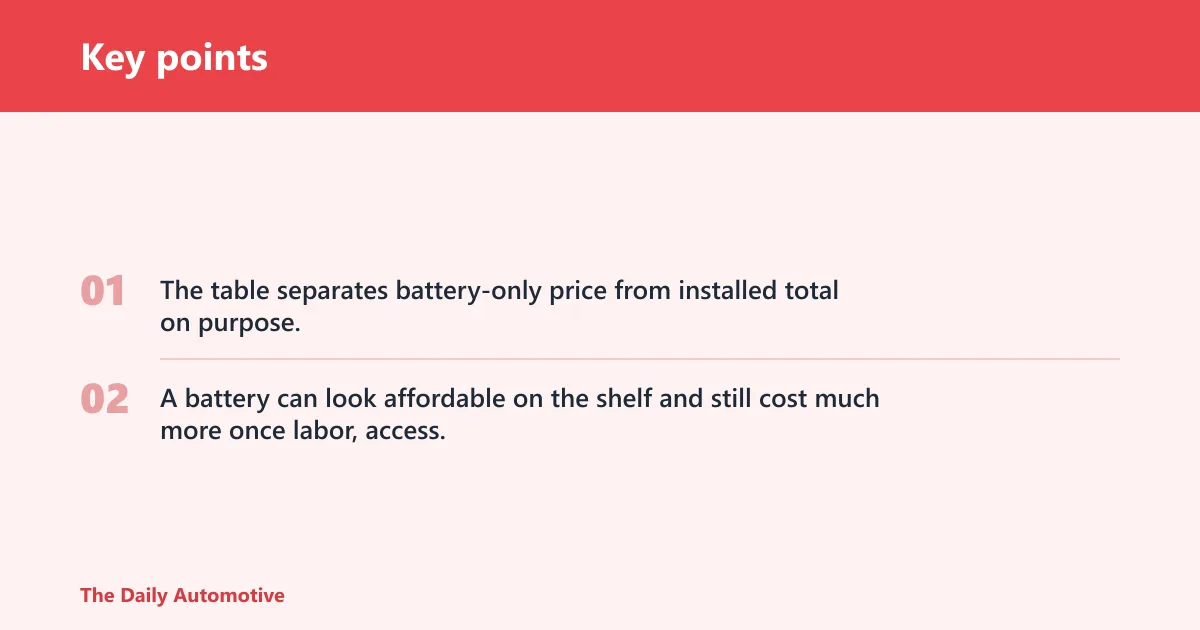
The table separates battery-only price from installed total on purpose. That is where winter budgets go off track. A battery can look affordable on the shelf and still cost much more once labor, access, or registration are added.
Why winter changes battery costs
Cold weather usually exposes a battery problem rather than creating one. Below freezing, cranking power drops sharply by roughly a third near 32°F, so a battery with weak reserve may fail on the first cold morning even if it still seemed fine in mild weather.
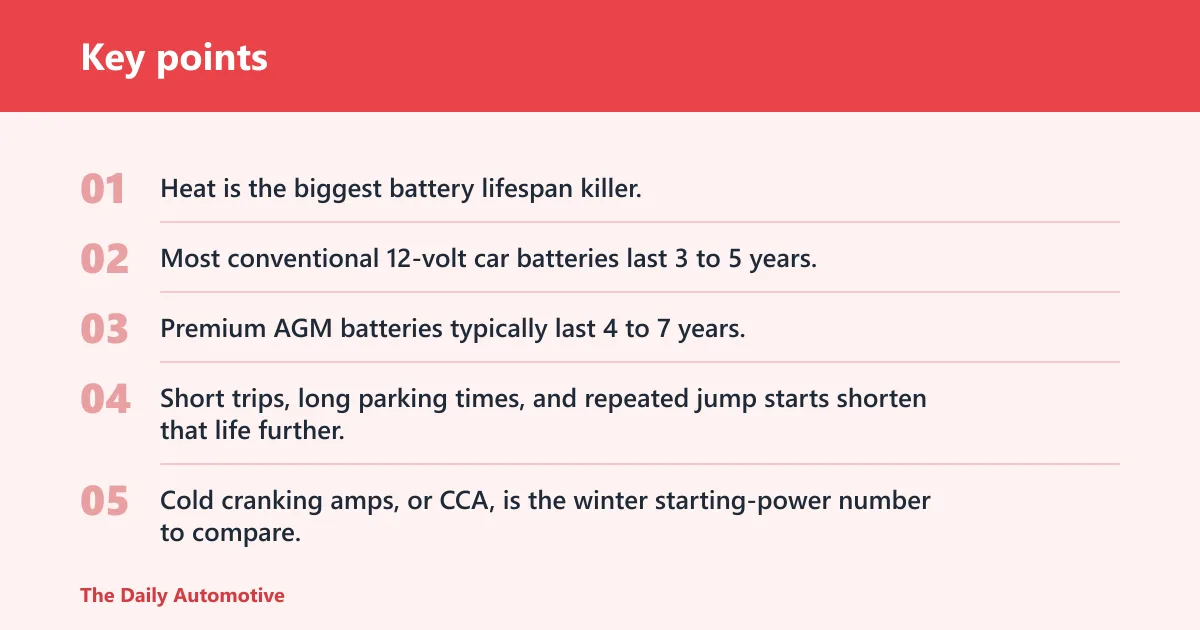
Heat is the biggest battery lifespan killer, but winter still drives more replacements because the margin gets smaller. Most conventional 12-volt car batteries last 3 to 5 years. Premium AGM batteries typically last 4 to 7 years. Short trips, long parking times, and repeated jump starts shorten that life further.
Cold starts expose weak batteries
Cold cranking amps, or CCA, is the winter starting-power number to compare. Higher CCA matters more in colder climates because the starter needs more help when the oil is thick and the battery can deliver less. If two batteries fit the car, the one with the higher CCA rating is often the better winter buy.
Say your sedan has a battery that is four years old and the first cold snap brings a slow crank. That does not automatically mean the battery is dead. It may simply mean the battery is near the end of its useful life and no longer has enough reserve for the weather.
Short trips and long parking times shorten life
Frequent short drives leave the battery partly charged. Long parking times do the same. Winter charging needs rise because the engine spends more time cranking and less time running long enough to refill the battery fully. That is why city driving and weekend-only use often lead to a replacement sooner than highway use.
How much should a car battery cost?
For most drivers, a standard flooded lead-acid battery should cost about $100 to $160 before labor. That is the common 12-volt replacement type for many vehicles. If you are comparing stickers, stay in that range unless the owner manual calls for a different battery type or the car has start-stop equipment.
Typical flooded lead-acid pricing
Flooded batteries are the lowest-cost option in the usual winter cost ladder. They work fine in many cars, but they are the weakest cold-weather performer of the three common types here. Their lower price makes sense only when the vehicle does not need extra cycling durability or stronger winter reserve.
Typical AGM pricing
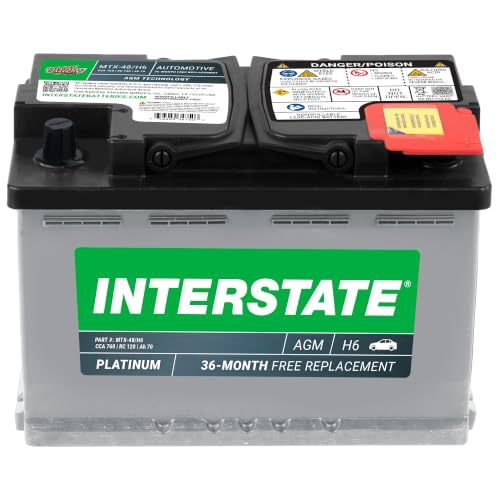
AGM batteries cost about $200 to $325 before installation. They are sealed, usually heavier by 3 to 7 pounds than flooded batteries of the same size, and better suited to vehicles with start-stop systems. That extra price can buy better cold-start performance and longer service life in demanding use.
Where EFB fits on the price ladder
EFB sits between flooded and AGM on price and durability. It is not the cheapest choice, but it is often the right one for a start-stop vehicle that does not require a full AGM. If the car came with EFB, swapping to a basic flooded battery can create repeat failures and charging issues.
Is an AGM battery worth the extra cost?
Sometimes, yes. AGM is worth the extra cost when the vehicle calls for it, when start-stop use is part of the design, or when cold-weather reliability matters more than the lowest sticker price. For a plain older car without those needs, a flooded battery can still be enough.
Start-stop vehicles and AGM fit
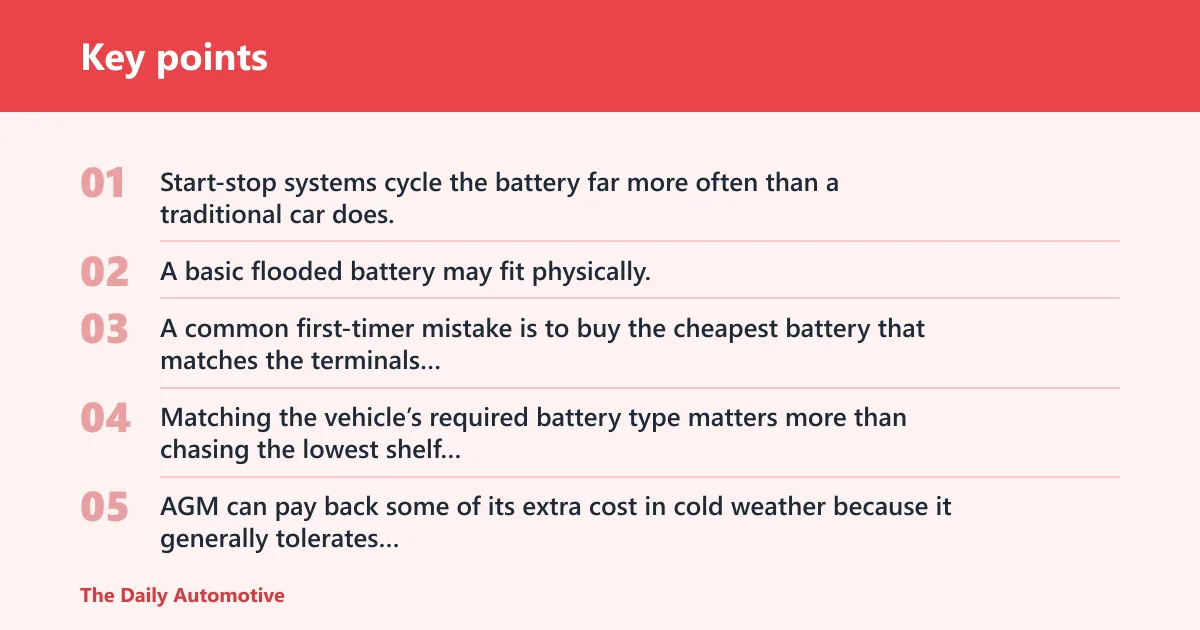
Start-stop systems cycle the battery far more often than a traditional car does. That is why AGM or EFB is often specified. A basic flooded battery may fit physically, but it is usually the wrong long-term buy for that system.
A common first-timer mistake is to buy the cheapest battery that matches the terminals and size, then wonder why the start-stop feature fails or the battery wears out early. Matching the vehicle’s required battery type matters more than chasing the lowest shelf price.
Cold-weather payback for AGM
AGM can pay back some of its extra cost in cold weather because it generally tolerates harder use and deeper cycling better than flooded batteries. If your winter is long, the car sits outdoors, and you need dependable starts, the higher initial spend may cost less than a second replacement later.
When flooded is still enough
Flooded is still enough when the vehicle is not start-stop equipped, the battery tray and cables are simple to access, and the climate is not severe. Do not pay for AGM just because it sounds better. Pay for it when the car or the weather makes it the smarter match.
What does labor add to replacement?
Independent shops typically charge around $30 to $100 in labor. Some parts stores install batteries for free, which can keep the all-in price close to the battery sticker. Hard-to-reach batteries cost more because trim panels, under-hood components, or trunk access add time.
Common shop labor ranges
Plan on labor as part of the winter budget, not an afterthought. The average all-in replacement cost lands around $150 to $200, and most drivers pay $120 to $320 all-in for replacement. That spread reflects battery type, labor, and vehicle design.
Free installation at some parts stores
Free installation can matter as much as the battery price itself. If the battery is easy to reach and the store installs it at no charge, your total may stay near the battery-only number. That is the best case for a budget-minded winter replacement.
Why some batteries cost more to replace
Some vehicles hide the battery under seats, in the cargo area, or behind interior trim. Others need registration after installation. Those jobs raise the final bill even when the battery itself is ordinary. In winter, that extra labor can decide whether a cheap battery is truly cheap.
What if the car will not start?
Do not assume the battery is the only problem. A no-start in winter can come from the battery, but it can also come from the alternator, starter, or charging system. A free battery test is the first spend that often saves the most money.
- Get the battery tested first if the car cranks slowly or will not start.
- Ask for a charging-system check if the battery tests good but the problem continues.
- Use the jump start only as a temporary move to get the car tested or home.
- Do not replace a battery just because the weather turned cold.
Battery testing at major auto parts stores is often free. That matters because a good battery can still fail to start the car if the alternator is not charging correctly. A healthy resting battery reads about 12.6 volts. With the engine running, charging voltage should be about 13.7 to 14.7 volts.
Picture a compact car that starts fine after a jump, then dies again after a few errands. That pattern can point to a charging issue instead of a dead battery. The jump start bought time, but it did not answer the real question.
Winter battery costs by vehicle type
Vehicle type changes the winter bill as much as battery chemistry does. Start-stop cars often need EFB or AGM. European luxury vehicles may require battery registration. Hybrids and EVs can still have a separate 12-volt auxiliary battery that wears out on a similar timeline to gas-car batteries.
Start-stop cars and EFB or AGM needs
Do not downgrade a start-stop vehicle to a basic flooded battery unless the manufacturer allows it. That shortcut can lead to poor operation and a shorter battery life. EFB usually fills the lower-cost slot for some start-stop cars, while AGM is the higher-end fit.
European luxury cars and battery registration
Some European luxury vehicles require battery registration after replacement. That adds cost beyond the battery itself because the vehicle’s charging system needs to know the new battery’s details. If registration is required and skipped, the car may charge the battery incorrectly.
Hybrids and EVs with 12-volt auxiliary batteries
Hybrids and EVs still use a separate 12-volt auxiliary battery for accessories and control systems. That battery is not the traction battery. It follows a similar replacement timeline to gas-car batteries, so a winter no-start on a hybrid or EV can still be a 12-volt issue.
Frequently asked questions
How much is my winter car battery?
If the car needs only a simple swap and the store installs it for free, the total stays lower. If the battery tests good, spending anything yet may be wasted money.
How much does a car battery cost?
Those are battery-only numbers. Labor, registration, and hard-to-reach mounting points can raise the final bill well above the sticker price.
How much should a car battery cost: a fair battery cost depends?
A fair battery cost depends on type and vehicle needs. For a basic car, flooded lead-acid is the budget choice. For start-stop cars or cold climates, AGM or EFB may be the better buy. The cheapest option is not always the best fit for winter.
What does a winter car battery cost installed?
AGM systems, hard-to-reach locations, and battery registration can push the total higher. A free installation deal can keep the bill much closer to the battery price.
Is an AGM battery worth the extra cost in winter?
AGM is worth the extra cost when the vehicle requires it, especially for start-stop systems and heavier winter use. It is not a universal upgrade for every car. If the manual allows flooded lead-acid and the climate is mild, the lower-cost battery may be enough.
How much should labor add to a battery replacement?
Independent shops typically charge around $30 to $100 in labor. Some parts stores install batteries for free. If the battery sits in a difficult location or the vehicle needs registration, labor can rise enough that the final bill feels far above the battery-only price.
Products related to this article
Sponsored / affiliate links. As an Amazon Associate I earn from qualifying purchases. I may earn additional commission from eligible campaigns.