Best Hitch Locks for Trailer Security (2026): We Compared
The main trade-off is simple. A receiver lock protects the connection while the trailer is hitched. A coupler lock blocks attachment when the trailer is parked. The right pick depends on receiver hole size, coupler shape, and whether you need one lock or layered protection.
The best hitch lock matches the threat: use a coupler lock for a parked trailer, a receiver lock for a hitched trailer, and choose the smallest lock that fully covers the latch or receiver. A bad fit can leave a trailer easy to steal, or force you to buy twice. This guide compares hitch-lock types, fit limits, and the best choices for parked, hitched, and stored trailers.
Quick comparison
| Product | Badge | Best for | Price | ||
|---|---|---|---|---|---|
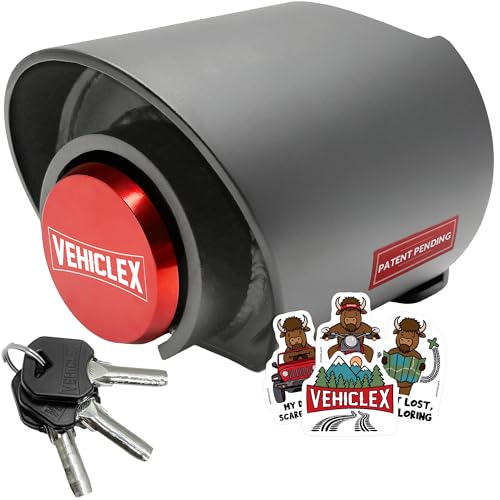 |
Vehiclex 2-5/16-Inch Trailer Coupler Lock with WeatherproofVehiclex | Our pick | 2-5/16-Inch · Weatherproof Shield · Red | $132.99
Price as of 18 Nov 2026
|
View |
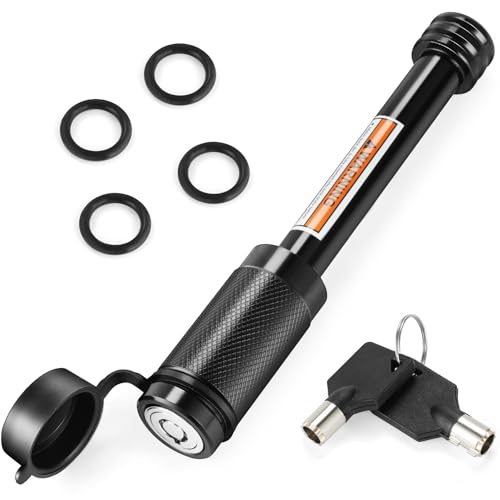 |
JUSTTOP Trailer Hitch Receiver Pin Lock,5/8" Dia 3-1/2" LongJUSTTOP | Budget pick | 5/8" Dia 3-1/2" Long · Black Carbon Steel | $9.99
Price as of 18 Nov 2026
|
View |
 |
Rhino USA Trailer Coupler Lock Kit (2-5/16in Trailers)Rhino USA | Also great | 2-5/16in · Steel Anti-Theft · Kit | $54.90
Price as of 18 Nov 2026
|
View |
 |
Kukoofyer 2026 Upgraded Trailer Lock Fits 2-5/16 InchKukoofyer | Upgrade pick | 2-5/16 Inch · Heavy Duty · Blue | $66.48
Price as of 18 Nov 2026
|
View |
Use the table below to match the lock to the trailer position first, then check fit. That order matters more than brand name for theft prevention.
How we chose
We compared only the manufacturer specs, listing details, and published buyer feedback available for these products. Fit, lock type, weather resistance, and keying convenience drove the selection.
Keep the list tied to real trailer use cases: hitched towing, parked storage, and campground or outdoor parking. That keeps the advice practical instead of generic.
Receiver hitch lock: best for hitched setups
Receiver hitch locks secure the inserted shank in the hitch receiver. CURT says they fit industry-standard receiver tube sizes, and standard receiver pin holes are 1/2 inch or 5/8 inch. That makes them the right choice when the trailer is already attached and you want to protect the connection point from removal.
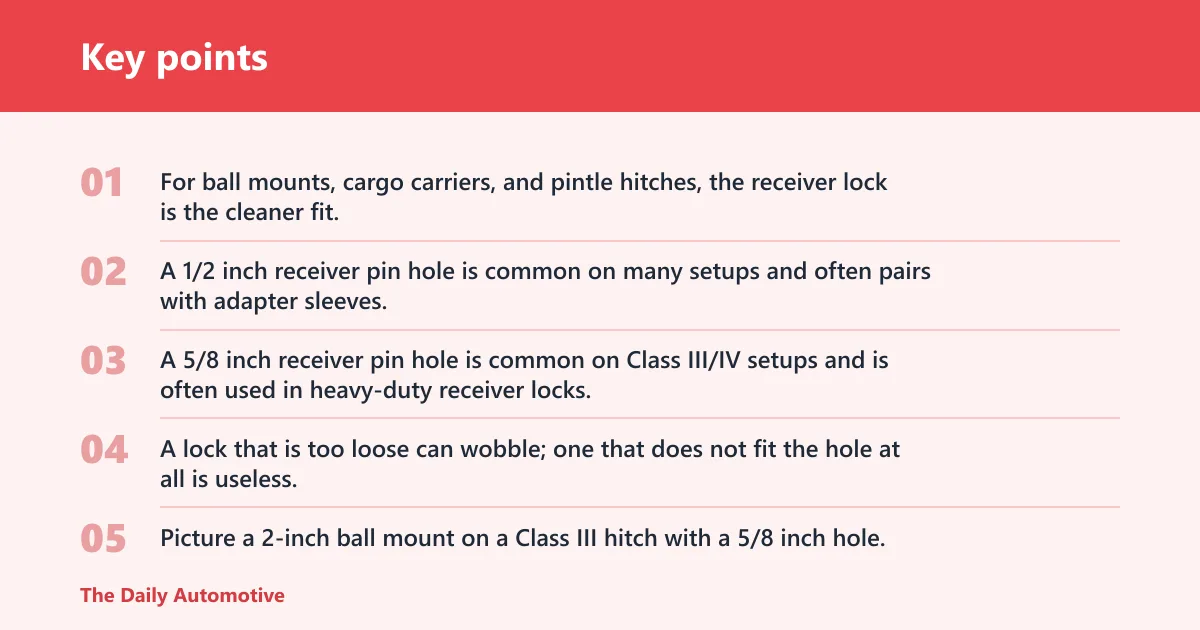
For ball mounts, cargo carriers, and pintle hitches, the receiver lock is the cleaner fit. CURT also describes adapter sleeves for different receiver sizes, which matters when the hitch class and lock size do not match cleanly.
Fit notes for 1/2 inch and 5/8 inch receiver holes
A 1/2 inch receiver pin hole is common on many setups and often pairs with adapter sleeves. A 5/8 inch receiver pin hole is common on Class III/IV setups and is often used in heavy-duty receiver locks. A lock that is too loose can wobble; one that does not fit the hole at all is useless.
Picture a 2-inch ball mount on a Class III hitch with a 5/8 inch hole. A 5/8 inch receiver lock is the cleaner match. If the hitch uses an adapter sleeve, you may need the sleeve and the lock to work together, not just a larger pin.
Swivel-head vs. barbell styles
Swivel-head and barbell styles both show up in receiver hitch locks. The swivel head can help with access in tight spaces, while the barbell style is familiar and simple to grab. Either way, the lock should fully engage the pin hole without leaving extra slack.
Master Lock says receiver locks slide through the hitch receiver and ball mount shank. That is the key point: if the shank or pin hole is wrong, the lock cannot do its job no matter how strong the body looks.
Common failure mode to avoid
The most common mistake is buying for the hitch class instead of the actual hole size. A 2-inch receiver does not guarantee the same pin-hole fit. Rust, misaligned holes, and adapter sleeves can also stop the lock from seating fully.
Use the vehicle and product manual. Never force a pin into a hole that does not line up. A seized fit can leave the trailer unsecured or damage the receiver finish.
Coupler lock: best for parked trailers
Coupler locks fit over or into the trailer coupler to prevent hitching. The same source says they prevent a trailer from being attached, and CURT says trailer locks are for parked and unattended trailers only. That makes them the better choice when the trailer is sitting in a driveway, lot, or campground space.
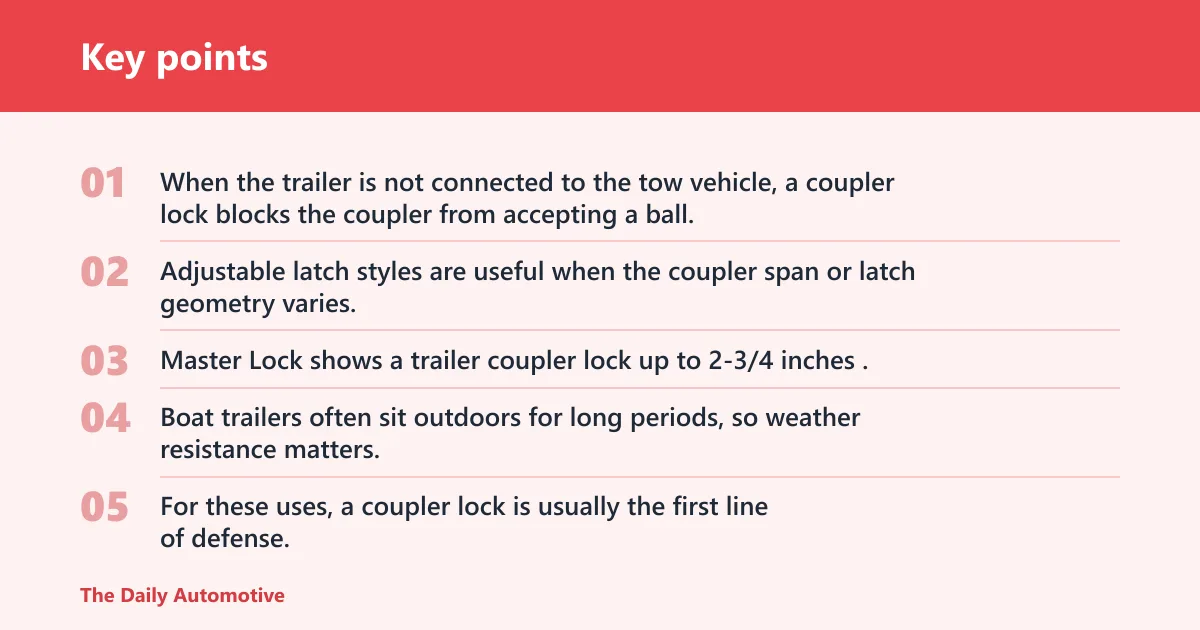
They are common for boat trailers, utility trailers, and travel trailers. When the trailer is not connected to the tow vehicle, a coupler lock blocks the coupler from accepting a ball.
Adjustable latch vs. universal-fit designs
Adjustable latch styles are useful when the coupler span or latch geometry varies. Universal-fit designs are better when you need one lock to cover more than one trailer, but they still need an actual physical fit check.
The same source shows a trailer coupler lock up to 2-3/4 inches. That kind of specification matters because couplers are not one-size-fits-all. A “universal” label still has a ceiling.
Boat, utility, and travel trailer use cases
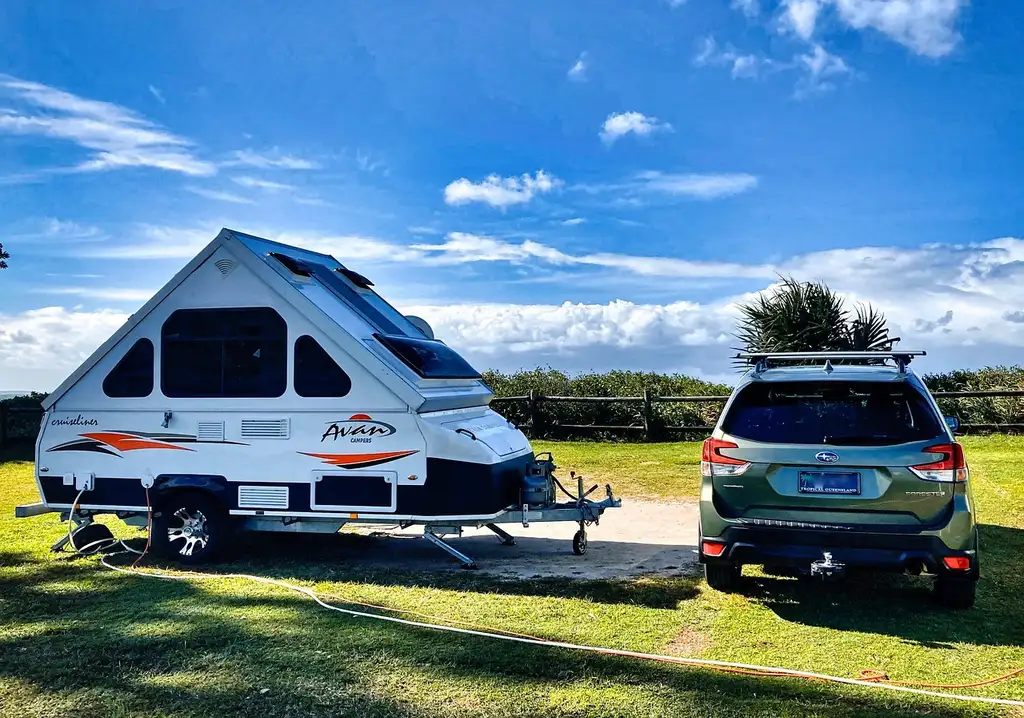
Boat trailers often sit outdoors for long periods, so weather resistance matters. Utility trailers are frequently parked in open driveways or shared storage areas, which makes visible deterrence more valuable. Travel trailers tend to sit unattended at campgrounds or storage yards, where sealed and capped designs help with weather exposure.
For these uses, a coupler lock is usually the first line of defense. If the trailer is parked and disconnected, a receiver lock does not block someone from backing up and coupling to the trailer. A coupler lock does.
Common failure mode to avoid: the main mistake is buying
The main mistake is buying a coupler lock for the wrong coupler style or span. A lock that fits the latch but not the coupler body leaves pry points exposed. Rust can also seize moving parts if the trailer lives outdoors.
Look for weather-resistant construction. Stainless steel and boron alloy materials are often featured in outdoor-focused lock designs, and sealed or capped bodies are a better match for campground use.
Trailer lock decision table
| Use case | Lock type | Compatible size/spec | Best material | Keying option | Common failure mode to avoid |
|---|---|---|---|---|---|
| Hitched utility trailer at a jobsite | Receiver hitch lock | Match the receiver pin hole, commonly 1/2 inch or 5/8 inch | Weather-resistant steel or stainless steel | Keyed alike if you have multiple tow points | Wrong pin diameter or loose fit |
| Parked boat trailer in a driveway | Coupler lock | Fit the coupler body and latch span; check the listed opening size | Powder-coated or sealed steel | Single key or keyed alike | Universal fit that still misses the latch geometry |
| Travel trailer in storage | Trailer lock | Over-lip or shackle style sized to the tongue and coupler opening | Stainless steel or boron alloy | Keyed alike if the trailer has other locks | Using it while hitched |
| RV with multiple accessories | Receiver lock plus layered security | Receiver lock sized to the hitch; add wheel chock or spare tire lock as needed | Sealed, capped, weather-resistant steel | Keyed alike for simpler ownership | Relying on one visible lock only |
Which lock type fits your trailer?
The right answer starts with where the trailer sits. Parked trailers call for coupler or tongue locks. Hitched trailers call for receiver locks. If you mix those two jobs, you can end up protecting the wrong part of the trailer.
Parked trailer
If the trailer is parked and unattended, start with a coupler lock or trailer lock. The same source says trailer locks are only for parked and unattended trailers, and they cannot be used when the trailer is hitched. That makes them a storage tool, not a towing tool.
Use a coupler lock when the goal is to stop attachment. Use a trailer lock when the tongue design calls for it. Both are about keeping a thief from coupling the trailer to a tow vehicle.
Hitched trailer
If the trailer is already attached, a receiver hitch lock is the better fit. It secures the inserted shank in the receiver and protects the hitch pin connection from removal. That matters for ball mounts, cargo carriers, and pintle hitches.
Say your trailer stays attached to a truck overnight at a jobsite. A coupler lock cannot help while the trailer is already hitched, but a receiver lock can protect the connection point from being pulled apart.
Storage and campground use
For storage yards and campgrounds, weather-resistant construction matters as much as fit. Sealed and capped designs are a better match for rain, road salt, and long outdoor exposure. That is where stainless steel and boron alloy materials start to matter in practice.
A common first-time mistake is buying a lock that looks heavy but is hard to service after a wet season. If the keyway or shackle area collects debris, the lock can become difficult to open right when you need access.
What size hitch lock do you need?
You need the size that matches the actual receiver pin hole, not the trailer’s general class alone. The same source lists 1/2 inch and 5/8 inch as standard receiver pin hole sizes, and adapter sleeves can help when the sizes do not line up cleanly.
Adapter sleeves
Adapter sleeves let you use different receiver sizes. A common example is a 1/2 inch lock with a 5/8 inch sleeve. That can help one lock cover more than one hitch class, but only if the sleeve and lock are meant to work together.
If you tow different trailers with different receivers, this can reduce duplicate purchases. If the sleeve is sloppy or the pin is too short, though, the lock may rattle or fail to seat fully.
When 1/2 inch fits better
A 1/2 inch receiver lock fits better when the hitch uses a 1/2 inch pin hole and you want a clean, snug fit. It is also the safer pick when an adapter sleeve is already part of the setup and the lock is made for that configuration.
Choose the smaller lock only if it still covers the hardware fully. Smaller is not better if it leaves slack or partial engagement.
When 5/8 inch fits better
A 5/8 inch receiver lock fits better on Class III/IV setups and heavy-duty receiver locks. The same source shows a 5/8 inch Class III/IV receiver hitch lock, which lines up with the common heavier-duty use case.
If the hitch is built for heavier towing, the larger pin size is often the more natural match. The point is not size for its own sake; it is correct fit without wobble or forced installation.
Should you buy a coupler lock or a receiver lock?
Buy a coupler lock if the trailer is parked and the threat is someone trying to hitch it to a vehicle. Buy a receiver lock if the trailer stays attached and the threat is someone removing the ball mount or hitch accessory. If the trailer moves between both states, many owners need both.
Layered security makes sense when the trailer carries valuable cargo or sits outdoors. Wheel chock locks and spare tire locks add another obstacle beyond the hitch itself. That matters because a thief often looks for the fastest path, not the most brute-force path.
Threat scenario
If the trailer is stored in a driveway, the main threat is attachment theft. A coupler lock targets that. If the trailer is hitched on a truck overnight, the threat shifts to the hitch connection, so a receiver lock becomes the relevant tool.
Trailer position
Trailer position changes the lock choice more than trailer type does. Boat, utility, and travel trailers can all need coupler locks when parked and receiver locks when hitched. The same trailer can need different locks on different days.
Layered security with wheel or spare tire locks
A trailer security system does not need to stop at the hitch. Wheel chock locks and spare tire locks help secure the vehicle, trailer, and cargo together. That is a smarter setup when the trailer is visible, outdoors, or left in a shared lot.
If theft risk is higher, pair a hitch lock with another visible barrier. The hitch is one access point. It is rarely the only one.
Vehiclex 2-5/16-Inch Trailer Coupler Lock: best for weather exposure
This lock is for owners of select boat, utility, and travel trailer couplers who want a weather-focused coupler lock. The listing calls out a weatherproof shield, a brass-core puck lock, and a smooth outer profile that limits pry access. That makes it a strong fit for parked trailers kept outdoors.
Its drawback is straightforward: it is sized for 2-5/16 inch couplers, so it is not a universal answer. Check the manufacturer’s listing for your exact coupler before buying.
JUSTTOP Trailer Hitch Receiver Pin Lock: best budget receiver lock
This is the practical pick for drivers who need a simple receiver lock for a 5/8 inch setup. The listing says it is designed with a 5/8 inch diameter hitch pin and includes four anti-rattle rubber O-rings to help reduce vibration. It fits the common role of protecting the hitch pin connection on a hitched trailer.
The drawback is fit specificity. It is built around a 5/8 inch pin and listed for 2 inch and 2-1/2 inch receiver use, so you still need to confirm your receiver hole and hitch class before ordering.
Rhino USA Trailer Coupler Lock Kit: best for keyed-alike convenience
This option is aimed at owners who want one key to operate more than one trailer lock point. The listing says one key operates both the coupler lock and the latch lock, which is useful if you manage multiple tow points or want fewer keys in rotation. It is built around 2-5/16 inch trailers.
The main drawback is that it is not a universal fit. It is designed for specific A-frame and other couplers, so the fit still depends on the coupler shape and opening. Check the manufacturer’s listing for your model.
Kukoofyer 2026 Upgraded Trailer Lock: best for standard 2-5/16 couplers
This is a fit-first coupler lock for standard 2-5/16 inch trailer couplers. The listing describes high-strength steel, an anti-pry and anti-cut build, and a coated finish meant to resist rust and harsh weather. That makes it a good match for RV, cargo, camper, and dump trailer owners who need a straightforward parked-trailer lock.
The drawback is the same one that applies to many coupler locks: it is sized to a specific coupler setup. If the coupler is not the listed size or shape, the lock may not seat correctly.
Choose Vehiclex if… / Choose JUSTTOP if… / Choose Rhino USA if… / Choose Kukoofyer if…
Choose Vehiclex if your trailer is parked outdoors and you want a weather-focused coupler lock for a 2-5/16 inch coupler. Choose JUSTTOP if you need an inexpensive receiver lock and your hitch uses a 5/8 inch pin. Choose Rhino USA if you want one-key convenience across coupled trailer security points. Choose Kukoofyer if you want a straightforward standard coupler lock for RV or cargo trailer storage.
If your trailer spends most of its time hitched, the receiver lock is the better first buy. If it spends most of its time parked, start with a coupler lock. If it does both, buy for the parked threat first and add a receiver lock later.
-
Check the actual fit. Measure the receiver hole or coupler opening before ordering. Use the manual and the listing, not just the trailer class badge, because 1/2 inch and 5/8 inch pin holes are both common.
-
Match the trailer position. Buy a coupler or trailer lock for parked storage and a receiver lock for hitched storage. The same source says trailer locks are only for parked and unattended trailers, so do not treat one lock as a replacement for the other.
-
Keep the fit tight. Install the lock so it seats fully without slack. If the lock rattles, use the correct adapter sleeve or move to the proper size instead of forcing the hardware.
-
Add layered protection. For outdoor storage, pair the hitch lock with a wheel chock lock or spare tire lock. That adds time and inconvenience for a thief and covers more than one access point.
Frequently asked questions
What is the best trailer hitch lock?
The best trailer hitch lock is the one that fits the threat and the trailer position. Use a coupler lock for a parked trailer, a receiver lock for a hitched trailer, and choose the smallest lock that fully covers the hardware. Fit matters more than a generic “universal” claim.
How do you install a trailer hitch lock?
Line up the lock with the receiver hole or coupler opening, insert it fully, and confirm it seats without force. If the fit is wrong, stop and check the manual or the listing. Do not force seized or misaligned hardware, because that can leave the trailer unsecured.
How do you open a trailer hitch lock?
Use the matching key or release method from the manufacturer, then remove the lock only after the trailer is stable and the load is supported as required by the manual. If the lock is corroded or frozen, do not pry aggressively. Outdoor storage often means debris and moisture are part of the problem.
What size trailer hitch lock do I need?
You need the size that matches the receiver pin hole or coupler geometry. The same source lists 1/2 inch and 5/8 inch as standard receiver pin hole sizes, and coupler locks must match the coupler body or opening. Adapter sleeves can help, but only when the lock and sleeve are designed together.
Are trailer hitch locks universal?
No single hitch lock is truly universal. Some models are marketed as universal-fit, but they still depend on the coupler span, receiver hole size, or hitch class. A correct physical fit is the difference between real security and a lock that only looks secure.
Products related to this article
Sponsored / affiliate links. As an Amazon Associate I earn from qualifying purchases. I may earn additional commission from eligible campaigns.